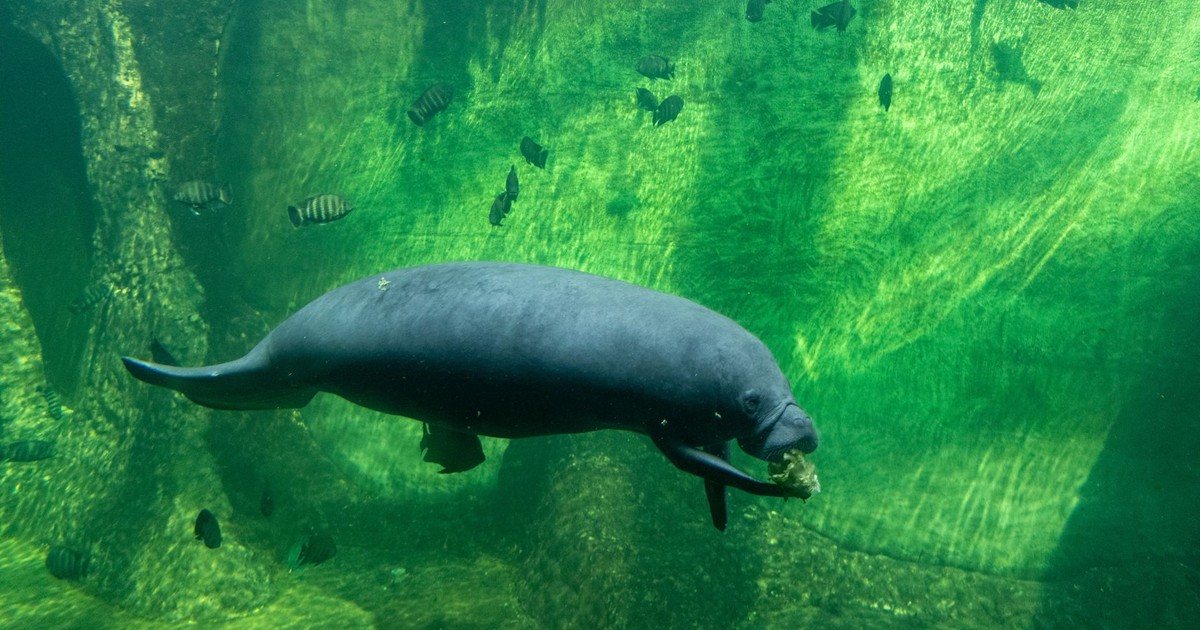

Most animals don’t get a world record at 71. Romeo the manatee earned his, and that afternoon, like most afternoons, he was probably napping near his favorite rock in Manatee Cove at the Gulfarium Marine Adventure Park in Fort Walton Beach, Florida, entirely unbothered by the distinction.
He was wild-born, somewhere around 1955, and nobody knows the exact date. When he was first found in the Miami area in 1957, researchers described him as a “subadult,” a teenager in manatee terms, estimated to be between two and five years old. That conservative estimate alone puts him at 71 in 2026, and he could easily be a few years older than that. A manatee’s typical lifespan runs between 30 and 40 years. Romeo has lived roughly twice that.
He arrived at the Gulfarium in June 2025, in what his caretakers describe as his final move. He shares Manatee Cove with two other rescued manatees: Lil Joe, a sprightly 37-year-old, and Inigo, who is around 10.
A Life That Predates the Laws That Protect Him
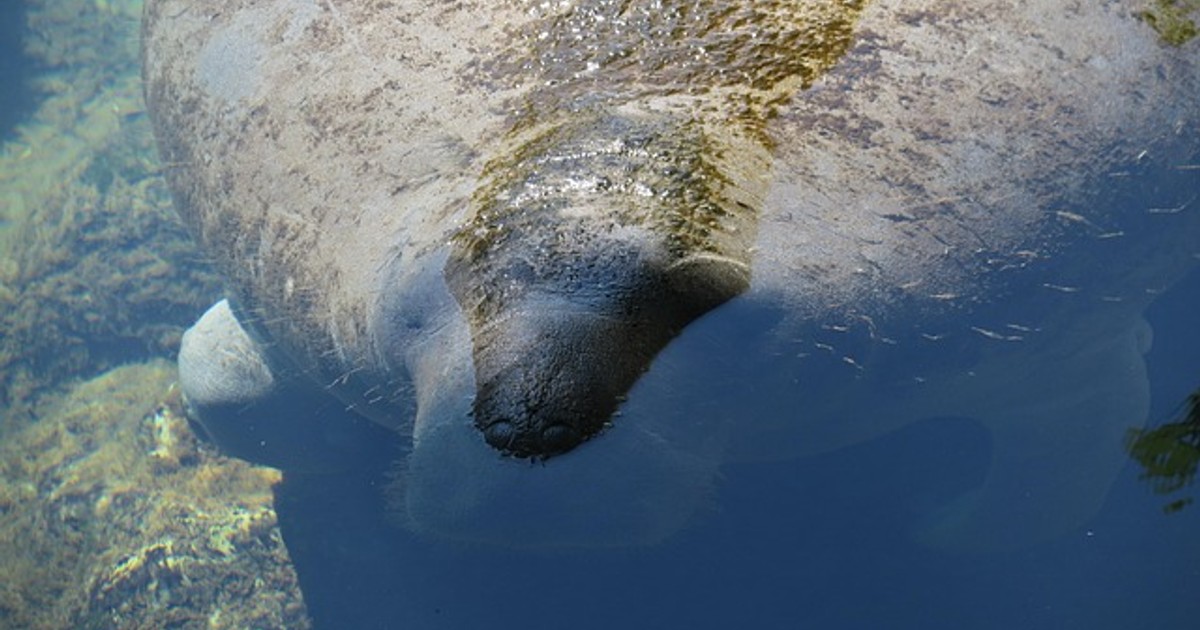
Since the late 1950s, Romeo had lived at Miami Seaquarium on Virginia Key. He predated the laws created in the 1970s to help protect his species. The Endangered Species Act, the Marine Mammal Protection Act: Romeo was already a fixture at the Seaquarium before any of it existed.
The year after he arrived, a female manatee, first called Mabel, was introduced to the facility and renamed Juliet. Romeo and Juliet would go on to produce nine offspring together. Their first, Lorelei, born on May 3, 1975, is believed to be the first manatee conceived and born while in human care. That made Lorelei a milestone in her own right, and it happened because two manatees were given enough time, space, and stability to form something like a life together.
Juliet also reached an impressive age, certainly in excess of 65 years old, when she passed away in April 2024 at Zoo Tampa. Romeo had already been moved by then. He outlasted her, as he has outlasted nearly everything about the world he entered.
The Seaquarium Years End, Not Quietly
The conditions at Miami Seaquarium had been deteriorating for years by the time anyone outside the facility took notice. A U.S. Department of Agriculture inspection pointed to manatee isolation and a lack of shade, among other observations of mishandling animals in the aquarium’s care.
What finally broke through to the public was a drone video. An advocacy group, UrgentSeas, posted footage from above one of the facility’s pools. The video appeared to show Romeo swimming in a small pool. The hashtag #FreeRomeo had amassed nearly 23 million views on TikTok.
Romeo and Juliet, who had resided at Miami Seaquarium since the late 1950s, were successfully relocated to Tampa under the direction of the U.S. Fish and Wildlife Service. Federal officials classified the pair as “advanced age” and described the transport as high risk. He made it fine.
Veterinarians at Zoo Tampa had expressed specific concern about cardiac health, which is difficult to evaluate in manatees due to their size. Romeo handled the disruption better than anyone expected. He spent about a year and a half at Zoo Tampa, recovering and stabilizing, before the Gulfarium’s new Manatee Cove was ready to receive him.
What 71 Looks Like, Day to Day
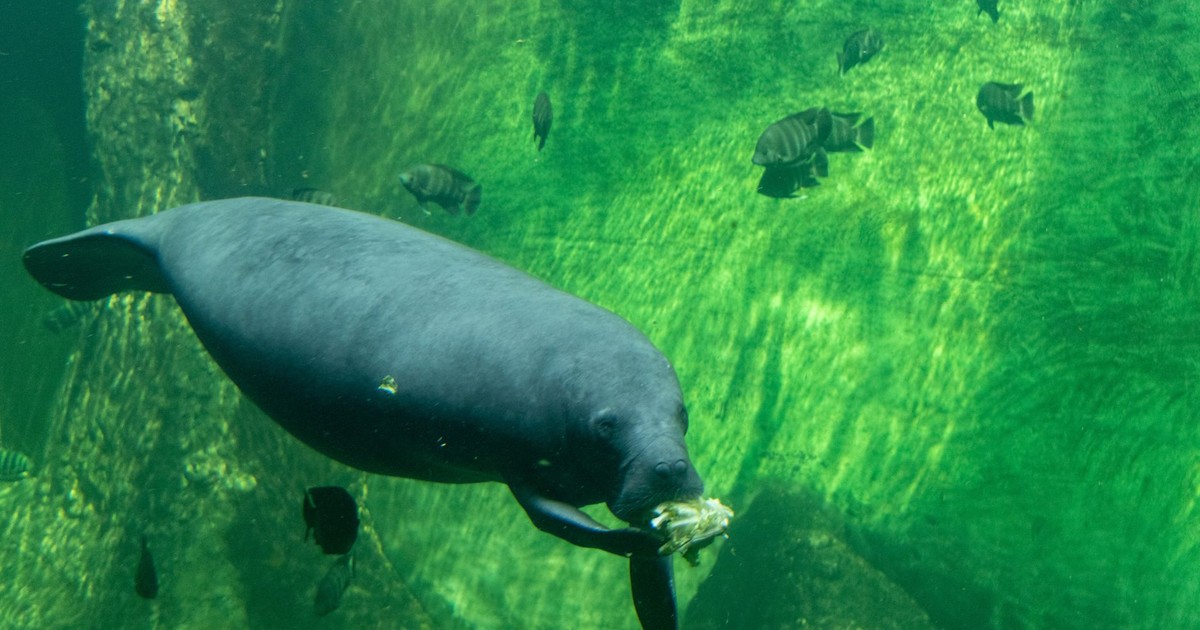
Romeo has been described as a laidback gentle giant. He loves grazing along the lettuce forage feeders that rest on the bottom of his habitat. He can almost always be found napping promptly at 2 p.m. near his favorite rock, often snuggled up with Lil Joe. Staff at the Gulfarium report that his favorite foods are romaine lettuce, apples, and small pieces of sweet potato.
He is classified as non-releasable, which means a return to the wild was never part of the plan. WJHG, the local Fort Walton Beach news station, reported that Gulfarium President Patrick Berry described Romeo as “truly one of a kind,” and noted that his world-record achievement highlights both his longevity and the challenges manatees face, including habitat loss, pollution, and boat strikes.
Romeo’s Guinness World Record status was confirmed on January 27, 2026. The record he holds is not just for the oldest manatee currently alive. It’s for the oldest manatee ever documented. No manatee in recorded history has lived longer.
The Species He’s Outliving
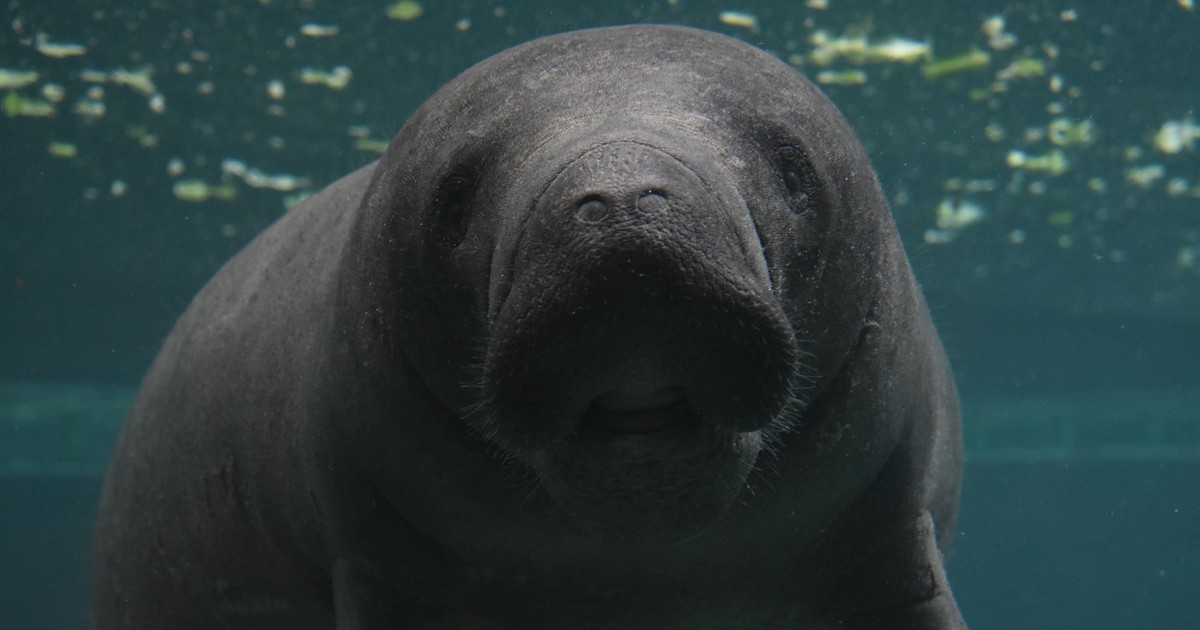
Romeo’s age would be remarkable for any animal. For a Florida manatee in the current environment, it borders on the impossible. Among the biggest ongoing threats to manatees are pollution, collisions with boats, and loss of habitat. According to the Florida FWC, the state recorded 632 manatee deaths in 2025 alone, below the five-year average of 731, but still higher than in either of the two preceding years.
Adults weigh 1,000 pounds on average and can eat about 100 pounds daily of seagrass, their primary food source. They were included on the first-ever federal list of endangered species, which was published in 1967, predating passage of the landmark 1973 Endangered Species Act. They’ve been protected on paper for nearly 60 years. In practice, the numbers tell a harder story.
The single worst period on record came in 2021, when more than 1,100 manatees died in a single year, primarily from starvation after seagrass losses in the Indian River Lagoon stripped them of their food source. The emergency feeding program that followed, where wildlife officials laid lettuce on the lagoon floor to keep starving manatees alive, was unprecedented. It worked well enough to get through the worst of it, but the seagrass hasn’t fully recovered.
Manatees are slow-moving and often blend in with the water, making them difficult for boaters to see. Boat strikes are the manatees’ leading cause of death. Romeo carries the scars of a different era, one where there were far fewer boats and far less pressure on the waters he would have called home.
Manatees are also slow to reproduce. Females typically give birth to a single calf every two to five years, which means populations can’t recover quickly when losses spike. Romeo and Juliet’s nine offspring together were genuinely exceptional, and the fact that their first calf was conceived in human care made her a milestone for the species, not just a footnote for the Seaquarium.
The Oldest Manatee Florida Has Ever Seen
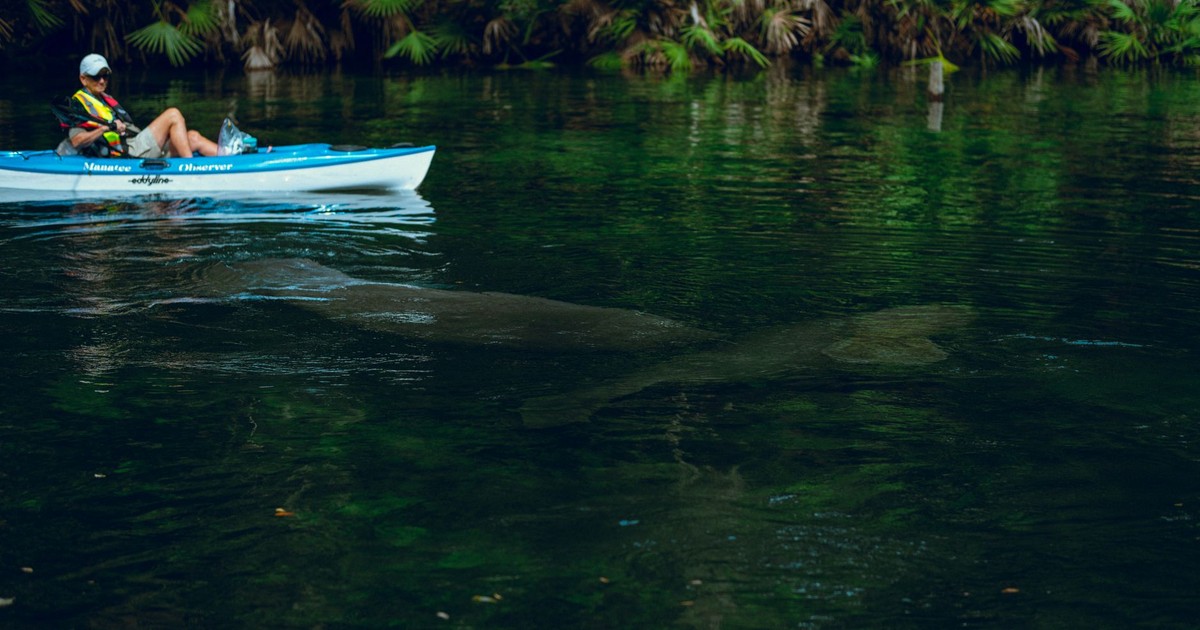
The Gulfarium sits on Okaloosa Island, right on the Emerald Coast between Destin and Fort Walton Beach, a stretch of the Florida Panhandle more associated with spring break crowds and white sand than with marine conservation history. Romeo’s presence there changes the character of the place. Manatee Cove opened about a year and a half ago, and it’s already become the park’s most talked-about exhibit.
Guinness World Records confirmed that the previous record holder was a manatee named Snooty, who lived to 69 years and 2 days before passing away in July 2017 at the South Florida Museum in Bradenton, Florida. Romeo has already cleared that mark by more than two years.
Gulfarium is part of the Manatee Rescue and Rehabilitation Partnership, which helps rescue and rehabilitate manatees before returning them to Florida’s Gulf waters with satellite tags to monitor their progress. Romeo is the permanent end of that pipeline, the animal that isn’t going back, the one who’s been through too much and lived too long. Caring for him is a different kind of work than rehabilitation. It’s more like stewardship.
What the Gulfarium has done, knowingly or not, is turn one very old manatee into a living argument for why any of this matters. Visitors come to see a world record. They end up standing in front of an animal who was born before the Korean War ended, who fathered the first manatee calf ever born in human care, who survived the collapse of the facility that had been his home for nearly 70 years, and who is currently napping next to a 37-year-old he’s apparently decided is his best friend. That’s a lot of life for one animal to carry.
The Real Record
It would be easy to file Romeo away as an uplifting animal story, the kind that gets shared on social media between the bad news cycles, something warm to offset everything else. He is that. But there’s a harder fact underneath it.
The species Romeo belongs to is under more pressure now than at almost any point since protections began. The waters he would have swum as a wild manatee have lost more than half their seagrass in key areas over the last decade. The average lifespan in the wild has dropped to 30 or 40 years, not because manatees stopped being capable of living longer, but because the conditions stopped allowing it. Romeo made it to 71 because he came under human care in 1957, before any of that accumulated damage. He is, in a sense, a record from a different Florida.
None of that makes his 2 p.m. nap any less satisfying to watch. But Romeo’s longevity is most interesting not as a feel-good outlier, but as a baseline, a glimpse of what these animals can actually do when the world doesn’t get in the way. The difference between 71 and 35 isn’t biology. It’s everything that’s happened to Florida’s waters in the decades in between.
Disclaimer: This information is not intended to be a substitute for professional medical advice, diagnosis, or treatment and is for information only. Always seek the advice of your physician or another qualified health provider with any questions about your medical condition and/or current medication. Do not disregard professional medical advice or delay seeking advice or treatment because of something you have read here.
AI Disclaimer: This article was created with the assistance of AI tools and reviewed by a human editor.