

Pick any date off the calendar and odds are it’s already carrying more history than you’d guess. July 4, for instance, is the day two of America’s most consequential founders died on its 50th birthday. June 28 is both the day that started World War I and the day that technically ended it, five years apart. November 22 swallowed three of the 20th century’s most significant figures in a single afternoon. These aren’t obscurities you have to hunt for. They’re sitting right there on the surface, hiding in plain sight because we almost never ask what else happened on the same square.
What follows are 28 cases where history doubled back on itself and landed on an identical date. Some of the coincidences are poetic. Some are jarring in the way that only arithmetic can be, two things that have no business sharing a calendar square somehow doing exactly that. The dates run from ancient Rome to the digital age, and once you know them, a simple date on your phone becomes something stranger.
1. July 4, 1826: Adams and Jefferson Die on America’s 50th Birthday

According to History.com, Thomas Jefferson and John Adams, who were once fellow Patriots and then adversaries, died on the same day within five hours of each other. That day was July 4, 1826. The nation’s 50th birthday. The same document they had both helped draft and sign fifty years earlier was what the country was out celebrating when both men took their last breath.
Jefferson went first, dying at Monticello shortly after noon. Adams, at his home in Quincy, Massachusetts, lasted until early evening. His last recorded words were “Thomas Jefferson still survives.” He was wrong by five hours.
Five years later, President James Monroe also died on July 4, making him the third U.S. president to die on that date. Three presidents. One date. The odds defy easy calculation.
2. November 22, 1963: JFK, C.S. Lewis, and Aldous Huxley All Die

President John F. Kennedy was assassinated on November 22, 1963, at 12:30 p.m. while riding in a motorcade through Dallas. The world stopped. In those same hours, two other giants of the 20th century quietly left it.
The National Catholic Register reports that on November 22, 1963, three award-winning writers died: Kennedy in Dallas, C.S. Lewis at his home just outside Oxford, and Aldous Huxley in Los Angeles. Lewis, author of The Chronicles of Narnia and one of the most widely read Christian thinkers of his era, had spent decades shaping the imaginations of millions. His passing was simply swallowed by the shock of Dallas. Huxley, the author of Brave New World, died the same afternoon. The deaths of Lewis and Huxley weren’t reported in The Times until three days later.
The triple coincidence was so striking that theologian Peter Kreeft later wrote a book imagining the three men meeting in the afterlife, debating philosophy from their shared departure date.
3. December 20: The Hoover Dam’s First and Last Deaths, Fourteen Years Apart

The first worker to die during the Hoover Dam’s construction was J.G. Tierney, who drowned on December 20, 1921, while surveying sites for the dam along the Colorado River. The last person to die there was J.G. Tierney’s son, Patrick, who fell from an intake tower on December 20, 1935. Father and son. Same project. Same date on the calendar, fourteen years apart.
There is no causal connection between the two deaths, which makes the date alignment even harder to process rationally. Probability experts would note that, given thousands of workers and years of construction, some overlapping death dates are statistically expected. But the surname, the project, and the exact calendar date, repeating across a single family? That’s the kind of thing that makes the hair stand up.
4. April 21, 1910: Mark Twain Dies the Day After Halley’s Comet

Snopes has verified that Mark Twain died on April 21, 1910, one day after Halley’s Comet reached its closest point to the sun. Twain was born on November 30, 1835, two weeks after the comet’s 1835 perihelion, and spent his life claiming the comet as his own. In 1909, Twain had predicted his own death with the comet’s return, saying: “I came in with Halley’s Comet in 1835; it is coming again next year, and I expect to go out with it.”
He was 74, not in good health, and by all accounts at peace with the prediction. The comet’s perihelion was April 20. He died the next morning. Snopes notes that the comet was not at its closest point to Earth on the exact date of his death, but confirms he died in the same year of its return, the day after its closest approach to the sun. The poet who romanticized the Mississippi River got his celestial send-off, more or less on schedule.
5. September 10, 1977: France’s Last Guillotine Execution and Star Wars’s French Premiere

In 1977, France conducted its last execution by guillotine. Hamida Djandoubi, convicted of murder, was executed on September 10, 1977. This marked the end of a method of execution that had been in use since the French Revolution.
The very next day, at the Deauville Film Festival, Star Wars: Episode IV – A New Hope celebrated its French premiere. A country said goodbye to the blade that had defined its most brutal chapter and, almost simultaneously, sat down in the dark to watch X-wings race through space. History rarely offers a more vivid before-and-after.
6. July 20: The Moon Landing and the Plot to Kill Hitler

On July 20, 1969, Neil Armstrong stepped onto the lunar surface, completing humanity’s greatest single feat of exploration. The whole world watched. But July 20 already carried a different kind of weight.
On July 20, 1944, Colonel Claus von Stauffenberg had planted a bomb in Hitler’s conference room in an attempt to end World War II. The bomb exploded but Hitler survived. The date had failed to change history in 1944. Twenty-five years later, the same date succeeded in doing exactly that, just from a different direction entirely.
7. April 15, 1912 and April 15, 1865: The Titanic Sinks, Lincoln Dies

April 15 has a grim reputation. On April 15, 1865, Abraham Lincoln died from the gunshot wound inflicted the previous evening at Ford’s Theatre. Forty-seven years later, on April 15, 1912, the RMS Titanic sank into the North Atlantic after striking an iceberg, killing more than 1,500 people. Two of the most devastating losses in American history, separated by nearly half a century, sharing the same calendar date.
Both were moments when tragedy arrived at the precise instant of what felt like triumph. Lincoln’s death came just days after the end of the Civil War. The Titanic had set sail on its maiden voyage only days before, carrying passengers who had been told the ship was unsinkable.
8. November 22, 1995: Toy Story Is Released

On November 22, 1995, Pixar’s Toy Story, the first entirely computer-animated feature-length film, was released in theaters. The date chosen was November 22. The same November 22 that, thirty-two years earlier, had witnessed the Kennedy assassination, the death of C.S. Lewis, and the death of Aldous Huxley.
A date so marked by loss now carries one of cinema’s most joyful debuts. Grief doesn’t hold a date’s lease forever.
9. May 1940: McDonald’s Opens and Auschwitz Receives Its First Prisoners

In May 1940, two entirely unrelated events occurred within days of each other. On May 15, Richard and Maurice McDonald opened the first McDonald’s restaurant in San Bernardino, California. Within days, the first prisoners began arriving at the Auschwitz concentration camp.
The two facts share a month and a sense of surreal contrast that no novelist would dare put in the same chapter. The beginning of the most recognizable fast-food chain in human history, and the beginning of one of history’s most systematic atrocities, separated by only days on the same calendar.
10. August 6 and August 9, 1945: Hiroshima, Nagasaki, and One Man Caught in Both

Tsutomu Yamaguchi was on a business trip in Hiroshima when the first atomic bomb exploded on August 6, 1945. Injured but alive, he returned home to Nagasaki and reported for work three days later. He was in the middle of describing the Hiroshima attack to his supervisor when the second bomb exploded over Nagasaki. Yamaguchi survived again and lived until 2010, eventually becoming the only person officially recognized by the Japanese government as having survived both bombings.
The dates August 6 and August 9 each carry the full weight of nuclear history. But one man’s body was present for both. Yamaguchi’s story forces both dates into a single, impossible human experience.
11. January 27: Auschwitz Liberation and the Holocaust Memorial Convention

January 27, 1945 is the date Soviet troops liberated the Auschwitz concentration camp, freeing those who had survived the war’s worst systematic killing program. Fifty years later, Germany observed its first official Holocaust Remembrance Day on January 27, 1996, tying the date deliberately to the liberation. The United Nations designated January 27 as International Holocaust Remembrance Day in 2005, sixty years after liberation, anchoring the world’s most solemn annual memorial to the exact date the gates opened.
One date. Liberation and remembrance, collapsed into each other across generations.
12. April 12: The Civil War Begins and America Enters Space

On April 12, 1861, Confederate forces opened fire on Fort Sumter in South Carolina, beginning the American Civil War. Exactly a century later, on April 12, 1961, Soviet cosmonaut Yuri Gagarin became the first human being to travel to space, completing one orbit of the Earth. The date that set off America’s most destructive internal conflict also marks humanity’s first reach beyond the planet.
The centennial overlap wasn’t lost on Cold War-era commentators at the time. America was still processing the shock of Gagarin’s flight while the full weight of the space race settled in, all against a date the country already knew by heart for entirely different reasons.
13. February 3, 1959: “The Day the Music Died”

February 3, 1959 is the date a small chartered plane crashed in a snowy Iowa field shortly after takeoff, killing rock and roll pioneers Buddy Holly, Ritchie Valens, and The Big Bopper. Don McLean later called it “the day the music died” in his 1971 song American Pie, and the phrase has been with us ever since.
What makes the date harder to sit with is that Ritchie Valens had tossed a coin to decide whether he would take the plane. He won the toss. He boarded. Three young careers, each at the beginning of something extraordinary, ended on the same morning, on the same flight, for reasons that could have easily gone the other way on any other night.
14. September 17: The U.S. Constitution Signed and the Battle of Antietam
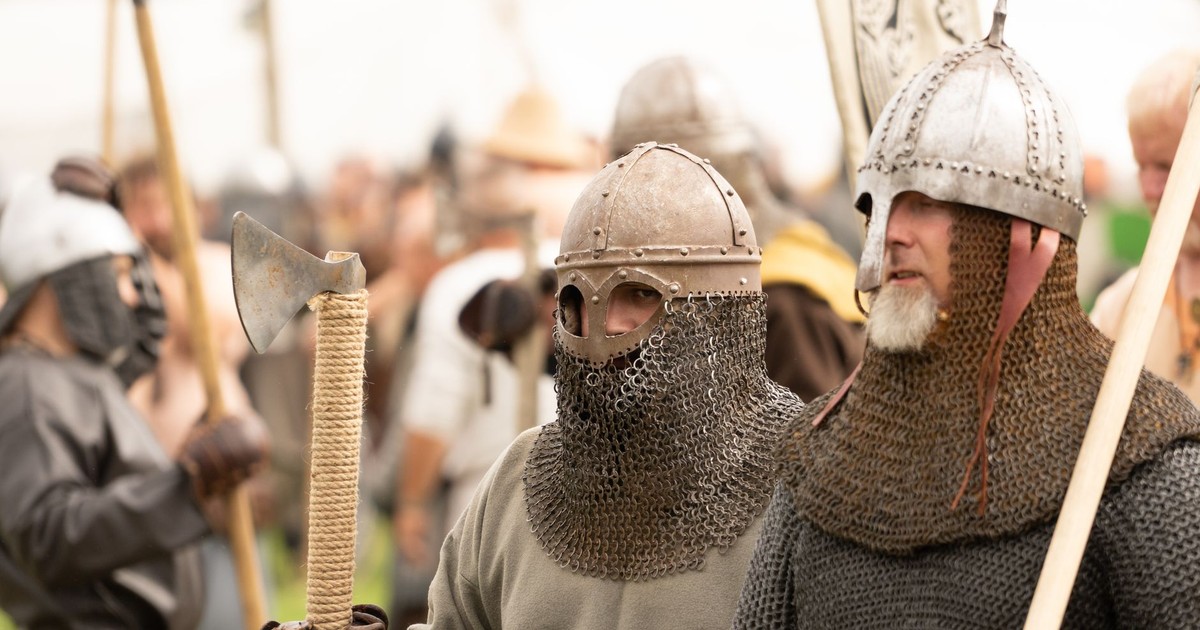
September 17, 1787 saw delegates at the Constitutional Convention in Philadelphia sign the U.S. Constitution, the document that would define American governance for centuries. Seventy-five years later, almost to the hour, on September 17, 1862, the Battle of Antietam became the bloodiest single day in American military history, with roughly 23,000 casualties. The document that guaranteed American freedoms and the single day that tested most violently whether those freedoms would survive share a date.
Antietam’s outcome gave Abraham Lincoln the political standing to issue the Emancipation Proclamation five days later, extending those Constitutional promises to people they had originally excluded. September 17 contains both the founding promise and the price paid for it.
15. March 14: Einstein’s Birthday and Stephen Hawking’s Death

Albert Einstein was born on March 14, 1879, in Ulm, Germany. On March 14, 2018, Stephen Hawking died in Cambridge, England, at 76. The physicist who produced the general theory of relativity and the physicist who spent his career mapping the theoretical endpoints of that theory were connected, without any planning, by the same calendar date. Einstein arrived on March 14. Hawking left on it.
Physicists pointed out the coincidence immediately. March 14 is also Pi Day, given the date’s approximation of 3.14, which added yet another layer to what was already a genuinely strange alignment of scientific history.
16. April 4, 1949 and April 4, 1968: NATO Founded, Martin Luther King Jr. Killed

Martin Luther King Jr. was shot on April 4, 1968, at the Lorraine Motel in Memphis, Tennessee, while standing on the balcony outside his room. He died at a Memphis hospital one hour later. The same date, nineteen years earlier, had carried an entirely different kind of history.
NATO, the Western military alliance that reshaped global security for the rest of the century, was formally signed into existence on April 4, 1949. King was killed on April 4, 1968. The date holds both the architecture of Cold War geopolitics and the wound of the civil rights movement’s most devastating blow.
17. July 4, 1776 and July 4, 1826: Declaration Signed, Founders Die

The Declaration of Independence was signed on July 4, 1776. Both Thomas Jefferson and John Adams died on July 4, 1826, the document’s 50th anniversary. Covered in more detail in entry #1, the July 4 date earned its reputation as America’s most historically loaded calendar square across a single half-century. The men who created the country’s founding text were present for its beginning and gone by its first golden anniversary, on the same date.
18. August 24, 79 AD and August 24, 1814: Pompeii and the Burning of Washington

On August 24, 79 AD, Mount Vesuvius erupted and buried the Roman city of Pompeii under volcanic ash, killing thousands and preserving an entire civilization in frozen detail. Exactly 1,735 years later, on August 24, 1814, British forces marched into Washington, D.C., and set fire to the White House, the Capitol, and other government buildings during the War of 1812. Two cities, two very different kinds of destruction, on the same August date across nearly two millennia.
The burning of Washington remains the only time since the Revolutionary War that a foreign power has captured and occupied the U.S. capital. The date it happened shares an anniversary with the destruction of one of the ancient world’s most complete cities.
19. October 14: The Battle of Hastings and the Cuban Missile Crisis Photographic Discovery

William the Conqueror defeated King Harold II at the Battle of Hastings on October 14, 1066, reshaping the English language, its legal system, and its social order in ways still felt today. On October 14, 1962, a U-2 spy plane photographed Soviet missile installations in Cuba, triggering the Cuban Missile Crisis, thirteen days that brought the world closer to nuclear war than at any other point in history. Same date, nearly a full millennium apart, two events that each redirected the course of civilizations.
20. April 19: Oklahoma City Bombing and the Warsaw Ghetto Uprising
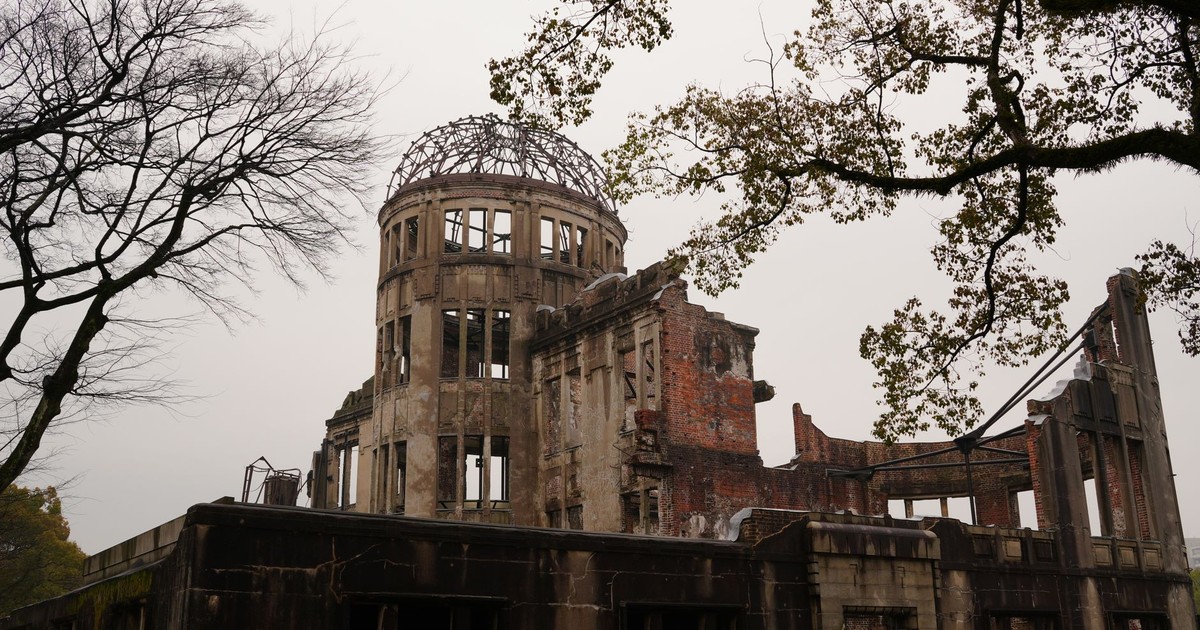
April 19, 1943 marks the beginning of the Warsaw Ghetto Uprising, when Jewish fighters inside the sealed Warsaw ghetto launched an armed resistance against Nazi liquidation efforts. It was one of the most significant acts of Jewish armed resistance during the Holocaust. Fifty-two years later, on April 19, 1995, a truck bomb exploded outside the Alfred P. Murrah Federal Building in Oklahoma City, killing 168 people in the deadliest domestic terrorist attack in U.S. history at that time.
The date was chosen deliberately by the Oklahoma City bombers, who saw it as significant for their own ideological reasons. The overlap with the Warsaw Uprising is not causally connected, but April 19 carries an unusual accumulation of historical weight regardless.
21. November 9: The Berlin Wall Falls and Kristallnacht

November 9, 1989 is one of the most joyful dates in modern European history: the fall of the Berlin Wall, a live broadcast moment of East Germans flooding through checkpoints while guards stood down. But November 9, 1938 was the date of Kristallnacht, the “Night of Broken Glass,” when Nazi forces and civilian mobs across Germany and Austria destroyed over 7,000 Jewish businesses, burned 1,400 synagogues, and killed at least 91 Jewish people.
The date’s dual identity is a constant source of reflection in Germany. November 9 holds the nadir of 20th-century fascism and the triumphant crack in the Cold War’s concrete on the exact same calendar date, fifty-one years apart. Germans observe both, every single year.
22. January 28: Space Shuttle Challenger and a Warning Nobody Heeded
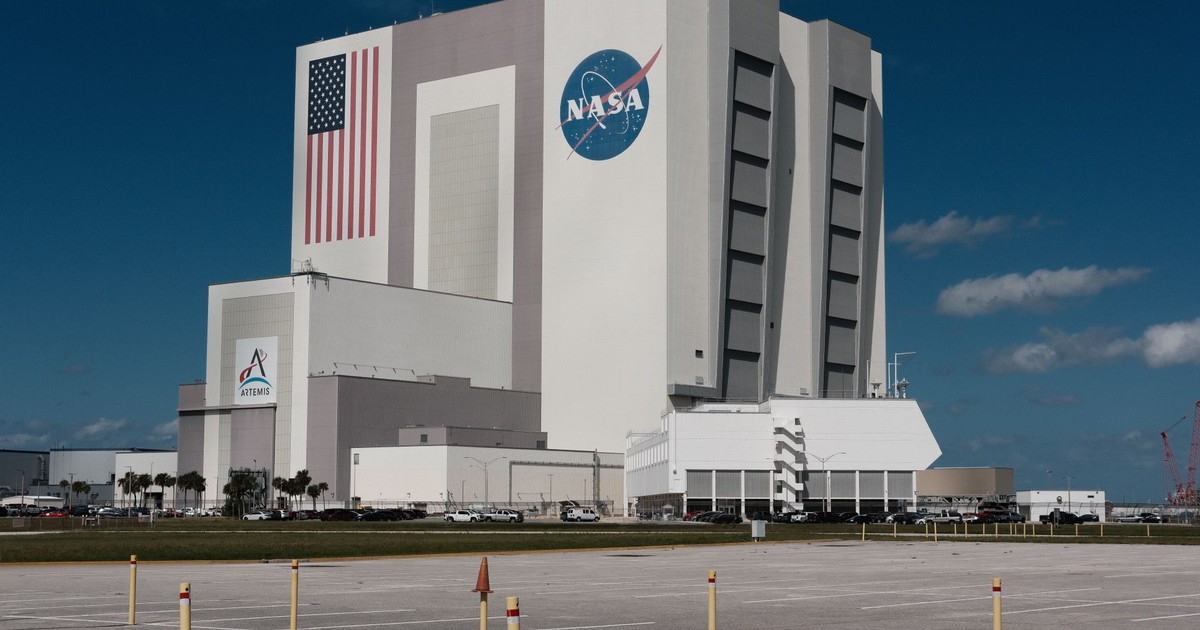
January 28, 1986 is the date the Space Shuttle Challenger broke apart 73 seconds after launch, killing all seven crew members aboard. The disaster was broadcast live on television and watched by schoolchildren across the country because teacher Christa McAuliffe was on board. What the date also carries is a grim continuity: the night before the launch, engineers at Morton Thiokol had raised urgent concerns about the O-ring seals in cold temperatures. Those concerns were overruled.
The date became a landmark in the reckoning over institutional decision-making and the price of ignoring warning signs. Later investigations documented how preventable the disaster was. That knowledge sits alongside the image of the exhaust plume forking in two, and neither cancels out the other.
23. June 28: Archduke Franz Ferdinand Assassinated and the Treaty of Versailles Signed

According to History.com, Archduke Franz Ferdinand of Austria was assassinated in Sarajevo on June 28, 1914, setting off the chain of alliances that dragged the world into World War I. Five years later, on June 28, 1919, the Treaty of Versailles was signed, formally ending that same war. The date that lit the fuse and the date that signed the peace settlement are identical on the calendar.
The Germans were forced to sign the treaty in the Hall of Mirrors at the Palace of Versailles. June 28 holds both the spark that started the deadliest conflict the world had ever seen and the document that, by most historians’ assessment, made the next one all but inevitable.
24. July 16: The Trinity Test and the Apollo 11 Launch

July 16, 1945 saw the first successful detonation of a nuclear device, the Trinity test in the New Mexico desert, marking the moment humanity acquired the capacity to destroy itself on a civilizational scale. Twenty-four years later, on July 16, 1969, Apollo 11 launched from Kennedy Space Center in Florida, carrying Armstrong, Aldrin, and Collins toward the Moon. The date that demonstrated humanity’s most destructive potential and the date that demonstrated its most ambitious aspiration are the same.
In 1945, that outer limit was terrifying. In 1969, watching the Saturn V rise on live television, it was transcendent. July 16 contains both feelings, and neither resolves the other.
25. September 1: Germany Invades Poland and the First Day of School for Millions
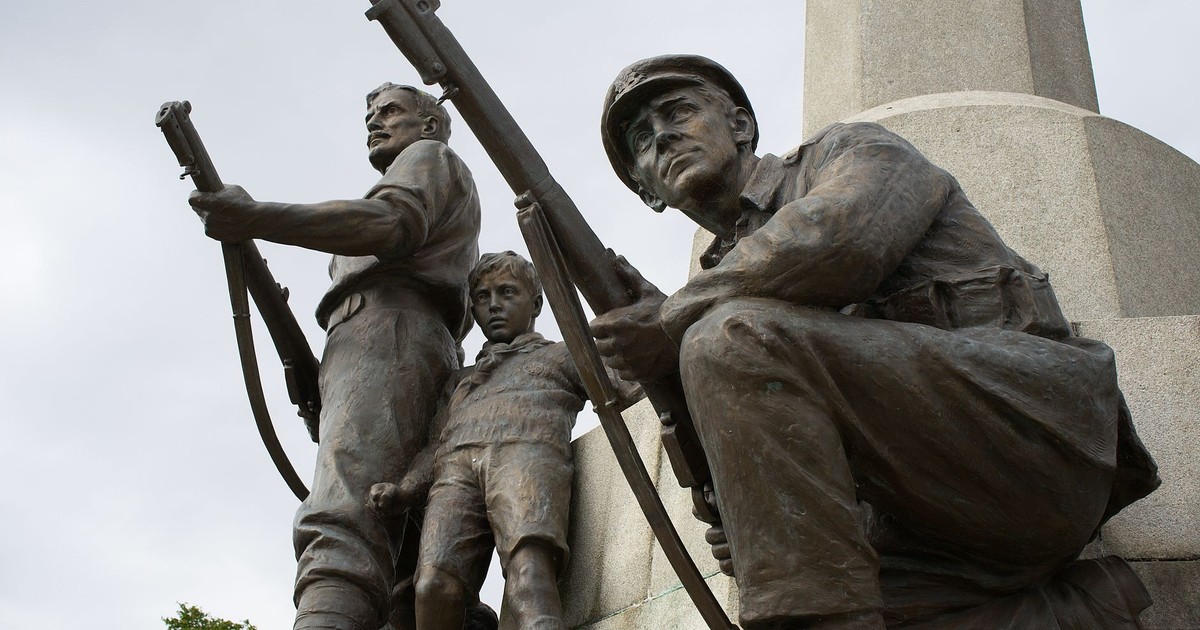
September 1, 1939 is the date Germany invaded Poland, beginning World War II in Europe. Within hours, cities were under bombardment. Within days, Britain and France had declared war on Germany. Across much of the Western world, September 1 is simultaneously one of history’s darkest dates and the date most permanently associated with the start of the school year, children carrying new backpacks on the same square that carries the opening hours of history’s most destructive war.
The contrast is less irony than it is a reminder that the calendar imposes no emotional coherence. The same date simply keeps arriving, indifferent to what it has already witnessed.
26. October 29: The Stock Market Crashes and the Internet Goes Live

October 29, 1929 was Black Tuesday, the single worst day of the Wall Street Crash that triggered the Great Depression, wiping out billions in market value and setting off a decade of economic catastrophe. Exactly sixty years later, on October 29, 1989, the first message was sent over ARPANET between UCLA and Stanford Research Institute, a transmission widely recognized as the birth of the modern internet. The date that cratered the financial world and the date that eventually rewired it share October 29.
The 1989 message was supposed to read “login.” The system crashed after the first two letters, “lo.” In retrospect, the date had form.
27. April 23: Shakespeare’s Birthday and Death Day

William Shakespeare was born on April 23, 1564, in Stratford-upon-Avon, England, or at least that’s the accepted date, drawn from parish records of his baptism three days later. He died on April 23, 1616, exactly 52 years to the day after his birth. The man who gave the English language more words and phrases than any other single writer arrived and departed on identical calendar dates.
It’s the kind of biographical symmetry that feels too neat to be accidental, which is precisely why historians have examined it so carefully. April 23 is also St. George’s Day, the patron saint of England. Shakespeare, apparently, had exquisite timing even about the things he couldn’t control.
28. August 6, 1945 and August 6, 1965: Hiroshima and the Voting Rights Act

August 6, 1945 is the date the United States dropped an atomic bomb on Hiroshima, Japan, killing between 70,000 and 80,000 people immediately and tens of thousands more in the months that followed. Twenty years later, on August 6, 1965, President Lyndon B. Johnson signed the Voting Rights Act into law, one of the most transformative pieces of civil rights legislation in American history, prohibiting discriminatory voting practices that had disenfranchised millions of Black Americans.
The same date holds both the most destructive single act of war in history and one of the most affirmative acts of democratic expansion in the 20th century. It doesn’t resolve into a lesson. It just sits there, August 6, carrying everything.
What the Calendar Can’t Explain

Running through all 28, what becomes clear is that the calendar genuinely doesn’t care. It has no preference for poetry or irony. It doesn’t arrange Adams and Jefferson to die together on the 50th Fourth of July because it has any agenda. These dates collide by pure arithmetic, and the human brain does the rest. Pattern recognition is, after all, what we do best and most compulsively.
But that doesn’t make these coincidences meaningless. The November 9 that holds both Kristallnacht and the fall of the Berlin Wall is genuinely harder to hold in your head once you know both facts. The same date that produced the worst the 20th century could offer in Germany also produced its most hopeful rupture. That tension is real. Living with both on the same anniversary, as Germans do every year, requires a kind of emotional honesty that the calendar demands without asking permission.
The dates don’t explain each other. They don’t illuminate a grand design. What they do, reliably, is remind you that time moves in a single direction and takes everything with it: the terrible and the extraordinary, often in the same week, sometimes on the same morning, occasionally within hours of each other. History is less a sequence of separate chapters than one long run-on sentence, and the dates where it folds back on itself are the moments where that becomes impossible to ignore.
Disclaimer: This information is not intended to be a substitute for professional medical advice, diagnosis, or treatment and is for information only. Always seek the advice of your physician or another qualified health provider with any questions about your medical condition and/or current medication. Do not disregard professional medical advice or delay seeking advice or treatment because of something you have read here.
AI Disclaimer: This article was created with the assistance of AI tools and reviewed by a human editor.