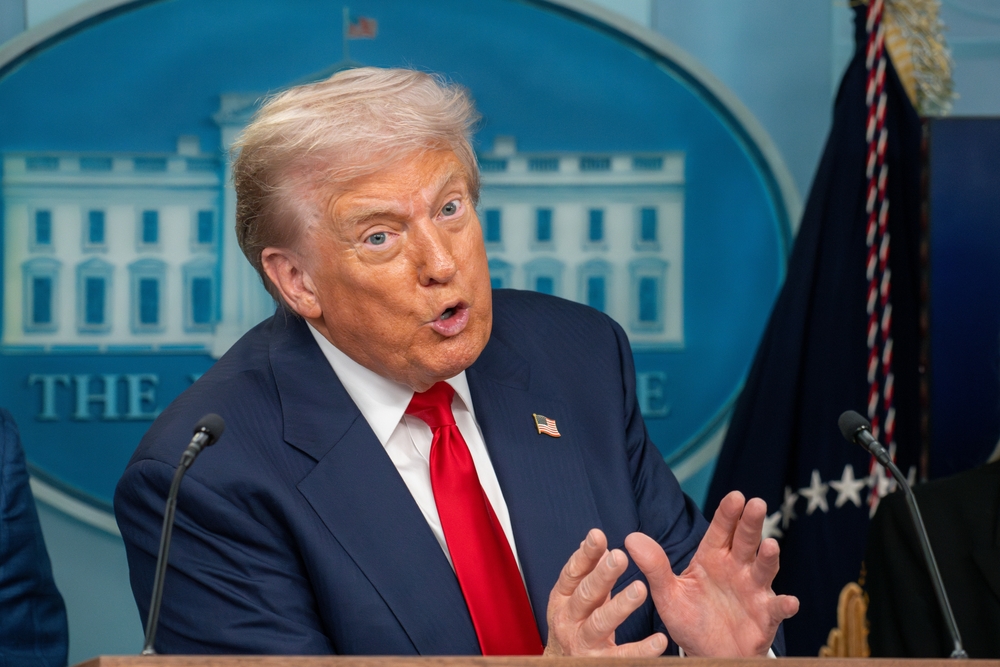

Donald Trump turned 79 last June and will hit 80 on June 14, 2026. As the oldest man ever inaugurated as president approaches that milestone, public attention on one question has sharpened considerably: how sharp is he, really? After his physical at Walter Reed National Military Medical Center on May 26, the White House released a three-page medical report. Trump, as is his custom, got to the headline before anyone else did. He posted on Truth Social that he had aced a cognitive test, scored a “perfect 30 out of 30, considered ‘extreme intelligence,'” and suggested that all future presidents and vice presidents should be required to take the same “high difficulty” exam.
The claim landed everywhere at once. By the following morning, doctors were pushing back, fact-checkers were mobilizing, and X was plastering community notes onto viral clips of the post. The problem wasn’t the score itself. It was what Trump said the score meant, and what the test actually measures.
Those two things are not the same, and the difference matters far more than the number.
What the Trump Cognitive Test Actually Was
The test Trump took at Walter Reed is the Montreal Cognitive Assessment, known as the MoCA – a widely used screening tool for detecting cognitive impairment, developed by Dr. Ziad Nasreddine in 1996 in Montreal, Quebec. It is not a measure of intellect, problem-solving prowess, or general intelligence. That is not an interpretation or a political opinion. It is the stated purpose of the tool.
The MoCA assesses attention and concentration, executive functions, memory, language, visuoconstructional skills (the ability to perceive and reproduce visual information), conceptual thinking, calculations, and orientation. In practice, the tasks involved include drawing a clock face with hands set to a specific time, copying a simple cube, naming pictures of animals, repeating a short list of words, and doing basic arithmetic. It typically takes 10 to 15 minutes to complete.
In medical practice, a score of 26 or higher is considered normal, meaning no signs of cognitive impairment. A score of 30 out of 30 does not put someone in an elite tier. It puts them in the same bracket as any cognitively healthy adult who walks through a doctor’s door. According to Nasreddine, roughly 10% of test takers achieve the same perfect score Trump has been boasting about.
What Trump Said vs. What the Doctors Said

In his Truth Social post, Trump wrote that he scored “a perfect 30 out of 30, considered ‘extreme intelligence,'” declaring this his fourth such perfect result – “120 correct answers out of 120 questions asked.” He also claimed the test was of “high difficulty” and that no other U.S. president had ever taken such an assessment.
On that second point, the public record offers no evidence to support or disprove the claim about other presidents. On the first point, the medical community was rather direct.
CNN medical analyst Dr. Jonathan Reiner noted that Trump had now been administered the dementia screening test four times, clarified that the MoCA is specifically a dementia screening tool and not an IQ assessment, and stated that a score of 26 or higher constitutes normal cognitive performance, not evidence of exceptional intelligence. On Trump’s “high difficulty” framing, Reiner was blunt: “None of the questions are high difficulty.” He also pointed out that after taking the same test four times, with questions that don’t change significantly between versions, “it’s probably not that difficult to pretty easily get through it.”
The MoCA’s creator has been equally clear. Nasreddine has stated publicly that the test was never intended to measure IQ or intelligence, adding: “There are no studies showing that this test is correlated to IQ tests. The purpose of it was not to determine persons who have a low IQ level. So we cannot say that this test reflects somebody’s IQ.”
The White House’s own report was considerably more measured than Trump’s post. Dr. Sean Barbabella’s memo said Trump’s cognitive function was “within normal limits” and noted the perfect 30 out of 30 result. “Within normal limits” and “extreme intelligence” do not occupy the same medical space.
The Full Physical: What the Report Actually Said
The cognitive test was only one element of a broader examination. Barbabella’s report declared that Trump “remains in excellent health, demonstrating strong cardiac, pulmonary, neurological, and overall physical function.” A 3D scan of the president’s heart showed no abnormalities.
But the report also contained details that received considerably less fanfare. Trump had gained 14 pounds since his April 2025 physical, bringing his weight to 238 pounds – near the threshold of clinical obesity. Barbabella said he provided guidance on diet, recommended low-dose aspirin, and advised increasing physical activity and losing weight.
The report also noted swelling in the president’s lower leg, attributed bruising on Trump’s hands to “consistent with minor soft tissue irritation related to frequent handshaking,” and flagged the bruising as occurring in the setting of aspirin use for cardiovascular prevention. That explanation has attracted scrutiny from independent physicians, who note the bruising appears on both hands, including the non-dominant left, which complicates the handshaking explanation. The official account is medically plausible; it has simply not been independently verified.
Trump, who has mused publicly about friends who take what he calls “the fat drug,” has said he has not taken obesity medication, adding “I probably should.” No weight management medication appeared in the official report.
A History of Perfect Scores and Pointed Claims
This is not the first time the Trump cognitive test has become a news story in its own right. Trump’s former physician Dr. Ronny Jackson confirmed he administered the Montreal Cognitive Assessment in 2018, and current physician Dr. Sean Barbabella confirmed administering it again in 2025. Both said he scored “30 out of 30.”
In 2020, Trump famously described the test’s memory portion during a Fox News interview, recounting the “person, woman, man, camera, TV” word-recall sequence as though it were an extraordinary feat of memory. Many medical professionals found this framing odd – not because the exercise was difficult, but because it is a standard screening task. A community note circulated widely on social media at the time reading: “The MoCA test Trump refers to is a 10-minute screening tool for mild cognitive impairment that people with normal cognition easily pass.”
Trump has also claimed the latest result marked his fourth perfect score. That claim requires context. It is not always clear from public records whether Trump referred to separate new MoCA administrations or whether all claimed tests were full MoCAs or different cognitive instruments entirely.
What is clear is the pattern: each new exam becomes its own political performance, with the test framed as evidence of something it was never designed to confirm.
Why the Score Tells Only Part of the Story
Conflating “no signs of decline” with “extreme intelligence” distorts public understanding of what cognitive decline actually is and how it gets detected. The MoCA can only answer one question: does this person show signs of early cognitive impairment? A score above 26 answers that question with a “no.” That is genuinely reassuring, and worth saying plainly. A 79-year-old approaching his 80th birthday who passes a cognitive screening cleanly is someone whose brain is, by this one measure, working as it should.
But that is not the same as acing a difficult test. The MoCA was designed for clinicians who need a fast, reliable way to flag potential problems in patients – drawing a clock, naming animals, doing simple subtraction. Passing it cleanly confirms the absence of something. It does not confirm the presence of anything exceptional.
When the president of the United States frames a dementia screening as proof of extraordinary intellect, it also, perhaps unintentionally, trivializes the real concern the MoCA was built to address. A test designed to catch early Alzheimer’s markers is not a high-difficulty cognitive workout. Treating it like one makes the achievement sound grander than it is, and the test sound more demanding than it is.
The medical community has been consistent on this for years. A perfect score indicates no errors on the screening instrument, but clinicians emphasize that the result is interpreted in context and is not considered evidence of exceptional intelligence. That’s not a political judgment. It’s a clinical one.
What Trump’s Scores Actually Tell Us
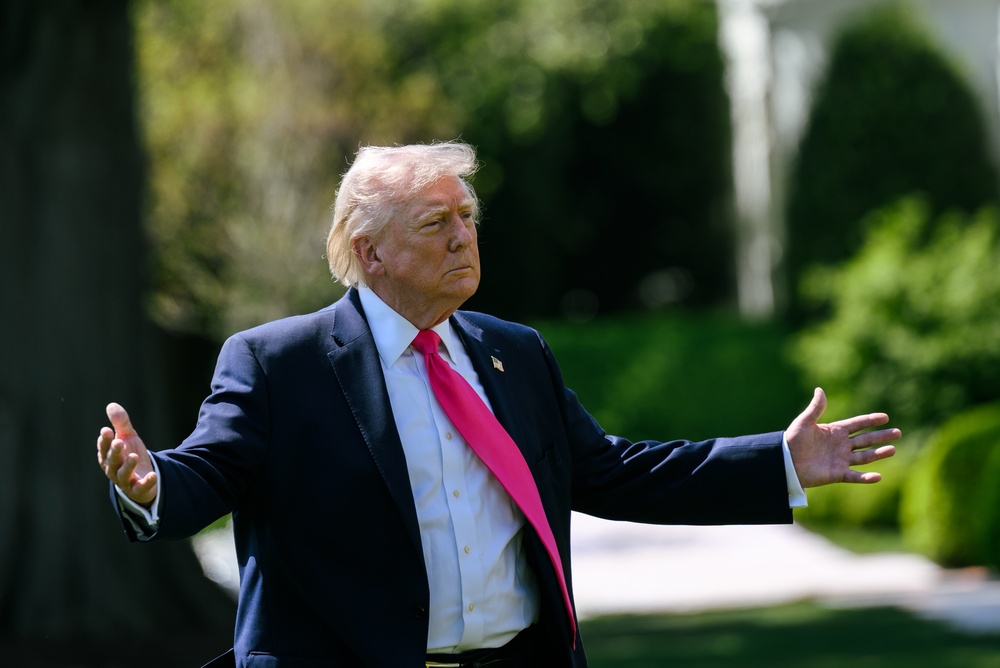
Taken at face value, a 30 out of 30 on the MoCA in 2026 is meaningful in a limited but real way. Trump will turn 80 in June 2026. He is the oldest man to be inaugurated as president. In that context, a clean pass on a dementia screening is relevant public information. It does not confirm he has the cognitive stamina for the demands of the presidency in a comprehensive sense, because no 10-minute paper-and-pencil test can do that. What it does confirm is that he does not, as of late May 2026, show signs of early cognitive impairment by the standards of this particular instrument.
Reiner put the broader concern plainly: he said he is shocked that Trump’s advisers are not urging him to stop boasting about an assessment as simple as drawing hands on a clock. The irony is real. The more Trump frames the test as a high-stakes proof of brilliance, the more he invites scrutiny of its actual simplicity, which in turn makes the achievement sound less impressive, not more.
The broader health picture from the May 2026 report is one of an aging man who is, by official accounts, in good functional health with several conditions being actively managed. Chronic venous insufficiency in the legs. Weight that climbed 14 pounds in a single year. Bruising that is officially attributed to aspirin and handshakes. A physician who recommended more exercise and a better diet. And a cognitive score that confirms no dementia markers, which is good news presented, by the man himself, as something considerably grander.
Read More: 25 Signs of Alzheimer’s You Should Never Ignore
The Part Nobody Quite Says Aloud
The reason Trump’s cognitive test keeps becoming a news event is not really about the test. The test is a stand-in for a question the public has been asking in various forms since 2015, which became considerably more pointed after Joe Biden’s decline played out publicly in the final year of his presidency: can we trust what we are told about the cognitive fitness of the people who hold the highest office?
That question doesn’t have a clean answer. For more than a decade, Trump, his doctors, and his aides have issued terse, vague, or notably rosy statements about the president’s health. Trump’s first-term physician said in 2015 that Trump would be “the healthiest individual ever elected to the presidency.” A later physician said that with a better diet, Trump could have lived to be 200 years old. The claim of “extreme intelligence” based on a dementia screening fits neatly into that tradition.
What This Actually Means
A dementia screening is not a window into a person’s stamina, judgment, or capacity for sustained complex reasoning under pressure. Those things don’t fit into a 30-point checklist administered in ten minutes. What the MoCA offers is a baseline, a check for something specific and serious. On that narrow question, Trump appears to be fine.
The more interesting question the whole episode raises is one that applies well beyond the president: how do we, as a public, learn to read medical claims accurately when they are being shaped by people with every incentive to spin them? “Normal cognitive function” is good news. It’s not a trophy. Knowing the difference between those two things is actually useful, whether you’re evaluating a president’s health report or your own aging parent’s recent doctor visit. A clean result on a screening test means the alarm didn’t go off. It doesn’t mean the alarm was difficult to silence.
Whether “fine by the MoCA’s standards” is the same as “fit for the presidency” is a question the test was never designed to answer, no matter what gets posted on Truth Social.
Disclaimer: This information is not intended to be a substitute for professional medical advice, diagnosis, or treatment and is for information only. Always seek the advice of your physician or another qualified health provider with any questions about your medical condition and/or current medication. Do not disregard professional medical advice or delay seeking advice or treatment because of something you have read here.
AI Disclaimer: This article was created with the assistance of AI tools and reviewed by a human editor.