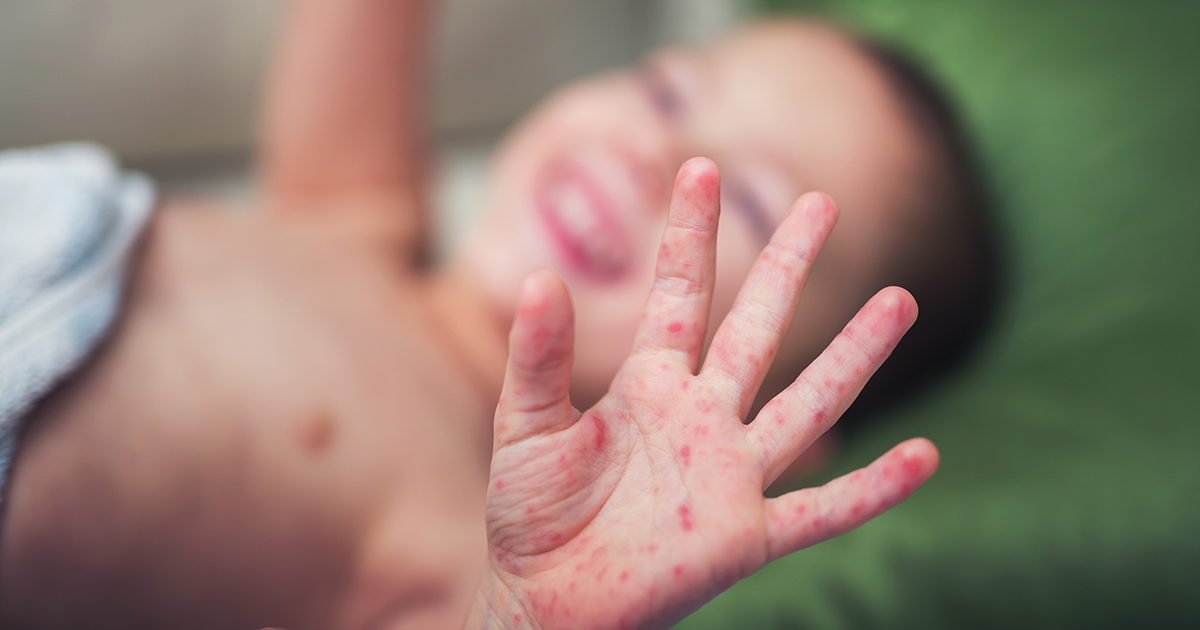

The year 2025 started with 59 confirmed measles cases across the entire country. January 2025 started with a single infected traveler in a close-knit, undervaccinated community in Gaines County, West Texas. By April of that year, the CDC had logged 800 confirmed cases nationally. By the time the calendar flipped to 2026, that number had climbed to 2,288, the highest annual total since 1991. And 2026 is on track to be worse.
As of June 18, 2026, 2,104 confirmed measles cases have been reported in the United States in 2026 alone. That figure does not include the full 18 months of unbroken transmission that preceded it. From January 1, 2025 through June 18, 2026, there have been 4,392 confirmed measles cases in the United States. A disease that was declared eliminated from this country in 2000 has now spent more than a year and a half spreading continuously across American communities.
The geography, the demographics, the school quarantine letters, the hospital beds occupied by children sick from something a two-dose vaccine prevents with 97% effectiveness – all of it points to the same question. More than 2,000 cases have been counted in 2026 alone, making it one of the two worst years for measles in the U.S. since 2000. How it got here, and what it will take to stop it, is the story the numbers are telling.
How the Outbreak Grew: From Texas to 41 States
The 2025 U.S. measles outbreak began in early January, seeded by an infected traveler in a close-knit, undervaccinated community in West Texas. From there, the virus spread across at least three states, including Texas, New Mexico, and Oklahoma, among populations with historically low MMR uptake. The source of the original introduction was never conclusively identified.
By mid-April 2025, 85 patients had been hospitalized, and three had died, the first measles deaths in the United States in over a decade. Air travel and domestic tourism quickly distributed the virus to additional states, illustrating how a single imported case can ignite nationwide spread when local protection is uneven. The West Texas outbreak was contained within its epicenter just long enough to seed a dozen others.
In 2025, 48 outbreaks were reported, with 90% of confirmed cases being outbreak-associated. For comparison, 16 outbreaks were reported during 2024 and only 69% of cases were outbreak-associated. Measles stopped behaving like a disease driven primarily by imported cases and started behaving like one with genuine community-level traction. In 2026, 30 new outbreaks have been reported, and 93% of confirmed cases are outbreak-associated, 613 from outbreaks starting in 2026 and 1,344 from outbreaks that started in 2025.
The Outbreaks That Defined the Spread

Two outbreaks in particular shaped the trajectory of this crisis. The first was in Spartanburg County, South Carolina, where the virus arrived in late September 2025, took hold in private schools and churches in the state’s Upstate region, and exploded. Centered in northwestern Spartanburg County, the measles outbreak was the fastest-growing the U.S. had seen in decades. Public health officials confirmed more than 650 cases in January alone, and the outbreak quickly eclipsed the 2025 outbreak in West Texas that sickened at least 762 people and killed two school-age children.
The public health department worked to contain the spread, sending nearly 2,300 quarantine letters, making more than 1,670 case investigation calls, and working across seven school districts to quarantine 874 students. The response was extraordinary by any measure, and it was nearly derailed by something as ordinary as winter break. Nobody was available at most schools to provide the information health officials needed. This communication gap between the South Carolina Department of Public Health and schools in Spartanburg County resulted in delays quarantining people who were at risk of unknowingly spreading the highly contagious disease.
On April 26, 2026, South Carolina’s Department of Public Health declared the measles outbreak in the Upstate region over, with 997 confirmed cases. Ending it required a genuine community-level effort: thousands of MMR vaccine doses were administered during the outbreak, with doses increasing 94% in Spartanburg County and 82% in the Upstate region compared to the same period a year earlier.
The second major outbreak was playing out simultaneously along the Utah-Arizona border. Most of Arizona’s cases have occurred along the Utah border, with Mohave County recording 214 cases since August 2025. In Utah, state officials confirmed 405 measles cases, with 98 recorded in just three weeks. Roughly half of the state’s cases occurred in the Southwest Utah health district, home to several unvaccinated communities of Fundamentalist Latter Day Saints.
Who Is Getting Sick

The majority of cases are among children and adolescents, with 26% of cases in children under 5 years and 41% among individuals aged 5 to 19 years. Very young children face the highest stakes. In severe cases, measles causes children’s brains to swell, leading to seizures, deafness, cognitive disability, and possibly death. About 1 in every 20 children with measles also contracts pneumonia, the top cause of pediatric death from measles.
About 92% of cases so far this year were in people who were unvaccinated or whose vaccination status was unknown. That figure has been remarkably consistent across both 2025 and 2026. Of the 997 South Carolina cases since late September 2025, about 91% were among children and teens. In Arizona, 97% of cases occurred in people who were unvaccinated.
Measles is the most contagious respiratory virus known to medicine. A single infectious person can potentially infect 18 healthy others. The virus can also be invisible for days before a person knows they’re carrying it. A person is contagious four days before and after a rash begins, meaning someone can spread measles before they know they’re infected. The virus can linger in the air for up to two hours after an infected person leaves a room. That combination, high contagion and pre-symptomatic spread, is exactly why measles found fertile ground wherever vaccination rates had dropped below protective thresholds.
The Vaccination Gap Behind Measles Outbreaks
When more than 95% of people in a community are vaccinated, most people are protected through herd immunity. According to the CDC, vaccination coverage among U.S. kindergartners has decreased from 95.2% during the 2019-2020 school year to 92.5% in the 2024-2025 school year, leaving approximately 286,000 kindergartners at risk during the 2024-2025 school year.
That 2.7 percentage point drop might look modest in isolation. It isn’t. According to a February 2026 report from the Common Health Coalition, a 1% decrease in the childhood MMR vaccination rate could cause 17,000 measles cases, 4,000 hospitalizations, and 36 preventable deaths each year. National averages also obscure the pockets where coverage has fallen far more steeply. Several West Texas counties at the center of the 2025 outbreak carried kindergarten two-dose MMR coverage well below the 90% threshold for multiple consecutive years: Briscoe County at 80%, Childress County at 70.5%, and Dawson County at 88.1%.
At local levels, vaccine coverage rates may vary considerably, and pockets of unvaccinated people can exist in states with otherwise high vaccination coverage. When measles gets into communities of unvaccinated people in the United States, outbreaks can occur. The national number gives a false sense of security. County-level data consistently tells a more alarming story.
For parents wondering what to do right now: the MMR vaccine is a two-dose series. Receiving two doses provides 97% effectiveness. Even one dose provides 93% protection. Children who have received only one dose, or whose vaccination history is uncertain, should talk to their pediatrician about completing the series, particularly ahead of summer travel.
Read More: 8 Biblical Plants That Were Actually Used as Ancient Remedies (and they worked)
What “Elimination Status” Means and Why the U.S. Could Lose It
The United States achieved measles elimination status in 2000 after decades of high MMR vaccination coverage. In public health terms, “elimination” means that a disease’s continuous, endemic spread within a region has ceased for at least 12 months. While it doesn’t necessarily mean zero cases, it does mean that local chains of transmission have been interrupted.
Those chains have not been interrupted. These outbreaks put the United States at risk of losing elimination status if transmission of the same strain continues for 12 months uninterrupted. The regional picture is already worse. In November 2025, PAHO announced that the Region of the Americas has lost its verification as free from endemic measles transmission. That announcement came after Canada’s 2024-2025 outbreak was deemed to have re-established endemic transmission. The U.S. maintained its individual status at that review, but only just.
The review of the measles elimination status in the United States and Mexico will take place in November 2026, during PAHO’s regular annual Commission meeting. Public health experts and outbreak tracking bodies widely anticipate that the assessment will confirm the U.S. has lost the elimination status it has held since 2000, a 26-year achievement that served as one of the signature successes of American public health.
The CDC has warned state and local health departments that more measles cases are likely to come with summer travel. “With continued measles transmission in areas across North America and expected increases in international and domestic travel and large events during spring and summer, additional measles cases are anticipated in the coming months.”
Where Things Actually Stand

A child in Spartanburg County who had never been vaccinated sat in a classroom with other unvaccinated children. Their school closed for winter break. Health officials couldn’t reach families. Cases multiplied. 874 students were sent home on quarantine. Some spent 42 days out of school waiting to find out if they were infected, and then went back into the same conditions that produced the outbreak in the first place.
No single parent, school, or community is responsible for that. Measles requires near-universal participation to stay contained, and when coverage slips in enough places simultaneously, the virus finds every unprotected person with a precision that no other pathogen quite matches: the 9-month-old too young for the first dose, the child in a community where a trusted voice told their parents the vaccine wasn’t necessary, the teacher in a county where 30% of kindergartners aren’t fully immunized.
The MMR vaccine is not a new technology. It’s been in use since 1963 and has an extraordinary safety record across more than six decades of widespread use. Two doses, given at 12-15 months and again at 4-6 years, is the standard schedule. For any child or adult whose vaccination status is unclear, the simplest and most concrete step is checking in with a primary care provider. For families with summer travel plans, the CDC guidance is unambiguous: confirm your children are up to date before you go.
The elimination of measles from the U.S. was the result of sustained, unglamorous, decades-long work. Getting back there, if it’s still possible, starts in the same place it always did.
Disclaimer: This information is not intended to be a substitute for professional medical advice, diagnosis, or treatment and is for information only. Always seek the advice of your physician or another qualified health provider with any questions about your medical condition and/or current medication. Do not disregard professional medical advice or delay seeking advice or treatment because of something you have read here.
AI Disclaimer: This article was created with the assistance of AI tools and reviewed by a human editor.