

Emotionally strong women don’t have fewer problems than anyone else. They have a different relationship with the problems they do have. The difference shows up in daily habits, internal architecture, and instincts most people never build.
Emotional strength gets confused with toughness, stoicism, and the ability to hold it together in public. Women who actually possess it aren’t performing composure. They do the internal work of staying functional under pressure and grow from the experience rather than just surviving it.
These traits aren’t glamorous. No one builds a personal brand around high tolerance for discomfort or knowing how to sit with uncertainty. But these qualities separate women who are emotionally resilient from those who are simply waiting for things to get easier.
1. They Regulate Their Emotions Without Suppressing Them

The average person has two default settings under emotional pressure: blow up, or shut down. Emotionally strong women have figured out a third option: feel the thing fully and still choose how to respond to it.
A 2025 research review found that women engage in a broader range of emotion regulation strategies than men, including rumination, reappraisal, problem-solving, and acceptance. That broader repertoire builds real capacity to manage adversity without reverting to helplessness or avoidance. The anger is real. The grief is real. Neither one runs the whole show.
In practical terms, this comes through in conversations where most people would escalate. The woman who can say, “I need a few minutes before we continue this,” instead of either storming out or pretending everything is fine, is running a genuine skill.
2. They Know the Difference Between Empathy and Emotional Absorption

Being deeply attuned to other people’s feelings is a real strength. For many women, it comes with a shadow side: the tendency to take on other people’s emotional states as their own. A 2025 study drawing on data across 24 countries confirmed that women score higher than men in empathy across the lifespan. Emotionally strong women have that attunement, and they’ve also learned where their responsibility ends and someone else’s pain begins.
An emotionally strong woman can be the person you call when your marriage is falling apart at 11pm on a Tuesday. She’ll be fully present for that conversation. But she won’t lie awake at 3am absorbing your anxiety as if it were hers to solve.
The practical result is that she’s actually more useful in a crisis than someone who gets swept up in it. Her groundedness makes space for other people to fall apart safely.
3. They Don’t Treat Uncertainty as a Problem to Eliminate

Most people find uncertainty uncomfortable enough that they’ll choose a bad known outcome over an unclear good one. Emotionally strong women have a noticeably different tolerance for not knowing how things will turn out. They can sit in the unresolved middle of a situation without immediately reaching for a decision that will at least make the discomfort stop.
The Resilience in Midlife (RIM) Scale identifies five core structural dimensions of resilience: self-efficacy, family and social networks, perseverance, internal locus of control, and coping and adaptation. Research using the RIM Scale found that all five qualities require a willingness to keep moving without a clear map. Women who score high on these dimensions don’t love uncertainty, but they’ve stopped treating it as an emergency.
In real life, this looks like staying in a job transition long enough to find the right next step rather than grabbing the first offer out of desperation. It looks like sitting in the space after a relationship ends without immediately filling it with something new.
4. They Build Their Self-Worth on Internal Ground

A woman who is emotionally strong doesn’t stop caring about how she’s perceived. But her sense of whether she’s doing okay doesn’t hinge on external approval. She has a working sense of her own value that can survive a bad performance review, a rejection, or a week when nothing goes right.
Carol Ryff’s widely used model of psychological well-being identifies six key dimensions of flourishing: self-acceptance, personal growth, autonomy, environmental mastery, positive relations with others, and purpose in life. Research applying Ryff’s framework to women found that females score higher than males in personal growth and positive relations with others, dimensions that are all internally oriented rather than dependent on someone else’s opinion. Building self-worth on internal ground is what allows a woman to take feedback without being destroyed by it.
The woman who genuinely doesn’t need your validation to feel solid in herself moves through rooms differently. She doesn’t perform. She doesn’t constantly seek reassurance. She’s just there, doing the thing.
5. They Seek Help Without Framing It as Failure

One of the more persistent myths about strength is that it means not needing anyone. Emotionally strong women have generally worked through enough of their own psychology to understand that asking for support is a form of self-efficacy, not a concession to it. They’ve been to therapy, or they talk honestly to people they trust, or they know exactly what they need and they go get it.
Resilience research consistently shows that social support and access to resources predict stronger outcomes across emotion regulation, adaptability, and self-efficacy. The women who consistently come out of difficult periods with their sense of self intact are almost always women who haven’t tried to do it alone. They’ve built networks, sought counsel, and recognized that using your resources is what a competent person does.
An emotionally strong woman doesn’t ask for help in a way that requires constant reassurance in return. She asks cleanly, accepts what’s offered, and doesn’t treat the person who helped her as though they now owe her permanent emotional management.
6. They Can Hold Two Contradictory Feelings at Once

Most people find it deeply uncomfortable to feel both sad and grateful, both angry and loving, both relieved and devastated at the same time. The instinct is to pick the feeling that makes the most sense in context and commit to it. Emotionally strong women have enough inner range to hold the contradiction without it destabilizing them.
You see this most clearly in complicated grief. The woman who can say honestly that she misses her difficult parent deeply AND that her relationship with that parent damaged her in real ways AND that she’s relieved, a little, that it’s over is doing something psychologically sophisticated.
A PMC study on resilience and positive affect found that highly resilient people reported greater post-crisis experiences of gratitude, interest, and love in the midst of negative emotions like anger, sadness, and fear. Emotional stability under stress isn’t about eliminating one feeling to make room for another. It’s about holding both without needing to resolve the tension.
7. They Know Which Battles Are Actually Worth Fighting

An emotionally strong woman doesn’t avoid conflict. She’s not a pushover and she’s not conflict-averse. But she’s selective in a way that the chronically reactive person never manages to be. She’s learned, usually through some expensive life experience, that not every slight requires a response, not every wrong needs to be corrected out loud, and not every difficult person needs to be argued into a better position.
This selectivity isn’t passivity. Genuine self-awareness and clear personal values let someone engage with the fights that matter and let the ones that don’t slide past. The woman who responds to everything with equal intensity has no way of signaling that some things matter more than others. The woman who picks her moments becomes very hard to dismiss when she does engage.
She also knows the difference between a problem that needs solving and a feeling that needs expressing. That distinction alone saves a remarkable number of relationships.
8. They Have a Clear and Honest Relationship With Their Own History

Emotionally strong women aren’t defined by what happened to them, but they’re also not pretending it didn’t happen. They’ve done enough looking-back to understand which old patterns still operate in their current life and which old wounds get triggered by present situations that don’t actually deserve that much heat. That’s not easy work. Most people avoid it indefinitely.
Self-awareness here means something specific: not just knowing your feelings, but understanding where they came from and whether your response to a current situation is proportionate to the current situation, or whether you’re actually responding to something that happened fifteen years ago.
The woman who has done this work doesn’t walk out of every conflict needing to tell you about her childhood. But she also doesn’t blow up at her partner over something that was never really about her partner to begin with.
9. They Adapt Without Losing Themselves

Change is the thing that separates people who are resilient in appearance from people who are resilient in practice. Emotionally strong women can shift significantly when circumstances demand it, whether that’s a major life transition, a career change, a loss, or the slow grinding work of a relationship moving through a hard stretch, without their core sense of who they are becoming unstable.
The Gender Socialization Theory, summarized in a 2025 cross-national review of gendered emotional expression, argues that societal norms encourage women to express emotions more openly from childhood, which builds the emotional range and vocabulary needed to process change as it happens rather than after the fact. Adaptability without loss of self comes from knowing what’s negotiable and what isn’t.
In practice this looks like the woman who moves to a new city for a partner, builds a life there that is genuinely hers, and would still be whole if the relationship ended. The version of her that existed before the change is recognizable in the one that exists now, even though almost everything around her is different.
10. They Process Grief All the Way Through
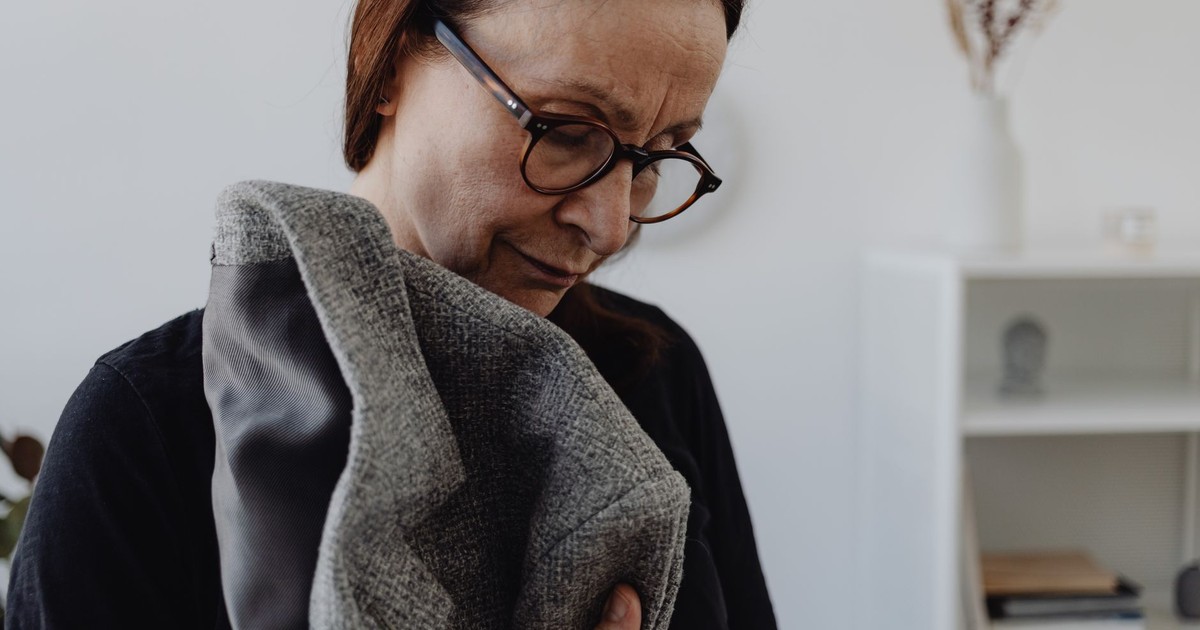
Most people manage loss rather than process it. They get to functioning and then stop there, keeping the unfinished grief at arm’s length because finishing it would require sitting with things that are genuinely painful. Emotionally strong women have a higher tolerance for staying in the uncomfortable middle of a grief process until they actually come out the other side.
A 2025 PMC narrative review on resilience and positive affect found that both optimism and gratitude acted as protective factors, where higher levels of either resource predicted a weaker association between stress symptoms and distress outcomes. But that protective effect is only possible after the loss has been felt in full. Women who skip the feeling and go straight to meaning-making tend to carry the unprocessed grief forward into everything else, where it shows up sideways: as disproportionate anger, or numbness, or a free-floating sadness that can’t be traced to anything specific.
Grief here doesn’t mean only bereavement. It means the loss of a relationship, of an identity, of a version of yourself you expected to become. Emotionally strong women grieve all of those things, not just the obvious ones.
Read More: These Strange Jobs Were Done Exclusively by Women — And Then Vanished
11. They Stay Curious About Themselves Without Being Self-Obsessed

Emotionally strong women remain genuinely curious about their own inner workings, not in a navel-gazing way but in the way of someone who understands that self-knowledge is a renewable resource, not a destination. They’re still finding out things about themselves at 45 that they didn’t know at 35. They still occasionally surprise themselves, sometimes not pleasantly.
The woman who keeps examining herself honestly is the one who keeps updating her understanding of herself rather than running a version of herself that stopped being accurate years ago. That takes a particular kind of courage: not the dramatic kind, but the ordinary, daily kind that says, “I might have gotten that wrong, and I want to know.”
This curiosity also makes her genuinely interesting to know. She’s not closed off. She’s not certain about everything. She’ll tell you about the thing she got wrong recently. That combination of self-awareness and openness is what makes emotionally strong women not just the person others turn to in a crisis, but the person others want to stay close to for the long haul.
What This Actually Means

The eleven traits above aren’t a checklist to measure yourself against and find wanting. Emotional strength isn’t binary and it’s not fixed. The woman who processes grief well might fall apart when it comes to tolerating uncertainty. The woman who is brilliant at holding contradictory feelings might still collapse her sense of self-worth into external feedback. These capacities develop unevenly, across time, through specific experiences that demand something particular from you.
What the research does make clear is that emotional strength is built, not given. It develops through practice, through honest self-examination, and, critically, through having been in enough hard situations to have learned something from them. The women who seem to hold themselves together with an unusual kind of grace have usually already been through the thing that most people are still afraid of. They know something specific about what survives. And that knowledge, more than any personality trait you’re born with, is the actual foundation of the whole thing.
Disclaimer: This information is not intended to be a substitute for professional medical advice, diagnosis, or treatment and is for information only. Always seek the advice of your physician or another qualified health provider with any questions about your medical condition and/or current medication. Do not disregard professional medical advice or delay seeking advice or treatment because of something you have read here.
AI Disclaimer: This article was created with the assistance of AI tools and reviewed by a human editor.