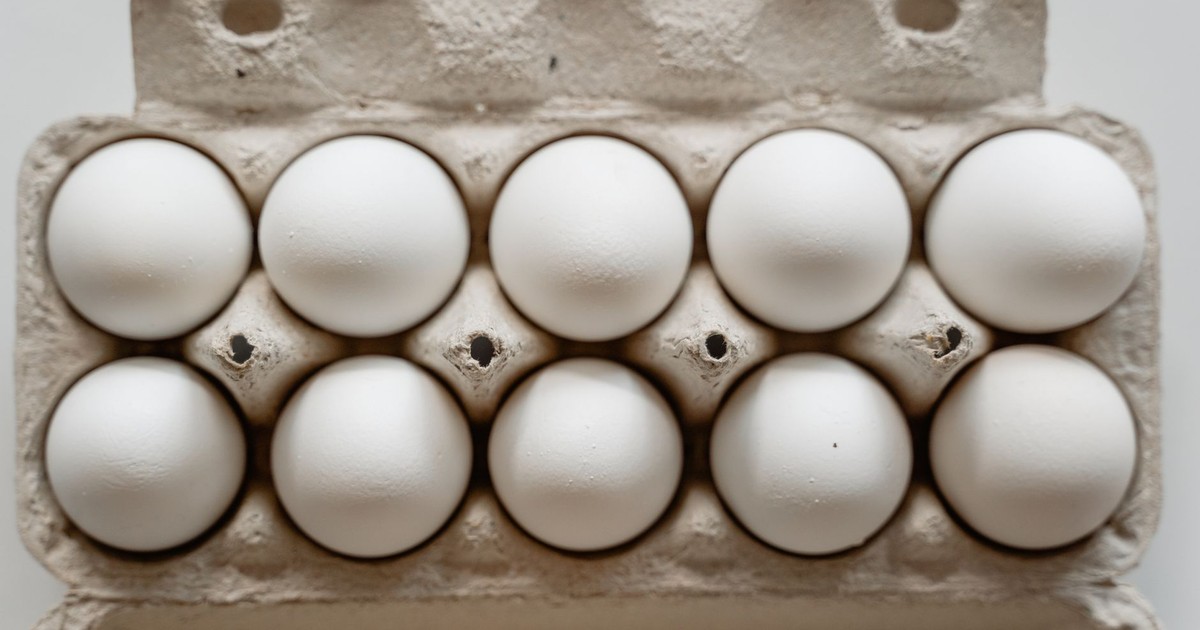

Midwest Poultry Services, L.P. is voluntarily recalling 1,589,577 dozen white shell eggs and brown cage-free shell eggs produced at its Texas farms – roughly 19 million individual eggs – after the company found a Salmonella contamination risk through internal environmental monitoring at two of its Texas facilities. No consumers reported getting sick. The company caught it first, through its own testing, before any cluster of illness pointed investigators back to the source. Many of those eggs are still sitting in refrigerators right now, stamped with best-by dates that read as perfectly fine.
The bacterium behind the recall is Salmonella Enteritidis, and it has a specific and unsettling trait. It can live inside a hen’s reproductive tract before the shell even forms around the yolk and white, which means contaminated eggs look, smell, and feel completely normal. There is no visual check, no smell test, no way to know from the outside. The only reliable protection is knowing exactly which cartons are affected – and that requires looking past the brand name on the front and checking the codes stamped on the side of the carton.
The eggs were distributed to retailers in six states across the South and Southwest. If you shop at Kroger or Brookshire’s and bought eggs in the past several weeks, there is a real possibility your refrigerator is holding recalled product. The brands involved go well beyond those two chains. Check the side of any egg carton you bought recently before cracking another one.
The Scope of the Recall

The eggs were produced and distributed from farms in Texas between June 6, 2026, and July 3, 2026, with sell-by or best-by dates between July 20, 2026, and August 17, 2026. That production and distribution window runs almost exactly through the lead-up to Fourth of July weekend – the peak period for families stocking vacation rentals, lake houses, and RV coolers, often without any awareness of a recall announced days later.
The recall covers nearly 1.6 million dozen eggs – approximately 19 million individual eggs – including white shell and brown cage-free varieties produced in Texas, with “sell by” or “best by” dates between July 20 and August 17, 2026. This includes medium, large, extra-large, and jumbo sizes across both white and cage-free brown eggs. The eggs went to retail grocery customers and foodservice operators alike, meaning the exposure extends beyond household refrigerators to restaurants and food-service kitchens across the affected region.
Midwest Poultry Services identified the issue through proactive environmental monitoring practices and root cause analysis on its two Texas farms, and is not distributing fresh eggs produced on those farms at this time. No new affected eggs are entering the supply chain. The concern is with eggs already purchased and sitting in homes.
Which States Are Affected

The recalled white-shell and brown cage-free shell eggs were sold at Kroger stores in Texas and Louisiana and Brookshire Grocery stores in Texas, Oklahoma, Arkansas, Louisiana, New Mexico, and Mississippi. The total distribution footprint covers six states: Texas, Oklahoma, Louisiana, Arkansas, New Mexico, and Mississippi, spanning some of the busiest summer road-trip corridors in the American South.
The eggs were sold under multiple brand names, including Kroger, Simple Truth, Brookshire’s, Country Morning, and Sunups, and were also sold at other smaller retail outlets. The variety of brand names means a shopper who never sets foot in a Kroger or Brookshire’s could still have affected eggs at home from an independent grocery or regional chain. The eggs were also shipped to foodservice customers in Texas, Oklahoma, and Louisiana.
CBS News reports on the affected brand names and states involved in the recall. The complete list of impacted UPCs is available in the FDA’s official recall notice. The brand on the front of the carton is a starting point – the plant code on the side is what confirms whether the eggs are recalled.
How to Identify Recalled Cartons
Brand names alone are not enough. Because the same eggs were packed under multiple labels, the FDA’s recall notice directs consumers to the codes stamped on the side of the carton, not the front label.
The recalled eggs will have an identifying code number printed on the left or right sides of the carton in date-coding ink only. Only codes P-1950 or 0840962 with a Julian Date between 157 and 184 printed on the side of the carton are recalled.
A Julian Date is a three-digit number representing the day of the year on which the eggs were packed. Day 157 corresponds to June 6, and day 184 corresponds to July 3 – the precise boundaries of the affected production window. Those numbers should appear alongside one of the two plant codes in date-coding ink, a type of print typically finer and less prominent than the brand labeling on the front.
Three things to check together: plant code P-1950 or 0840962 printed in date-coding ink on the left or right side of the carton; best-by dates between July 20 and August 17, 2026; and Julian Dates between 157 and 184. These codes appear across dozens of retail configurations, from standard 12-count cartons to 60-count packs, cage-free brown eggs, and bulk food-service trays.
Why Salmonella Enteritidis Is Particularly Dangerous in Eggs
Most foodborne pathogens contaminate eggs on the outside – through fecal contact with the shell during processing. Salmonella Enteritidis operates differently. It infects the hen’s ovaries directly, meaning the bacteria can be present inside the yolk before the egg is even laid. The shell forms around already-contaminated contents. That internal origin is why the bacterium has historically been so difficult to eliminate through standard egg-washing and refrigeration practices alone.
Most people infected with Salmonella experience diarrhea, fever, and stomach cramps. Symptoms typically begin anywhere from 6 hours to 6 days after exposure. Most recover without medical treatment after 4 to 7 days, and for healthy adults the illness is deeply unpleasant but self-resolving.
The infection is an organism which can cause serious and sometimes fatal illness in young children, frail or elderly people, and others with weakened immune systems. For those groups, an infection from an undercooked egg or an egg used in a sauce, dressing, or baked good that doesn’t reach a sufficient internal temperature can escalate quickly – from severe dehydration to hospitalization.
Contaminated eggs can appear completely normal. Soft-scrambled eggs, runny yolks, homemade Caesar dressing, hollandaise, egg-based smoothies, and batter tasted before baking all represent exposure risks. An internal temperature of 160°F in dishes containing eggs is what reliably kills the bacteria.
The Illness Picture So Far

No illnesses have been linked to the Midwest Poultry Services recall. Midwest Poultry Services confirmed it is not aware of any specific illnesses connected to its products. That said, salmonella illness is chronically under-reported: many people attribute it to a general stomach bug, recover without seeing a doctor, and are never tested or counted in official figures. The number of confirmed cases in any egg-related outbreak typically represents a fraction of actual infections.
The broader pattern of egg-linked recalls in 2025 shows why acting early matters. A June 2025 recall involving August Egg Company of Hilmar, California, ended with 134 confirmed illnesses and 38 hospitalizations, with one death reported in California – a final toll that was still climbing months after the initial recall. A separate outbreak linked to Country Eggs, LLC, which was declared over in November 2025, resulted in 105 confirmed illnesses across 14 states before it closed. In both cases, the confirmed numbers significantly understated the real scale of infection, because most people who get sick from Salmonella never get tested at all.
Given that many eggs with best-by dates as late as August 17, 2026, are still within their labeled freshness window, the monitoring period for the Midwest Poultry Services recall is not over. Health departments in the six affected states will continue tracking case data for any infections that match the bacterial profile identified at the Texas farms.
What the FDA Recall Notice Requires

Consumers should not eat the recalled eggs and should return them to the place of purchase for a full refund. That applies regardless of whether the eggs look or smell normal, regardless of how the consumer plans to prepare them, and regardless of the best-by date on the carton. The recall supersedes the date stamp.
The company has paused distribution of fresh eggs from its Texas facilities while working with federal regulators to determine the source and scope of the contamination. That means no new affected eggs are entering the supply chain, but eggs already in household refrigerators remain a live concern until discarded or confirmed as outside the recall parameters.
If eggs were removed from their original carton and stored loose in a refrigerator egg tray – a common habit – and the consumer can no longer confirm the codes, the standard guidance for ambiguous recalls is to discard the product rather than assume safety.
Safe Egg Handling Practices During Any Recall

Even outside the specific parameters of this recall, the basics of egg safety are worth reviewing during any period of elevated concern about egg-linked Salmonella.
Wash your hands, utensils, and surfaces often. Rinse fruits and vegetables under running water before eating, cutting, or peeling. Keep raw eggs and egg-containing foods away from other foods that won’t be cooked further. Use a food thermometer to confirm that egg-containing dishes reach 160°F. Refrigerate perishable food within 2 hours of purchase or preparation, and within 1 hour if the outside temperature is above 90°F.
For eggs specifically, cook them until both the yolk and white are firm, or until an egg-containing dish reaches 160°F internally. Pasteurized eggs, clearly labeled as such, are safe to use in recipes that call for raw or lightly cooked eggs – hollandaise, Caesar dressing, smoothies with raw egg, and cookie dough among them.
Cross-contamination is a separate and underappreciated risk. Raw eggs or shells that contact kitchen surfaces, bowls, or other foods can transfer bacteria even if the eggs themselves are never consumed. Washing hands after handling any raw egg, recalled or not, cuts that transfer pathway. So does cleaning any surface or bowl that touched a recalled egg before you confirmed its status.
A Pattern Worth Noting
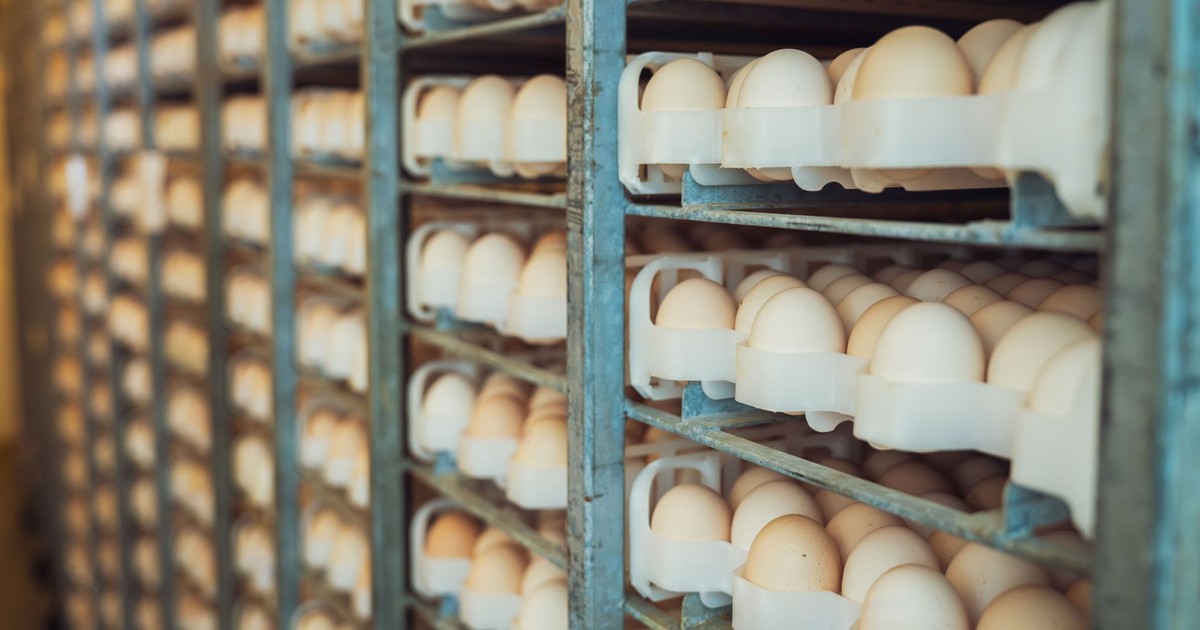
The Midwest Poultry Services recall did not emerge from a cluster of sick consumers. It emerged from internal environmental monitoring – sampling of surfaces, equipment, and environmental conditions inside the company’s Texas facilities. The Food Safety Modernization Act, which shifted the federal food safety framework from reactive to preventive starting in 2011, specifically requires egg producers above certain flock sizes to maintain environmental monitoring programs for Salmonella. That is the system doing exactly what it was designed to do.
Midwest Poultry Services found the contamination risk, reported it, and voluntarily pulled the affected product. The company has paused distribution from the Texas farms while working with federal regulators to identify the source. Results of environmental sampling, flock testing, and facility inspections typically inform whether corrective actions allow production to resume or whether a more extended shutdown is required.
The agency will continue monitoring for any cases linked to the recalled products. The company directs consumers with questions to its customer service line during weekday business hours.
Key Takeaways

The immediate priority for anyone in the six affected states – Texas, Oklahoma, Louisiana, Arkansas, New Mexico, and Mississippi – is straightforward: check the side of every egg carton currently in your refrigerator. The codes to look for are plant code P-1950 or 0840962, paired with a Julian Date between 157 and 184. Best-by dates on recalled cartons fall between July 20 and August 17, 2026. If both codes match, those eggs should not be eaten.
The brands most likely to carry recalled product are Kroger, Simple Truth, Brookshire’s, Country Morning, and Sunups – but because the same eggs reached unnamed smaller retailers, brand alone is not sufficient to rule out a match. The plant code on the side of the carton is the authoritative identifier.
Return any recalled cartons to the place of purchase for a full refund. Consumers do not need a receipt. If the original carton is gone and you cannot verify the codes, discard the eggs.
Salmonella Enteritidis can cause severe infections in young children, adults 65 and older, and people with weakened immune systems – the three groups for whom a foodborne illness that a healthy adult might walk off in a few days can become a hospitalization. In households with any of those individuals, the threshold for caution is lower.
Read More: Experts Warn Your Bag of Chips Could Soon Cost $15
What to Do Right Now

Pull out your egg carton before the next meal. Flip it to the side. Look for the date-coding ink – it’s usually smaller and plainer than the front label branding – and check for plant codes P-1950 or 0840962 alongside a Julian Date between 157 and 184. If both are present, the eggs go back to the store. If you can’t find the carton, they go in the trash.
The recall covers product that was purchased weeks ago, with best-by dates extending into mid-August 2026. Those dates are still current. Without checking the codes, a recalled carton looks identical to a safe one. The best-by date is not a safety clearance – it never is with a live recall in place.
For anyone in the affected region, the window for exposure is real and still open. A few seconds with the side of a carton closes it.
Disclaimer: This information is not intended to be a substitute for professional medical advice, diagnosis, or treatment and is for information only. Always seek the advice of your physician or another qualified health provider with any questions about your medical condition and/or current medication. Do not disregard professional medical advice or delay seeking advice or treatment because of something you have read here.
AI Disclaimer: This article was created with the assistance of AI tools and reviewed by a human editor.