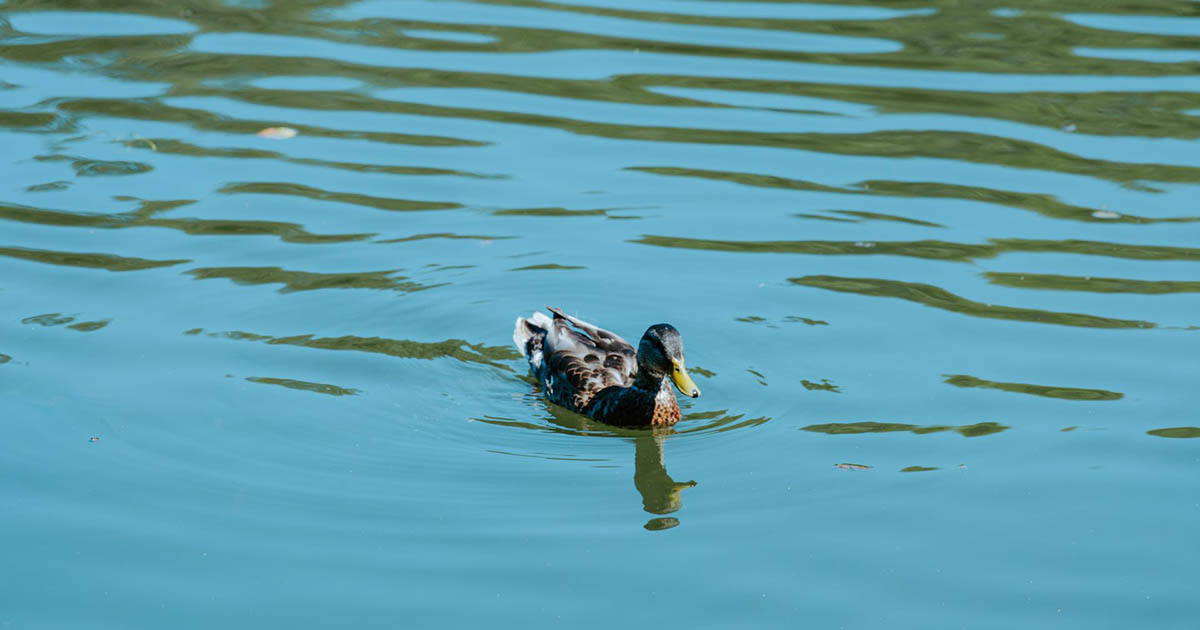

A dead baby duck floating against the concrete wall of the Lincoln Memorial Reflecting Pool, eye still open, surrounded by murky green water. That was the image circulating on social media Sunday, drawing more than 620,000 views on X by Sunday afternoon. What brought the pool to this point is a chain of decisions, contracts, and chemical interventions that unfolded over the preceding six weeks.
The Lincoln Memorial Reflecting Pool had been Trump’s signature Washington beautification project, freshly painted “American flag blue” for the country’s 250th anniversary. Instead, it turned green with algae within a day of being refilled, the blue coating began peeling off the bottom, workers were dumping gallons of hydrogen peroxide into the water, and now a dead duckling was floating in it. No single explanation for the duck’s death has been confirmed. What preceded it is documented in federal contracts, water test results, and eyewitness accounts from on-site reporters.
Rob Crilly, a political journalist who previously covered the White House for the Washington Examiner, shared two photos of the deceased animal to his X account on Sunday. Crilly said he spoke to an expert who suggested the pool “could have signs of cyanobacteria,” a blue-green algae that is harmless in small quantities but can be toxic to animals in “blooms” when the bacteria multiply rapidly. The photo, taken by Reuters’ Aaron Schwartz, spread rapidly across news outlets and social media, transforming an already controversial renovation project into an acute political liability.
A $14.7 Million Renovation That Turned Green Within Days
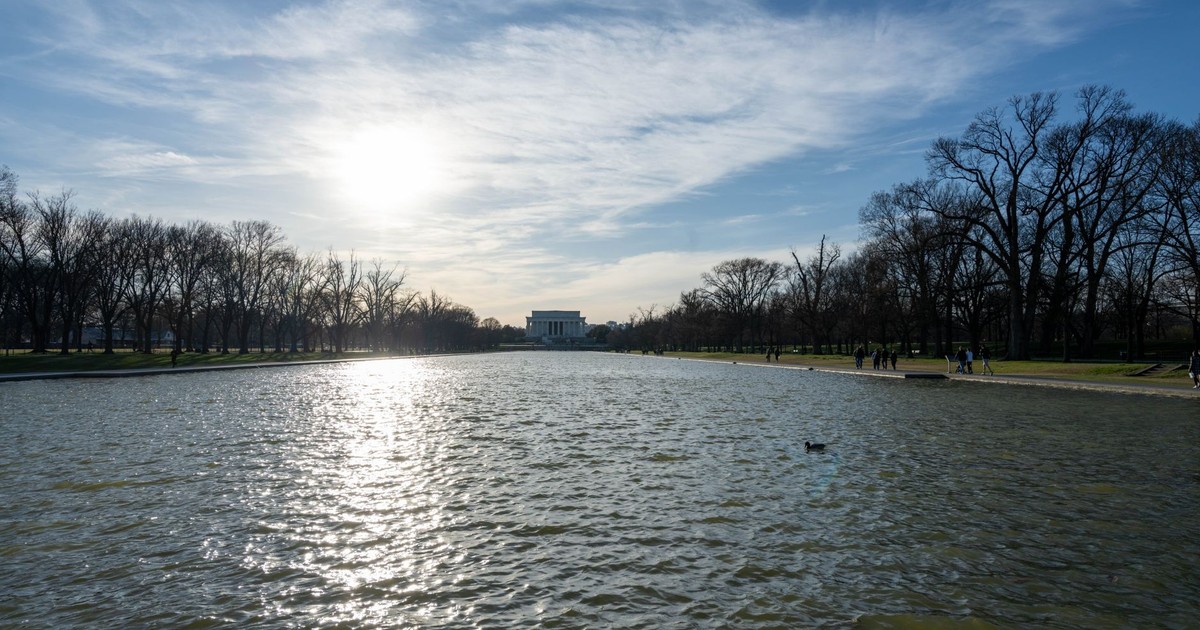
The Lincoln Memorial Reflecting Pool was intended to reopen as a patriotic showpiece. Trump ordered the stone flooring coated with a sealant he personally selected, telling reporters he chose the color himself: “American Flag Blue.” According to CBS News, a $14.7 million no-bid contract went to Virginia-based Atlantic Industrial Coatings to install the sealant on the pool’s concrete floor, which had traditionally been painted gray. The original estimate for the project had been $1.8 million.
In early June, water began to flow back into the pool. Just a day later, algae was already visible from the water’s edge. The Interior Department said at the time that the algae was “residual” and a normal part of the early process of restarting water flow. Within days, clumps of algae took over the pool, prompting the administration to send in workers to vacuum it out, install a filtration device known as the “ozone nanobubbler,” and dump in gallons of hydrogen peroxide.
Pool specialist Cochise Wanzer II, president of the Pool Service Company in Arlington, Virginia, was blunt about the inevitability of the outcome. “What do you expect?” he asked. “You’re basically taking natural, untreated river water, pumping it in and expecting it to do something different from what it would do out in the open.” He added that the new coat of paint on the bottom of the pool had made things worse: “Now that the bottom is nice and dark, it elevates the temperature and the algae grows better.”
NPR reported that Tim Auerhahn, chairman of the Aquatic Council consulting firm, told CNN that if the underlying conditions for algae growth remained the same, continued algae presence throughout the summer and into the fall was a plausible outcome. “In a body of water this large, that can become an ongoing maintenance challenge,” he said.
The Hydrogen Peroxide Question
The National Park Service deployed hydrogen peroxide into the Reflecting Pool to combat algae growth. Containers of hydrogen peroxide poured into the pool were marked as a “12 percent” solution. That concentration matters. A 12 percent solution is strong enough to “cause problems if inhaled and burns if the chemical touches the skin,” according to the Centers for Disease Control and Prevention, which carries detailed warnings and suggestions for “medical management” of the chemical. Hydrogen peroxide is “not absorbed by the skin, but can cause systemic toxicity when inhaled or ingested,” the CDC notes. It is also a “powerful” oxidizing agent; when it comes in contact with organic material, spontaneous combustion can occur, the agency warns.
Some experts were convinced that, if diluted enough, the chemical is unlikely to seriously affect ducks or other birds in the pool. A 3 percent concentration is generally considered safe. But the pool’s scale makes dilution an open question. Washington, D.C.-based pediatrician Dr. Michael O’Brien raised doubts on X about whether the treatment would even be effective, writing: “Y’all, not to be a huge nerd but for the reflecting pool you would need a minimum of about 8,000 liters of 12% hydrogen peroxide to reach the 50 parts per million concentration to kill algae.” He added: “Is this what happens when you have 0 scientists in your administration?”
The Interior Department maintained that hydrogen peroxide is a “milder treatment than chlorine and is used in spas and specialty pools like natural swimming pools,” adding “there are no harmful side effects to marine life or to the environment.” That claim is disputed by available evidence on concentrated solutions. Wildlife advocates raised concerns about the potential vulnerability of young waterfowl to chemical treatments in enclosed water bodies, particularly during the summer nesting season.
What the Algae Tests Actually Found
The Atlantic conducted its own tests on the water, with a reporter gathering samples from multiple areas of the Reflecting Pool and bringing them to two different scientists. The results showed that efforts to suppress one algal bloom had fueled another, with treatment efforts potentially making the underlying situation worse.
The original algae in the Reflecting Pool appeared to be a blue-green cyanobacterial bloom, a type that can sometimes produce neurotoxins dangerous to humans and animals. The hydrogen peroxide treatments may have eliminated that first bloom, but not without consequences. After a week of interventions, workers had killed off one type of algae, only to create conditions for a new type to take over. Scenedesmus, a genus of green algae nicknamed “Skinny Dead Mouse” by scientists, was now flourishing, according to testing run at the request of The Atlantic.
Researchers who examined bottles and microscope slides reported cyanobacterial characteristics, including an earthy scent and surface films consistent with cyanobacteria. But samples were degraded, in part because workers had already applied hydrogen peroxide, meaning lab identification and toxin assays were inconclusive or limited. Experts saw remnants of a previous cyanobacterial bloom and thick green algal mats under the microscope, and warned that while early-season blooms may be less likely to produce toxins, some cyanobacteria can make neurotoxins that pose risks to people and pets.
Algae expert Christova said she would like to see the water monitored weekly. “If we don’t have any control over algal growth, we don’t know what is growing,” she said, adding that not all types of algae are as harmless as the one currently blooming in the pool.
Why the Renovation Likely Made the Bloom Worse
The renovation itself appears to have contributed to the speed of the bloom. The pool was drained, repaired, and refilled on a compressed timeline, leaving little opportunity for systems to stabilize. Restarting water systems after a prolonged shutdown can release residual algae from pipes and supply lines, effectively seeding new growth as soon as the pool is refilled.
Temperature is another factor. Some specialists suggested the darker coating applied during the renovation could increase heat absorption, raising water temperature and encouraging algae to grow more quickly. Even small changes in temperature can significantly affect algae reproduction rates. Residual biological material in the pipes, warm weather, abundant sunlight, and a shallow basin create the kind of conditions in which algae spreads quickly regardless of maintenance efforts.
The No-Bid Contract and the Trump Donor Connection

The federal government awarded a company owned by a Trump donor a $1.7 million contract to install a new water cleaning system for the Lincoln Memorial Reflecting Pool, federal records show. The no-bid contract to install a “Nano Bubble” filtration system went to Green Water Solutions, an Ohio-based company whose owner is listed on federal contracting documents as “JJ Cafaro Investment Trust,” according to CBS News. The National Park Service justified skipping competitive bidding by citing time pressure tied to events marking the country’s 250th anniversary.
Since 2016, John Cafaro has given more than $300,000 to political committees connected to Trump. He pleaded guilty in 2002 to conspiring to bribe then-Rep. James Traficant, an Ohio Democrat, and in 2020 he pleaded guilty to a campaign finance crime. Records show multiple firms had expressed interest in the project before the contract went to Greenwater, which had previously received only one other federal contract.
David Schutzenhofer, the general manager of Trump’s golf club in Bedminster, New Jersey, had advised the Park Service on the project and was in contact with Greenwater Services. The Trump administration justified its no-bid contracts by saying work on the Reflecting Pool was urgent because it needed to be finished in time for America’s 250th birthday celebrations. An Interior Department spokesperson said the department had not been aware of Cafaro’s political affiliation when it awarded the contract.
Cafaro himself pushed back publicly. He insisted “the system is working,” and clarified that his company was not hired to clean the pool, but to sell permanent equipment to clean it indefinitely. “It turned green because the technology worked,” he said. “It killed the algae in the pipes.”
The Peeling Paint Problem
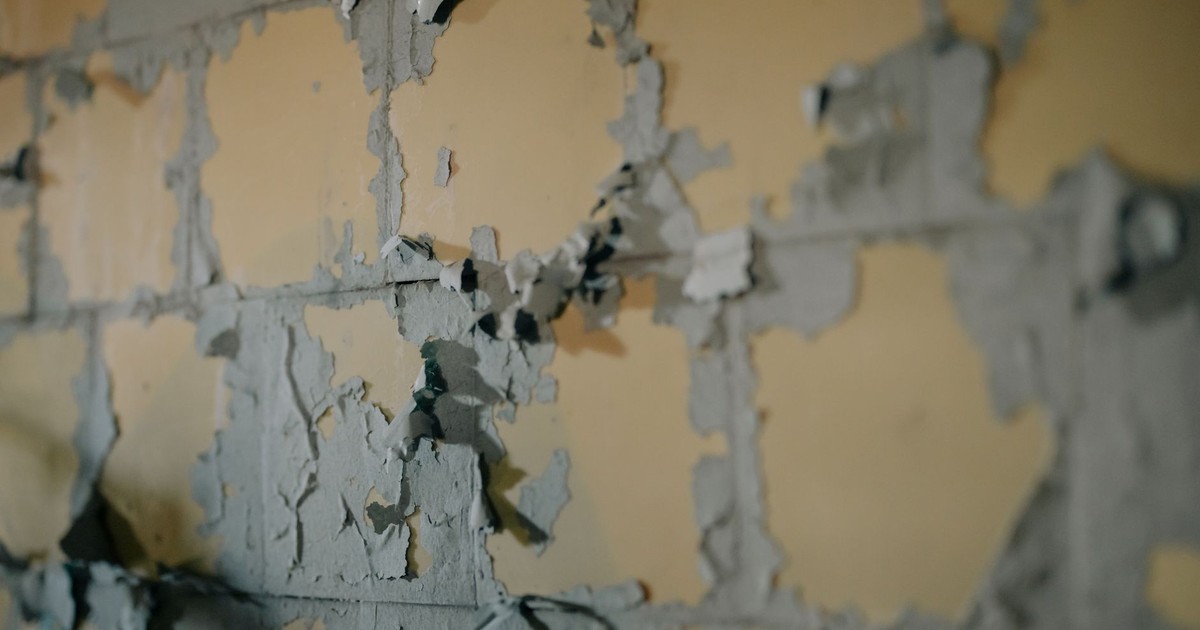
Some blue material at the bottom of the Lincoln Memorial Reflecting Pool began peeling off days after the pool was painted blue and refilled. CNN observed a flap of blue material partially attached to the bottom in one area of the pool and floating toward the surface. Whether the material is paint or sealant has not been established.
The coating has flaked off and peeled in some areas before floating up to the surface. While the president claimed vandals are to blame for ripping off parts of the coating, the leading alternative explanation is the hydrogen peroxide being dumped into the water, which can be used to break down and strip paint.
Eddie Wood, of Atlantic Industrial Coatings, the company that resurfaced the pool, distanced his firm from the algae problem. “My company had nothing to do with water, only water proofing and water tightening,” he said, adding that he is proud of the part of the work his company did on the project.
Trump said police arrested “many additional people” for the vandalism, though one person told CNN he was merely touching a piece of partially detached blue material from the recent renovation.
Trump’s Response: Vandalism Claims and a Promised Drain
Trump said on Sunday that he had inspected the Lincoln Reflecting Pool and that work would begin “immediately” to fix the landmark. “Work will begin immediately on fixing the seriously vandalized Reflecting Pool,” he wrote on his social media platform. “I just inspected it and could only say to myself, and those gathered around me, WOW, who would do such a thing? SICK, DERANGED PEOPLE!” Trump apparently saw the pool during a flyover on his way back to Washington from Camp David.
On Saturday, Trump said the pool would have to be drained. “We met with contractors today, will probably be forced to release and drain much of the water in order to do the necessary repairs, but will have them done as quickly as possible,” he said on social media.
The Interior Department had resorted to pouring hydrogen peroxide into the water to eliminate the algae. On Wednesday, the department said it had “killed the algae” and that the National Park Service was “vacuuming up the dead algae resting on the bottom of some parts” of the pool. But the green hue persisted into the weekend. Trump, in a Friday post, claimed the algae in the pool “is 75% gone” and “will soon be completely remedied.”
Officials have offered differing explanations for the issues. While some point to natural environmental factors like heat and stagnant water, Trump has said, without providing evidence, that the damage is the result of deliberate vandalism.
The pool renovation is one of several projects ordered by the president to “beautify” Washington, D.C. Trump has also sought to build a ballroom at the East Wing of the White House, build a towering arch near Arlington National Cemetery, and has proposed constructing a “National Garden of American Heroes” with 250 lifelike statues of prominent Americans throughout the country’s history.
The Wildlife Dimension
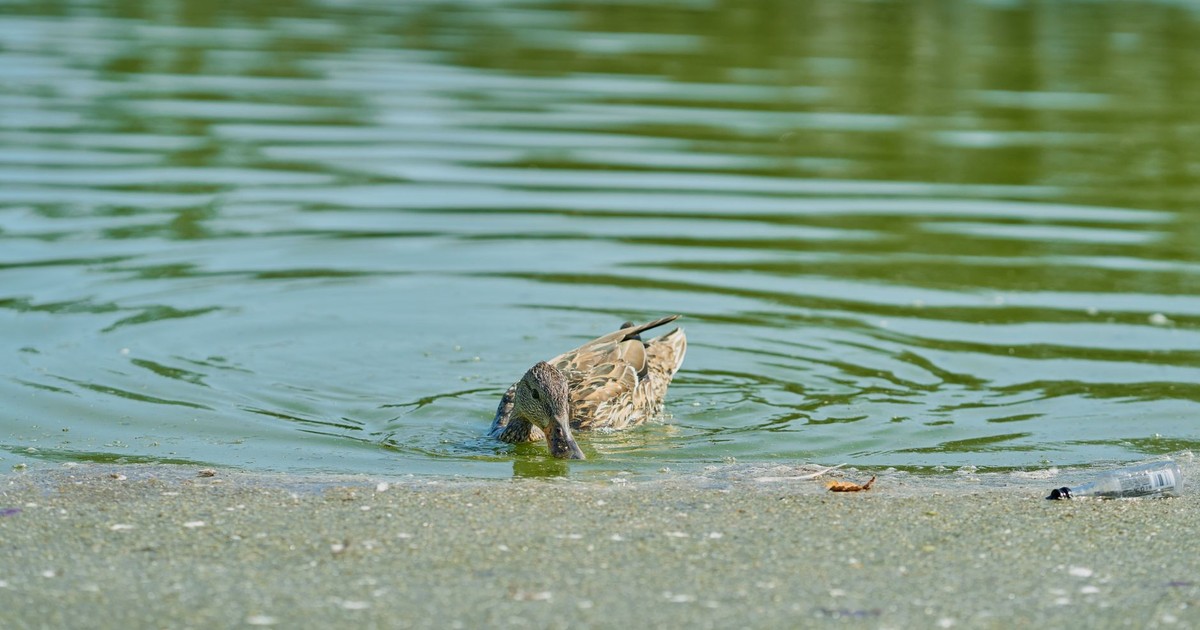
The pool is a well-known nesting ground for mallard ducks, particularly during the summer months when ducklings trail their mothers through the water. That timing proved significant. The full amount of hydrogen peroxide dumped into the Reflecting Pool has not been disclosed. At this time of year, several tiny ducklings are trailing their mothers in the water, and their size could make them more vulnerable to toxins.
Reports from on-site observers suggested the situation was worse than it appeared, with some ducks refusing to swim in the pool at all. A NOTUS reporter watching the bid to control the algae bloom with chemicals remarked it was a “bad day to be a duck.”
Online speculation linked the death to the hydrogen peroxide treatments, but no evidence has established a direct connection. While hydrogen peroxide is a standard water treatment that breaks down relatively quickly, high concentrations can pose a risk to wildlife if exposure is significant. The lack of a definitive explanation has fueled online debate, amplified by widely circulated images of murky water, debris, and seemingly distressed wildlife.
Whether the chemical treatment contributed to the duckling’s death has not been confirmed by any veterinary or environmental authority.
Read More: Trump’s $600M White House Ballroom is Costing Taxpayers Half and They Never Agreed
Key Takeaways
The dead duck Lincoln Memorial story is not, at its core, about a single duckling. It is the latest visible consequence of a renovation that went wrong in nearly every dimension simultaneously: a rushed timeline, two separate no-bid contracts totaling more than $16 million, a paint job that began peeling within days, an algae bloom that resisted treatment and then mutated into a second, more aggressive strain, and chemical interventions that may have done more harm than good to the very water they were meant to restore.
Water treatment engineer Loay Hidmi, a D.C.-based civil engineer who specializes in water treatment and has been visiting the pool daily to monitor progress, worried that the algae could return given the favorable conditions posed by the sunny, shallow pool. He acknowledged it is mostly an aesthetic concern but said it raises questions about process itself. “In water systems, when you fix something, you need to look at the step before it and the step after,” he said.
That logic runs through every layer of this project. The administration is now facing questions about why competitive bidding was bypassed for a Trump donor’s company with a single prior federal contract; why the pool was refilled before the permanent filtration system was in place; why a 12 percent hydrogen peroxide solution was deployed in a body of water home to nesting ducks; and why, after claiming the algae was 75 percent gone, the president was announcing a full drain within 24 hours. Trump had bragged for months about repainting the pool his hand-selected shade of “American flag blue,” but less than 24 hours after the project was completed, the pool turned green. The blue finish then began flaking off and floating to the surface, despite the renovation firm having been paid about $14 million, more than seven times Trump’s original estimate of $1.8 million.
With the Fourth of July and America’s 250th anniversary days away, the Reflecting Pool remains a national focal point for debate – not for the reasons the administration intended. The duck’s cause of death may never be confirmed. What is already on the record is a $14.7 million project that, by every visible measure, has not gone according to plan.
AI Disclaimer: This article was created with the assistance of AI tools and reviewed by a human editor.