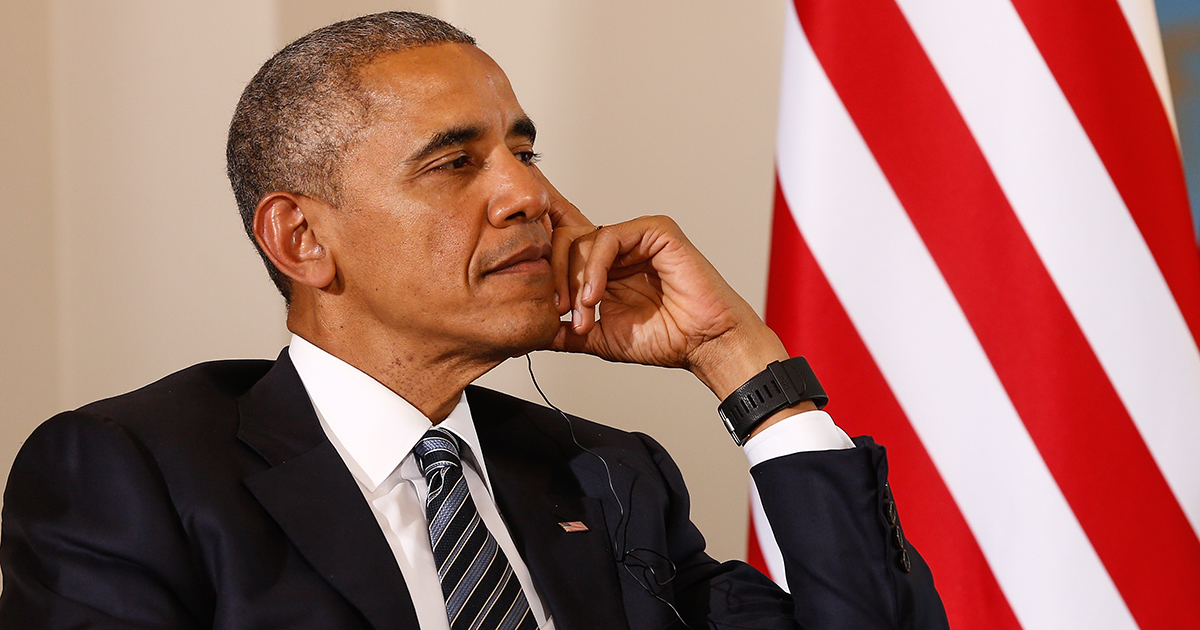

The most-watched moment from a June 24, 2026 podcast episode wasn’t a sports story. It was a former president of the United States explaining that the man currently holding his old office behaves very differently when no cameras are pointed at him.
Barack Obama’s appearance on All the Smoke, released June 24, 2026, arrived amid a new wave of Trump attacks on him in the 47th president’s second term. Podcast co-host and former NBA player Matt Barnes opened the exchange by describing Trump as “very fascinated with you and your family,” before asking Obama directly whether he ever wanted to respond in kind to the “negativity and racism.” Obama’s reply landed with the economy of someone who had spent a long time choosing his words carefully.
“I obviously have a room in his head, a suite in his head,” Obama said. He then went further, touching on what he called a belief in face-to-face conversation. “So if this – whoever you were talking about – was in front of me, which has happened a couple times, he don’t talk like that because he knows better. And I think there is a – that filter of the phone creates a situation both where people just say kind of crazy stuff that they would never say to your face with no consequences.” The clip spread within hours. But the full context of the Obama-Trump dynamic – the history behind it, the data measuring it, the public opinion surrounding it – tells a more complete story than a single podcast sound bite.
The Podcast Moment and What Obama Actually Said
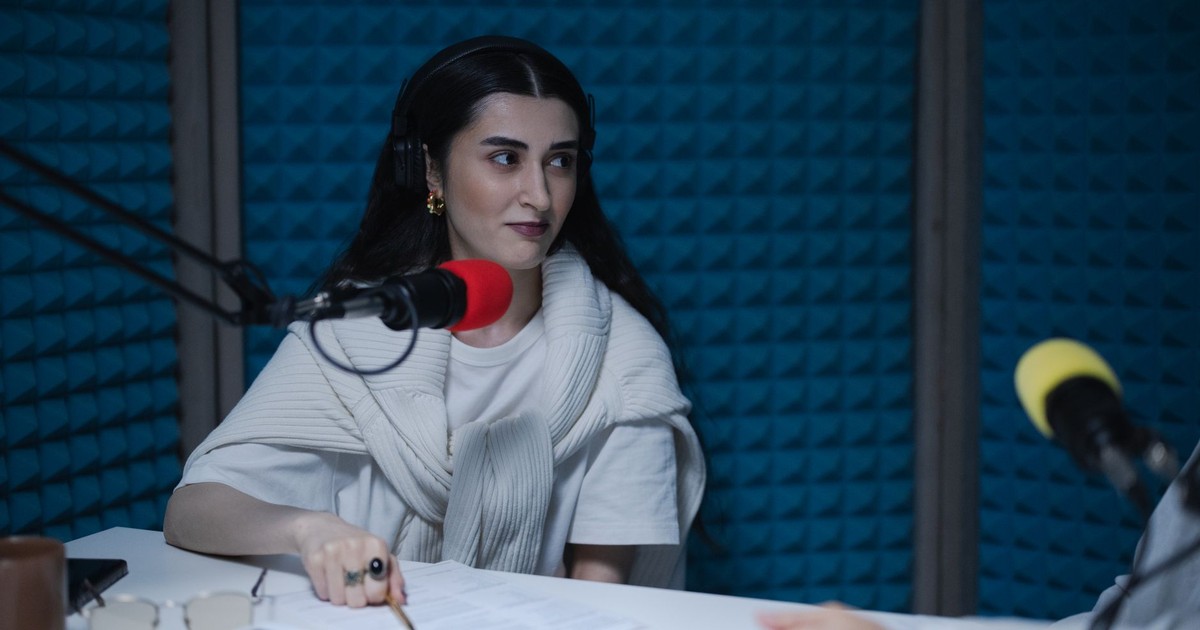
The episode was recorded at the newly unveiled Obama Presidential Center on Chicago’s South Side. Asked by Barnes how he stays composed against Trump’s near-daily attacks on his legacy, Obama did not deflect. “You got to ask him what it is, the obsession,” he replied. “Obviously, you know, I have a room in his head, a suite in his head.” He called the pattern “a strange thing” and said it points to a White House that is “not focused on the American people and the job they’re supposed to do.”
Obama’s framing went beyond a one-liner. He elaborated: “First of all, when I was president, the last thing I had time to do was worry about what somebody said or my predecessor did. They’re gone. I’ve got work to do.” He continued: “The idea that I’d be worrying about somebody who came before and me trying to measure like, ‘What’s he done today?’ Look, constantly worrying about that is a strange thing to me.” He added: “It shows me somebody who is not focused on the American people and the job they’re supposed to do.”
Obama went on to say that he learned early in his presidency to “screen out the noise in order for you to understand what’s in front of you and deal with it well.” That self-described discipline, he implied, was precisely what made Trump’s public behavior toward him so revealing by contrast.
The Face-to-Face Claim
Obama’s most striking assertion in the interview was about private meetings. Despite Trump’s constant negative commentary, Obama said he has never seen that energy in face-to-face interactions. “The other thing I believe in, and part of what we try to teach in our leadership training, is I believe in face-to-face,” he said. “I believe in conversation. So if this – whoever you were talking about – was in front of me, which has happened a couple times, he doesn’t talk like that because he knows better.”
Cameras captured Trump and Obama seated beside one another at Washington National Cathedral during Jimmy Carter’s funeral, where the two appeared to share a lengthy and surprisingly friendly conversation before services began. Video of the exchange spread rapidly online because it seemed at odds with the years of hostility that have characterized their public relationship. Obama was seen laughing at something Trump said, and the two men chatted for several minutes before the ceremony got underway.
Radio host Charlamagne tha God publicly questioned the framing, using the term “kiki” – a lighthearted chat – to describe the Carter funeral interaction. “You kiki-ing in his face, too,” Charlamagne said. “Because by the way, Trump been saying wild stuff about you, Barack, and your wife, but you were just right there kiki-ing with him at President Carter’s funeral, so I could see it going both ways. Don’t neither one of y’all be having that energy in each other’s face, at least from what we saw.” It was a pointed counter-observation, and it underscored just how much the public and private behaviors of both men in these encounters have become a subject of political interpretation in their own right.
The Data Behind the “Obsession” Claim
Obama’s use of the word “obsession” was not rhetorical hyperbole without supporting evidence. Trump has mentioned Obama’s name 537 times in a single tracked year – an average of 1.8 times per day – and the frequency has only increased since Trump’s return to the White House.
One of the clearest recent examples came in May 2026, when Trump faced questions about the renovation of the Lincoln Memorial Reflecting Pool. Rather than addressing the issue directly, he pivoted to Obama. “Barack Hussein Obama, have you ever heard of him?” Trump said, before claiming his predecessor had spent more than $100 million on the project. A FactCheck.org investigation found that the total spent for the overhaul of the pool during Obama’s term was about $35 million – and that no major work was conducted during the Biden administration at all.
Trump’s claims also included the Biden administration in the alleged waste, asserting that the two had together spent “hundreds of millions of dollars trying to get it to work.” The FactCheck.org review found no record of any major work done during Biden’s term and confirmed the Obama-era renovation, which ran from 2010 to 2012, cost roughly $35 million. Trump’s own administration has spent approximately $14 million on its current resurfacing project.
Earlier, in July 2025, Trump accused Obama of “treason,” claiming without evidence that his predecessor had orchestrated a criminal effort tied to the 2016 Russia investigation – a significant escalation in rhetoric. Obama’s office issued a direct response, calling the allegations “outrageous,” “ridiculous,” and “a weak attempt at distraction,” noting that his team typically doesn’t respond to “constant nonsense” but felt this particular claim warranted an exception.
In May 2026, Trump embarked on one of his periodic late-night social media posting sprees that included a claim that Obama had wiretapped Trump Tower during the 2016 election. There is no evidence this occurred. In 2017, the Justice Department said in a court filing that it had no records to support that claim.
The G7 Moment
At the G7 summit in France in June 2026, Trump falsely declared on the world stage that Iranians considered Obama “a stupid son of a b – -.” The New York Times reported that the focus on Obama “underscored Mr. Trump’s obsession with persuading people he is a superior leader to the former president.” Over the course of the three-day summit, Trump mentioned Obama by name nearly two dozen times.
That G7 remark landed just days before Obama recorded his response on All the Smoke. The contrast between Trump’s latest attack and Obama’s description of their in-person encounters quickly fueled reactions online.
The Origins of the Rivalry: 2011 and the Correspondents’ Dinner
Go back to the spring of 2011, which independent historians and political analysts have identified as the period that set this rivalry in motion.
For weeks, Donald Trump had been fanning the flames of the “birther” movement – demanding that Obama produce his birth certificate, implying he was not born in the United States, and questioning the legality of his presidency. On April 30, the tables turned. Trump was the target of Obama’s jokes at the White House Correspondents’ Dinner, and according to PBS FRONTLINE’s documentary The Choice 2016, Trump political adviser Roger Stone says that dinner was a turning point. “I think that is the night he resolves to run for president,” Stone said. “I think that he is kind of motivated by it: ‘Maybe I’ll just run.'”
The documentary examined the worldview that shaped Trump’s reaction that night, one in which sources say redemption and revenge are intertwined. Author Michael D’Antonio told FRONTLINE: “Donald dreads humiliation and he dreads shame, and this is why he often attempts to humiliate and shame other people. This is a burning, personal need that he has to redeem himself from being humiliated by the first Black president.”
Trump had arrived at the dinner as a potential Republican presidential candidate furiously pushing the conspiracy that Obama was not born in the United States. He reportedly left humiliated after a string of stinging jokes mocking his hair, his taste, his reality television show, and his fixation on the “birther” movement. Less than a month later, Trump announced he would not run in 2012. But that night appears to have ignited his desire to be taken seriously as a politician – and seeded his 2016 run.
Historian Timothy Shenk has noted that the event represented a moment where Obama moved from being the outsider coming to change Washington to the face of the American establishment. Obama’s senior adviser David Plouffe later acknowledged the administration had an overt political strategy of elevating Trump: “Our view was lifting Trump at the White House Correspondents’ Dinner, you know, as kind of the example of the Obama opposition.” In retrospect, few political miscalculations have aged as poorly.
The Policy Dimension: What the “Obsession” Costs
Trump’s fixation on Obama has drawn increasing attention precisely because it consumes political bandwidth that critics argue should be directed elsewhere. Before launching military action against Iran alongside Israel in February 2026, Trump repeatedly criticized the Joint Comprehensive Plan of Action – the 2015 diplomatic agreement negotiated primarily under Obama that limited Iran’s nuclear capabilities in exchange for sanctions relief. Obama, for his part, said the U.S. may be “worse off” because of the subsequent Iran war.
Trump also trashed the newly debuted Obama Presidential Center in Chicago as a “very unattractive building” and “total disaster,” adding that when his presidential library opens, it will be “on time, on budget, best location in Miami.” He posted a clip on Truth Social depicting Barack and Michelle Obama as apes; the White House blamed the post on a staffer. Trump later shared AI-generated images of Obama’s new presidential center looking like a giant dumpster, surrounded by homeless people and tents.
The timing of the podcast episode carried its own irony. Hours before it dropped, Trump scrapped a Capitol Hill signing ceremony for the 21st Century Road to Housing Act – the largest housing affordability package in a generation, which had cleared the Senate 85 to 5 and the House 358 to 32. He posted on Truth Social that the event was “cancelled” until Congress passed his SAVE America Act elections bill, then dismissed the housing measure itself as “of minor importance.”
The Chicago recording site was no accident. The Obama Presidential Center opened on June 18, 2026, drawing Bill Clinton, George W. Bush, Joe Biden, Kamala Harris, and Amazon founder Jeff Bezos to a launch that doubled as the largest gathering of Democratic donors and fundraisers before the November midterms.
The Favorability Gap That May Explain Everything
If one metric explains why this rivalry has remained so politically charged into 2026, it is public opinion data. A June 2026 CNN poll conducted by SSRS found Obama is viewed positively by 57% of Americans – far surpassing the ratings for his two Oval Office successors. Only 34% of the public offers a favorable opinion of President Donald Trump, with former President Joe Biden’s favorability trailing at just 30%. Obama’s standing among political independents is more than twice as high as either Biden’s or Trump’s.
Asked in an open-ended question which president they most admire, 30% of Americans named Obama, compared to 19% who named Trump. Lincoln and Reagan followed at 9% each. Among independents, Obama’s favorability stands at 56%, compared to 25% for Trump and 20% for Biden. He holds a near-universal 96% positivity rating within his own party.
As for Trump, he finished dead last in the Presidential Greatness Project Expert Survey, and his yearslong public campaign against Obama appears, by these polling metrics, to have failed to move public opinion in the intended direction.
How the Public Rates the Two Men
The partisan breakdown of that polling is instructive. Nearly two-thirds of Democrats – 64% – say they most admire Obama. Among Republicans, Trump holds the most-admired title with a smaller 53% majority, followed by Reagan at 18%. Though only about one-fifth of Republicans take a positive view of Obama, that is still far above the share of Americans willing to cross party lines in support of his successors.
Obama, who saw mixed ratings during much of his second term, has maintained broad popularity in the years since leaving office. Biden, by contrast, took office with a 59% favorability rating and left at 33%, and his current 30% is lower than at any point during his presidency.
Read More: Trump Blames Obama After the $14M ‘Blue’ Reflecting Pool Turns Green
The White House Response
The Trump administration’s reaction to Obama’s podcast comments was swift and characteristically unambiguous. White House spokesman Davis Ingle, responding to Obama’s interview, stated: “Barack Hussein Obama will go down as one of the most dishonest, divisive, and destructive Presidents in history.” The statement offered no specific rebuttal to Obama’s claims about their in-person interactions, nor to his comparison of how a sitting president should spend their attention. It was, in its own way, a confirmation of the dynamic Obama had just described: a reaction calibrated for volume rather than substance.
Obama, for his part, had previously acknowledged in a New Yorker interview that he thinks about pushing back against Trump “every day” – but declines to do so consistently since he is not a “commentator.” He told the publication: “For me to function like Jon Stewart, even once a week, just going off, just ripping what was happening – which, by the way, I’m glad Jon’s doing it – then I’m not a political leader, I’m a commentator.”
Key Takeaways
The “suite in his head” line will endure as a cultural moment, but the substance underneath it is more consequential than a quip. Obama’s June 24 podcast appearance crystallized several things that had been building for months.
First, this dynamic is measurably asymmetric. Obama says Trump’s focus on him is “a strange thing” and suggests it signals misplaced priorities. The data bears that out: 537 documented mentions in a single tracked year, a pattern that has only accelerated in Trump’s second term. Obama, by contrast, speaks about Trump selectively and through intermediaries far more often than directly.
Second, the public and private behaviors of these two men toward each other appear to diverge sharply. Obama said Trump’s tone changes when they are in the same room, and that some of Trump’s toughest public rhetoric reflects the way phones and social media allow people to say things they would not say face-to-face. Whether one accepts that characterization or Charlamagne’s counter-reading – that both men were cordial at Carter’s funeral, making the “he knows better” line read as mutually applicable – the underlying observation about how social media decouples public performance from private conduct is analytically sound and extends well beyond this particular rivalry.
Third, the favorability gap between the two men is not trivial context. It is arguably central to understanding why Trump’s fixation persists. When polling consistently shows a 23-point favorability gap between the two, a sitting president’s compulsion to relitigate his predecessor’s record starts to look less like political strategy and more like a response to numbers that refuse to cooperate.
What This Is Really About
Some of this goes back further than any specific insult or policy reversal. The 2011 Correspondents’ Dinner didn’t create the rivalry – it crystallized a power dynamic that was already in motion. Trump had spent weeks trying to delegitimize Obama’s presidency, and Obama turned him into the evening’s punchline in front of Washington’s entire political press corps. That the man who left that room humiliated went on to win the presidency two elections later, and has spent much of his time in office trying to undo his predecessor’s legacy, is one of the stranger plot lines in modern American politics.
Obama’s description of the face-to-face difference – the idea that Trump’s public ferocity evaporates in a room together – may be accurate. It may also be incomplete. The Carter funeral footage doesn’t prove anything either way, only that two men can exchange a laugh at a funeral without that meaning much. What’s harder to dismiss is the structural reality: a sitting president who mentions a former president’s name nearly 1.8 times per day, who pivots to that predecessor when asked about a pool renovation, who posts AI-generated mockery of his library. Obama spent the interview describing it as a “strange thing.” The polling data, the policy reversals, and the Friday-night social media posts all suggest he’s right – and that no one, including Trump, seems to be able to explain exactly why it keeps happening.
AI Disclaimer: This article was created with the assistance of AI tools and reviewed by a human editor.