
A multimillion-dollar renovation of the Lincoln Memorial Reflecting Pool, designed to give the historic landmark a deeper “American flag blue” finish, appears to have had an unintended consequence: the water already looks green. The pool turned the exact color everyone was promised it wouldn’t. And the administration’s response – pointing the finger at a predecessor who left office more than five years ago – has generated almost as much attention as the algae itself.
President Trump had wanted a pool filled with clear water and a bottom painted “American flag blue,” the color of a commercial-grade swimming pool liner he had added to the granite pool to address leaks and spruce up the monument ahead of huge Independence Day celebrations this summer on the National Mall, commemorating the nation’s 250th birthday. The renovation was treated as a personal priority, announced loudly, and completed fast. Within days of reopening, dark green clumps of algae had settled across the surface, and the phones came out.
What followed was a story that manages to be simultaneously about algae, federal renovation politics, the physics of shallow water, and the Washington habit of never, under any circumstances, accepting blame for anything. It is also a story about a pool that has been doing this to people for over a hundred years.
A Pool With a Long History of Turning Green
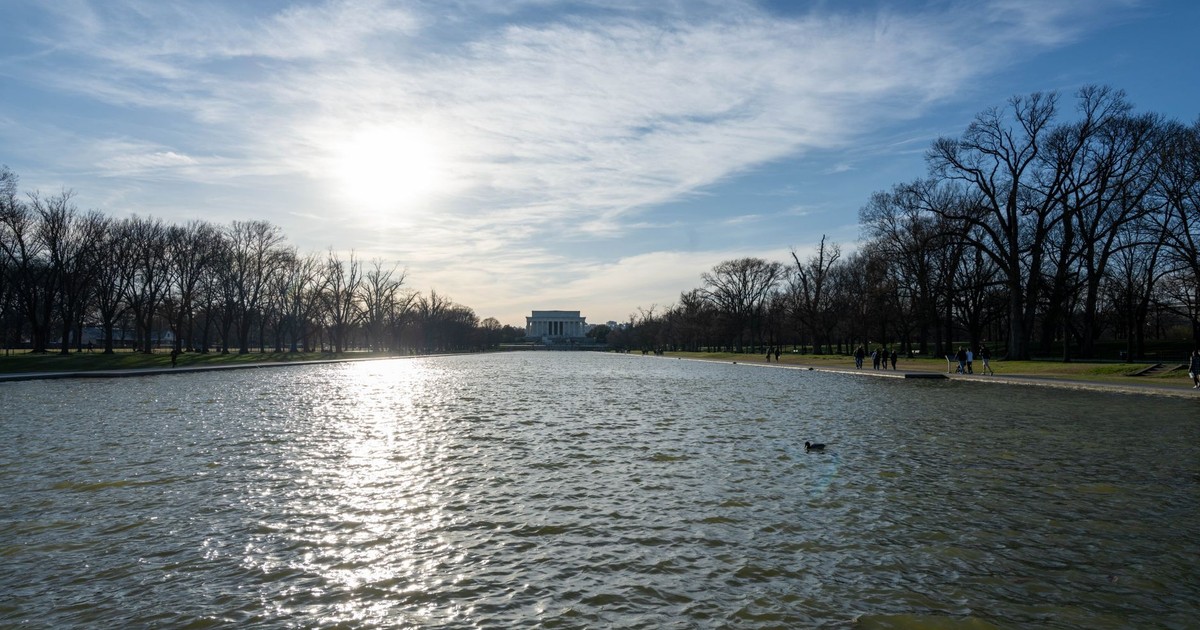
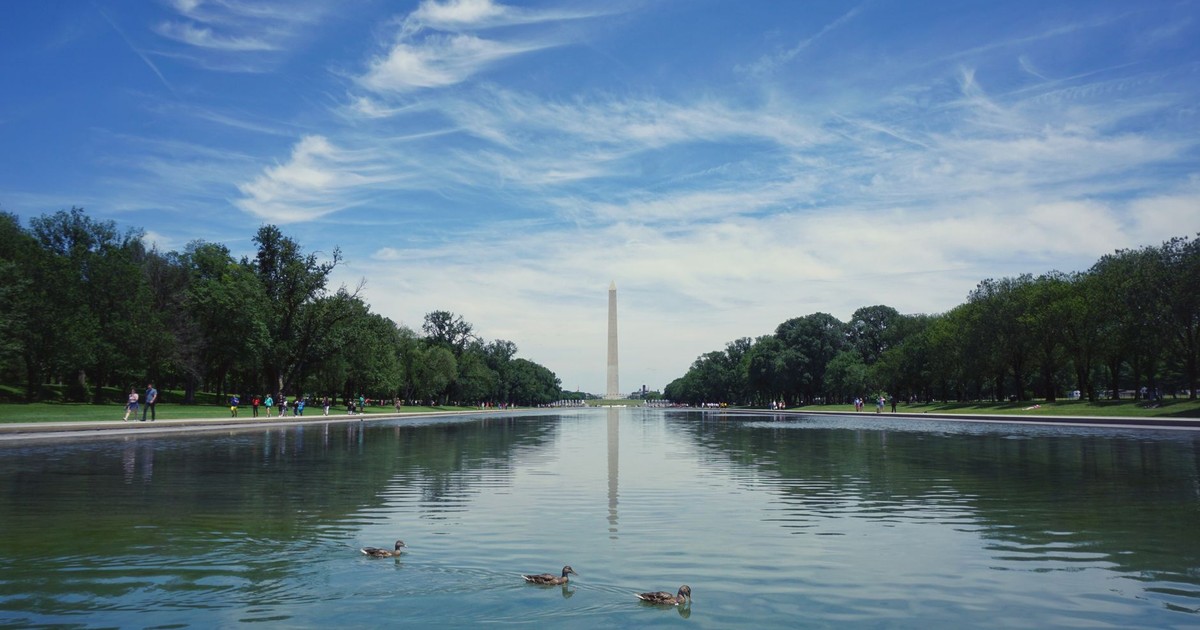
The Reflecting Pool measures approximately 2,029 feet long and 167 feet wide, making it the largest of the many reflecting pools in Washington D.C. Constructed between 1922 and 1923, it is part of the Lincoln Memorial complex designed by Henry Bacon. The National Park Service says it contains 6.75 million gallons of water. It ranges from 18 inches deep at the edges to 30 inches deep in the middle. That last detail matters more than it might seem. The pool isn’t just wide and long. It’s almost comically shallow, which is exactly the kind of environment where algae feel completely at home.
Martin Luther King Jr. delivered his “I Have a Dream” speech while overlooking the Reflecting Pool in 1963. The famed contralto Marian Anderson, barred from singing at Constitution Hall in 1939 because she was African American, held a widely attended outdoor concert on Easter Sunday that year by the Reflecting Pool. The site carries enormous symbolic weight, which makes the recurring algae problem all the more galling to the people who keep spending money trying to solve it.
The National Park Service was trying to remove a thick layer of green algae from the reflecting pool less than a month after a $34 million overhaul was completed back in 2012. That project had just re-engineered the pool to draw river water from the Tidal Basin instead of city drinking water. The system was supposed to filter and circulate the water to keep it cleaner than in the past. It did not, at least not right away. The algae came back within weeks. Today, more than a decade and another renovation later, the scene is strikingly similar.
What Trump Ordered, and What It Cost
The overhaul was ordered by President Donald Trump as part of a broader effort to revamp the National Mall ahead of the U.S. 250th anniversary. It involved resurfacing the century-old pool with a dark blue coating intended to improve its appearance and seal leaks. The repairs were completed in approximately six weeks and included draining, resurfacing, and sealing the pool against leaks, as well as painting the floor “American flag blue” prior to refilling it.
The cost of the renovations gradually ticked upward. The president had initially said the renovation would cost $1.8 million, but that went up to $13.1 million before seemingly settling at $14.2 million. Trump himself acknowledged the discrepancy: “I originally thought I’d do it for $2 or $3 million,” he told reporters in the Oval Office. The final figure continues to shift depending on which account you read. An Interior Department spokesperson did not dispute the $14.6 million figure when asked about it directly.
Following the completion of the project, Trump claimed the pool now had “beautiful, clean water” and placed the blame for the “terrible, disgusting, garbage-ridden” water before the renovation on previous administrations. That framing would become relevant again very quickly.
When Green Came Back
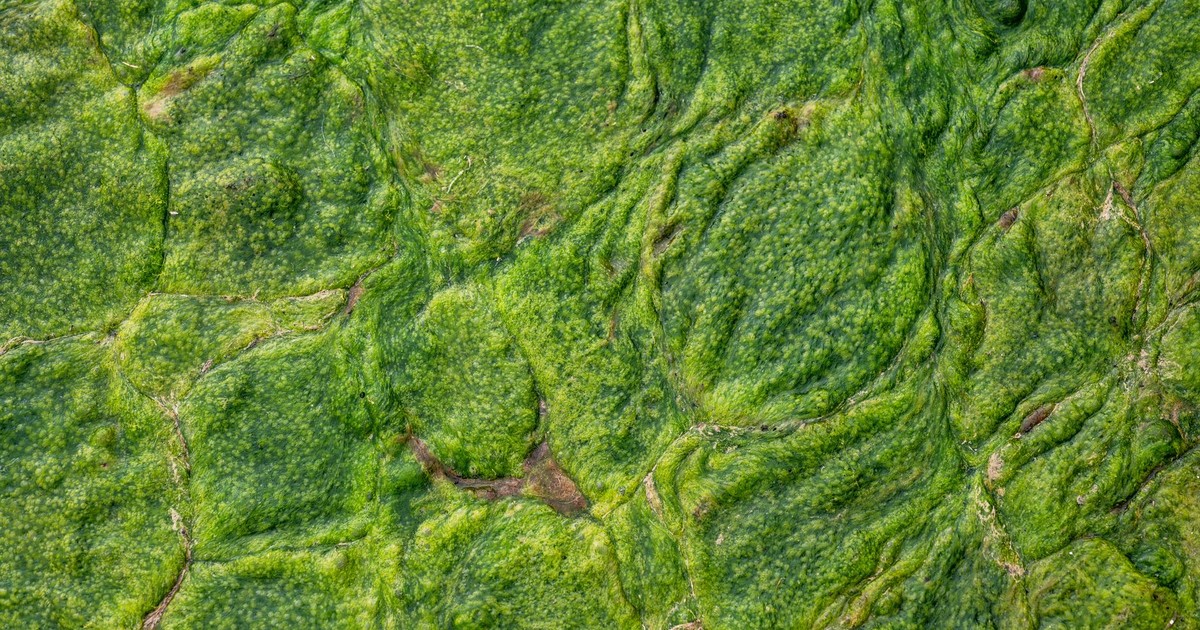
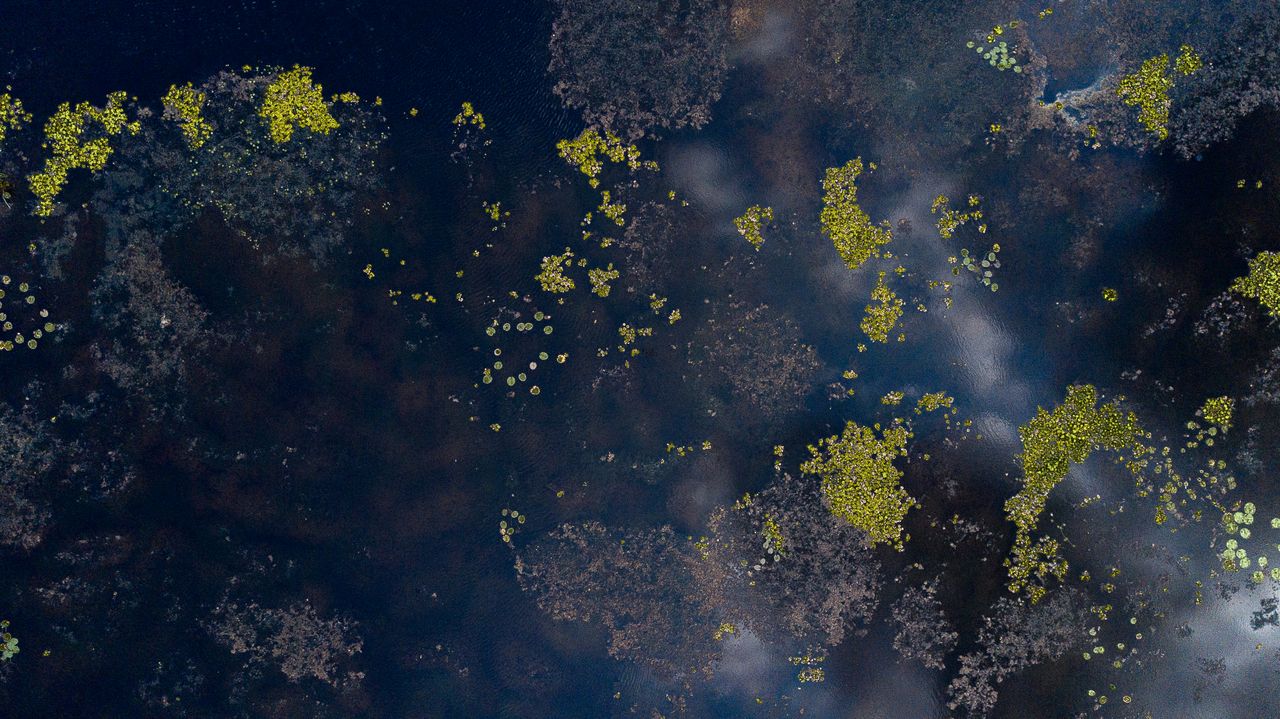
The Reflecting Pool turned green again just days after the renovation was completed. Dark green clumps of algae sat on a lighter green layer of algae that had blanketed the water. A large patch of algae near the World War II Memorial grew significantly larger during a rainy Wednesday.
The Interior Department’s initial response, before explaining that it was “residual algae,” was that the Fish and Wildlife Service wasn’t even convinced it was algae. Once that position became difficult to maintain given photographs visible to anyone with a phone, officials shifted to the claim that the growth was expected, temporary, and already being addressed.
The National Park Service said it was deploying “high-tech nanobubble ozone technology” to keep the water clean, and that hydrogen peroxide, described as a milder treatment than chlorine used in spas and specialty pools, was also being applied. National Park Service workers were seen pouring bottles of 12% hydrogen peroxide concentrate into the pool as part of the effort to reduce the bloom. Buckets of Induclor, a concentrated chlorine compound primarily used for water disinfection and algae control, were also spotted near the pool.
According to online federal contracting records, the Trump administration spent $1.7 million on an upgraded ozone nanobubbler filtration system, aimed at dispersing oxygen bubbles to disrupt algae’s food supply.
Why the Algae Keeps Coming Back
The algae problem at the Reflecting Pool isn’t really a maintenance scandal. It’s closer to a physics problem. Shallow human-made bodies of water like the Reflecting Pool attract algal growth because they are warm, exposed to the sun, and often filled with nutrients.
According to the NRDC, reports of freshwater harmful algal blooms have increased significantly over the past 40 years. Warm water gives cyanobacteria a competitive advantage – these bacteria grow faster than more benign algae in higher temperatures, and once a bloom forms, a feedback loop can kick in: as blooms grow thicker, the dark surfaces of the algae mats absorb more sunlight, which warms the water further and accelerates more algal growth. The EPA notes that cyanobacteria thrive specifically in warm, slow-moving water, which describes the Reflecting Pool on a June afternoon almost perfectly.
The new dark blue coating on the pool floor may be doing exactly what was intended visually while inadvertently raising water temperatures. Darker surfaces absorb more sunlight and heat than lighter ones, and in water barely two feet deep, that heat has nowhere to go. A sun-exposed, largely stagnant pool sitting hotter than usual is about the most welcoming environment algae could ask for.
E&E News by Politico reported that an Interior Department spokesperson said the current algae is “residual,” after supply lines sat dormant for eight weeks during construction, suggesting at least part of the bloom may be a routine post-renovation effect rather than a completely new issue. That explanation has scientific grounding. Systems that sit unused for extended periods do accumulate organic material, and refilling them disturbs dormant algae colonies. But the 2012 renovation produced the same result, with the same explanation offered at the time.
The compressed timeline, from draining to repainting to refilling within weeks, left a relatively short window for systems to be flushed and stabilized, a period when water quality can be especially vulnerable.
The Obama Card
When the algae photos went viral, the Interior Department did not spend long acknowledging the awkwardness of the situation. Instead, it reached for a familiar move.
An Interior Department spokesperson stated: “The nanobubbler technology has successfully destroyed the algae bloom that has plagued every pool reopening since 1922, most infamously, the Obama pool reopening that resulted in massive algae clumps taking over the pool’s surface following years of construction that cost taxpayers millions upon millions, only to be broken and disgusting days later.”
Interior Communications Director Katie Martin added: “President Donald J. Trump is an expert builder who has fixed the Reflecting Pool for good unlike the failed and extremely costly attempt by Obama and Biden.”
According to a contract summary from the Obama administration, the cost for renovations to the Reflecting Pool at that time was $35.3 million. That renovation, completed in 2012, did cost more than the current one. It also turned green within weeks of reopening, which was embarrassing then too, and which no one at the time blamed on a predecessor.
The cadence of D.C.-area renovations has ramped up as the country approaches its 250th anniversary. Interior Secretary Doug Burgum has joked that he has become Trump’s “pool guy.” The joke lands better when the pool isn’t green.
Read More: 12 Terrible Moments in America That People Still Remember
The Pattern Nobody Wants to Talk About
The Lincoln Memorial Reflecting Pool has faced long-standing structural issues, including leaks, algae buildup, and water-quality problems. These issues predate the Obama administration, the Trump administration, and essentially every living person working in federal government today. The Interior Department’s own statement acknowledged that algae has “plagued every pool reopening since 1922.”
That’s not a talking point. The pool is over a hundred years old, barely two and a half feet deep at its deepest, open to full sun in a mid-Atlantic city that gets genuinely hot summers, and it has turned green repeatedly across administrations of both parties after renovations costing anywhere from a few million to well over $30 million. The algae is not a political event. It’s what happens to warm, shallow, nutrient-rich standing water in June in Washington D.C.
The pattern is consistent: money is spent, the pool is reopened with fanfare, algae appears within weeks, officials express surprise, treatments are deployed, and the cycle resets. This has happened under presidents of both parties, at renovation costs ranging from a few million to more than three times the current figure. The recurring costs of landmark upkeep are a feature of maintaining century-old public infrastructure, not a problem that changes with the party in power.
The “American flag blue” decision made the renovation personal and visible in a way that a standard resurfacing project wouldn’t have been. The moment the pool turned green, it became a punchline that carried an obvious symbolic charge. The pool was always going to struggle with algae regardless of what color the floor was painted – but attaching a bold aesthetic promise to a renovation that couldn’t guarantee the outcome made the contrast impossible to ignore.
What Actually Happens Now
The treatments being deployed are not without merit. Nanobubble ozone technology works by saturating water with microscopic oxygen bubbles that disrupt algae at a biological level, making it harder for blooms to sustain themselves. Hydrogen peroxide, while unglamorous as a headline, is a legitimate and relatively low-impact algaecide used in specialty pool management. Neither is a guarantee against future blooms in a pool with the Reflecting Pool’s fundamental characteristics. Both are stopgap measures for a problem that is structural and environmental as much as it is chemical.
Algal blooms depend on a combination of factors: high concentrations of nutrients that feed algae, like nitrogen and phosphorus, warm temperatures, sunlight, and shallow, slow-flowing water. The Reflecting Pool checks every one of those boxes, regardless of what color its floor is or which administration is running the National Park Service. Warm surface water prevents vertical mixing, allowing algae to grow thicker and faster. Water darkened by the presence of bloom mats absorbs more sunlight, warming further, and the cycle accelerates.
The administration may well succeed in clearing the current bloom. The nanobubbler system, if it performs as advertised, could reduce the frequency and severity of future outbreaks. But the same conditions that have produced algae in this pool since 1922 are still in place. The pool is still shallow, still open, still in Washington D.C. in summer.
The Score Hasn’t Changed
Blame-shifting is not unique to this administration, and the Reflecting Pool’s algae problem is not unique to this renovation. The current episode shows, with unusual clarity, how the political framing of a maintenance project can turn a predictable engineering challenge into a public embarrassment.
Trump made the renovation personal: announcing it loudly, putting his name on it, framing it as the correction of years of failure by others. That’s a reasonable political move when it works. When the pool turns green five days after the ribbon is cut, that same framing makes the failure land harder than it would have otherwise. The louder the promise, the more the algae seems to have the last word.
Some problems don’t care how much money you spent. A pool built on swampy land a century ago, holding nearly seven million gallons of standing water at barely two feet deep, open to the sun in one of the hotter cities on the East Coast, is going to fight back. It has been fighting back since 1922. Across administrations, across renovation budgets, across decades of treatments and promises and pointed statements about predecessors, the score remains very much in the algae’s favor.
AI Disclaimer: This article was created with the assistance of AI tools and reviewed by a human editor.