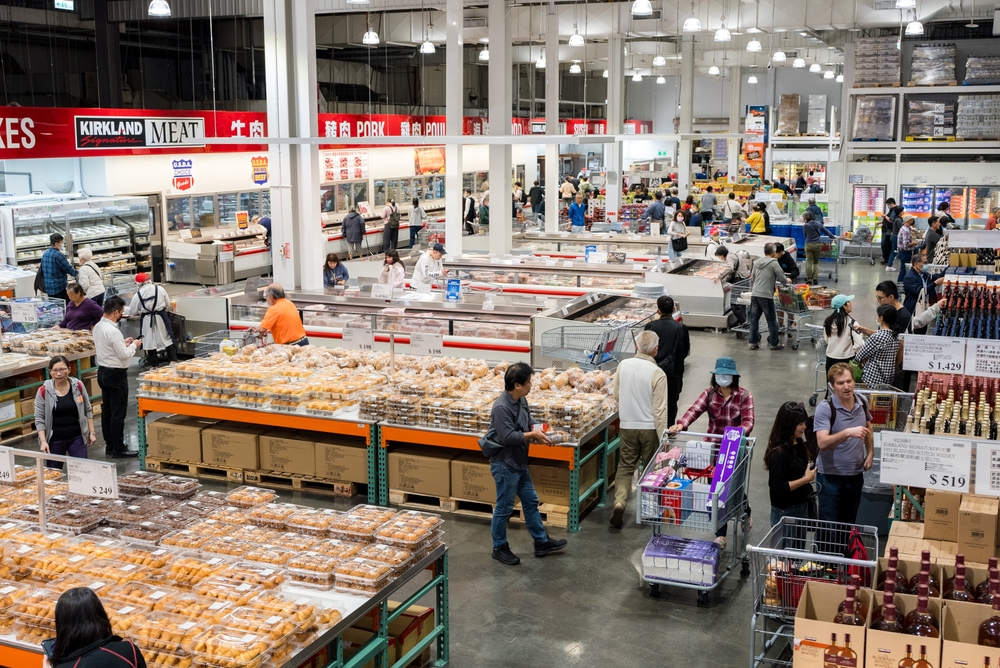

There is a particular kind of confidence that comes from pulling into a Costco parking lot. You have your list, your reusable bags, and a firm conviction that you are about to be very smart with your money. By the time you reach the checkout, that cart will likely tell a different story – a 72-count bag of granola bars, a fleece jacket in a color you’re not sure about, a rotisserie chicken you didn’t need but couldn’t leave behind, and somewhere beneath all of it, the paper towels you actually came for. If that scenario sounds familiar, you’re not alone. Costco is one of the most psychologically sophisticated retail environments ever built, and it has been quietly exploiting the gap between your intentions and your behavior for decades.
The premise seems simple enough: pay for access, buy in bulk, spend less per unit. And the premise isn’t wrong – the savings are real on the right items. But the design of every Costco warehouse, the mechanics of every membership tier, and the rotation of those famous seasonal “finds” are all calibrated toward one outcome: getting more money out of your cart than you planned to put in. Understanding exactly how that works is the first step to not letting it happen.
The sections below break down the psychology, the data, and the practical strategies behind shopping Costco with genuine financial discipline – the kind that leaves you with a lower receipt, not just a lower cost per unit.
The Scale of the Problem: What Impulse Spending Actually Costs
Before discussing Costco specifically, it’s worth anchoring the problem in real numbers. In 2024, the average American consumer spent an estimated $282 per month on impulse purchases, making roughly 9.75 unplanned buys per month at an average of $28.90 each. That works out to more than $3,300 per year spent on things people did not intend to buy when they left the house.
Impulse buying accounts for up to 62% of grocery sales revenue, and up to 80% in some product categories. Physical retail is where the problem is most concentrated: 80% of impulse buys occur in brick-and-mortar stores. And despite the growth of online shopping, physical stores still lead in triggering unplanned purchases – touching, seeing, and experiencing products in real life creates a stronger emotional pull, amplified further by in-store merchandising, sensory environment, and layout design.
Costco exists squarely in that physical retail world and exploits those dynamics more effectively than almost any other retailer on the planet. The “treasure hunt” strategy Costco employs is not a byproduct of warehouse logistics – it is one of the most deliberately engineered, behaviorally sophisticated retail environments ever constructed, designed to activate specific consumer mental states that generate unplanned purchasing, discovery excitement, and membership loyalty.
How Costco’s Store Design Is Built to Make You Spend More
The Treasure Hunt Model
Regular Costco shoppers will have noticed that their favorite products move around the store frequently – that’s intentional. The company rotates most of its inventory on a regular basis, so shoppers must hunt for familiar items. If you’re searching for laundry detergent but can’t find it this week, you’re forced to walk past new products that Costco hopes you’ll notice and buy.
By disrupting customers’ routines and shopping habits – what behavioral scientists call “scripts” – Costco prevents people from going on autopilot. The result is that shoppers who come in just for a rotisserie chicken or toilet paper end up re-navigating the store each visit, seeing new products, and placing something extra in their cart.
The model leans heavily into a core element of consumer psychology: the fear of missing out. Many of Costco’s unique or seasonal items are available for a limited time only, creating urgency. If you don’t grab that deal now, it might be gone by next week.
The first products most shoppers encounter when walking into a Costco are high-ticket items – large-screen televisions, jewelry, designer goods. These are placed front and center to condition shoppers into perceiving a luxury-at-discount environment, making everything else in the store feel like a bargain by comparison.
Free Samples: Small Bites, Large Bills
Research shows that almost half of consumers say a free sample has led them to buy something they didn’t plan to. Samples remove the barrier of risk – once someone has tried a product, that’s often all it takes. Costco has made the free sample into one of its most powerful selling tools. And the psychological principle at work goes deeper than just convenience: the act of receiving something for free triggers a reciprocity response, a social impulse to give something back – which often takes the form of putting the sampled item in the cart.
The Membership Effect
A paid membership acts as a psychological commitment device. It nudges shoppers to shop intentionally, to maximize the value of their access, and to frame Costco as a place of value – and once they’ve paid to belong, they’re more likely to show up and follow through on purchases. That membership fee also creates a subtle justification for spending more: if you’ve already paid to be here, you want to feel that it was worth the trip.
According to Costco’s fiscal year 2025 earnings release, membership fee revenue grew 10% to $5.323 billion, driven by new member sign-ups and fee increases. By the end of fiscal 2025, 68.3 million people held individual memberships – up from 63.7 million the previous year. The company’s membership renewal rate in the U.S. stood at approximately 92% at the end of fiscal 2025. Shoppers aren’t just showing up; they’re coming back, year after year, at extraordinary rates.
Understanding Your Membership: Are You Paying the Right Amount?
Before even setting foot inside a warehouse, the membership decision itself deserves scrutiny. Costco’s standard Gold Star membership costs $65 per year, while the Executive membership is $130 per year. The Executive tier earns a 2% annual reward on qualifying purchases – but to recoup that extra $65 you’re paying over the Gold Star price, you’d need to spend $3,252 at Costco in a single year. For households that don’t reach that threshold, the Gold Star membership is the better financial choice – the math doesn’t work otherwise.
Both Costco and Sam’s Club offer 2% cash back at the higher membership tier, but Costco caps annual rewards at $1,250 while Sam’s Club caps theirs at $500. Sam’s Club’s basic Club membership is $50 per year, $15 cheaper than Costco’s Gold Star, though it has more limited service offerings – no pharmacy savings, optical savings, or free online shipping, for example. The Sam’s Club Plus tier is $110 per year.
The practical implication: if you’re considering which warehouse club to join, or whether to upgrade your existing membership, do the math before deciding. The Executive membership justifies its cost only at meaningful annual spending levels. And as U.S. News & World Report reports in a 2026 analysis, it’s increasingly common for consumers to hold memberships at multiple stores. According to research firm Upside, the average grocery customer now belongs to 2.8 loyalty or membership programs in total – members still shop around at multiple stores seeking the best deals.
The Core Strategy: Why a Shopping List Is a Financial Instrument
The single most documented behavior for controlling grocery spending – and one that becomes especially consequential inside a Costco – is the shopping list. Research published on ResearchGate found that the effects of shopping lists on spending are well-replicated across multiple studies, with consistent reductions in mean spending of around $10 to $13 per trip – findings similar across both online and brick-and-mortar shopping environments.
That $10 to $13 saving per trip sounds modest. At Costco, where individual items routinely cost four to six times what they would at a regular grocery store due to bulk packaging, the savings from sticking to a list scale up considerably. A single unplanned purchase at Costco – a cashmere sweater, an outdoor furniture set, a 36-pack of sparkling water – can easily exceed what an entire year of unplanned items would cost at a conventional supermarket.
According to a 2025 report by FMI, the Food Industry Association, shoppers are increasingly relying on structured strategies to manage grocery budgets – with list-making (cited by 83% of respondents), household inventory checks (79%), and meal planning (69%) ranking as the most common methods. That 83% figure is striking: most people know lists work. Fewer actually stick to them once they’re inside a Costco, where the environment is specifically engineered to override the impulse-control function the list was meant to serve.

The list isn’t just a memory aid. When written before entering a store, it functions as a pre-commitment device – a specific intention set before decision-making pressures begin. Data from AlixPartners’ December 2025 consumer survey found that 45% of consumers who planned to reduce their grocery spending in 2026 cited “better planning” and avoiding impulse purchases as their primary strategy. The list doesn’t eliminate the pull of a well-placed display or a limited-time deal, but it gives shoppers an external anchor to return to when those triggers fire.
The related insight that personal finance writers consistently surface: make the list before you leave home, not in the parking lot. Writing it at home, while referencing what’s actually in your pantry and refrigerator, forces a level of inventory-taking that the parking-lot version doesn’t. You’re less likely to buy 48 ounces of olive oil if you’ve just confirmed there are two full bottles already on your shelf.
For shoppers navigating Costco buys that seem like deals but aren’t, this pre-trip discipline becomes even more important – because several product categories at Costco systematically underdeliver on their apparent value, and the list is the best defense against them.
Practical Strategies for Not Overspending at Costco
Eat Before You Go
The link between hunger and spending isn’t folk wisdom – it’s documented consumer behavior. Shopping on an empty stomach increases the attractiveness of everything in a store, not just food. Psychologists link impulse buying to instant gratification, and neuroscience research shows that dopamine, the brain’s pleasure and motivation chemical, plays a direct role – when dopamine levels rise, people become more likely to choose immediate rewards over delayed ones, even when waiting would be the more rational choice. Hunger accelerates that process across the board. Eating a full meal before visiting Costco isn’t just comfortable common sense – it dampens the neurochemical conditions that make unplanned purchases feel necessary.
Know Your Prices Before You Go
One of the most consistently cited errors Costco members make is assuming that Costco prices are always lower than alternatives. A July 2025 price comparison by Saving Your Tail of 150+ items across both Costco and Sam’s Club found that Sam’s Club had the lowest prices on 68% of items, with 8.2% lower average unit prices overall. That doesn’t mean Costco is a poor value – it means informed shoppers know which specific items represent genuine savings and which don’t. Costco wins clearly on milk, eggs, cheese, coffee, and bottled water, with its Kirkland Signature sourcing and focused product strategy giving it an edge in those specific categories.
Knowing your regular grocery store’s unit prices for key items before walking into Costco prevents the “it’s bulk, so it must be cheaper” assumption that costs shoppers real money. Not all bulk is discount bulk.
Apply the Spoilage Test to Perishables
Bulk pricing only saves money if you use what you buy. Fresh produce doesn’t last, and the volume available at Costco can work against smaller households. Unless you’re feeding a large family or hosting an event, the risk of throwing away moldy fruit or slimy greens is real. Before adding any perishable to the cart, a quick mental check – “Will we actually eat all of this before it expires?” – prevents spending money to eventually discard it.
Set a Budget Floor, Not Just a List
A shopping list tells you what to buy. A budget tells you how much you’re willing to spend in total. Combining both gives you two layers of defense against the treasure-hunt effect. Setting a dollar ceiling before entering the store – and checking the running total at key points during the shop – works against the psychological momentum that Costco’s layout is designed to build. The bigger the cart, the fuller it looks, and the more natural it feels to keep adding items. Interrupting that momentum at $150, $200, or whatever your planned ceiling is, resets the calculation.
Treat “Limited-Time” Framing With Skepticism
While Costco does carry genuinely limited-stock items, the psychological effect of scarcity is deployed even on products that return seasonally or are simply slow-moving stock. The perception of limited availability prompts impulsive purchases – consumers fear missing a good opportunity. When that anxiety fires next to a pallet of outdoor furniture or a six-bottle wine deal, pausing to ask whether the urgency is real or manufactured is one of the most useful things a Costco shopper can do.
What the Data Says About Choosing the Right Membership Tier
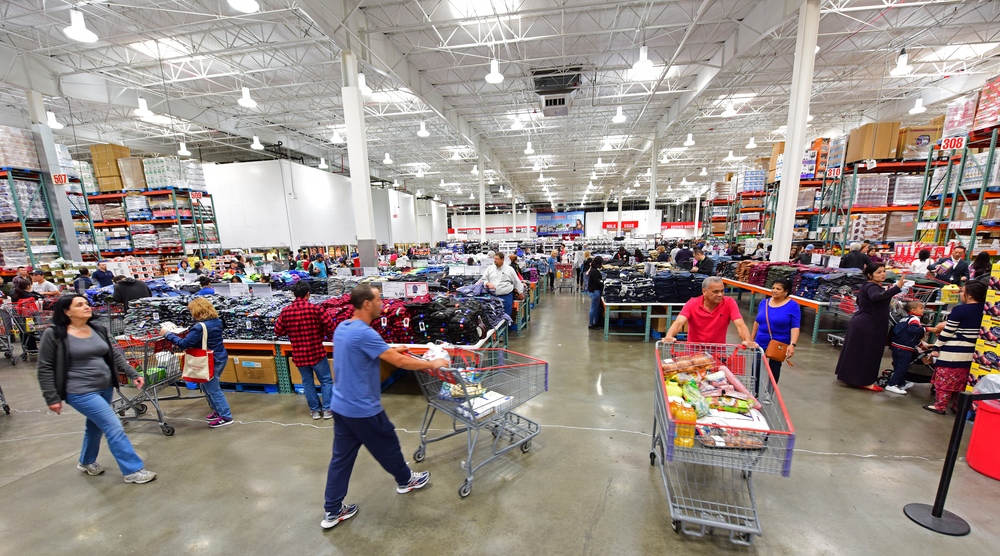
The membership decision deserves a brief return visit, because it’s where many members quietly lose money before they’ve bought a single item. As of fiscal year 2025, Executive memberships accounted for 47.7% of all paid Costco members and generated 74.2% of global sales. That’s a remarkable figure: fewer than half of members hold the premium tier, but they account for nearly three-quarters of all spending.
That correlation carries a caution. The Executive membership’s 2% cash back incentive encourages higher spending to maximize returns – which is exactly what Costco wants. To get back the extra $65 you paid over the Gold Star membership cost, you need to spend $3,252 in a year. That’s a meaningful bar. Households that don’t reach it are effectively paying $65 extra for no benefit. The right membership tier should be a function of honest, backward-looking calculation – how much did you spend at Costco last year? – not an aspiration about how much value you plan to extract.
Separately, the data confirms that 70% of all consumers have impulsively purchased an item specifically because it was on sale. The 2% Executive reward is, in effect, a “sale” framing applied to your entire shopping behavior – it makes every purchase feel slightly discounted, which lowers the psychological friction on buying things you didn’t plan to buy. The membership tier should be chosen with that dynamic in mind.
What to Do Before Your Next Trip
The gap between Costco’s savings potential and its overspending risk is real, and it’s wider than most members acknowledge. The warehouse model genuinely delivers value on a core set of items – Kirkland Signature staples, bulk proteins, household essentials with long shelf lives. Where it stops delivering value is in the categories that depend on impulse: seasonal merchandise, apparel, electronics, and fresh produce in quantities that exceed what a household can realistically consume.
The corrective isn’t complicated. Write the list at home, with the pantry open. Set a dollar budget and check it mid-shop. Eat before you go. Know your baseline prices for the items you buy regularly, so you can identify whether Costco’s unit price is actually better – and accept that sometimes it isn’t. Apply genuine scrutiny to “limited-time” items before they land in the cart. And take a hard look at your membership tier: if you spent less than $3,252 at Costco last year, the Executive upgrade is costing you money, not saving it.
The AlixPartners data found that 45% of U.S. shoppers planning to reduce grocery spending in 2026 identified better pre-shopping planning and avoiding impulse purchases as their primary method for doing so. The strategy isn’t novel, but the execution inside a store this size – with this much psychological engineering built into every aisle – requires deliberate practice rather than good intentions. The list isn’t just helpful. It’s the discipline that makes Costco’s real value accessible, instead of subsidizing the value that Costco extracts from you.
AI Disclaimer: This article was created with the assistance of AI tools and reviewed by a human editor.