
The self-checkout machine was supposed to be a permanent fixture of modern retail, as inevitable as fluorescent lighting and loyalty card prompts. For the better part of two decades, big-box stores raced to install them, trading cashier wages for a promise of sleeker, faster throughput. Customers adapted. Habits formed. The beep of a self-scan became the soundtrack of a weekly grocery run. Then, quietly, the machines started coming out.
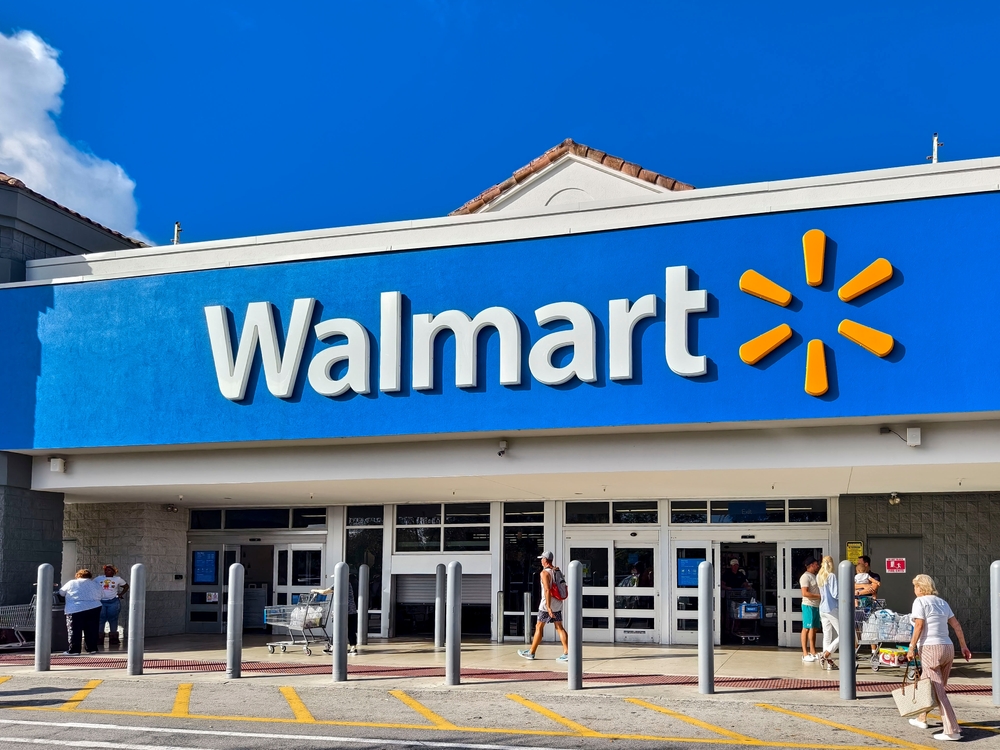
Walmart’s move to strip self-checkout kiosks from its South Philadelphia Supercenter in March 2026 might have looked like a minor operational tweak at first glance. One store. One city. But read it in the context of what the company is doing across more than 650 locations nationwide, and what Target, Dollar General, Sam’s Club, and Costco are simultaneously doing with their own checkout floors, and a much larger story comes into focus. This is not a series of isolated decisions. It is a coordinated industry-wide reckoning with one of retail’s most consequential experiments, and the numbers driving it are difficult to look away from.
Walmart’s 650-Store Overhaul: What the Plan Actually Entails
Walmart has announced plans to remodel more than 650 of its stores across the U.S., while also opening about 20 new locations in 2026 and early 2027. The remodel count of approximately 650 supercenters and Neighborhood Markets is roughly consistent with the total number of remodels carried out in the prior year.
The refresh follows Walmart’s “Store of the Future” concept and will include bold signage and redesigned displays to more effectively showcase merchandise, expanded departments and product selection, increased capacity for online pickup and delivery, and changes to pharmacy layouts, including wider aisles, private screening rooms, and dedicated checkout areas. Texas leads all states with 67 planned locations, followed by California with 56. Each remodel is expected to run into the millions of dollars, though Walmart has not publicly disclosed specific figures for individual projects.
Walmart has previously confirmed that the rapid remodels will include upgrades to checkout areas specifically designed to reduce wait times, along with tools to help workers locate products quickly and assist shoppers. Critically, the checkout redesign is not just aesthetic. Company officials cited feedback from customers and associates, aiming to deliver a more personalized shopping experience as part of the broader remodeling plans. What that means in practice, at a growing number of locations, is replacing automated kiosks with staffed lanes.
The Philadelphia Test Case
Walmart removed its self-checkout machines from a South Philadelphia Supercenter in March 2026 and replaced them with staffed cashier lanes, a move widely read as a sign that the retailer’s years-long bet on front-end automation is not paying off. The shift took hold at the South Christopher Columbus Boulevard location, currently the only store in Philadelphia to fully roll back self-checkout. The store has returned to a cashier-led model, with employees handling transactions that were previously automated, though a limited number of kiosks remain available exclusively for Spark delivery drivers fulfilling online orders.
A Walmart spokesperson described the change as an effort to “improve the checkout experience and enable associates to provide more personalized customer service,” adding that changes across its stores are “guided by feedback from associates and customers, local shopping patterns, and the needs of the business in each community.” Notably, the word “theft” appears nowhere in the company’s public statements.
Philadelphia is not the only precedent. Walmart has already removed self-checkout kiosks at select locations including stores in Shrewsbury, Missouri, and Cleveland, Ohio, in favor of associate-staffed checkout lines. The retailer also removed self-checkout lanes from three stores in New Mexico the prior year.
The Shrewsbury Effect: When the Data Is Undeniable
From January through May 2024, the Shrewsbury Police Department responded to 509 calls from that Walmart location. During the same period in 2025, after self-checkout was removed, that number fell to 183. Arrests dropped from 108 to 49 over the same comparison window, a reduction the local police chief attributed directly to the removal of self-checkout. Those figures represent something corporate language does not easily capture: a near-halving of police calls tied to a single operational change.
The Theft Problem That No One at Corporate Will Officially Name
The shift comes as retailers increasingly confront “shrink,” an industry term for theft and inventory loss, much of which has been tied to self-service systems. The scale of the problem, across the retail sector as a whole, is substantial.
According to the Appriss Retail 2026 Total Retail Loss Benchmark Report, U.S. retailers lost $90 billion to inventory shrink alone in 2025. Incidents of shoplifting and merchandise theft increased 19 percent from 2023 to 2024, further compounding a 26 percent increase from 2022 to 2023.
Self-checkout is not the sole cause of retail shrink, but research consistently shows it is a disproportionate contributor. Research also found that self-checkout machines generate losses amounting to 3.5% of sales, more than 16 times the loss rate at traditional cashier lanes. Data compiled by Capital One Shopping estimates that 36.3 million Americans have stolen from a self-checkout kiosk, and almost 20 million plan to do it again. Shrink rates at self-checkout represent 3.75% of average retailer inventory, and self-checkouts see up to four times as much shrinkage as traditional cashiers.
Consumers Come Clean
The most revealing data on self-checkout theft comes not from loss-prevention audits, but from consumers themselves. A December 2025 LendingTree survey of 2,050 U.S. consumers found that 27% of self-checkout users have purposefully taken an item without scanning it, with unaffordable essentials (47%) and price increases tied to tariffs (46%) cited as the main motivations. That 27% figure is up from 15% just two years earlier, nearly a doubling of self-reported intentional theft in a two-year span.
While 55% of Americans say they like self-checkouts for their speed and convenience, 69% of people who use them believe the machines make it easier to steal. The demographic breakdown adds another layer of complexity. Millennials (41%) and Gen Zers (37%) were more likely to acknowledge stealing at self-checkouts, while only 2% of Baby Boomers reported doing so. Men were twice as likely as women to take something without scanning. Strikingly, those in households earning over $100,000 annually (40%) were more than twice as likely to steal as those making under $49,999 (17%).
Of those who have deliberately stolen at self-checkout, 46% say they have been caught, yet 55% say they intend to do it again. LendingTree chief credit analyst Matt Schulz offered a candid read of the motivations at play. “Largely unattended self-checkouts provide a potential opportunity for folks to help themselves,” Schulz said. “Even though people know that stealing is wrong and most understand the risk they’re taking, tough times require tough choices.”
About a third of self-checkout thieves say they feel no remorse, and a similar share view self-checkout as “unpaid work,” meaning taking small items “feels like compensation” for doing the retailer’s job.
Who Else Is Pulling Back – And How
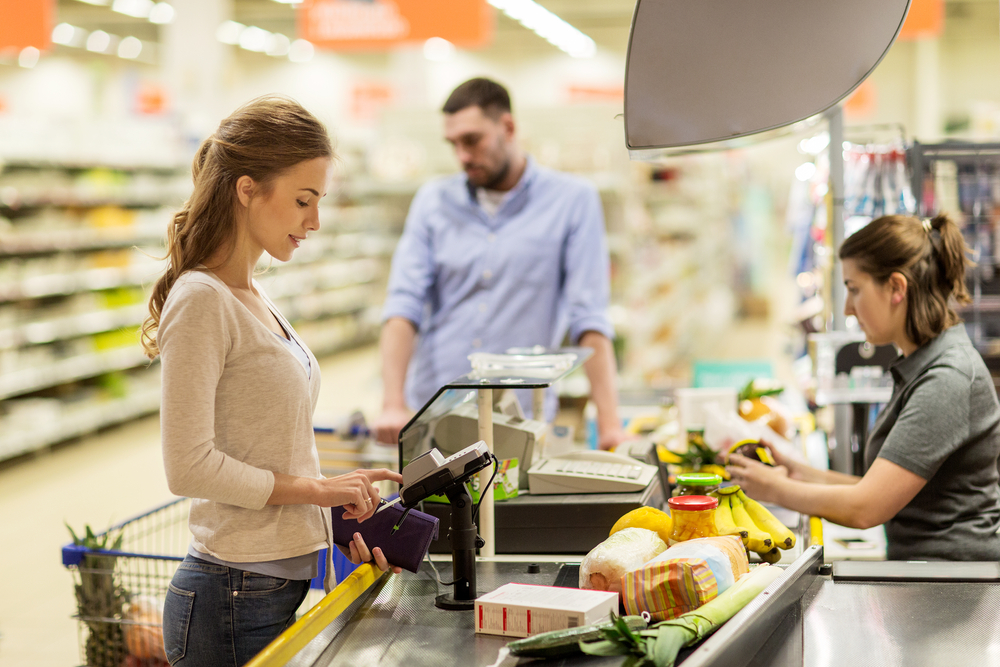
Walmart’s moves are unfolding inside a broader industry retreat. The degree to which each retailer is walking back differs, but the direction is consistent.
Dollar General’s Wholesale Removal
In 2024, Dollar General stripped self-checkout kiosks from roughly 12,000 stores nationwide. The company said it would reduce self-checkout at thousands of locations and remove it entirely from 300 locations most prone to shoplifting, while simultaneously increasing staffing for checkout assistance. Dollar General’s chief executive had previously said publicly that the chain had “relied too much” on self-checkout, one of the more direct admissions from any major retailer.
Target’s Item Limits and Oversight Expansion
Target limited self-checkout lanes to 10 items or fewer and gave store managers more control over the ratio of self-checkout lanes to cashier-operated lanes. The 10-item cap is an attempt to preserve the convenience of self-checkout for quick trips while pushing larger carts, and higher shrink risk, toward staffed registers where accountability is higher.
Sam’s Club’s Technology Pivot
Sam’s Club, a Walmart subsidiary, announced that it would phase out traditional self-checkout entirely in favor of AI-powered “scan and go” technology, where shoppers scan items as they place them in their carts and pay via a mobile app on their way out. This approach keeps the frictionless, staff-light checkout model intact while using technology to track what is actually leaving the store, addressing the accountability gap that standard kiosks created.
Costco’s Hybrid Model
Costco is charting a different course, piloting a hybrid checkout model in which staff members approach customers waiting in line and pre-scan cart items before they reach the register. At remaining self-checkout areas, Costco now often requires photo ID matching membership cards, adding a layer of accountability that standard self-checkout lanes lack. A Costco executive noted that early results show the new approach “is improving the flow of traffic” and generating strong member feedback.
For readers who want a fuller picture of how stricter self-checkout policies are landing with shoppers on the ground, the reporting on Walmart’s self-checkout rule changes captures the consumer reaction in detail.
The Legislative Response: States Begin to Regulate
The retail industry’s internal reckoning is now being matched by a growing legislative response. Lawmakers in California, Connecticut, Massachusetts, New York, Ohio, Rhode Island, and Washington are all pursuing or considering laws that would regulate how self-checkout is deployed, including requirements for a minimum ratio of employees to kiosks and limits on the number of items permitted in self-checkout lanes.
Bills across multiple states propose staffing requirements, such as mandating one employee per set number of kiosks, or item limits at self-checkouts, often capping them at 10 to 15 items. In California, the city of Santa Ana became one of the first localities in the country to pass a self-checkout ordinance, with the city council unanimously approving a measure that requires retail stores to staff self-checkout lanes in efforts to improve public safety and address theft. Under the ordinance, stores must have at least one employee monitoring self-checkout lanes at all times, shoppers are limited to 15 items or fewer, and customers cannot purchase items requiring identification, such as alcohol, through self-checkout.
The legislative push is not without critics. Analysis from the Manhattan Institute argues that while self-checkout restrictions are often framed as crime prevention, the fine print of some bills reflects a parallel motivation: protecting and creating unionized cashier jobs. The organization notes that many of the proposed staffing ratios align closely with union bargaining positions rather than evidence-based theft thresholds, a dimension of the debate that corporate and legislative narratives largely omit.
The Technology That May Replace the Kiosk
Industry watchers broadly expect more experimentation. AI cameras, better mobile apps, and data-driven lane management are all seen as candidates to blend the convenience of self-checkout with greater accountability.
At least one major hypermarket chain has used artificial intelligence to analyze purchases made at its self-checkouts and identify the stores with the highest levels of stolen products or mis-scanned items, a granular, store-by-store approach to shrink that moves beyond blanket policies. Retail strategist Bryan Gildenberg has described Walmart’s behavior as a methodical audit of stores with the highest theft rates, suggesting the company is pulling self-checkout machines from those specific locations rather than signaling a wholesale rejection of automation.
Despite the pullback, self-checkout is not disappearing completely. Walmart is still investing in alternatives like its Scan & Go technology, while also improving in-store layouts as part of its wider overhaul. The question is not whether automation survives. It is what form of automation can close the accountability gap that the traditional kiosk never solved.
What This Means for You
The story of Walmart’s self-checkout rollback is not simply a tale of machines being swapped out for people. It is an account of how a cost-cutting technology, rolled out at scale with insufficient safeguards, quietly accumulated a set of financial and social costs that eventually outweighed its benefits, at least in a subset of high-risk locations.
If you shop at Walmart, or at any major retailer, the practical effects will vary by store and by how quickly your local location is remodeled. Staffed checkouts generally mean longer peak-hour waits but a meaningfully different experience for shoppers who prefer human interaction or have complex transactions. The tradeoff is real, and not everyone will welcome it. But the numbers make the logic clear. With U.S. retailers losing $90 billion to shrink in 2025 alone, and self-checkout machines generating loss rates more than 16 times higher than cashier lanes, the math was always going to catch up.
For the retail sector more broadly, the shift represents a fundamental reassessment of where automation creates value and where it transfers risk from the store to the shopper, and eventually back again in the form of higher prices, reduced selection, and store closures in high-theft areas. The era of the fully unmonitored self-checkout lane, where trust was extended unconditionally to every customer, is effectively over. What replaces it, whether more staff, smarter technology, or some combination of both, will define how the next chapter of retail checkout is written.
AI Disclaimer: This article was created with the assistance of AI tools and reviewed by a human editor.