
A ten-foot gold trophy appeared on the National Mall on July 13, 2026. It was spray-painted gold, embossed with a large “#1,” and labeled at its base with a single word: “PARTICIPANT.” The intended recipient, per the plaque at its base, was President Donald J. Trump. The trophy was called the “Iran War Participation Trophy.” And within hours, it had drawn crowds, cameras, and a pointed response from the White House.
Given Trump’s well-documented preference for all things gold, visitors who happened upon the 10-foot golden trophy could be forgiven for initially thinking it was a legitimate monument installed by the current administration. It wasn’t. It was the latest provocation from an anonymous art collective that has spent the better part of two years turning the nation’s most symbolic public space into an ongoing canvas for political mockery.
The group calls itself the Secret Handshake. And the trophy is only their most recent move in what has become one of the most sustained, creative, and closely watched protest art campaigns in recent American political memory.
The Trophy, Explained
The anonymous protest art collective the Secret Handshake installed the “Iran War Participation Trophy” near the Martin Luther King Jr. Memorial bookstore, a short distance south of the Lincoln Memorial Reflecting Pool. The sculpture was built from wood, foam, and plaster, spray-painted gold.
The trophy cup carries a large “#1” on its face, while the word “Participant” appears in raised capital letters on its base. A plaque says the trophy recognizes Trump’s “enthusiastic involvement in the Iran War” and his “courage to participate regardless of the final score.” It compares the president to children who receive recognition for “simply showing up” and is signed by the “Secret Handshake Prize Committee.”
Another plaque nearby invites visitors to add their own trophies, adding that “No accomplishment is too distant, too small, or too unearned to bestow on President Trump.” Visitors took the invitation seriously. The trophy attracted ornaments and other items around its base, including a WWE championship belt. One baby blue Honorable Mention ribbon read “Lost Arizona,” and a small gold chess trophy carried the tag “Smallest Hands Award.”
The trophy’s satirical logic is deliberate and layered. It lampoons Trump’s desire to win the Nobel Peace Prize, and also references the peace prize Venezuelan opposition leader María Corina Machado presented to Trump in January, along with the inaugural FIFA Peace Prize awarded by FIFA president Gianni Infantino. A president who collects honors the way some people collect memorabilia now has one more to add to the shelf, this one for simply showing up to a war.
“We didn’t make up the idea of a big dumb trophy as being important. He did,” the Secret Handshake told Fast Company via email.
The Accolades Behind the Joke
To understand what the trophy is satirizing, it helps to know what happened in the months before it appeared. When Venezuela’s opposition leader María Corina Machado walked into the White House in January 2026, she came bearing the gift Trump had long coveted: a Nobel Peace Prize. Machado, a fierce critic of Venezuela’s former strongman Nicolás Maduro, had won the award for her campaign for greater democracy. She left the medal at the White House, hoping the gesture might buy her something far more valuable: US backing in the fight to lead Venezuela’s post-Maduro future.
Trump had also been awarded the inaugural FIFA Peace Prize by FIFA President Gianni Infantino during the FIFA World Cup 2026 Draw at the Kennedy Center for the Performing Arts in Washington, D.C., on December 5, 2025. FIFA’s award was suddenly announced three weeks after Trump had been overlooked for the Nobel Peace Prize, which was given to Machado. There was no explanation for the process behind the award, no candidates named, and no selection criteria given. Senior officials within FIFA were reportedly surprised by the announcement, which had not been discussed with the FIFA Council.
The Secret Handshake’s trophy draws a direct line between those accolades and the Iran war. The trophy’s raw material was sitting right there in the news.
The Geopolitical Backdrop
The satirical statue arrived amid significant political discord in Washington. The installation landed just as the U.S. and Iran resumed strikes and the Trump administration moved to reinstate a naval blockade, escalating tensions after the collapse of a tentative peace deal. The trophy’s appearance comes at a time when both the US and Iran have renewed hostilities following the collapse of an interim cease-fire deal signed in June. The Trump administration viewed its July 10 formal notification to Congress as the start of a new 60-day window during which the U.S. could engage in military action against Iran without seeking congressional approval.
Visitors, tourists, and political onlookers reacted in real time, some praising the satire, others defending President Trump, suggesting the piece may become a flashpoint as the conflict enters a volatile new phase. The 10-foot gold trophy mocked Trump’s repeated claims of victory in the Iran war despite renewed fighting.
The White House Responds
The administration’s reaction was swift and, arguably, exactly what the collective was counting on. In an email to the Washington Post, White House spokesperson Anna Kelly called the Secret Handshake “untalented ‘artists'” and advised them to “refrain from weighing in on foreign policy,” reiterating that the US “achieved all of its objectives during Operation Epic Fury.”
A passerby named Dan, who said he had walked more than two miles to see the installation, called the satire effective: “I saw an interview yesterday where people didn’t actually understand it was satire, which I think is a sign that it’s good art.” The more convincingly a satirical work resembles official commemoration, the sharper its edge. The White House response only confirmed that the trophy had landed.
Who Is the Secret Handshake?
The Secret Handshake describes itself as “a very small group of citizens” using “art, irony, and humor to express social commentary and spark political conversation in public spaces.” Its members have declined in phone interviews to provide any identifying information. The group has been operating on and around the National Mall for roughly 20 months, and their output has accelerated sharply.
The satirical art group is responsible for about a dozen public pieces mocking President Donald Trump in the nation’s capital over the past 20 months. They describe their approach as a “Hybrid Model of Covert Art Activism,” trading the traditional pursuit of permanence in art for maximum political utility – combining guerrilla-style interventions, staged symbolism, and calculated use of social media.
Many of the Washington installations were permitted with the National Park Service. The group isn’t simply trespassing. They go through the same bureaucratic channels that govern any public monument, which makes the installations harder to dismiss and harder to remove.
A Growing Catalog of Protest Art
The Iran War Participation Trophy is the most recent entry in what has become a comprehensive satirical record of Trump’s second term. Each installation has targeted a different political controversy, and the body of work has grown more ambitious over time.
In September 2025, a 12-foot statue of President Donald Trump and sex offender Jeffrey Epstein holding hands and prancing together was erected on the National Mall. Three plaques accompanied the satirical piece, courtesy of the Secret Handshake, noting the statues were “in Honor of Friendship Month.” The piece was framed as a celebration of “Friendship Month,” a tongue-in-cheek reference to the once-close friendship between Trump and Epstein, who died by suicide in jail in 2019 while awaiting trial on sex trafficking charges. Trump has said that he ended his association with Epstein years before Epstein’s death and has denied writing a birthday message attributed to him.
In January 2026, a 10-foot-tall birthday card with the message and sketch Trump allegedly sent to Epstein appeared on the National Mall in time for Epstein’s birthday.
In March 2026, a protest statue depicting Donald Trump and Jeffrey Epstein in a Titanic-style pose was installed on the National Mall near the US Capitol. The 12-foot artwork showed the two figures recreating the iconic “Jack and Rose” scene from the movie. The installation, titled “King of the World,” was placed near the US Capitol by the Secret Handshake.
Earlier works also include the “Dictator Approved” piece, an 8-foot-tall sculpture of a hand squashing the crown of the Statue of Liberty while making a thumbs-up gesture, and a “Gold TV statue” multimedia installation in which a golden TV showed images of Trump dancing, including with Epstein.
In May 2026, the collective planted working 1980s-style arcade games near the District of Columbia War Memorial, one offering players a choice between “order Diet Coke” and “invade Iran.” Other earlier pieces include a mock tribute from the world’s authoritarian leaders, a “Throne Fit for a King” sculpture featuring a golden toilet mocking Trump’s White House renovations, and a reproduction of the desk of former House Speaker Nancy Pelosi with a pile of fake excrement ridiculing the January 6 rioters.
Each piece has its own specific target. Taken together, they form something closer to a running political chronicle than a single act of protest.
The National Mall as a Contested Space
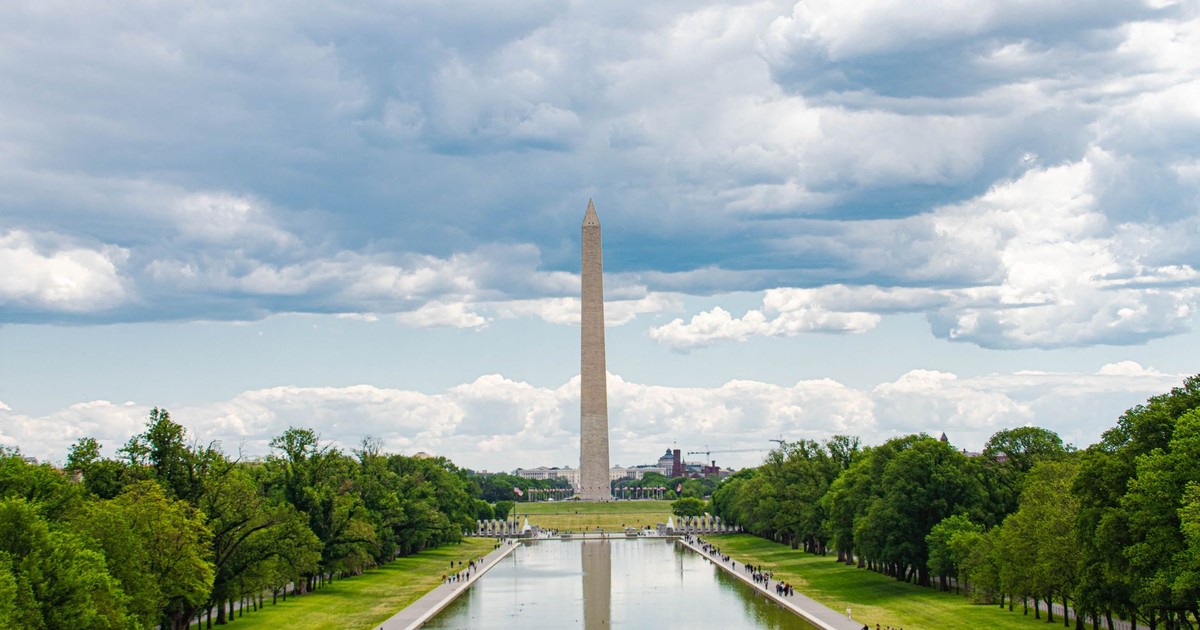
The Secret Handshake’s installations exist within a broader visual contest playing out across Washington’s most iconic public space. Huge banners bearing Trump’s face hang from several federal buildings, creating an environment in which the administration’s own self-promotional imagery and the collective’s satirical counter-imagery coexist within a few hundred yards of each other.
Activists have also launched demonstrations against Trump’s proposed Triumphal Arch, erecting mock installations near the National Mall to highlight their opposition to the project. Those demonstrations followed a decision by the U.S. Commission of Fine Arts, which unanimously approved the final design concept and site plan for the proposed arch, slated for construction at Memorial Circle near the entrance to Arlington National Cemetery. The Mall is being contested from multiple directions simultaneously: one side adding official monuments, the other adding satirical ones.
Official architecture takes years of approvals, hearings, and construction. The Secret Handshake can install a fully realized sculptural statement overnight and have it photographed, shared, and debated across social media within hours. That speed is a significant part of what makes the campaign work.
From Washington to Manhattan
The anonymous artists who call themselves the Secret Handshake left their mark in Lower Manhattan on July 29, 2026, placing a 10-foot-tall trophy, spray-painted gold and emblazoned with a #1, in Foley Square.
The golden monument sits just a few blocks from the Manhattan courthouse where Trump faced his hush money trial in 2024. That proximity was almost certainly not accidental. According to a statement issued by the group, the statue was “an attempt to de-escalate the conflict through positive reinforcement.”
More than three dozen mock trophies and awards surround the base of the New York installation. One seemed to mock Trump’s electoral history: “Lost Arizona,” read a baby blue Honorable Mention ribbon, dangling from the neck of a tennis trophy. The New York deployment signals that the Secret Handshake’s campaign has expanded beyond Washington. Whether other cities follow remains to be seen.
The Satire That Sticks
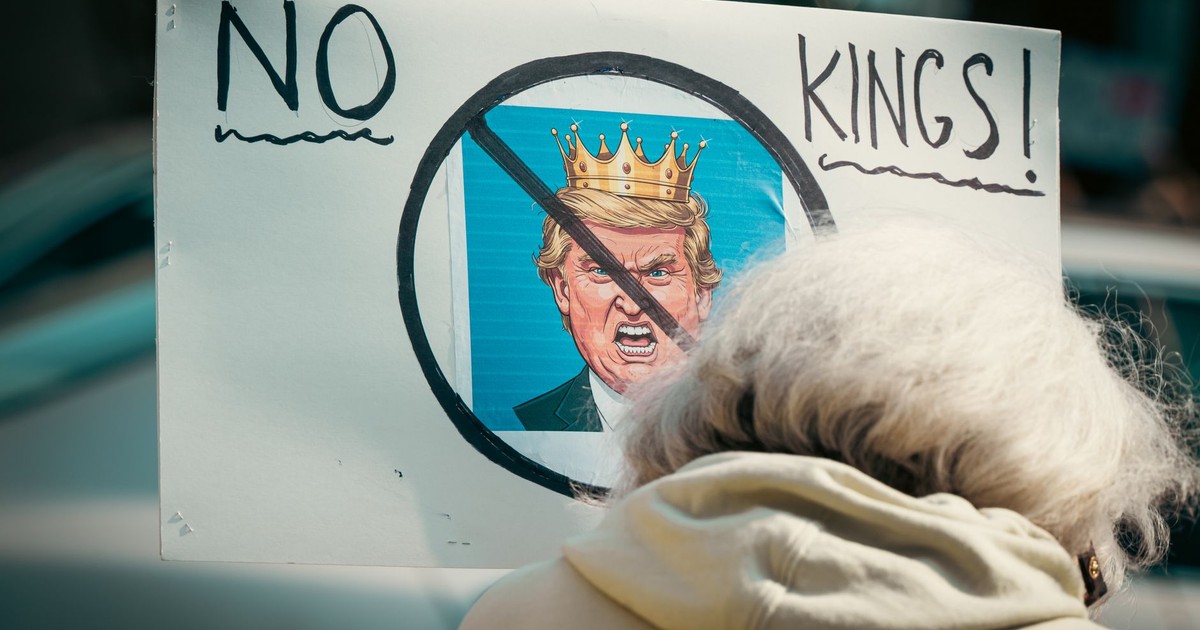
The most revealing response to the Iran War Participation Trophy came not from the White House or art critics, but from ordinary people on the Mall who initially took it for a real monument. One visitor, Gayl Staver, 75, told Art News: “I thought it was serious because there are so many ridiculous things happening that it’s hard to tell.” That confusion is the piece’s sharpest edge.
Political satire has always worked best when the gap between the target and the joke is uncomfortably small. The Secret Handshake understands something particular about this political moment: that the rhetorical style of the administration, the prizes, the superlatives, the self-bestowed grandeur, already looks, to many observers, like parody. A fake participation trophy for a war president lands because the real trophies Trump has accumulated during his second term are themselves contested. The Nobel Peace Prize medal accepted from Machado and the inaugural FIFA Peace Prize became the collective’s raw material, the straight lines that the trophy answers with a punchline.
The group’s willingness to stay anonymous also keeps the focus entirely on the work. There is no artist to interview at length, no personality to attach to or reject. Just the object, the plaque, and the public figuring out what to do with it.
Some of what the Secret Handshake does sits in a long tradition. The Dadaists of the early 20th century built anti-war protest from absurdity. Street art and sculptural intervention have always used public space to stage confrontations that formal channels cannot. What makes the Secret Handshake distinctive is the specific combination of monumental scale, legal permitting, targeted research, and social media strategy, all deployed in a location that is, symbolically, America’s living room.
What to Do With All of This
The Secret Handshake’s work raises a genuine question that goes beyond any single installation: what does protest art actually accomplish? It doesn’t change policy. It doesn’t remove anyone from office. The White House calling the artists “untalented” and defending Operation Epic Fury suggests the administration is unlikely to be moved by a golden trophy.
But that may not be the point. What the Secret Handshake has built over 20 months is a parallel visual record of a presidency, one that operates outside official channels and resists the administration’s own image management. Each piece targets a specific vulnerability: the Epstein associations, the bathroom renovations, the trophy collecting, the Iran war. The cumulative effect is a catalog of the controversies an administration would prefer to minimize, rendered in ten-foot gold paint and placed directly in front of the public.
Protest art doesn’t win arguments. It changes what people are looking at when they go for a walk near the Lincoln Memorial. Sometimes that’s enough. The Iran War Participation Trophy will eventually be removed, like every installation before it. The plaque will be read by a few thousand more visitors, the WWE belt photographed from a dozen angles, and then it will be gone. What persists is the record of what it said, when it said it, and precisely where it was standing.
Disclaimer: This information is not intended to be a substitute for professional medical advice, diagnosis, or treatment and is for information only. Always seek the advice of your physician or another qualified health provider with any questions about your medical condition and/or current medication. Do not disregard professional medical advice or delay seeking advice or treatment because of something you have read here.
AI Disclaimer: This article was created with the assistance of AI tools and reviewed by a human editor.