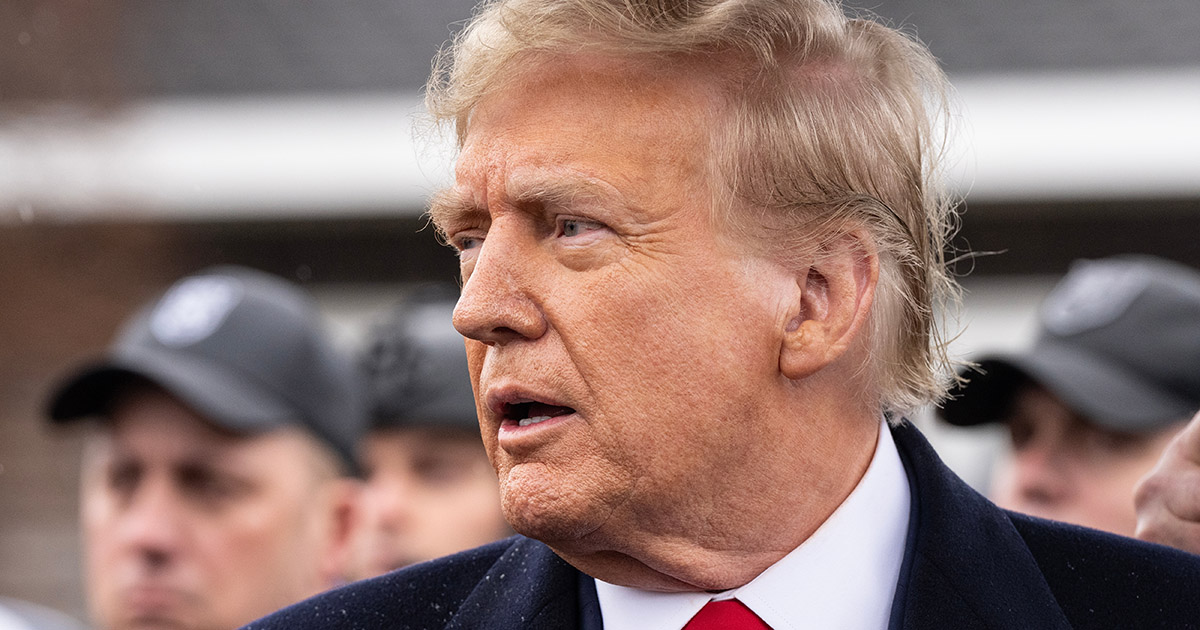

The share of Republicans who disapproved of Trump’s job performance increased to 21% from just 5% shortly after he took office in January 2025, while the share of Republicans who said Trump was doing a good job fell to 79%, down from 91% at the start of his term.
U.S. crude oil jumped past $90 per barrel at the start of the conflict, up from $67 the day before the Iran war broke out, and that shock at the pump became the most immediate and personal way millions of Americans experienced the war’s consequences.
The Independent Collapse

According to the Quinnipiac poll, independents said U.S. military action against Iran was not worth it by 66% to 29%. That margin matters because independents do not share Democrats’ institutional opposition to the Republican administration. A 66% negative verdict from persuadable voters is not something a campaign can spin its way past.
The CBS News/YouGov data captured the partisan gulf on the war itself clearly: 57% of independents viewed U.S. military action as a failure, aligning more closely with Democrats, who called it a failure at 80%, than with Republicans, 66% of whom viewed it as a success. On the generic congressional ballot, CBS polling found voters preferring Democratic candidates by a margin of 49% to 42%, with independents showing a 19-point Democratic lead.
The doubts ran particularly sharp among younger Americans. A Generation Lab survey of adults aged 18 to 34 found 77% called the strike the wrong decision.
The Peace Deal Nobody Trusts

The signing of a Memorandum of Understanding between the U.S. and Iran on June 17 was intended to be the Trump administration’s off-ramp from the conflict’s political damage. It has not functioned that way.
According to the Quinnipiac poll, when asked how confident they were that President Trump’s deal with Iran would work, 59% of voters said they were either not so confident or not confident at all, while just 37% expressed confidence it would work.
The latest Reuters/Ipsos poll, which surveyed 1,262 American adults from June 18 to 22, found that just 24% of Americans thought the war with Iran was worth the costs. Half said the conflict was not worth it. Only 23% of respondents, including just half of all Republican respondents, believe the U.S. is now in a stronger position with regard to Iran than before the war. Thirty-five percent think it is in a weaker position.
Sixty-three percent of Americans polled by Reuters/Ipsos think it is unlikely the Memorandum of Understanding will lead to lasting peace between the U.S. and Iran. That includes around half of Republicans and 80% of Democrats. Only 18% of Americans, including 34% of Republicans and 10% of Democrats, think the deal will deliver lasting peace.
The memorandum included provisions to reopen the Strait of Hormuz and initiate a 60-day negotiation period for a new Iranian nuclear agreement. The agreement’s durability was quickly tested by Israeli strikes on an Iran-backed militia in Lebanon, with Tehran’s top military command threatening to close the strait again over those attacks.
Although a shaky truce between Washington and Tehran remained in place, Trump continued to face mounting criticism at home, including from fellow Republicans. Washington and Tehran’s interim deal, which extended a months-long ceasefire and offered concessions to the Islamic Republic, sparked outrage among many Republicans. Hostilities then quickly resumed with a series of strikes that reignited tensions, before the two sides agreed to pause the fighting and hold more talks.
William Figueroa, an assistant professor of international relations at the University of Groningen, summarized the strategic picture plainly: “While it is difficult to say that Iran won given the state of the economy and the internal political instability, it’s even more difficult to see this as a victory for Trump. Almost all of the concessions or changes from pre-war policy are on the U.S. side.”
The Midterm Warning Signs
Trump’s approval rating fell to the mid-30s in multiple polls conducted in the weeks following the strikes — hitting 36% in Reuters/Ipsos polling in late March and dipping as low as 33% in an AP/NORC survey in late April — a significant drop from the 40% he held at the start of the conflict. Independent voters have broken sharply against the war and against the president. And the midterm elections, in which all 435 House seats and 35 Senate seats are at stake, are four months away.
Historical data is unambiguous on the relationship between presidential approval and midterm seat losses: every president since Harry Truman whose approval was below 50% in the month before a midterm election lost House seats. When approval falls below 40%, the average seat loss climbs to 34.
In the 2026 cycle, Democrats running in special elections were outperforming Kamala Harris’s 2024 margins by an average of 13 percentage points, a stronger swing than the one that preceded Democrats’ 40-seat gain in 2018. In February 2026, Democrat Chasity Verret Martinez won a Louisiana House seat in a district Trump had carried by 13 points. A week earlier, Democrats had seized a Texas state Senate seat in similarly Trump-friendly territory.
The conflict had increased the Democratic Party’s chances of making political gains in the November midterms and exposed divisions among MAGA and non-MAGA Republicans, with Democrats’ edge on the generic congressional ballot rising to 6.8 points as of the end of May, a swing of more than nine points from 2024. A Washington Post-ABC News-Ipsos poll conducted in late April found 76% of respondents disapproved of Trump’s handling of the cost of living, 72% disapproved of his handling of inflation, and 66% disapproved of the war with Iran.
For Republican strategists, one of the most uncomfortable aspects of the polling picture is that the Iran war has damaged Trump with a segment of his own base. Operation Epic Fury did something particularly damaging: it gave a portion of Trump’s own supporters reason to question the fundamental promise he made them. “America First” was not supposed to mean airstrikes on Tehran. The MAGA coalition’s fracture over the war represents a potentially durable realignment risk.
Even Congress has moved. The Senate voted 50 to 48 to approve a House-passed resolution directing Trump to withdraw U.S. troops from the conflict, with four Republican lawmakers breaking rank to support it. The resolution does not carry the force of law, but the vote itself signals the depth of Republican discomfort with the war’s trajectory.
Read More: The Countries That Benefit From the Iran War
What the Numbers Actually Mean

The pattern in these polls is consistent enough to state plainly. This is not an opposition party driving negative numbers through partisan messaging. Democrats would naturally oppose the war, and at 93% opposition they do. But when independents oppose it 66% to 29%, when half of Republicans say the administration is partly to blame for gas prices, and when 66% of respondents in Reuters/Ipsos tracking said Trump hadn’t clearly explained his war goals, the survey data is describing something more fundamental than partisan opinion.
The $67 billion war cost the White House has asked Congress to approve is the concrete version of the abstract dissatisfaction in the poll numbers. Voters understand, at some level, that $67 billion committed to a conflict most of them opposed is not money that went to reducing their grocery bills or their gas prices. The approval data on cost of living, stuck at 22% in Reuters/Ipsos polling, is the inevitable result of that calculation.
A Democratic victory in the House would bring the president’s legislative agenda to a halt and expose his administration to the congressional oversight it has not experienced to date. A broader Democratic victory extending to the Senate would force the president to account for the opposition’s views on potential nominees, with MAGA-aligned candidates difficult to confirm. Neither outcome is certain, but the trajectory of polling since late February has moved consistently in one direction.
The deeper problem for the White House is not a single bad number. It’s the arithmetic of four independent polling organizations arriving at the same conclusion within the same two-week window. Quinnipiac’s Tim Malloy put the public’s verdict in terms that don’t leave much room for interpretation: after months of diplomatic fits and starts, global economic ripple effects, and a broad loss of life in the region, a majority of voters had made their feelings clear. What happens between now and November will determine whether that verdict stays in the polling data or shows up in the vote tallies.
AI Disclaimer: This article was created with the assistance of AI tools and reviewed by a human editor.