
When the US and Israel launched coordinated airstrikes on Iran on February 28, 2026, the world’s attention locked onto the obvious combatants: the jets, the missiles, the Strait of Hormuz suddenly dark to tanker traffic. But in geopolitics, as in most things, the people watching a fight from across the room often walk away with more than the people throwing punches. While the direct participants count their costs, other nations have been quietly counting something else entirely.
Since February 28, 2026, the United States and Israel have been engaged in a war with Iran and its regional allies. The conflict began with US and Israeli airstrikes on Iranian military and government sites, including the assassination of Supreme Leader Ali Khamenei. Iran responded with missile and drone strikes on Israel, US bases, and US-allied Arab countries across West Asia, and with the closure of the Strait of Hormuz, disrupting global trade on a scale not seen in decades.
The economic fallout has been brutal for most of the world. For a select group of countries, though, the disruption in one place has created breathing room, leverage, and outright financial windfalls in another. Here’s who those countries are, and exactly what they’re gaining.
Russia: The Clearest Iran War Benefit of All
No country has gained more concretely from the Iran conflict than Russia, and the math is not subtle. The International Energy Agency’s April 2026 Oil Market Report found that global oil supply plummeted by 10.1 million barrels per day in March alone, with the Strait of Hormuz closure producing the largest supply disruption in the history of the global oil market. For most countries, that’s a crisis. For Moscow, it was a windfall.
The Russian economy, battered by Western sanctions and the immense costs of the war in Ukraine, was facing a precarious 2026. Russia had built its federal budget on oil price assumptions of roughly $60 a barrel. The eruption of war in the Gulf sent Brent crude surging toward $120 a barrel, a rescue that arrived at exactly the right moment. According to a March 2026 assessment by the KSE Institute at the Kyiv School of Economics, Russia could receive as much as $45 billion to $151 billion in additional budget revenues in 2026, depending on the conflict’s duration, when accounting for the recovery of suppressed export volumes and the narrowing of the discount on Russian crude. Even in an optimistic scenario involving a six-week war with fast recovery, Russia earns an additional $84 billion in export earnings and $45 billion in budget revenues compared to a no-war baseline.
The energy windfall compounds into something even more useful: political oxygen. For Russia, the benefits keep accumulating, first through a welcome increase in oil prices and then through some respite on sanctions on oil exports to India. Above all, the Trump administration is now focused on Iran rather than Ukraine, reducing pressure on Russia to come to the negotiating table, while the need for military equipment for Operation Epic Fury further reduces the supply available to Ukraine.
Russia has seen a windfall from the Iran war as Middle East energy supplies have been disrupted, prompting major buyers India and China to significantly increase imports and massively boosting Russia’s fossil fuel export revenues. In the first quarter of 2026, 90% of Russia’s total crude exports were delivered to China and India.
Moscow has also been anything but passive behind the scenes. Iran’s Foreign Minister Abbas Araghchi commented approvingly that Iran had “good cooperation” with Russia and China, including “politically, economically, even militarily,” emphasizing that Russia in particular was helping Iran “in many different directions” and that their partnership was “not a secret.” This collaboration deepens a relationship with strategic value far beyond the current conflict. Russia is consolidating its partnership with China in ways that Washington spent decades trying to prevent.
China: Strategic Gains With a Complicated Asterisk
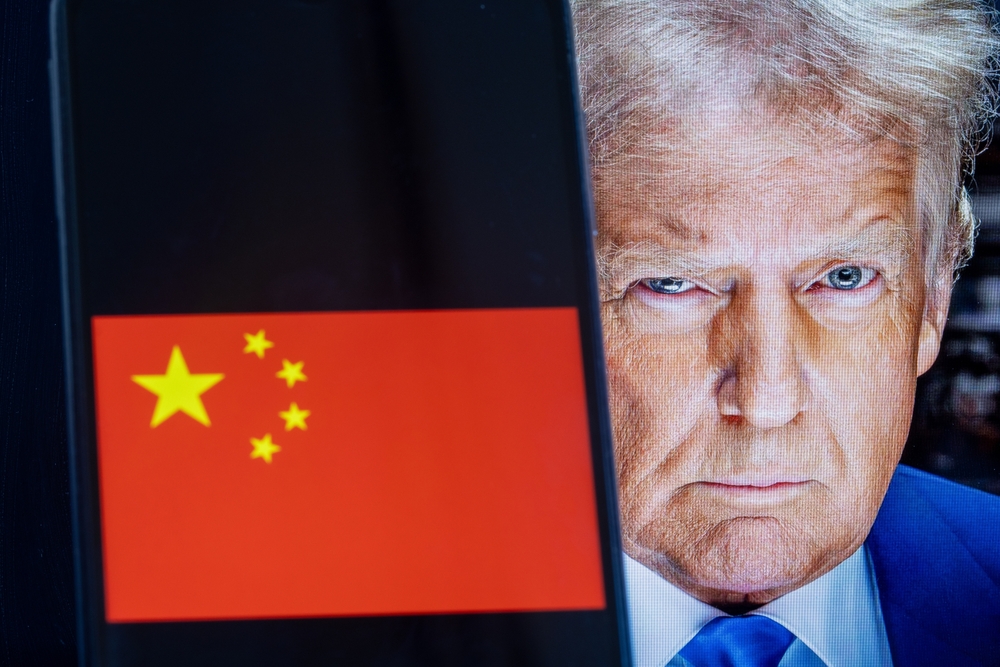
China’s position is more calculated than Russia’s, and significantly more ambiguous. Beijing has condemned the war in public statements while simultaneously maneuvering for advantages that the conflict has made available.
From China’s point of view, staying quiet has been the best way to let Washington entangle itself in a protracted war in the Middle East, opening space for President Xi Jinping to expand China’s influence in the Indo-Pacific. China is also benefiting strategically from the diversion of US military assets. Every aircraft carrier in the Persian Gulf is a carrier not parked near Taiwan. Every munition consumed in Operation Epic Fury is one that cannot be restocked instantly for an Indo-Pacific contingency.
The military intelligence dimension is harder to discuss publicly, but analysts have documented it in some detail. In early March, two sanctioned Iranian vessels picked up chemicals from the Chinese port of Zhuhai, which likely included sodium perchlorate, used in rocket fuel. According to French intelligence experts, China has also provided Iran with access to the BeiDou Navigation Satellite System, which could explain the improved accuracy of Iranian targeting compared to the 2025 operations.
There is also a deeper strategic play unfolding. The 2023 Saudi-Iran rapprochement, brokered by China under its Global Security Initiative, was a landmark achievement in countering US dominance in the Gulf. Beijing had been building influence by pushing for Iran’s admission to the Shanghai Cooperation Organization and BRICS, as part of a multipolar architecture Beijing has been shaping to its advantage.
That said, China’s gains come with genuine risks. China’s economy remains structurally dependent on export demand, with Europe alone absorbing 15% of Chinese exports. A sustained energy shock that tips Europe and the US into recession would collapse Chinese export orders, compound the ongoing property crisis, and expose the weakness of domestic demand. Beijing is gaining strategic room to maneuver, but the economics of a prolonged war cut the other way. China needs the conflict to be disruptive enough to tie down Washington, but not so catastrophic that it drags the global economy into territory that hurts Chinese exports.
North Korea: Leverage, Lessons, and a Seat at the Table
Pyongyang has said relatively little about the Iran war. That restraint is, in itself, revealing. North Korea rarely stays quiet about American military action unless it has something more interesting to gain from watching.
The primary benefit for Pyongyang comes from the fact that the war disrupts an economic competitor with Russia. Both Iran and North Korea are major providers of war materiel to support Russia’s war effort against Ukraine, including missiles, drones, and ammunition. As Iran shifts to using its stockpiles for its own fight, it creates a gap that the Kim regime is well-positioned to fill. In that way, the Iran war increases Russian dependency on North Korea, handing additional leverage to Pyongyang.
The battlefield intelligence dividend is equally significant. Analysts at 38 North, a specialist publication on North Korean security issues, argued that the US-Israeli strikes have reinforced North Korea’s nuclear deterrence calculus. The Iran operation almost certainly underscored for Pyongyang that US-made theater missile defense systems are highly effective in real-world intercept engagements, while simultaneously demonstrating that non-nuclear states attacked by the US face a categorically different outcome than nuclear-armed ones. That lesson, drawn against the backdrop of military action against a country that had no proven nuclear capability, will almost certainly shape North Korean thinking on disarmament diplomacy for years to come.
The war in Iran, alongside the 2022 invasion of Ukraine, has reinforced North Korea’s core position: nuclear weapons are the only reliable guarantee of sovereignty. Iran was struck while in the middle of nuclear negotiations. North Korea’s leadership has read that lesson carefully and will draw its own conclusions about what it means to engage in disarmament talks with Washington.
Europe’s Defense Industry: An Uncomfortable Windfall
The broader picture for Europe is one of economic pain, but within that, one sector has benefited substantially. For defense stocks, the picture has been different from the overall market. London-based BAE Systems surged around 6% on the first day of the conflict.
The broader logic is straightforward: war in the Middle East puts European governments under immediate pressure to spend more on their own defense. The Atlantic noted the diplomatic strain between Trump and European NATO member nations, as Trump had not consulted them regarding the entrance to war against Iran, and had subsequently lashed out at them for not joining the war campaign. That friction accelerated a rethink across European capitals that was already underway. Governments that were hesitating over defense budgets are hesitating no longer. That spending flows directly into orders for European defense manufacturers.
The Trump administration declared that the arms industry quadrupled weapons production to address the projected exhaustion of defensive systems due to the military operations in the Iran war, expecting to secure the long-term sustainability of US-Israel interceptor supplies. European manufacturers capable of filling gaps in that supply chain, or meeting their own governments’ accelerated demand, have found the order books filling up faster than they expected at the start of 2026.
Israel: Strategic Objectives With Significant Costs
Israel sits in an unusual category. It is both a direct combatant and, on some measures, a net strategic beneficiary, depending on how you assess its original objectives.
In 2024, during the Israel-Hamas war, Israel significantly diminished Iran’s reach in the Middle East, tipping the regional balance of power in Israel’s favor. Most notably, Israel decapitated Iran’s close ally Hezbollah in Lebanon, which in turn facilitated the toppling of the pro-Iran Syrian government. The 2026 war deepened that trend. Iran’s proxies, like its nuclear program, had been hit hard before the current war, especially Hezbollah. Both Hezbollah and the Houthis have attacked Israel during the 2026 conflict, but the impact of these attacks has been limited, and Israel has further devastated Hezbollah.
The picture for Israel is not clean, and analysts at the Carnegie Endowment for International Peace have been frank about the uncertainty. As of late April, it remains unclear whether Israel and the United States achieved their strategic goals, and whether the strategic, diplomatic, military, political, and economic costs to Israel, the United States, and the Gulf states outweigh the benefits gained thus far. Iran has been significantly set back militarily, its nuclear program is in disarray, and its proxy network has been dramatically weakened. Whether those gains are durable, and at what long-term price, is a question that cannot yet be answered.
The US Domestic Energy Sector: A Less Noticed Windfall
One beneficiary rarely mentioned in the headline analysis is the American domestic energy industry. In the United States, domestic energy production buffered the immediate shocks from the Strait of Hormuz closure in a way that European economies simply could not. When Gulf oil is cut off and prices surge toward $120 a barrel, American producers of shale oil and natural gas collect a windfall. The same price spike that tipped European gas markets toward crisis was, for American drillers, a production-boosting price signal.
This difference in energy exposure is one of the reasons the economic consequences of the Iran war have hit Europe far harder than the United States. Europe is suffering a second energy crisis, primarily as a result of the suspension of Qatari liquefied natural gas and the closure of the Strait of Hormuz. The conflict coincided with historically low European gas storage levels, estimated at just 30% of capacity following a harsh 2025-2026 winter, causing Dutch TTF gas benchmarks to nearly double to over €60/MWh by mid-March. American LNG exporters, meanwhile, have had no shortage of buyers.
What Actually Lasts
Wars generate winners. That is an uncomfortable fact, and listing those winners is not an argument for the war, or against it, or for any particular outcome. It is simply a description of how geopolitical shocks redistribute power, money, and leverage across a system that doesn’t pause for moral accounting.
What makes the 2026 Iran war notable is the degree to which the countries gaining the most are doing so passively. Russia didn’t fire a missile at Iran. China didn’t commit a single soldier. North Korea issued a toned-down press release and then went mostly silent. Yet all three have accumulated real advantages: financial in Russia’s case, strategic in China’s, and a combination of leverage and battlefield intelligence in Pyongyang’s. The countries most visibly in the fight, meanwhile, are the ones burning through munitions, spending down political capital with their allies, and dealing with the uncertainty of what comes next.
The US-Israel war on Iran has not only produced a military stalemate but has also raised serious questions about the durability of the US sanctions regime, by demonstrating again that Washington faces intense domestic pressure to ease energy costs the moment oil prices spike at home. That observation captures something important: the longest-lasting consequences of this conflict may not be measured in craters or ceasefire lines. They may be measured in the shifting calculations of smaller countries watching from the sidelines, recalibrating who they trust, who they fear, and which great powers still set the terms of the global order. The countries that threw no punches may, when the dust settles, be the ones that walked away with the most.
Disclaimer: This article was created with AI assistance and edited by a human for accuracy and clarity.