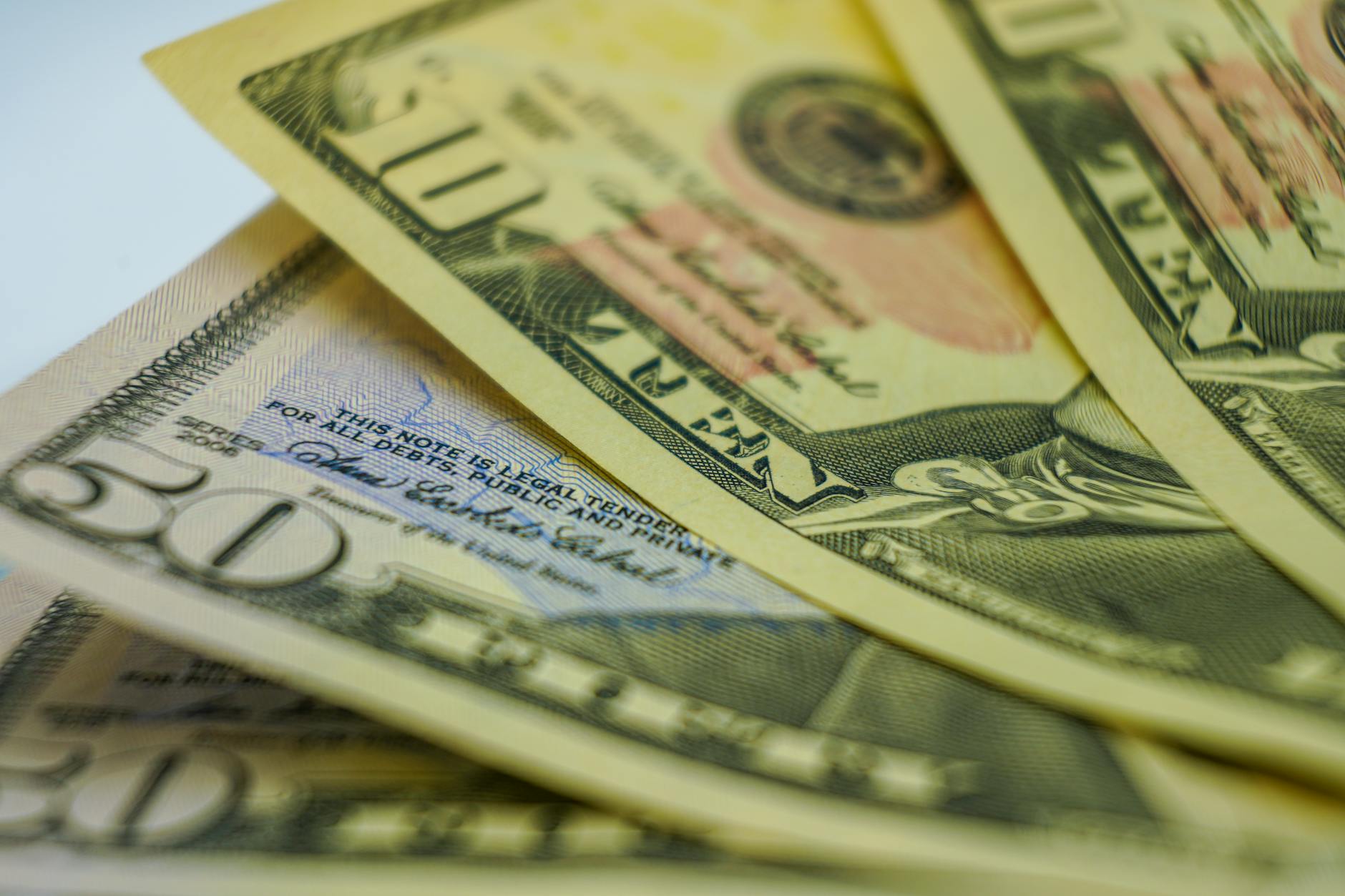

American money has always carried a specific kind of weight. The faces on it are all dead, deliberately so, and the law behind that fact is older than most of what we take for granted about modern democracy. That’s not tradition born of squeamishness. It came from a specific scandal, a specific outrage in Congress, and a vote that has held for 160 years. Until now, no administration has pushed directly against it. Now one is.
In late May 2026, Treasury Secretary Scott Bessent stepped up to the White House briefing room podium and held up a mock-up of a proposed $250 bill. On it: the face of President Donald Trump. The Treasury, Bessent confirmed, is preparing to print the note. Whether it actually goes into circulation is a question for Congress. But the designs are ready, the Bureau of Engraving and Printing has been doing the legwork, and the machinery of this idea is further along than most people realize.
The $250 bill is one part of something much larger. Since January 2025, Trump’s name and face have been attached to federal buildings, national park passes, commemorative coins, military equipment, and now passports. The currency push sits at the center of all of it, the single proposal that would require rewriting a federal law that has stood since the Civil War era, and that’s what makes it worth understanding properly.
The Trump Currency Face: What’s Actually Being Proposed
According to reporting by The Washington Post, based on four current and former employees, Trump administration officials have pressed the Bureau of Engraving and Printing to design a $250 bill featuring the president’s portrait – which would be the first appearance of a living person on US currency in more than 150 years.
Bessent’s comments came after the Post reported that US Treasurer Brandon Beach, a Trump appointee, had been pushing the Bureau to expedite the process for a new currency note to mark the 250th anniversary of the Declaration of Independence. “I don’t think that there’s anything untoward about having the president of the United States, the person who’s president of the United States, on the 250th anniversary bill,” Bessent told reporters. A design mock-up obtained by the Post showed the words “America 250 anniversary,” a nod to the US declaring its independence on July 4, 1776.
Treasury Secretary Bessent acknowledged the two current rules governing US currency: that “no living person can be on U.S. currency, and the currency must say ‘In God We Trust.'” The proposal targets the first of those rules directly. Changing it would require an act of Congress, which the Republican-led legislature is reportedly considering ahead of the Semiquincentennial on July 4, 2026.
If approved, the $250 denomination would itself be unprecedented. The largest bill Americans can currently get is the $100. A separate section of US code specifies the denominations of notes – $1, $2, $5, $10, $20, $50, $100, and so on. It does not include a $250 bill. Both the face and the denomination would require Congress to act, and so far the legislation has stalled. The bill introduced by Rep. Joe Wilson of South Carolina was referred to the House Financial Services Committee last February and has remained there since.
Separate from the portrait question, the Trump administration has already moved on currency in a way that needed no new law. The Treasury announced in March 2026 that Trump’s signature would begin appearing on future paper currency, replacing the traditional signatures of the Treasury secretary and the Treasurer – the first time a sitting president’s signature has gone on paper money.
The Law Standing in the Way
According to Britannica, the 1866 Thayer Amendment prohibited the image of any living person on “the bonds, securities, notes, or postal currency of the United States” – a law born from a brazen act of vanity by Treasury official Spencer Clark, who decided to put himself on banknotes intended to honor explorer William Clark, of Lewis and Clark fame. The bill authorizing the note only specified it should honor “Clark,” and Spencer Clark decided that referred to him.
The backlash in Congress was swift and specific. Pennsylvania’s Russell Thayer took immediate exception when he learned of the five-cent note in February 1866 and that March amended an appropriations bill to permanently bar portraits of living people from US money. The amendment passed and has held ever since.
One technicality matters here. The Thayer Amendment specifically prohibited living people from appearing on “bonds, securities, notes, or postal currency” – it says nothing about coins. That’s the opening the current administration has used for the coin side of this effort. Trump is set to appear on several coins, including a commemorative 24-karat gold coin and a $1 coin that will reportedly circulate as currency. In March 2026, the design of the gold coin was unanimously approved by the US Commission of Fine Arts, whose members were appointed by Trump earlier this year.
That legal gap doesn’t help with paper currency, where the law is direct. Congress would need to rewrite a 160-year-old statute. Until that happens, the designs sitting in a Bureau of Engraving and Printing drawer are legally inert.
Not the First Living Leader on a Nation’s Money
The ban on living faces isn’t a universal democratic principle – it’s a specifically American norm, born of a specific scandal. Queen Elizabeth II appeared on the currencies of Great Britain, Canada, Australia, and dozens of other countries during her lifetime. King Charles III was added to British banknotes in 2024. The American rule came from Congress being annoyed at one mid-level bureaucrat, not from any foundational theory about what democracies should do.
That said, the Citizens Coinage Advisory Committee, which typically advises on coin designs, refused to weigh in on the Trump coins in an effort to slow the process. Its acting chair, a New Jersey Democrat, announced that only “nations ruled by kings or dictators display the image of their sitting ruler on the coins of the realm.” The push to break from tradition has prompted criticism that the move appears to elevate Trump to the status of a monarch.
The Washington Post, which first reported the Treasury’s preparations, obtained a mock-up of the bill’s design, which appears to be based on one of Trump’s presidential portraits showing a stern expression. Rep. Andy Barr of Kentucky had previously proposed a similar design, with the same portrait of Trump and his signature, as well as the colors of the American flag. Bessent has pushed back on critics directly, arguing that commemorations of the 250th anniversary are separate from wider economic conditions. Others have raised concerns about what message the currency sends amid a growing affordability crisis.
A Broader Pattern of Branding
The Trump-era commemorative coins are one part of a branding effort that spans far more than currency. Since January 2025, Trump’s name and image have been placed across federal institutions in ways that have no precedent in modern American history.
The Department of the Interior announced that its annual “America the Beautiful” national park pass for 2026 would feature Trump’s face alongside that of former President George Washington, replacing the traditional nature imagery. Trump’s name was added to the Kennedy Center for the Performing Arts, and his name was also added to the headquarters of the US Institute of Peace in early December, even amid an ongoing court battle over who controlled it. The State Department revealed a new passport commemorating the nation’s 250th birthday that includes a page featuring a picture of Trump’s face surrounded by the text of the Declaration of Independence.
Every individual item – the bill, the coin, the passport, the national parks pass – is packaged as a 250th anniversary tribute. Whether that framing feels genuine or convenient depends heavily on your politics. But cumulatively, a sitting president is embedding his image into the physical material of national life, from the pass in your back pocket to the bill in your wallet.
Read More: All the Things Trump Has Put His Name and Face On
Even if Congress rewrites the 160-year-old rule, Americans shouldn’t expect to see the bill in their wallets anytime soon. Creating a new denomination requires years of anti-counterfeiting testing and coordination between the Federal Reserve, the Secret Service, and printing agencies. Bessent acknowledged the timeline directly: “It’s all in the hands of Capitol Hill. We prepared things in advance… but we will stick to the law.”
What This Actually Means
The proposal to put the Trump currency face on a $250 note is the furthest any administration has pushed against the democratic convention that has distinguished American money from the currencies of monarchies. The Thayer Amendment wasn’t passed because Americans were squeamish about power. It was passed because a man at the Bureau of Engraving and Printing put his own face on a government note, and Congress’s reaction was: never again, for anyone, under any circumstances. That rule held through every presidency for 160 years, including plenty of presidents who would arguably have welcomed the honor.
The law hasn’t changed yet. The appetite has. The director of the Bureau of Engraving and Printing who resisted the effort was reassigned last month. The Treasury has designs ready to go. Political appointees have been pressing Bureau staff since August 2025 to get prototypes made, according to the Washington Post’s reporting from four current and former employees. The infrastructure for this bill exists, waiting on a Congressional vote.
Whether that vote happens before July 4, 2026, and what it would mean if it did – those questions don’t have tidy answers. The more honest framing is this: for the first time in living memory, the old rule is genuinely at risk of being rewritten. Rules that hold for 160 years can feel permanent right up until the moment they aren’t.
AI Disclaimer: This article was created with the assistance of AI tools and reviewed by a human editor.