

Most of an entire generation grew up eating birthday dinners in restaurant smoke. Not in the smoking section. Just in the restaurant, which was the smoking section, because the non-smoking half was three booths away and nobody had invented actual walls yet. That’s the part the nostalgia posts leave out when someone shares a Polaroid and says the ’80s and ’90s were simpler times.
They were, in some ways. But they were also genuinely unpleasant in ways that memory has a strong incentive to sand down. A Reddit thread asked Boomers and Gen Xers point-blank: what do you not miss? The answers ran into the thousands. Here is an honest look at 28 things those generations are relieved to have left behind.
1. Secondhand Smoke Everywhere

Walking into a restaurant in 1988 meant walking into a fog. Smoking sections existed in theory, but the dividing line between the smoking half and the non-smoking half of a diner was roughly one booth. You left with your hair smelling like an ashtray whether you wanted to or not. Movie theaters, shopping malls, hospital waiting rooms, and offices routinely permitted smoking, with little separation between smokers and everyone else.
In January 1993, the EPA classified secondhand smoke as a Class A carcinogen, a designation reserved for substances with the strongest evidence of causing cancer in humans. The CDC reports that secondhand smoke causes more than 7,300 lung cancer deaths annually among U.S. non-smokers. Before that finding became policy, the public argument about whether secondhand smoke was actually dangerous was still considered open by enough people that workplaces felt little pressure to act.
Comprehensive smoking bans prohibiting smoking in most workplaces and public places, including bars and restaurants, arrived only in the late 1990s and early 2000s in some states. An entire generation of kids grew up eating birthday dinners in that haze. Nobody misses it.
2. Dial-Up Internet
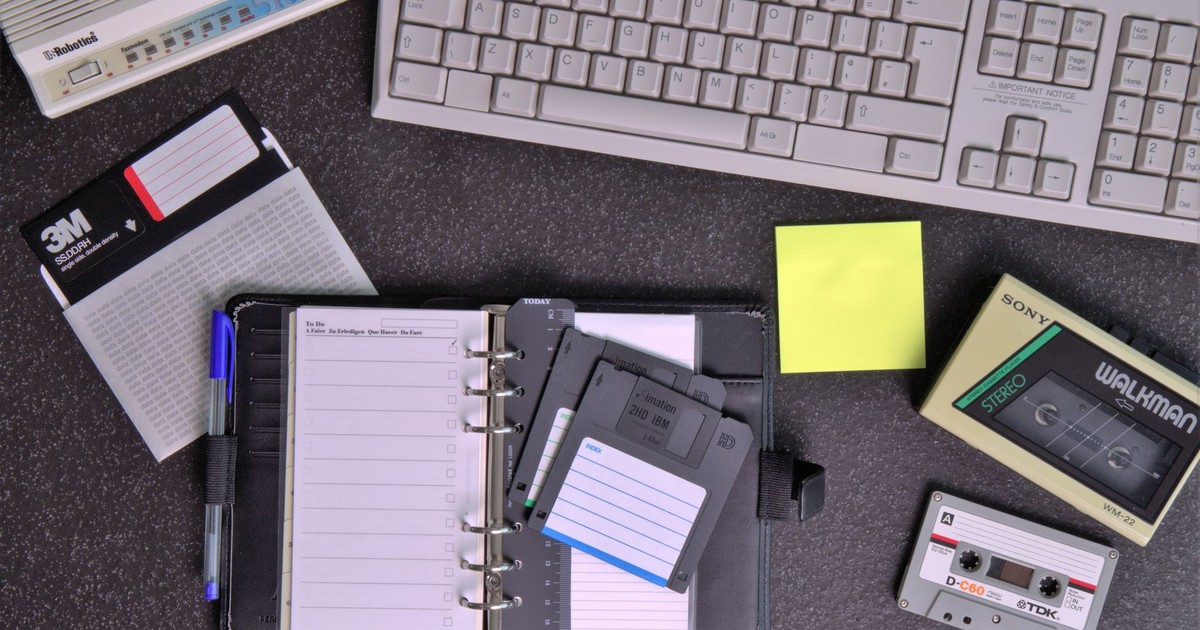
The sound is seared into every Gen X brain: the modem handshake, that ascending screech of tones negotiating a connection at approximately geological speed. If you wanted to load a photo on a website in 1996, you watched it appear in horizontal strips, one slow band at a time, and hoped nobody in the house picked up the phone.
In early 1993, the fastest available modem could transfer data at a maximum speed of 14.4 kilobits per second. The launch of the 28.8k modem in 1994 doubled that theoretical maximum. 56k modems arrived in 1998. In practice, those advertised speeds were never actually attained, and large file downloads on a 28k modem commonly ran at an average of between 1 and 6 kilobits per second, according to a detailed history of dial-up modem speeds.
Downloading a 1GB file on a 56k modem would have taken approximately 40 hours under real-world connection conditions. Today the same file takes about 32 seconds on a standard home connection. And the whole time the modem was connected, the phone line was occupied. You couldn’t call anyone. Anyone calling you got a busy signal. The internet and human contact were mutually exclusive.
3. Not Knowing Who Was Calling
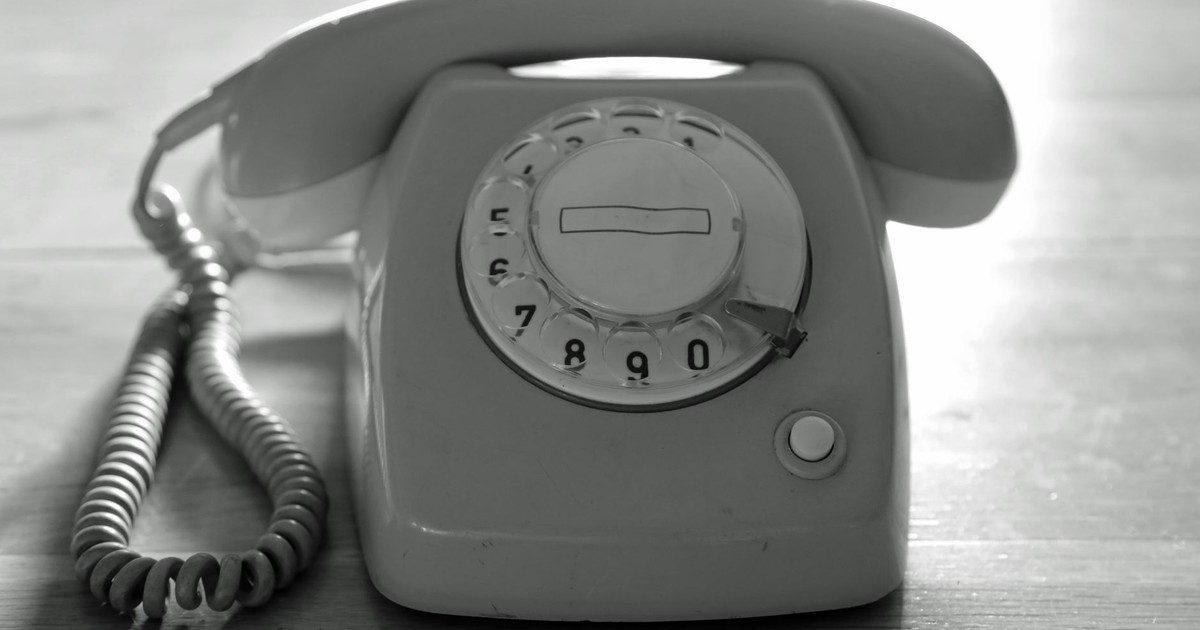
Before caller ID became standard, every ringing phone was a small gamble. It could be your best friend. It could be a telemarketer. It could be your most difficult relative calling to relitigate something from two Thanksgivings ago. You had no way to know until you picked up.
Screening calls required an answering machine, and even then you had to stand in the kitchen listening to the message play in real time, deciding whether to pretend you weren’t home or sprint across the room to grab the handset. The lack of any information about who was on the other end of a ringing phone generated a specific, low-grade anxiety that was so constant people barely registered it.
4. Long-Distance Phone Charges
Calling someone who lived in the next state was, for much of the ’80s and into the ’90s, a financial decision. Long-distance charges were billed by the minute and could add up fast enough that parents had entire conversations with their children about the cost before the child was allowed to call a friend who had moved away.
The workaround was to wait. Rates dropped in the evenings and were cheapest on weekends, so calls were deliberately timed. Friends and family coordinated around billing windows the way people now coordinate around time zones. The idea that you might call someone on the other side of the country just to chat, at noon on a Tuesday, without thinking about it, would have seemed like something out of a science fiction novel to most households in 1985.
5. No Way to Reach Anyone
Your teenager was supposed to be home an hour ago and you had no way to find out where they were. Your friend said she’d meet you at the corner of Fifth and Main and she never showed up, and all you could do was stand there for another twenty minutes deciding how long to wait.
Making plans required specificity and commitment in a way that’s almost foreign now. You named a time, a place, and a backup plan, because there was no amendment available once you both left the house. People who grew up then remember the knot of low-level dread that came with waiting for someone who wasn’t there yet, with no information and no way to get any.
6. VHS Tapes and Rewinding

You rented a movie. You watched it. You forgot to rewind it. The next day you returned it to the video store and discovered a small fine waiting for you, because the store’s cassette rewinder was busy and the next person who rented that tape would otherwise have to sit through the end credits before the movie started.
“Be Kind, Rewind” was not a polite suggestion but a warning printed on stickers that video rental stores slapped on every tape. The tapes themselves degraded over time, stretched, got tangled in machines, and occasionally destroyed the VCR in the process. Finding a tape at the bottom of a box of old electronics today is mostly just a reminder of how genuinely annoying the format was in practice.
7. Maps and Getting Hopelessly Lost
Before GPS and before smartphones, navigation meant printing out MapQuest directions before you left the house, or unfolding a paper map across the steering wheel while also driving, or pulling over to ask someone who gave you instructions involving landmarks that may or may not still exist.
Getting truly, thoroughly lost was a real possibility on every unfamiliar drive. Road trips required either a co-pilot reading a physical atlas or a tolerance for wrong turns and dead ends. The satisfaction of reaching an unfamiliar destination intact was genuine, but so was the forty-five-minute detour through the wrong part of town that preceded it.
8. Smoking on Airplanes
You could board a flight, take your seat in the non-smoking section, and spend three hours breathing cabin air that smokers and non-smokers shared alike. Commercial airline smoking sections operated on roughly the same logic as the restaurant dividing line: theoretical separation, no actual barrier.
A federal smoking ban on domestic flights of less than two hours went into effect on April 23, 1988. Congress extended the airline smoking ban to all domestic flights under six hours in 1990, and to all domestic and international flights in 2000, according to the Center for the Study of Tobacco and Society. For most of the ’80s, passengers in the non-smoking rows were still breathing cabin air shared with smokers seated just rows away.
9. Encyclopedias and Research Without the Internet
Writing a school report in 1991 meant either owning a set of encyclopedias (which went out of date the moment they were printed) or going to the library, finding the right reference section, hoping the volume you needed wasn’t already checked out, and hand-copying information onto index cards. There was no search function. There was no quick cross-reference. There was only the card catalog and however much time you had before the library closed.
For families without encyclopedias at home, an elementary school research assignment was a logistical problem before it was an intellectual one. The knowledge existed. Getting to it required physical travel, time, and luck.
10. Paying for Every Phone Call
The pay phone was not just a cultural artifact. It was infrastructure. If you were away from home and needed to reach someone, you needed a quarter, and later 35 cents, then 50 cents. Running out of change while trying to call for a ride home was not hypothetical inconvenience but a concrete scenario that millions of people experienced regularly.
Collect calls were the backup, which meant the person you were calling would hear an automated voice say your name and then decide whether to accept the charges. “Mom, it’s me, please accept” was a sentence spoken with genuine urgency into pay phones across America for two decades. The whole system required everyone to carry change at all times, to memorize phone numbers, and to plan around the possibility of being stranded with no way to communicate.
11. Telemarketers Had Free Reign
Before the Do Not Call Registry, before caller ID, before the ability to simply let unknown numbers go to voicemail, telemarketers operated at peak power. They called at dinner. They called during the news. They called on Saturday mornings. They had your number, they called it, and the only way to stop the call was to hang up or endure it.
The dinner hour in the early ’90s was practically a contact sport. The phone rang, someone answered it, and the opening line of a sales pitch for vinyl siding began. The polite people in the family listened to half of it before declining. The less patient ones had already hung up. Either way, dinner was interrupted. Every night.
12. Renting Movies and They’re Already Out
Few experiences captured the specific frustration of the ’80s and ’90s entertainment economy better than driving to the video store on a Friday night, walking to the shelf where the new release was supposed to be, and finding nothing but empty boxes. The movie you wanted was out. All eight copies of it were out. The employee at the counter could tell you when someone was supposed to return theirs, but whether that would actually happen was anybody’s guess.
Your options were: rent your second choice, drive to a different store, or go home. There was no streaming alternative, no digital rental, no other way. The scarcity was real. Popular new releases required either advance planning or arriving early enough on a Friday afternoon that the shelves hadn’t been stripped yet.
13. Acid Rain and Visible Smog

The ’80s was the era when acid rain became a genuine household term. Lakes in the Northeast were dying. Forests in Germany were visibly deteriorating. American cities ran on leaded gasoline until 1996, and before the phase-out of leaded fuel was complete, urban air quality in cities like Los Angeles, Houston, and New York was measurably worse than anything most city-dwellers experience today.
Anyone who grew up in Los Angeles in the ’80s can describe what the skyline looked like on a bad smog day: a brown haze sitting over the basin like a lid. Children with asthma had their activities restricted on high-ozone days. The Clean Air Act amendments of 1990 accelerated improvement, but the difference between the air quality in American cities in 1985 and 2026 is not subtle. You could see it then.
14. Word Processors That Ate Your Work
The early word processor relationship was built on mutual distrust. You typed for an hour. You forgot to save. The power flickered. Your work was gone. Completely, irretrievably gone. No autosave, no cloud backup, no recovery file, just a blank screen and the hollow feeling of having to start over.
Even with regular saving, floppy disks were unreliable storage. A disk that worked fine yesterday might refuse to read today, for reasons the machine declined to explain. The experience of losing a finished document, a term paper, a work report, a letter you’d rewritten four times, to a technical failure with no recourse was so common that entire coping strategies existed around it. Print as you go. Save constantly. Keep a backup on a second disk. And still, sometimes, it just disappeared.
15. Telephones Tethered to the Wall
The kitchen phone had a cord. The cord was usually about six feet long, which meant any conversation requiring privacy required creative physical arrangements: standing in the corner, stretching the cord into the hallway, closing a door on it. Serious or emotional conversations happened in the kitchen while someone else made dinner three feet away.
Cordless phones improved things eventually, but the range was limited, the batteries died constantly, and the signal degraded near the microwave. The idea that a phone conversation could be had anywhere in the house, in any room, lying on your own bed, was a genuine quality-of-life improvement that people who grew up with wall phones noticed immediately and never stopped appreciating.
16. Developing Film and Waiting to See Your Photos
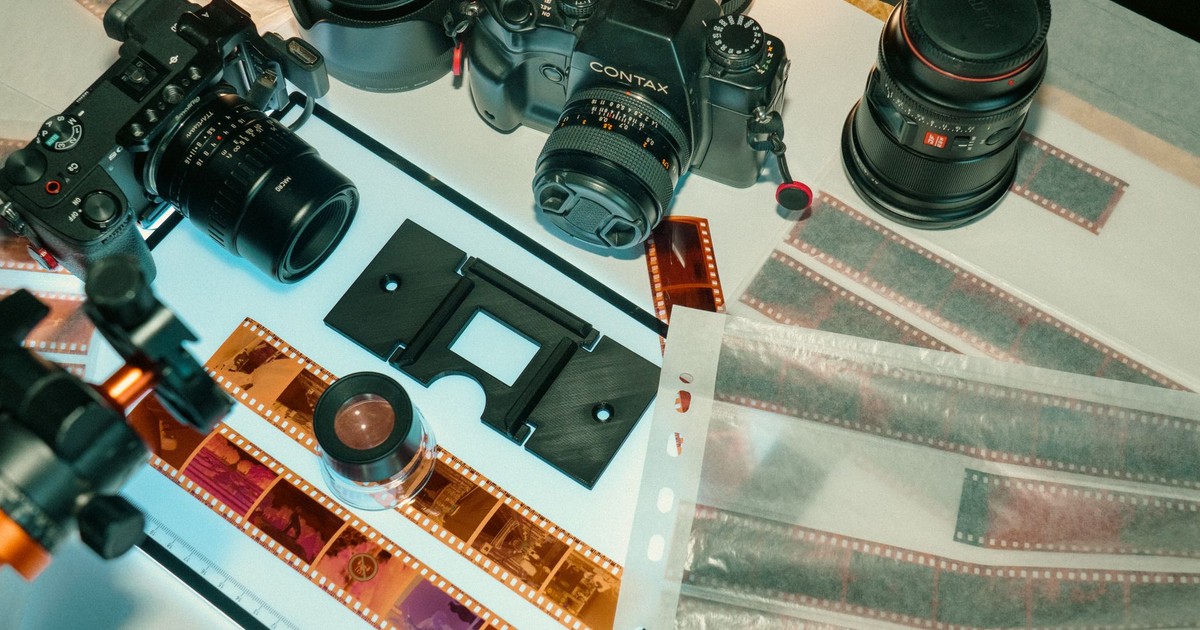
You took 24 or 36 photos on a roll of film. You finished the roll. You drove to a one-hour photo lab or dropped it off at a pharmacy. You waited a day or a week. You paid for the prints. You looked at them and discovered that six were blurry, four had someone blinking, two had a thumb over the lens, and maybe eight were worth keeping.
The entire process required payment regardless of result. You paid for the bad ones too. There was no preview, no delete, no retake on the spot. A birthday, a vacation, a graduation: you pointed the camera, pressed the button, and hoped. Finding out that you’d missed the moment entirely happened days later, in an envelope from the drugstore, when it was far too late to do anything about it.
17. The Card Catalog
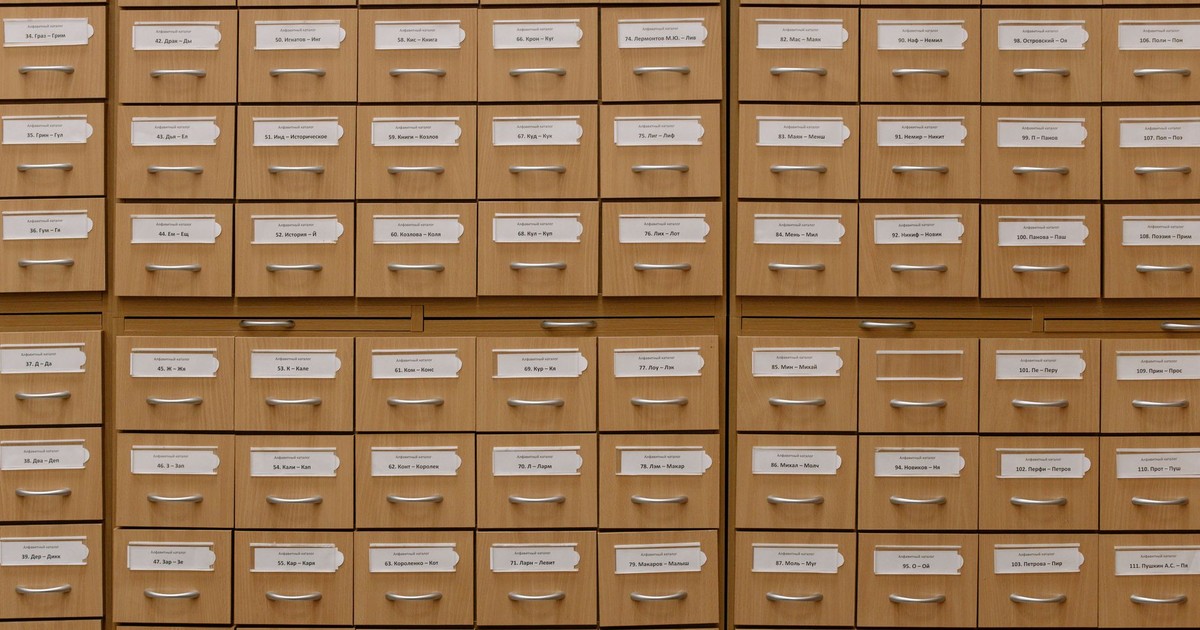
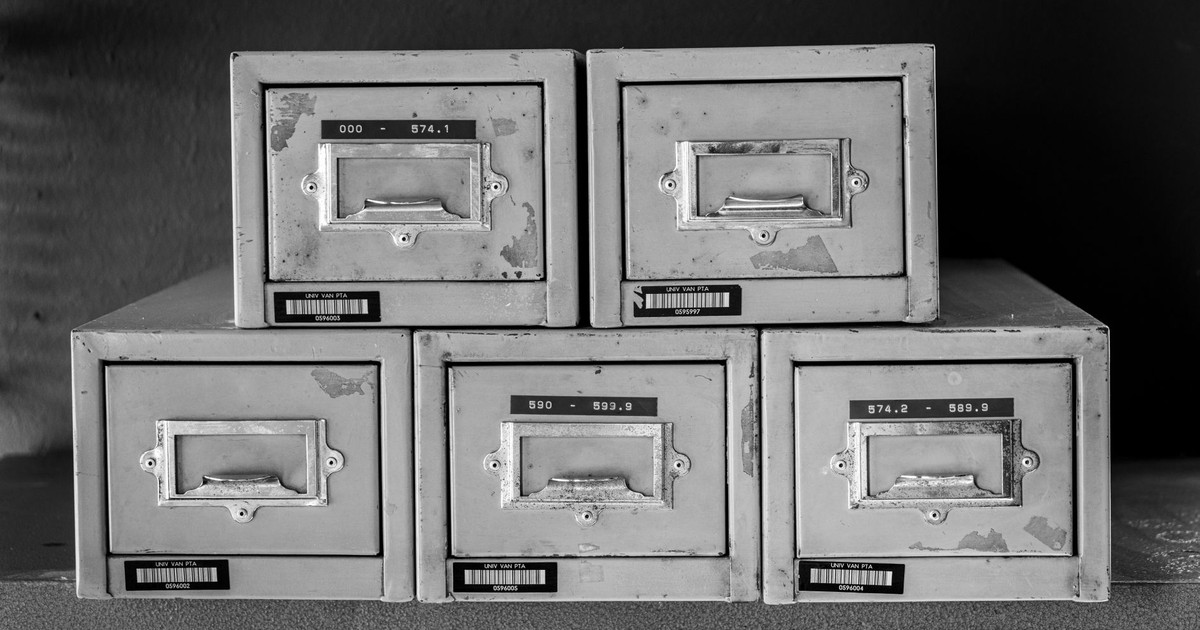
Before digital library catalogs, finding a book meant consulting a set of wooden drawers filled with index cards organized by author, title, and subject. Each card was typed or printed manually. Each drawer was labeled with a letter range. If you needed to find everything a library held on a topic, you flipped through cards one by one, wrote down Dewey Decimal numbers on a slip of paper, then went looking for the shelf.
If the book was misfiled, it was lost to you. If the card was wrong or outdated, you discovered that only after the walk to the stacks. The card catalog was functional, and librarians navigated it with genuine expertise, but the moment a university replaced it with a searchable computer terminal in the early ’90s, nobody mourned the wooden drawers.
18. Cash Only, Everywhere
ATMs existed in the ’80s, but they weren’t on every corner, they charged fees, and they had withdrawal limits. Running out of cash at a restaurant, at the gas station, or at the grocery store meant either writing a check (which required showing ID, a check guarantee card, and the patience of everyone in line behind you) or genuine embarrassment.
Credit card acceptance at small businesses was inconsistent. Many places had minimum purchase requirements. Gas stations in particular operated on cash-or-check systems well into the ’90s in plenty of parts of the country. Figuring out how much cash you’d need for a day, making sure you had it before you left, added a layer of planning to even routine errands that has since largely vanished.
19. Answering Machine Anxiety
The answering machine was a technological miracle that immediately introduced a new social problem: the message you didn’t leave, the message you left that said too much, and the message you received that said nothing but hello and a long pause and a hang-up and you spent three days wondering who it was.
Checking the answering machine when you got home carried genuine stakes. The blinking light either confirmed someone had called or confirmed that no one had. Both outcomes could be freighted with meaning. And unlike a missed call on a cell phone, a voicemail message was permanent until you deleted it. You could replay the awkward message from your ex seventeen times if you wanted to. Some people did.
20. No Weather App
Rain in 1988 arrived as a surprise. You might have watched the evening news forecast the night before, but by morning the situation had evolved and the only way to know if you needed an umbrella was to look out the window and make a judgment call. Long-distance travel required genuine contingency planning around weather, because the information available in real time amounted to what you could see from your car window.
The five-day forecast existed, but it was built on models crude enough that day four and five were essentially educated guesses delivered with the confidence of certainty. Planning an outdoor wedding meant consulting the almanac and hoping. Planning a hiking trip meant calling a ranger station and asking someone who had looked at the sky that morning.
21. Smoking in the Office
For much of the ’80s, smoking at a desk was not only permitted but common. Non-smokers who shared offices with colleagues who lit up throughout the workday had no recourse. The ashtray on the desk was standard office equipment, the same category as a stapler or a tape dispenser.
Legislative requirements for non-smoking areas in private workplaces began to expand only gradually through the 1980s, and many offices didn’t change their policies until well into the ’90s. Spending eight hours a day in a room with three colleagues who smoked was not a choice you made. It was a condition of employment.
22. Carrying a Pager
The pager was the technology that promised connectivity and delivered only half of it. You could receive a message. You could not send one back. Someone paged you; you now knew they wanted to speak to you but had no information about why or how urgently; and finding out required locating a phone, which meant finding a pay phone or asking to use someone else’s, which brought its own set of complications.
The whole system operated on a one-way information flow that was somehow more anxiety-producing than no information at all. A 911 on a pager meant someone needed you urgently. What they needed, and whether you’d arrive in time, was information you couldn’t access until you found a phone. The pager made you reachable without making you informed, which is a particular kind of frustrating.
23. Appointment Television and Missing Your Show
Knowing what was on television required either owning the weekly TV Guide magazine or consulting the newspaper listings section. Recording something to watch later required setting the VCR to record at a specific time, a process that the joke about the blinking 12:00 exists to commemorate. Many VCRs in many living rooms were never successfully programmed.
Missing a show meant missing it. There was no catch-up service, no streaming library, no episode available on demand the following morning. If you were on vacation when the season finale aired, you returned home having missed it, and the only option was to find someone who had taped it or accept that you’d never know what happened until reruns. The rigidity of appointment television sounds romantic in hindsight but in practice was simply inflexible.
24. Terrible Car Safety

Seat belts were not universally worn in the early ’80s. Child car seats existed but were not required in all states, were not always used, and bore little resemblance to the engineered restraints available today. Children rode in the back of station wagons facing backwards on a fold-down seat with no seat belt in sight. Pickup trucks carried kids in the bed on road trips because there was room and it seemed fine.
Federal law began requiring lap-shoulder belts in all seating positions in passenger cars in 1990, but the culture of casual non-use persisted for years afterward. The concept that a car could be engineered around surviving a crash, with crumple zones, airbags, and side-impact protection rated to specific standards, was not the organizing principle of most vehicles rolling off assembly lines in 1983.
25. No Online Reviews Before Buying Anything
Purchasing a major appliance, a car, a piece of electronics, or even a hotel room in the ’80s and ’90s meant operating almost entirely on the basis of advertising and salesperson recommendation. Consumer Reports existed, but finding the right issue, in the right month, that covered the specific product you were buying required either a subscription or a library trip.
Word of mouth was the primary quality signal. You asked the people you knew. If none of them had bought the thing you were buying, you went in largely uninformed. Hotels were judged by their printed brochure. Restaurants were judged by their sign and the cars in the parking lot. The information asymmetry between the person selling something and the person buying it was enormous, and it was entirely normal.
26. Aggressive Skincare That Burned
The dominant teenage skincare philosophy of the ’80s was essentially: if it burns, it’s working. Noxzema, astringent toners loaded with alcohol, benzoyl peroxide in concentrations that would raise eyebrows today, and medicated pads designed to strip every trace of oil from the skin: the message was that acne was caused by insufficient aggression toward your own face.
The result was skin that was simultaneously broken out and raw. Dermatology has since moved firmly toward barrier-supporting, inflammation-reducing approaches, and the idea of recommending a product that leaves the user’s face visibly red and irritated as a selling point now reads as almost satirical. The whole category smelled like menthol and regret.
27. Homophobia as Background Noise
Gay slurs were routine in ’80s and early ’90s mainstream culture, in comedy specials, on prime-time television, in schoolyards, in offices. What’s striking looking back isn’t that it happened but how unremarkable it was considered at the time. Comedy albums and stand-up specials from the era are largely unwatchable now not because they were edgy but because the contempt was so casual and so ambient.
People who were gay in that era often lived under a specific kind of social pressure that required constant calculation about who knew, who was safe, and what the cost of visibility might be. The AIDS crisis hit during this same period and was met, at the official level, with years of deliberate governmental inaction. The distance between the social environment of 1986 and the social environment of 2026 on this particular axis is one of the larger cultural shifts of the last four decades.
28. Having No Record of Anything
No camera in your pocket. No voice memo function. No way to quickly document something you’d seen or heard or experienced. If you witnessed something remarkable, you described it to people in words, and the description was all anyone would ever have. Childhood memories exist for Gen X and Boomers almost entirely as internal experience, because the documentation rate was close to zero for most of daily life.
The flip side of this, as many people in that Reddit thread acknowledged, is that it’s not entirely something they miss. The constant documentation of modern life brings its own pressures and its own distortions. But the fact that so many shared, everyday moments from those decades are simply gone, the ordinary Tuesday afternoon, the unremarkable family dinner, the friend’s face before they moved away, is a loss that only registers once the alternative exists. You can’t miss what you don’t know is missing.
The Uneven Texture of Memory
The nostalgia machine runs on selective memory, and the ’80s and ’90s are its favorite fuel right now. The clothes are back. The synth sounds are back. The aesthetic is everywhere. What those decades genuinely had, a sense of shared cultural experience, a lower-resolution social life with fewer ways to fail publicly, was real, and the longing for it is understandable.
But the list above is also real. The smoke in every room. The information scarcity. The inability to find someone when you needed them. The physical anxiety of a phone you couldn’t screen ringing during dinner. These weren’t charming inconveniences but the texture of daily life, and most people who lived through them are relieved they’re gone. The decades weren’t worse, exactly. They were just uneven in ways memory tends to smooth over. The cassette tape looks great on a tote bag. You probably don’t want it back as your primary music format.
Disclaimer: This information is not intended to be a substitute for professional medical advice, diagnosis, or treatment and is for information only. Always seek the advice of your physician or another qualified health provider with any questions about your medical condition and/or current medication. Do not disregard professional medical advice or delay seeking advice or treatment because of something you have read here.
AI Disclaimer: This article was created with the assistance of AI tools and reviewed by a human editor.