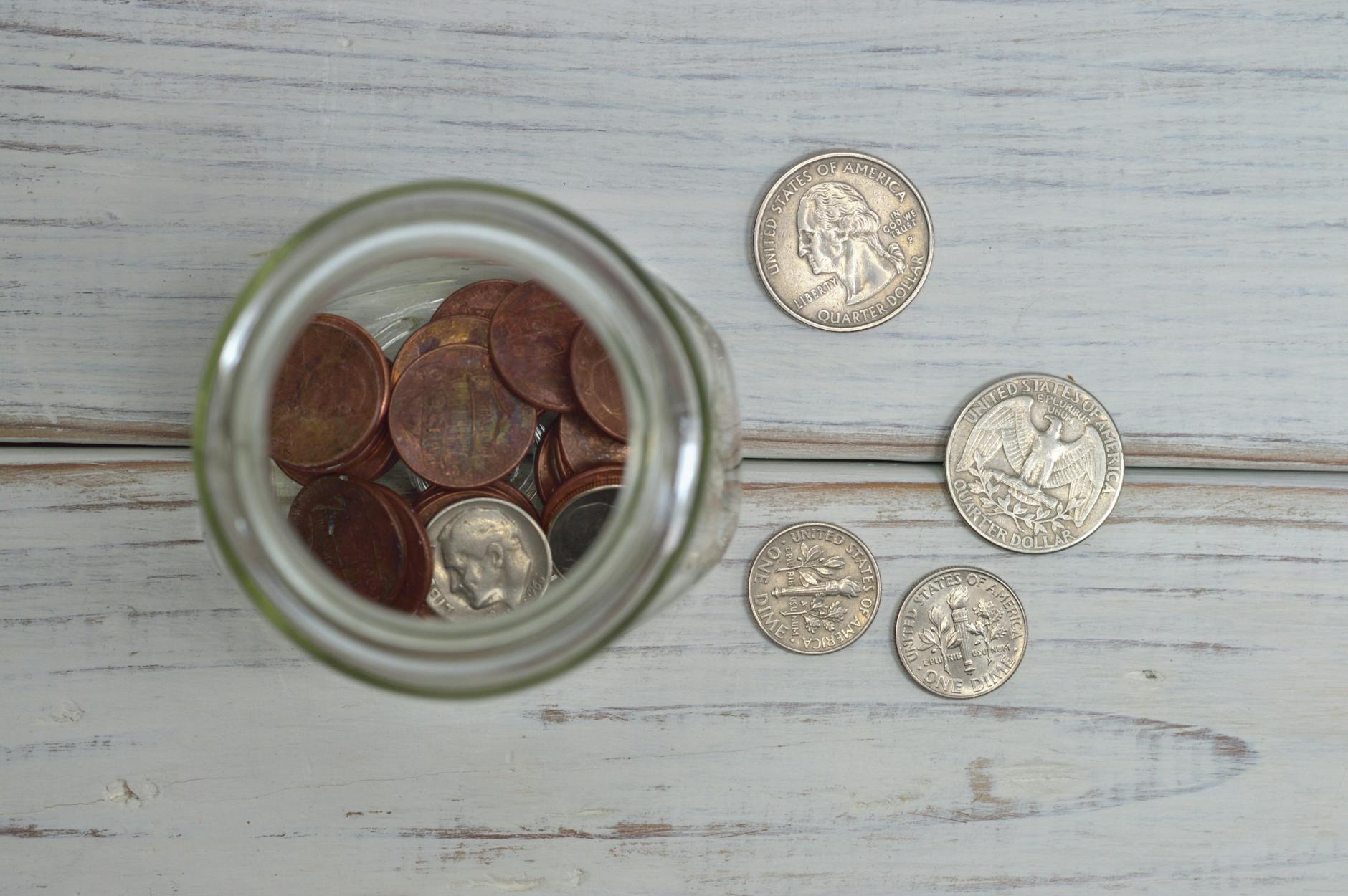

You know exactly which jar it is. The one on the counter, or maybe the windowsill, or tucked behind the coffee maker. Glass, probably, with a lid you stopped using sometime in 2019. It gets a few coins dropped into it after every cash transaction, and then it just sits there, growing incrementally, doing nothing. Nobody ever does anything about it. Until now there was no particular reason to.
The U.S. penny, a fixture of American life since 1793, is officially on its way out. Not metaphorically. Not “eventually.” Over the past decade, the total production cost of the penny rose from 1.3 cents to 3.69 cents per coin, and the U.S. Treasury now projects annual savings of $56 million by stopping production entirely. The Treasury placed its final order for penny blanks – the flat metal discs the Mint stamps into coins – in May 2025. Those remaining blanks were expected to run out by early 2026, at which point production of new pennies officially ceased.
That spare change jar in your kitchen is now holding a piece of monetary history, and quite possibly some real money. Here’s what to actually do with it.
Why the Penny Is Finally Gone
The math was never going to work out in the penny’s favor. According to the Congressional Research Service, in 2024 the Mint sold and shipped over 3 billion pennies to the Federal Reserve, at a total gross cost of approximately $117 million – roughly 3.7 cents per coin. It was the 19th consecutive year the production cost remained above one cent.
The U.S. isn’t alone in making this call. Several countries have already eliminated their penny equivalents, including Canada in 2012, Australia in 1992, and New Zealand in 1987. Studies from Canada, Australia, and New Zealand found no meaningful relationship between inflation trends and the removal of a country’s smallest coin. Lower-income households, often the most cash-dependent, weren’t measurably more impacted, because price rounding goes both ways and the overall result across transactions is neutral.
For anyone still paying for things in cash, the adjustment at the register will be rounding to the nearest nickel. When penny change is not available, businesses may round the final amount of a cash transaction to the nearest five-cent increment. The penny remains legal tender and retains its status as an acceptable form of payment. Non-cash transactions, such as payments by check, credit card, or debit card, continue to be priced and processed to the exact cent.
What nobody is doing is recalling pennies. The Treasury Department confirmed that the penny “remains legal tender and will retain its value indefinitely,” with an estimated 300 billion pennies already in circulation. They won’t disappear overnight. But the pipeline of new ones is closed. Which brings us back to the jar.
Take a Closer Look Before You Do Anything Else
Before you scoop everything into a bag and head to the supermarket, spend five minutes sorting through what’s actually in there. Not every coin in a spare change jar is worth face value.
Any quarters made before 1965 are worth checking, because pre-1964 quarters were made of 90% silver, meaning they’re worth significantly more than 25 cents. The same principle applies to dimes from the same era. A 1964 Roosevelt dime, for instance, has silver content that puts its melt value well above ten cents in today’s market.
Pennies themselves can occasionally be worth more than their face value too, though most aren’t. The ones that typically attract collector interest are error coins (pennies struck with the wrong metal or a misaligned die), very old pennies in unusually good condition, or specific years with low mintage numbers. There’s likely little value in stockpiling pennies broadly as production halts. Unless you have a rare penny, your one-cent coins are still only worth one cent. But it takes about two minutes to check, and occasionally people are surprised by what they’ve been sitting on.
If you keep coins with any possible collector value, separate them out before converting the rest to cash.
The Fastest Way to Turn Coins Into Cash
If you just want the money and you want it today, you have a few options, and they are not all created equal.
The green Coinstar machines at the supermarket are genuinely convenient. You pour in the coins, the machine counts them, and you walk out with a cash voucher you can redeem at the customer service desk. But that convenience comes at a real cost. Choosing the cash payout option at a Coinstar machine will cost you 12.9% of your total coin value plus a $0.99 transaction fee in 2026, meaning a $100 jar of change costs roughly $13.89 in fees.
The workaround that most people don’t know about: skip the cash option entirely. Choosing an eGift card at the kiosk is completely free. You receive 100% of your coin value with no deduction, loaded onto a digital gift card for a participating retailer. Coinstar offers zero-fee redemptions for over 20 partner stores and restaurants. If you spend money at Amazon, Starbucks, or similar stores anyway, this is the obvious move.
The other free option is your own bank. Most banks will accept rolled coins from their own customers at no charge. The downside is the rolling itself, which takes time. You can buy or request coin wrappers for free at most branches, and the sorting can be turned into something almost meditative on a rainy Sunday afternoon. With no new pennies being minted, banks and retailers rely on recycled coins, which can cause local supply issues – meaning your jar is more welcome than it used to be.
Put That Money to Work Once You Have It
Once the coins are converted, the follow-through matters. A jar of change that becomes a crumpled cash voucher shoved in a drawer hasn’t accomplished much. But even a modest amount of money, directed intentionally, does real things.
One of the most sensible uses is an emergency micro-fund. Not a full emergency fund in the three-to-six-month sense, but a small, separate stash earmarked for the minor disasters that hit between paydays. Unexpected expenses don’t wait for payday. A surprise school fee, a last-minute medical copay, or needing a little extra for gas can pop up at any time. Having a small stash of spare change savings means quick access to funds without dipping into your main budget. A hundred dollars sitting in a separate savings account labeled for that purpose is more useful than the same hundred dollars mixed into your checking account, where it quietly disappears.
For anyone carrying high-interest debt, sending even a small payment toward a credit card balance has an immediate, calculable return. Paying an extra $50 toward a card charging 24% APR is equivalent to earning 24% on that $50, guaranteed, which no savings account is currently matching. The psychological win of watching a balance shrink is real too.
Some people do better turning the coins into a specific goal fund rather than rolling them into general savings. One approach is keeping a dedicated jar labeled for something specific, like a trip or a purchase you keep putting off. Eighteen months of loose change, properly collected, can accumulate to several hundred dollars. It feels different from money you had to actively budget for, which means you’re more likely to actually spend it on the thing you intended.
And if the amount is modest enough that none of those options feels worth the logistics, donating it directly is a clean ending. Many charities accept spare change, and even modest contributions add up when combined with others. A single jar of pennies might not seem like much, but it can still support a meaningful cause.
What To Do If You Want To Keep Some
Not everything in the jar needs to be liquidated. The penny phase-out is a genuine historical moment, and keeping a few coins from specific years as mementos costs you nothing and gives you something tangible to show a kid in twenty years.
Choosing a few years of note – a child’s birth year, an anniversary, or the oldest penny you can find – and setting them aside as keepsakes is worth doing. A pre-2026 penny in good condition is already, by definition, a coin that will never be minted again. That doesn’t automatically make it valuable in the collector market, but it does make it the kind of small object that carries a story.
The same logic applies to the jar itself. Some households have been adding to the same kitchen jar for a decade. In a way, that jar is also a private accounting of all the cash transactions made during that time – all the change handed back from coffee shops and corner stores, back when paying in cash was something people did without thinking about it.
Read More: Bernie Sanders Says the 401(k) System Is Rigged
The End of Something Ordinary
The penny’s exit is not a crisis, but it is a small closing. Americans have been carrying pennies for over two centuries, and for most of that time, those coins accumulated in exactly the way yours did – sliding off countertops and into drawers, migrating to jars, forgotten and then rediscovered.
What’s changing now isn’t just the production of a coin. Cash use in the U.S. has been declining in favor of electronic payments for years. As fewer people carry coins and bills, the practical burden of maintaining low-value denominations grows. Removing the penny aligns currency with the reality of how people actually spend money.
That spare change jar is a small artifact of the cash economy, and it deserves better than another year of sitting on the counter. The money inside it is real. The history inside it is real. And right now, with pennies actually running short in circulation in some parts of the country, taking action with what you have is one of those small, completely sensible things you can do this week without a plan or a budget or a reason beyond: it’s time.
AI Disclaimer: This article was created with the assistance of AI tools and reviewed by a human editor.