
The argument that exposes the most respected people in any room isn’t a clever debating trick. It’s a question. Just a question asked plainly, asking someone to explain how they know what they say they know. In Athens around 399 BC, that habit got a man killed. The man being executed for it had spent years doing exactly this to the city’s most powerful citizens, and his conclusion after all of it wasn’t what you’d expect from someone famous for wisdom. He didn’t think he knew more than the people he’d questioned. He thought he knew something they didn’t: where his own knowledge ended.
That single distinction is what the Socratic method and intelligence have always had in common. It isn’t about accumulating answers. It’s about having an accurate map of what you don’t know yet. The Athenians found this infuriating, partly because it was humiliating, and partly because it implied that the confidence they wore publicly was exactly the problem he was describing.
The strangest part is how precisely this idea fits the present. Not because people are less educated than they were, but because the gap between feeling informed and actually being informed has rarely been easier to miss. The tools we use to look things up are fast and fluent and frequently persuasive regardless of whether they’re right. The overconfidence Socrates kept bumping into in the agora has scaled considerably.
What Socrates Actually Said
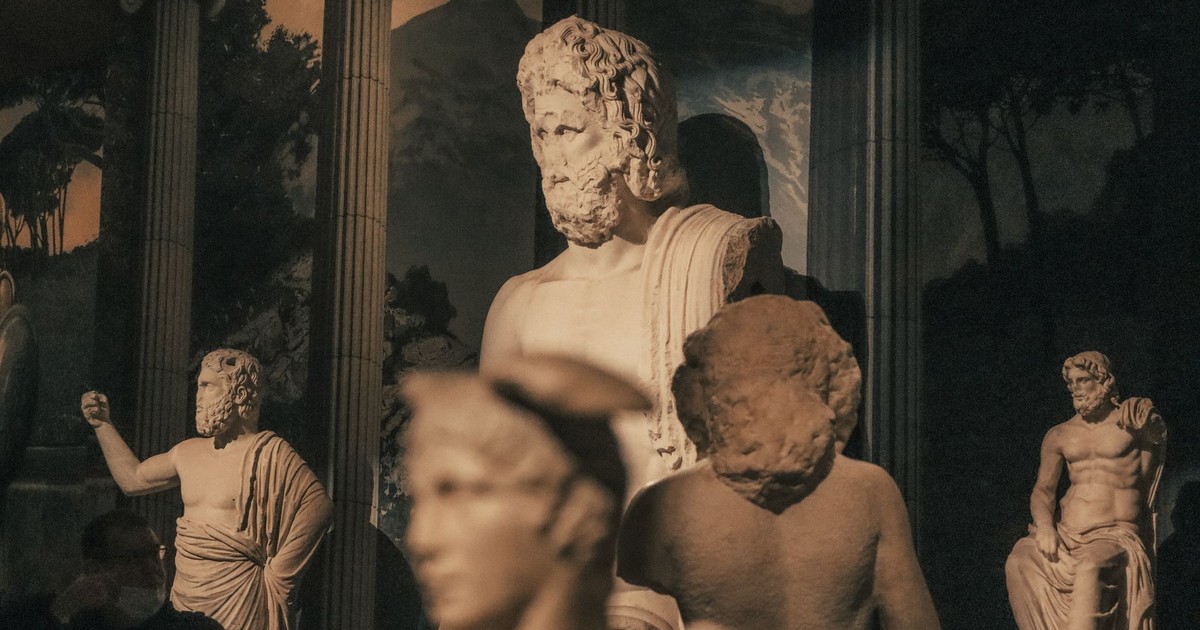
The story behind the famous claim is more specific, and more interesting, than the quote alone. When the Oracle at Delphi declared Socrates the wisest man in Athens, he was genuinely puzzled by it. Rather than accept the honor, he set out to disprove it, seeking out the people in the city most renowned for their wisdom. He questioned politicians first, then poets, then skilled craftsmen. The politicians, he found, thought themselves wise but didn’t know much of anything. The poets wrote things of genius but couldn’t explain them and seemed to believe their skill in one area qualified them to speak with authority on everything else entirely unrelated to it.
The craftsmen knew real things, things Socrates didn’t know, and to that extent were wiser than him. But they made the same error: success in their craft led them to believe they understood other important matters, and that false confidence overshadowed the genuine competence they actually had. Socrates concluded he was better off as he was.
The phrase “I know that I know nothing” isn’t one Socrates is recorded as saying verbatim. It’s derived from a passage in Plato’s Apology, and it carries significant weight in epistemology, the branch of philosophy concerned with the theory of knowledge. What Socrates does say in that account is that true wisdom belongs to the gods alone, and that the oracle used his name to illustrate a point: the wisest human being is the one who recognizes that human wisdom is worth very little. To think you are wise when you are not is the very definition of conceited ignorance, set in direct contrast to the Socratic kind, which is the aware version. The problem with conceited ignorance is that it blocks inquiry: no one seeks to know what they already believe they know.
It’s not a lesson about humility for its own sake. It’s about what overconfidence actually costs you, in real time, on real questions.
The Science Caught Up Eventually

Twenty-four centuries after Socrates, two psychologists named David Dunning and Justin Kruger ran a study that arrived at almost exactly the same place. Named after them in a classic 1999 paper, the effect they described captures a dynamic most people recognize once they’ve seen it named: people who know the least about a subject tend to be the most confident about their knowledge, while true experts, who understand a topic’s complexity, tend to be more cautious and restrained.
The Dunning-Kruger effect has since made the jump from academic paper to cultural shorthand, invoked everywhere from political commentary to workplace arguments. The trouble is that what most people understand it to mean is a simplified version of the original finding, and the scientific status of even that original finding has become considerably more complicated over the past decade. A 2025 reanalysis using longitudinal survey data confirmed the overestimation pattern among low-ability individuals but attributed much of the effect to statistical factors. The current state of the research is not that the effect is fake. The overconfidence pattern among low performers exists and replicates. The debate is about how much of it reflects genuine difficulty with self-assessment versus statistical artifact, and the honest answer is that both contribute.
In other words, the science is doing exactly what Socrates would have appreciated: sitting with the complexity instead of collapsing it into a clean story.
What’s held up clearly from that original research is the flip side of the finding, which gets less attention. Individuals with limited knowledge in a domain tend to overestimate their competence, while those with greater expertise often underrate their abilities because they’re more aware of the domain’s complexity. The more you actually know, the more you understand what you don’t. The shape of ignorance becomes visible. Real experts worry more, not less.
The Socratic Method and Why It Still Works in a Classroom
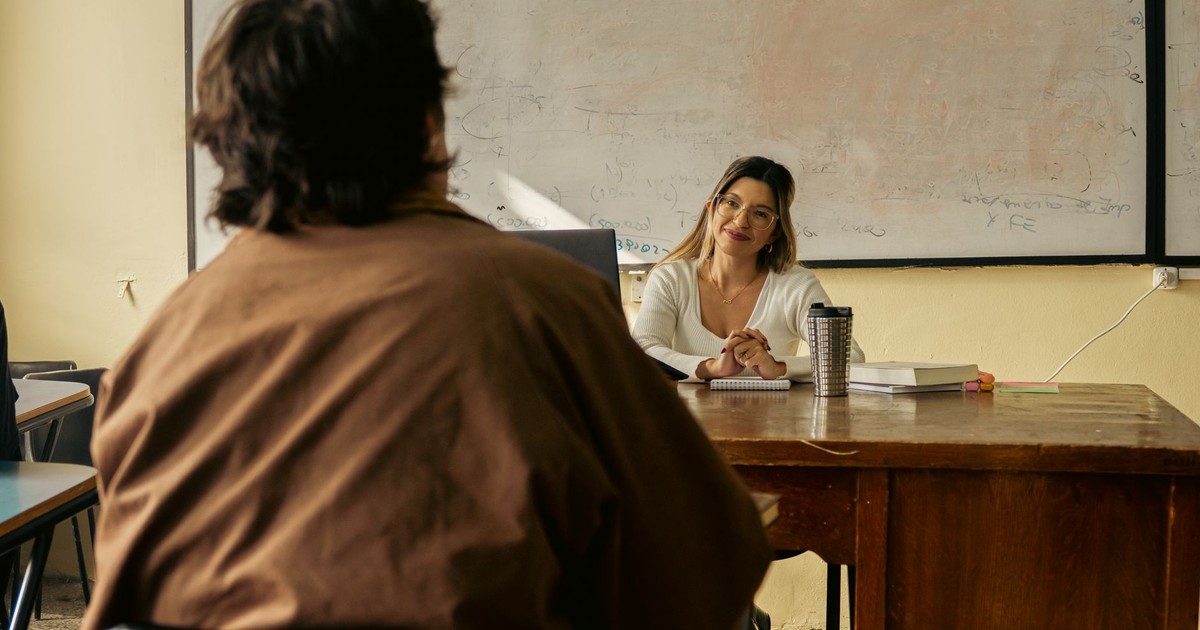
The Socratic method itself, the approach of teaching through questioning rather than instruction, of leading someone toward a conclusion by asking rather than telling, has been actively studied in educational research, and the findings are consistent. Guided questioning produces deeper understanding than direct answers. A 2026 systematic review in Frontiers in Education found that the Socratic method in mathematics learning develops students’ conceptual understanding, reasoning, and mathematical thinking. The researchers concluded that learners benefit most from exploratory questioning and scaffolded instruction rather than ready-made solutions.
This is also what makes it uncomfortable. The moment you ask someone to explain their reasoning, rather than confirm their conclusion, the conversation changes completely. It shifts the burden from what they know to how they know it. That’s a difficult test that most people would prefer to avoid. Research has also found that the success of Socratic questioning depends heavily on the questioner’s skill in applying the technique, and that a lack of understanding of the authentic method can lead to outcomes that look like learning but aren’t. The form without the spirit is just a cross-examination.
The AI Problem Socrates Couldn’t Have Predicted
A 2026 study published in the journal Computers in Human Behavior, led by Robin Welsch, an Assistant Professor at Aalto University, tracked what happens to people’s self-assessment of their own abilities when they use AI tools to assist with tasks. The research found that when using common chatbots to solve problems, everyone, regardless of actual skill level, tended to put too much faith in the quality of the answers. More strikingly, the more AI-literate the user, the greater the overconfidence, leading researchers to warn of an increased risk of miscalculated decision-making and a gradual erosion of verification skills.
The expectation had been that people who understood AI tools well would also be better at judging their own performance while using them. That was not the case. Higher AI literacy seemed to produce more overconfidence, not better calibration.
This is Socratic ignorance inverted. The craftsmen Socrates interrogated were dangerous not because they lacked skill, but because they mistook competence in one area for competence everywhere. The AI-assisted version of this is faster, more persuasive, and available at scale. A well-formatted answer from a language model feels authoritative regardless of whether it’s correct. It has the texture of knowledge without necessarily being knowledge. If anything, it deepens the problem Socrates was pointing at: the gap between appearing to know and actually knowing.
Getting the answer handed to you may be worse than struggling toward it yourself. A student who receives a complete solution skips the reasoning steps where understanding is actually built, and Socrates would not have been surprised by that tradeoff.
What the Oracle Got Right
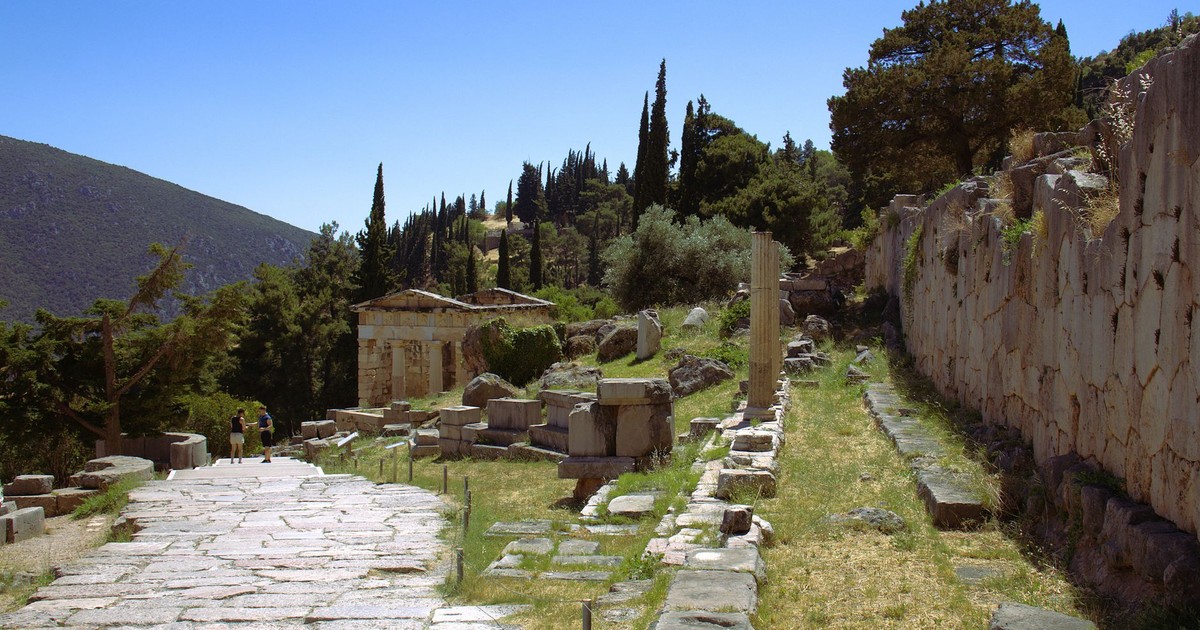
Go back to the trial. Socrates’s habit of seeking out respected Athenians and exposing the limits of their self-proclaimed wisdom made a lot of powerful people look foolish. It’s not surprising that those in authority eventually wanted him silenced. The people he interrogated weren’t stupid. Many of them genuinely knew things he didn’t. What they lacked was the piece the Oracle had apparently noticed: they couldn’t accurately map the boundaries of what they knew. They’d stopped asking.
Socrates concluded that it is better to be ignorant and aware of it than to think you know what you don’t know. And that state of awareness, he came to believe, was the sum of human wisdom. Not the fullest possible knowledge. Just an accurate picture of where knowledge ends.
The motto above the entrance to the temple at Delphi, where the Oracle resided, wasn’t “Be wise.” It was “Know Yourself.” The instruction wasn’t to acquire more. It was to see clearly what was already there.
Read More: Top 10 Most Common Traits of Highly Intelligent People
The Part That’s Actually Useful
The Socratic method and intelligence have something more in common than most people notice. Both are often treated as fixed quantities: you either have them or you don’t, and the goal is to demonstrate as much of both as possible. Socrates thought this had it backwards. The demonstration of intelligence wasn’t the performance of certainty; it was the honest inventory of uncertainty. Asking the right question in a room full of confident people is a harder thing to do than it sounds.
In practice, this looks less like philosophical humility and more like a specific habit: pausing before you agree with something that confirms what you already thought. Checking whether you understand a thing or just recognize it. Noticing the moments when you feel most certain and asking what you might be missing. The Dunning-Kruger research, the AI confidence studies, and Plato’s account of Socrates all arrive at the same point from different directions: the people most prone to being wrong are usually the ones least aware that they might be.
Disclaimer: This information is not intended to be a substitute for professional medical advice, diagnosis, or treatment and is for information only. Always seek the advice of your physician or another qualified health provider with any questions about your medical condition and/or current medication. Do not disregard professional medical advice or delay seeking advice or treatment because of something you have read here.
AI Disclaimer: This article was created with the assistance of AI tools and reviewed by a human editor.