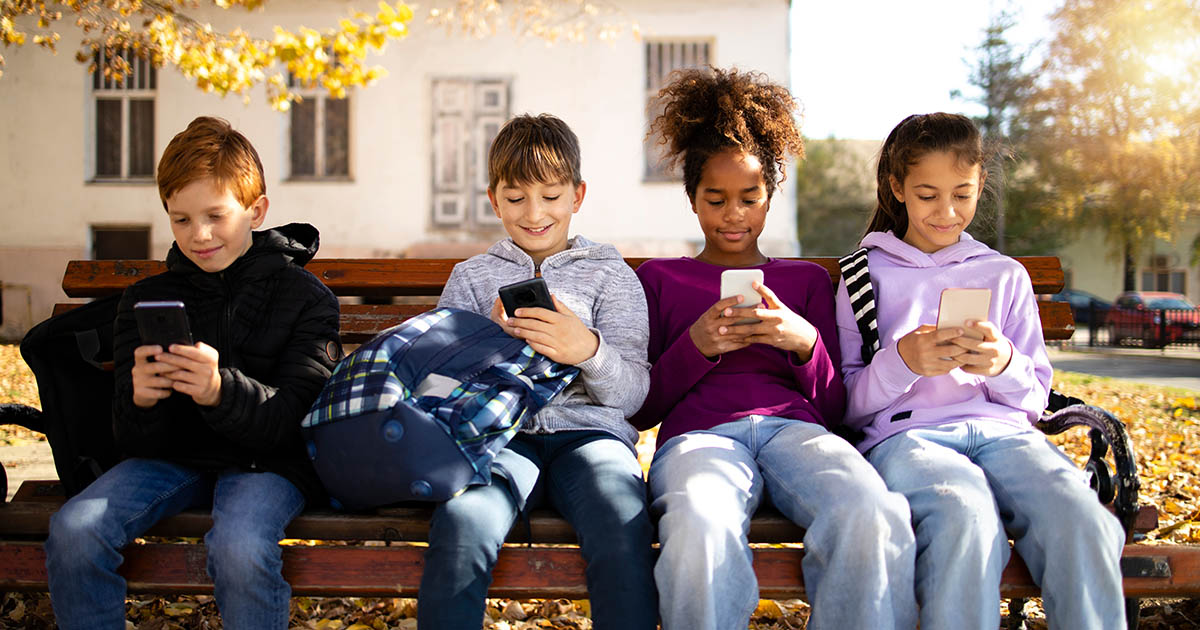

Australia became the first country on earth to formally bar users under 16 from major social media platforms, and almost immediately, the rest of the world started watching very closely. Not to see whether it would work – that question is still open – but to figure out whether they could do the same thing. In the eighteen months since, a wave of bans, bills, and formal consultations has rolled across every inhabited continent except North America, where the debate remains stuck at the state level. What started as one government’s gamble has become something that looks unmistakably like a global policy shift.
The question at the center of it is not really whether teenagers should be on TikTok. Most parents already have opinions on that. The harder question is whether governments can actually enforce a ban, who bears the cost of trying, and what happens to the kids who find their way around it anyway. Those tensions haven’t been resolved anywhere. But that hasn’t stopped governments from passing laws.
Here is where every major country stands right now.
Australia: The Country That Started It All
The Australian government passed the Online Safety Amendment (Social Media Minimum Age) Bill 2024 on November 28, 2024, introducing a mandatory minimum age of 16 for accounts on certain social media platforms. It came into effect on December 10, 2025, and parents cannot give their consent to let under-16s use these platforms.
The platforms the social media ban children covers are YouTube, X, Facebook, Instagram, TikTok, Snapchat, Reddit, Twitch, Threads, and Kick. Companies failing to comply face fines of up to 49.5 million Australian dollars. The burden falls on the platforms, not on children or their families. Australian Prime Minister Anthony Albanese welcomed it as families taking back power from tech giants.
The rollout was messy from day one. Parents reported distraught children discovering they’d been shut out of platforms, while some young children reported fooling the platforms’ age estimation technology by drawing on facial hair. Parents and older siblings were also expected to help some children circumvent the restrictions. By March 2026, around 70% of parents polled by the eSafety Commissioner – Australia’s independent online safety regulator – said their children remained on the platforms, having found ways to bypass age-gating systems. Reddit filed a High Court challenge to the law, joined by a Sydney-based rights group called the Digital Freedom Project. Both suits claimed the law is unconstitutional because it infringes on Australia’s implied freedom of political communication.
That friction was predictable. What was less predictable was how quickly other governments decided to follow.
The United Kingdom: The Newest Entrant
On June 15, 2026, Prime Minister Keir Starmer announced that Britain will ban children aged under 16 from using a range of social media apps, including Snapchat, TikTok, and YouTube, to protect them from harmful content and excessive screen time.
The decision followed a public consultation that drew 116,000 responses from parents, children, and the tech industry – the second-highest response total for a government consultation since one on same-sex marriage in 2012. More than 83% of parents who responded said the risks of social media use outweigh the benefits, and 90% expressed support for a minimum age of 16.
The restrictions, expected to take effect early next year, would apply to Instagram, Facebook, and X, while messaging services such as WhatsApp and Signal, as well as YouTube Kids, would be exempt. Starmer said the move would go further than Australia’s measures, adding that the government will act to prevent strangers from contacting children on gaming and livestreaming platforms, and is also considering additional measures including overnight curfews and breaks in infinite scrolling for those under 18.
The legislation would put the onus on tech companies to ensure children aren’t using their platforms, and they could face huge fines for failing to comply. Starmer said he hoped to have the regulations passed by lawmakers by late December so the ban can come into force by spring 2027.
Indonesia: The First Non-Western Country to Enforce a Ban

Indonesia became the latest country to bar children under 16 from social media, with Communications and Digital Minister Meutya Hafid announcing that account deactivations would begin on March 28, 2026, citing threats from online pornography, cyberbullying, online fraud, and internet addiction.
Accounts belonging to children under 16 on high-risk platforms began being deactivated, starting with YouTube, TikTok, Facebook, Instagram, Threads, X, Bigo Live, and Roblox. The restrictions are tiered by age: children under 13 are limited to platforms built specifically for their age group, while those aged 13 to 16 are permitted only on services classified as low risk, and only with parental consent. Indonesia’s action mirrors Australia’s age threshold but goes further in scope, extending restrictions beyond social media to online gaming and e-commerce platforms.
Malaysia: The Southeast Asian Ban
Malaysia joined the growing list of countries choosing to limit children’s access to digital platforms, with Communications Minister Fahmi Fadzil announcing a ban on social media for users under the age of 16. The minister said the government was reviewing mechanisms used to impose age restrictions in Australia and other nations, citing a need to protect youths from online harms such as cyberbullying, financial scams, and child sexual abuse. The ban came into force on June 1, 2026, under Malaysia’s Child Protection Code of the Online Safety Act.
France: The Senate’s Vote Is Next

France’s National Assembly approved legislation in January 2026 to ban children under 15 from social media amid growing concerns about online bullying and mental health risks. The bill needs to pass through the Senate before a final vote in the lower house. The French National Assembly passed the bill by a vote of 130-21. If the Senate approves it, enforcement is planned for September 2026.
At the AI Impact Summit in New Delhi in February 2026, President Emmanuel Macron threw his support behind the proposal and referred to the group of countries planning to implement social media bans as a “new ‘coalition of the willing.'” That framing says something about where political momentum now sits globally.
Denmark: Ban With a Parental Loophole

Denmark is set to ban social media platforms for children under 15. The Danish government announced in November 2025 that it had secured support for the ban from three governing coalition parties and two opposition parties in parliament, with the government’s plans expected to become law as soon as mid-2026. The ban includes exceptions for those aged 13-14, subject to parental approval.
Denmark’s Prime Minister Mette Frederiksen announced the push in October 2025, warning that “never before have so many children and young people suffered from anxiety and depression.” The Danish digital affairs ministry is also launching a “digital evidence” app that includes age verification tools that may be used as part of the ban.
Greece: Targeting January 2027

Greece will ban access to social media for children under the age of 15 from January 1, 2027, Prime Minister Kyriakos Mitsotakis announced on April 8, 2026. Mitsotakis said the move was aimed at tackling rising anxiety and sleep problems among young people, as well as the “addictive design” of social media. The Greek government had already outlawed mobile phones in schools and set up parental control platforms to limit teenagers’ screen time.
Brazil: A Different Kind of Law
Brazil took a different approach. Brazil enacted the Digital Statute of the Child and Adolescent in September 2025. It requires social media companies to set up parental controls and age verification techniques to ensure that under-18s cannot access inappropriate content and blocks tech firms from using minors’ data for targeted advertising, but does not establish a social media age limit. It took effect in March 2026.
Brazil’s Digital Statute also requires users under 16 to link their social media accounts to a legal guardian and prohibits addictive features like infinite scroll. It’s a law built around guardrails rather than a hard ban – which makes it both more practical to enforce and easier for critics to dismiss as not going far enough.
Norway, Poland, Slovenia, and Spain: The Pipeline
Several more countries are moving legislation forward, at different speeds.
Norway’s government said it will introduce a bill by the end of 2026 to ban social media use for children under 16, with tech companies responsible for verifying users’ ages. Poland’s ruling party is drafting legislation to ban social media for children under 15 and to require platforms to verify users’ ages. Slovenia is preparing draft legislation to ban social media access for children under 15, with the country’s Deputy Prime Minister Matej Arcon making the announcement in February 2026. Spain’s Prime Minister Pedro Sánchez announced that the country will ban social media access for minors under 16 and require platforms to deploy age-verification systems, with Digital Transformation Minister Óscar López telling Reuters in May 2026 that Spain will press ahead despite heavy lobbying from the tech industry.
Austria plans to ban social media use for children under 14, with the government announcing in March 2026 that draft legislation would be finalized by June.
The Enforcement Problem Nobody Has Solved
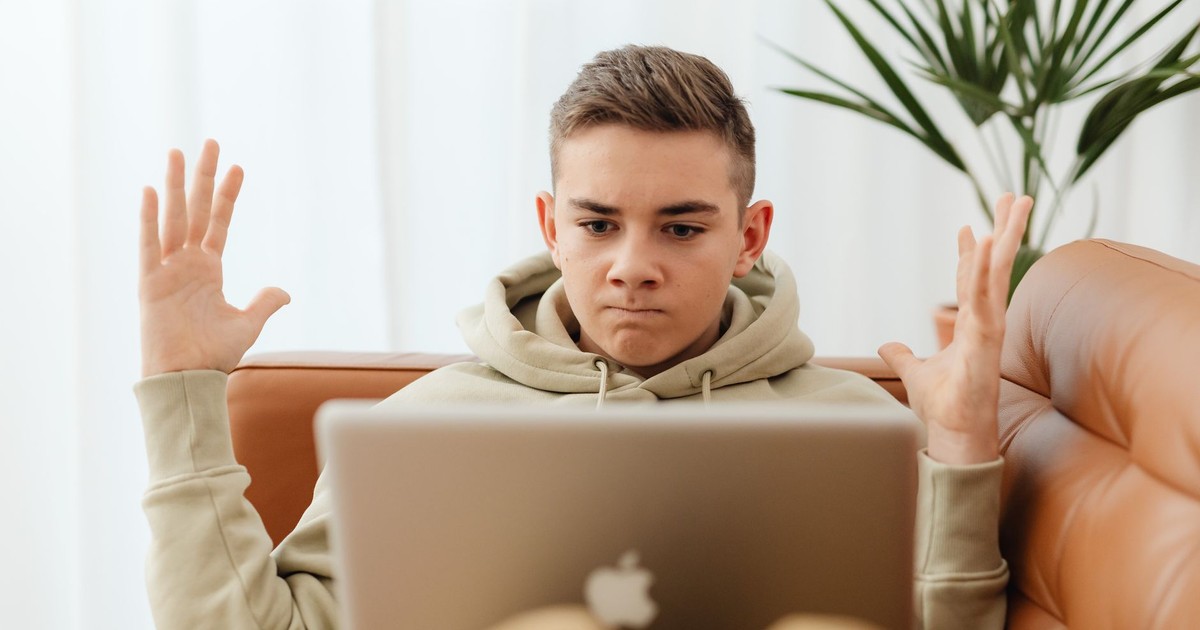
No country has yet demonstrated age verification that works at scale, resists workarounds, and protects privacy. Laws are being passed faster than the technology to enforce them is being proved. That gap is not a minor footnote. It’s the central challenge. Australia is the clearest example: six months after the ban took effect, most children who wanted to stay on the platforms had found a way.
Critics, including Amnesty International, argue that hard bans miss the point. They contend the most effective way to protect children online is through better regulation, stronger data protection laws, and better platform design, with robust safeguards to stop platforms from exposing users to harms through their pursuit of user engagement and exploitation of personal data. PBS warned that a blanket restriction could “push kids out of such curated, supervised, beneficial experiences and towards anonymous, less-safe services,” while Meta said a ban could drive teens to online alternatives without any parental controls.
The counterargument, which Starmer made explicitly, is that the difficulty of enforcement is not a reason to abandon a rule. Research published in Pediatrics Open Science adds weight to the concern driving legislators. A study following 8,324 children found that children who spent time on social media developed symptoms consistent with ADHD more so than peers whose screen time was centered around TV or video games. The average time spent on social media was just 30 minutes a day for 9-year-olds, steadily rising to 2.5 hours for 13-year-olds, despite platform guidelines intended to keep children off until age 13. The study authors called for stricter age verification and clearer guidelines for tech companies.
A Los Angeles jury added its own verdict to the conversation in March 2026. In the case of K.G.M. v. Meta et al., the jury ruled that Meta and YouTube were liable for creating products that led to harmful and addictive behavior by young users, awarding $6 million in compensatory and punitive damages – a landmark decision that could set a legal precedent for similar allegations brought against social media companies.
Read More: 20 Things Dads Used to Do in the 90s That You Just Don’t See Anymore
The Gap Between a Law and a Reality

More than 40 countries now have social media bans for children in place, in progress, or under active consideration. That number is extraordinary given that Australia’s law is barely six months old. It suggests that the political calculation has shifted in a way that is hard to walk back. For years, governments gave platforms the benefit of the doubt. That window appears to have closed.
What hasn’t changed is the fundamental difficulty. A teenager who wants to be on Instagram at 14 has more tools to get there than any previous generation of teenagers had to break any previous rule. A VPN costs nothing. An older sibling’s account is a phone screen away. The question most governments are sitting with is whether the goal is to stop all children from accessing social media – which is probably impossible – or whether setting a clear legal standard, with real fines for non-compliant platforms, pushes the companies to build safer defaults even if the ban itself isn’t airtight.
Starmer’s analogy when pressed on enforcement was blunt enough to land: he wasn’t deterred by Australia’s imperfect results, he said, for the same reason that society doesn’t abandon rules against selling alcohol to minors just because some teenagers still manage to get it. The rule changes the default. It shifts the responsibility. It gives parents something to point to. Whether that’s enough, or whether it’s really just the beginning of a much harder conversation about how platforms are designed and who they’re designed for, is a question that won’t be answered by legislation alone.
AI Disclaimer: This article was created with the assistance of AI tools and reviewed by a human editor.