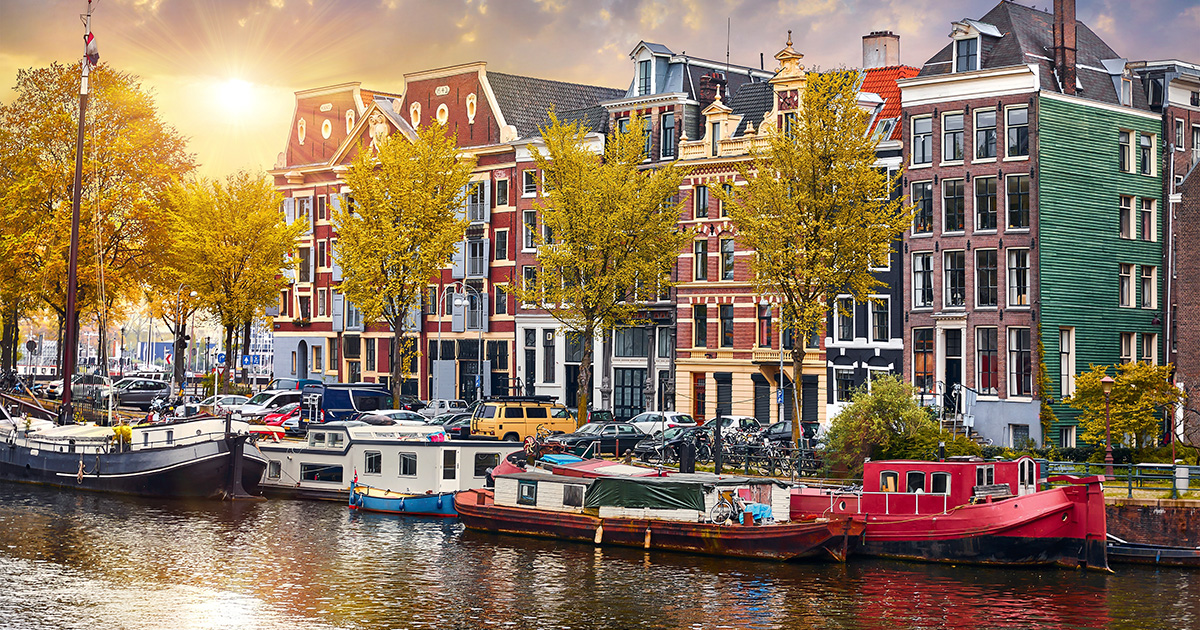

The most romantic thing about a canal isn’t the water. It’s the way it slows everything down. No traffic, no horns, no crowd spilling off a bus and rushing past. A canal insists on its own pace, and that pace – the soft lap against old stone, the low arch of a bridge, the reflection of a lit window at dusk – turns an ordinary evening into something you’ll remember for years.
Venice built its legend on exactly that feeling, and it deserves every word of it. But Venice in 2026 is also a city that charges a day-tripper fee to enter its historic center, turns away cruise ships, and watches its population keep falling – according to Venessia.com, fewer than 48,000 people now live in the historic center, down from more than 175,000 in the early 1950s, with residents consistently trading lagoon views for affordable rent elsewhere. The magic is real. The crowds are also real. And for the growing number of travelers who want the water, the architecture, and the unhurried drift without the elbow-to-elbow promenade, there’s a strong case for looking elsewhere.
The good news is that canals are not a Venetian invention. Cities on every continent figured out centuries ago that waterways are the most elegant solution to moving people, goods, and time. What follows is seven of the most romantic canal cities on earth – each one with its own history, its own architectural personality, and its own reasons to stay longer than you planned.
1. Bruges, Belgium
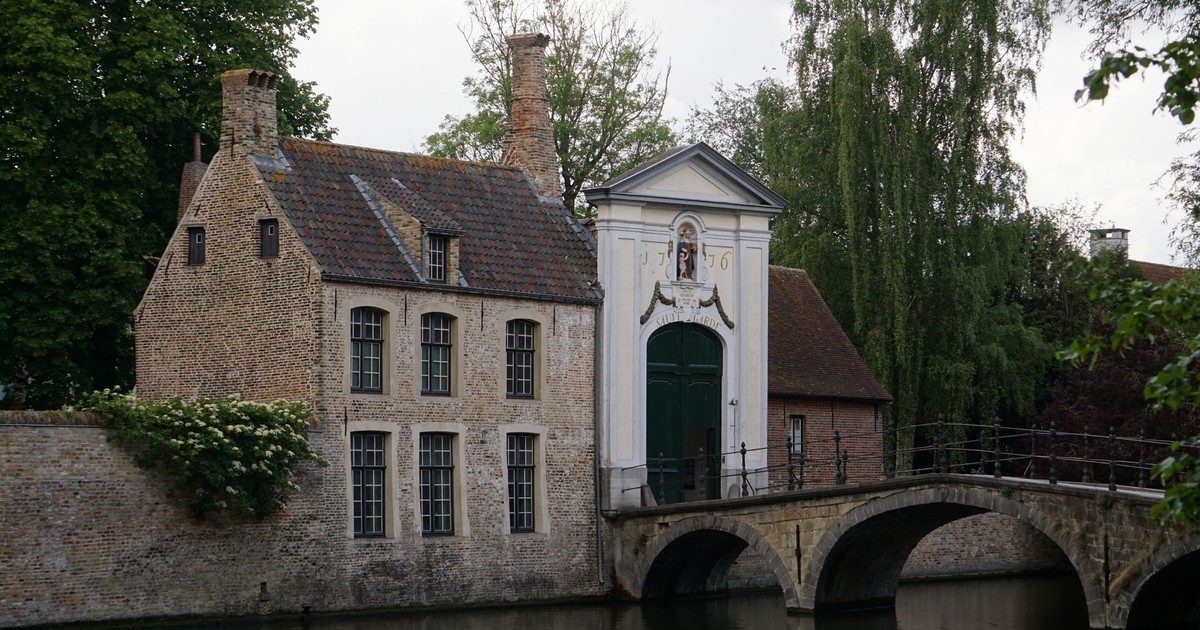
The historic centre of Bruges is a UNESCO World Heritage Site, packed with cobbled lanes, crow-stepped gables and Neo-Gothic architecture. What makes it so persistently romantic is how little has changed. The city’s medieval canal network, known locally as the Reien, winds through neighborhoods where the buildings on the water’s edge look almost exactly as they did in the 15th century, when Bruges was one of the wealthiest trading cities in northern Europe.
Of all the canals, the Groenerei, the ‘green canal,’ is the most romantic. It is best seen from Peerdebrug (Horse Bridge); looking towards the Meebrug, the canal is lined with trees and creepers, elegant 17th-century mansions and almshouses and topped by the cathedral tower. A boat tour covers the route between Jan van Eyck Square and the Beguinage in about thirty minutes – accompanied by swans floating alongside you on the water, you discover Bruges from a surprising perspective, because some things you can only see from the water.
Walking around Bruges today, it’s hard to imagine that by the mid-1800s it was a city in decline – it was tourism in the 20th century that helped breathe new life into this historical gem. That revival is visible in the density of world-class chocolatiers, the breweries pulling Trappist ales on cobblestone side streets, and the fact that the city’s well-preserved medieval structures – including the Belfry of Bruges and the Basilica of the Holy Blood, both within the UNESCO-inscribed historic core – attract millions of visitors annually. The crowds are real, particularly in summer, but the evening is the city’s secret weapon. As day-trippers leave and the sun sets, Bruges transforms into something even more magical. The crowds thin, the canal lights flicker on and the whole city glows in soft amber.
2. Amsterdam, Netherlands
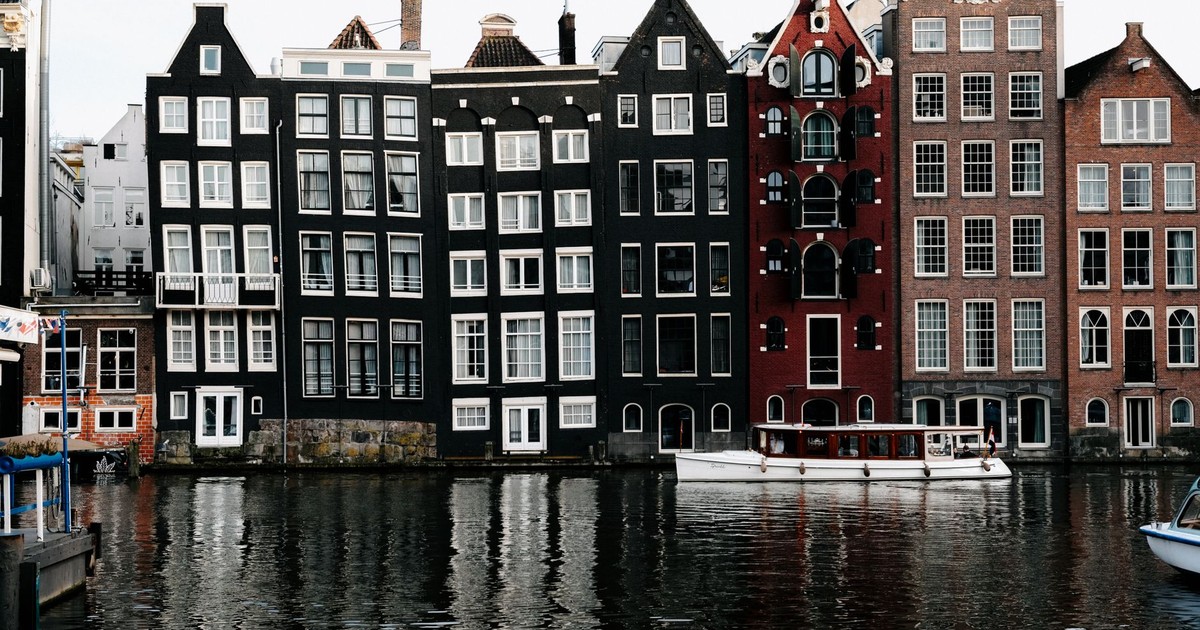
Most people know Amsterdam has canals. Fewer stop to consider the scale of what was built here. Amsterdam’s 17th-century Canal Ring is a UNESCO World Heritage Site, recognized as a masterpiece of hydraulic engineering and urban planning. According to Wikipedia’s overview of the canals, Amsterdam has more than 100 kilometers of waterways, about 90 islands, and 1,500 bridges – a network larger in scale than Venice’s. The concentric semicircular design solved practical transportation and water management challenges and created a harmonious cityscape that continues to captivate visitors four centuries later.
The three main canals – Herengracht, Keizersgracht, and Prinsengracht – form the famous Grachtengordel, the canal belt, and the architecture along their banks tells the story of the Dutch Golden Age in gable after gable. The most exclusive section, known as the “Golden Bend” (Gouden Bocht) on Herengracht, showcases the immense prosperity of 17th-century Dutch merchants.
Romance in Amsterdam lives less in the grand gestures and more in the small ones: twinkling lights reflecting on the canals, cobbled hump-back bridges, buildings that lean close to each other like old married couples. The Jordaan neighborhood, west of the main canal ring, is the version of Amsterdam that most visitors wish the whole city looked like – narrow lanes, independent cafés, window boxes above the water. In 2025, electric and eco-friendly canal boats dominate the scene, with nearly all operators offering silent, zero-emission city tours – which means an evening on the water is, for the first time in decades, genuinely still.
3. Annecy, France
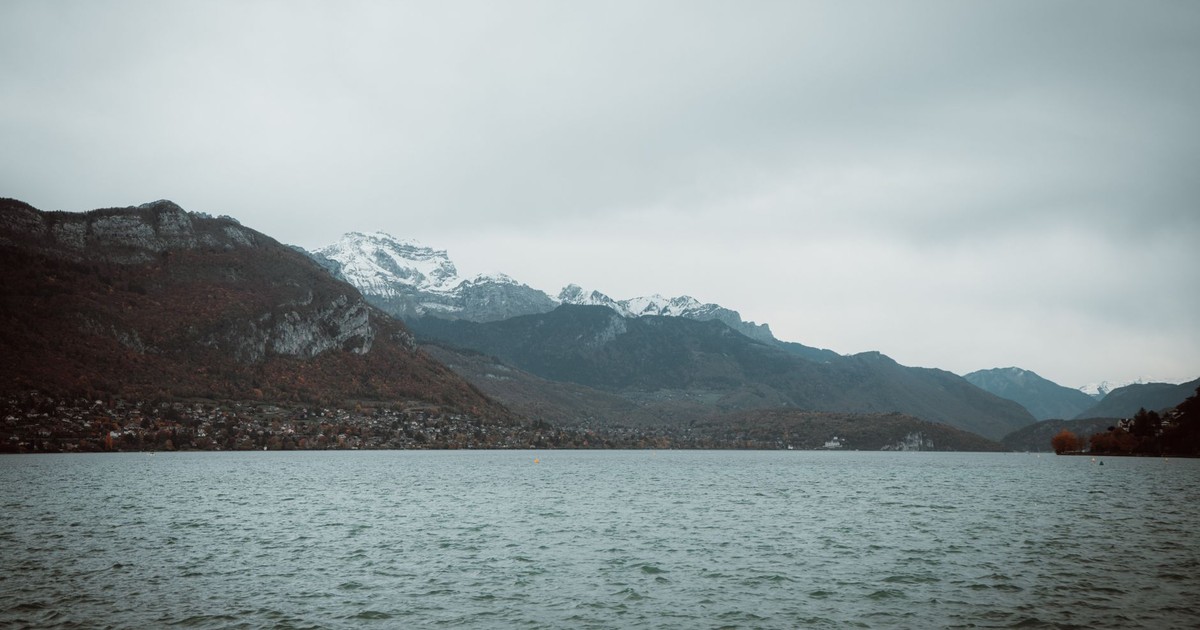
The argument for Annecy is simple: it has everything Venice has, minus the price tag, the crowds, and the logistical stress. Set in the French Alps at the northern tip of a mountain lake so clear it looks filtered, the city wraps its medieval Old Town around a network of canals fed directly by the lake, keeping the water a shade of turquoise that belongs more to the Caribbean than to northern France.
The centerpiece of the old town is the Thiou canal, which flows past a 12th-century island palace – the Palais de l’Île – that sits in the middle of the water like a stone ship at anchor. Medieval arcaded streets run alongside the canal banks, with flower boxes at every window and the Alps filling the skyline behind the rooftops. It is, by most objective measures, one of the most photogenic urban scenes in Europe. What keeps it from being overrun is its geography: Annecy requires a deliberate decision to get there, and most visitors who discover it tend to return rather than tell everyone they know about it.
The lake itself has long had a reputation as one of the cleanest in Europe – a result of strict environmental protections introduced after industrial pollution threatened it in the 1960s – which means swimming is not just possible but encouraged. Couples who arrive in Annecy for its canals usually end up spending at least a half-day on a boat on the lake, which offers views of the town from the water with the Alps as the backdrop. The combination of mountain air, medieval stone, and that impossible water color makes a strong case for Annecy as the most spectacular romantic canal city in France.
4. Copenhagen, Denmark
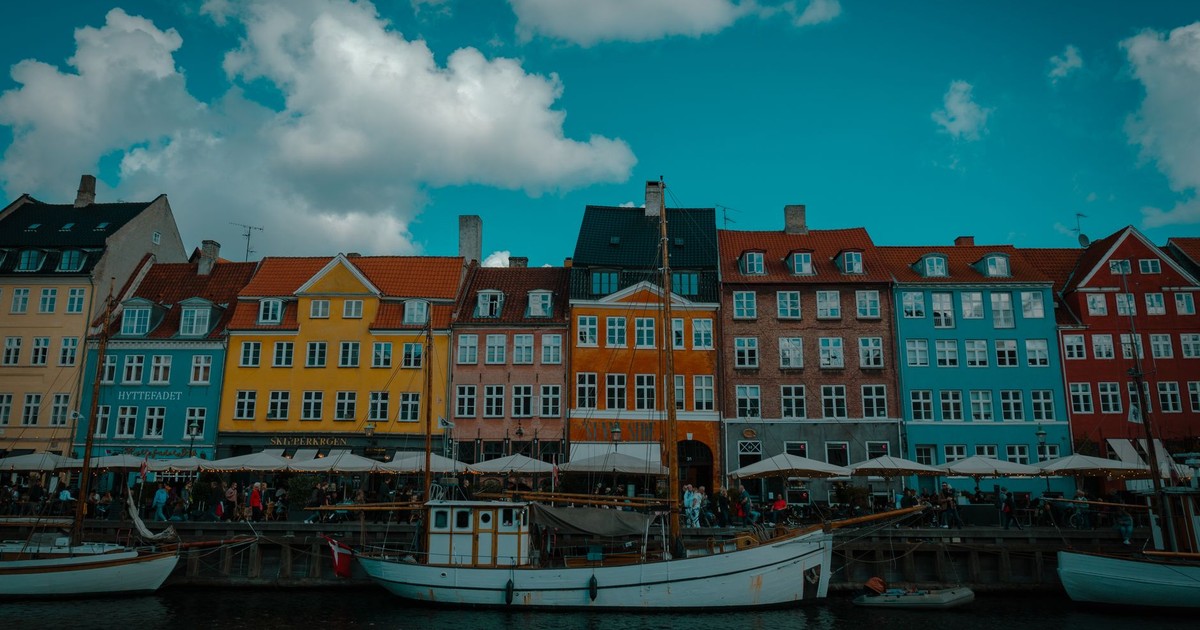
The capital city of Denmark is hardly a hidden gem among travelers, but few realize that Copenhagen unites the major city amenities of Amsterdam or Venice with the romance of canals flanked by lovely architecture that other canal cities tend to lack. The city’s most famous waterway is Nyhavn – the 17th-century harbor canal lined with brightly painted townhouses, dug on the orders of King Christian V between 1670 and 1673 – but the network extends well beyond that single postcard view, threading through the city past palaces, old warehouses, and neighborhoods that feel nothing like a tourist destination.
The Christianshavn canal district, on the other side of the inner harbor from the old city, is where Copenhagen gets genuinely interesting for anyone who wants the canal experience without the tour groups. The streets here narrow down to almost nothing, the buildings tilt slightly toward the water, and the whole area has the feel of a small canal town that just happens to be embedded in a Nordic capital. Whether you take the waters in self-piloted boats or water buses, these canals offer a new vantage point on some of the most scenic stretches of Copenhagen. Its canals pass by stately historic buildings that showcase Copenhagen at its grandest and most romantic.
What sets Copenhagen apart from other entries on this list is what surrounds the canals. The city’s food scene is world-class, its design culture is pervasive, and its commitment to cycling means that arriving by bike along the harborside to find a table at a waterfront restaurant is entirely normal. A canal city where the evening ends with a Michelin-level dinner three minutes from the water is not something every destination can offer.
5. Suzhou, China

Just an hour and a half’s drive from Shanghai lies the Venice of the East: Suzhou, a charming water town nestled in eastern China’s Yangtze River Delta region with a history spanning more than 2,500 years. Suzhou’s compelling similarities to Venice won the admiration of explorer Marco Polo, who visited the small water town in the 13th century – high praise indeed from a Venetian himself.
The city has a 2,500-year history and beautiful canal streets lined with traditional architecture, including some branches of the Grand Canal, which runs through Suzhou en route from Beijing to Hangzhou. The Classical Gardens of Suzhou – nine of which are UNESCO World Heritage-listed – represent one of the most sophisticated traditions of garden design in the world, spaces where water, stone, and carefully placed trees create landscapes that function as poems. As UNESCO notes, they represent “the development of Chinese landscape garden design over more than two thousand years.” Visiting them alongside the canal streets gives Suzhou a cultural depth that most Western canal cities simply can’t match.
The romantic atmosphere here is distinctly different from anything in Europe. Dotted with ancient pagodas, Ming dynasty-era buildings, and aromatic markets, Suzhou makes for a pleasant alternative from larger cities when traveling to China. The pace is slower than Shanghai by several orders of magnitude, the light along the canal streets at dusk has a particular golden quality, and the combination of water, old stone, and the smell of jasmine tea from the tea houses along the bank adds up to something genuinely unlike anywhere else on this list. For couples who have already done Europe and want a canal city that will genuinely surprise them, Suzhou is the answer.
6. Trogir, Croatia
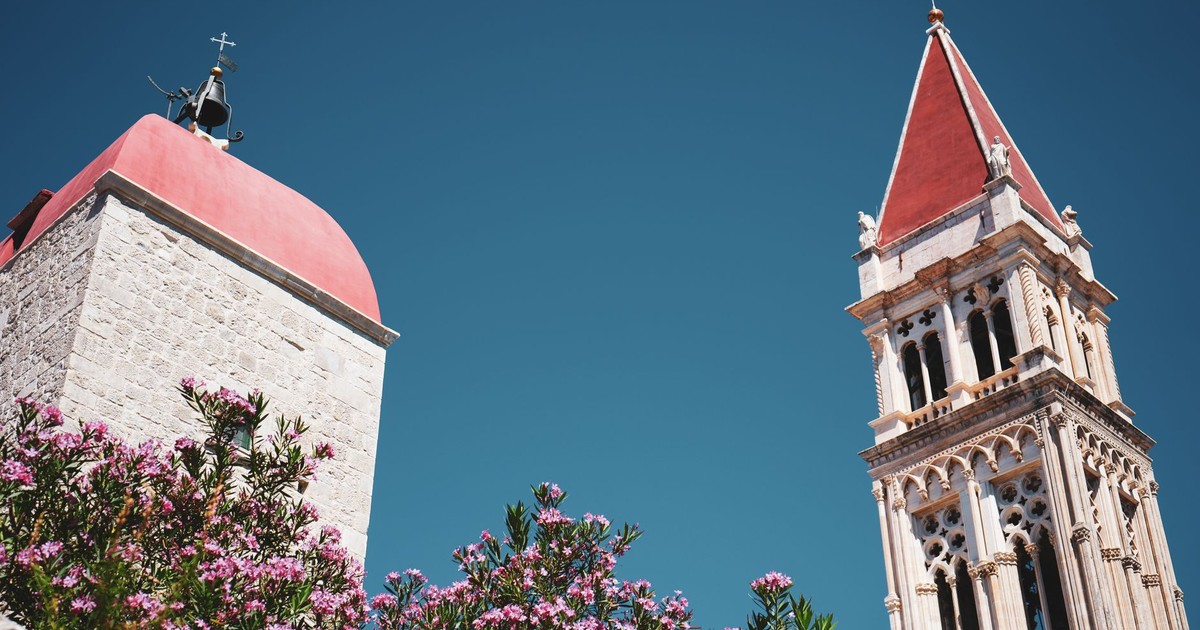
Trogir is a UNESCO World Heritage Site on the Adriatic coast of Croatia with a heritage of Venetian rule, inscribed in 1997 for its Venetian architecture. Its Old Town sits on a small island separated from the mainland by a canal that’s crossed by pedestrian bridges, giving access to narrow medieval streets and historic architecture from a range of periods. The Venetian influence here is not metaphorical – the city was under Venetian control for centuries, and the stone loggia, the cathedral, and the towers that line the water still bear the Lion of St. Mark carved into their facades.
What makes Trogir work as a romantic destination is its compactness. The Old Town island is small enough to walk end-to-end in about fifteen minutes, which means every café, every canalside table, and every sunset viewpoint is within easy reach. The canal that separates the Old Town from the mainland is narrow enough to feel intimate – more like a wide street filled with water than anything resembling a major waterway. Fishing boats tie up here in the mornings, and by evening the same quays fill with locals and visitors sharing a table above the water.
Unlike Venice, Trogir is also doable on a tight budget, despite offering many of the same draws. The Croatian kuna still makes everything from waterfront dining to a room with a canal view considerably more affordable than a comparable experience in Italy. It is also, critically, one of the least visited UNESCO World Heritage Sites on the Dalmatian coast – most visitors to Croatia make a beeline for Dubrovnik, leaving Trogir to those who know to look a little further up the coastline.
7. Yanagawa, Japan
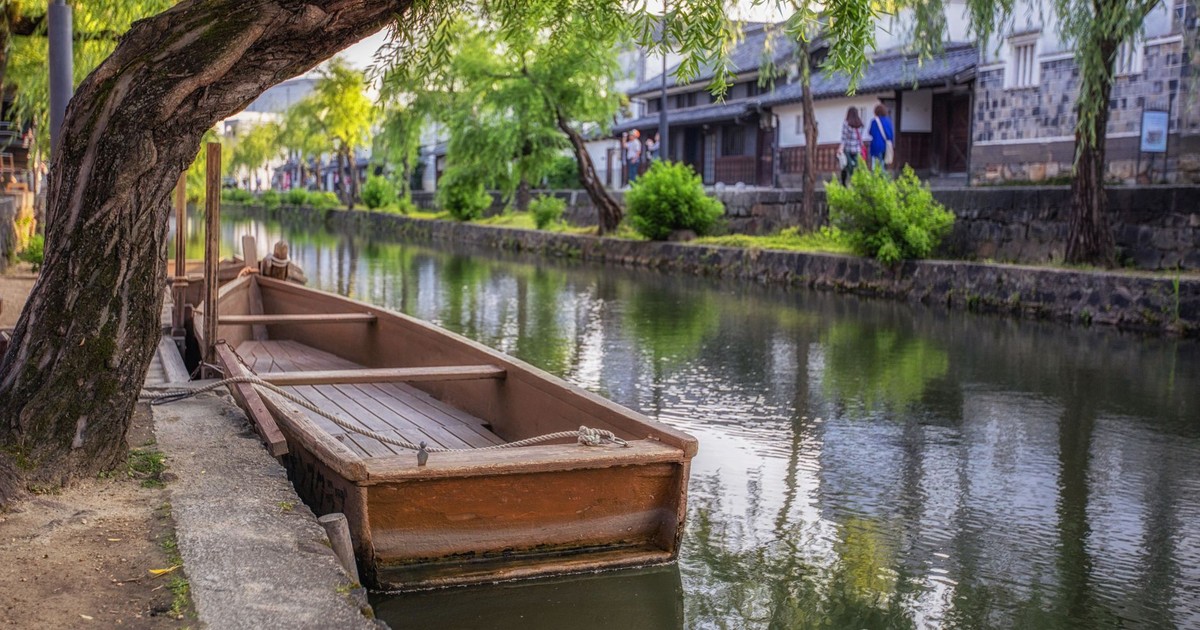
Most visitors to Japan’s Kyushu island head for Fukuoka or Nagasaki and stop there. Those who carry on another hour south to Yanagawa find a canal city unlike anything else in the country. Yanagawa’s canals define this corner of Kyushu – even the town’s manhole covers feature scenes depicting its waterways. To explore them, board a donkobune, a small flat-bottomed craft. Oarsmen expertly steer them using bamboo poles, dressed in traditional costume, from their conical hats to their rubber boots. They glide through the calm waters, punctuating the silence with folklore tales and centuries-old songs.
These canals were originally dug in the seventh and eighth centuries to provide irrigation for local agriculture and to create a defensive moat around the town’s castle. What remains today is a network of narrow waterways winding through willow-draped streets, past traditional wooden houses and small shrines tucked into the banks. The scale is intimate – nothing here is trying to impress you. The boat barely fits under some of the low stone bridges, which means passengers have to duck, which means laughter, which is probably the point.
Yanagawa is also a working food town. It’s famous throughout Japan for its unagi – freshwater eel – served in the local style called seiro mushi, steamed over rice with a sweet soy glaze in a wooden box. The combination of a morning donkobune ride along the willows and an afternoon eating eel at a table overlooking the canal is the kind of day that requires no further justification. For a couple looking for a romantic canal city completely off the European circuit, Yanagawa offers something that the rest of this list simply cannot: the feeling of having found it for yourself.
Read More: 8 Money Saving Travel Hacks That Really Work and 8 That Don’t
The Only Question That Matters
The instinct, when you read a list like this, is to ask which one is the best. The honest answer is that it depends entirely on what you’re actually looking for. Bruges and Amsterdam are the most accessible from North America and deliver the highest concentration of canal-and-architecture romance per square meter. Annecy rewards the traveler who wants natural scenery alongside medieval streets. Copenhagen is for the person who wants canal life without giving up great food, design, and a city that functions brilliantly. Suzhou and Trogir offer history that goes deeper than almost anything in northern Europe. And Yanagawa is for the traveler who is, at this point, done with being told where to go.
What unites all seven of these romantic canal cities is not just water. It’s the way that water changes how you move through a place. You can’t rush along a canal bank the same way you rush down a city street. The view from a low boat looking up at a medieval arch is not the same view you get from the sidewalk above. These cities were built for a pace of life that the modern world has mostly abandoned, and visiting them, even briefly, is a useful reminder that some of the best things still take time. The right city on this list isn’t the most famous one – it’s the one that matches the pace you actually want to keep.
AI Disclaimer: This article was created with the assistance of AI tools and reviewed by a human editor.