
Health Secretary Robert F. Kennedy Jr. has never been easy to categorize. The environmental attorney turned vaccine skeptic turned presidential candidate turned cabinet official has spent decades confounding the political categories people try to assign him. His latest move adds yet another layer: on July 31, 2026, the man running the Department of Health and Human Services launched a cooking show. Not a podcast. Not a policy briefing. An online cooking show, hosted on the HHS government website, featuring celebrity chefs, budget recipes, and Kennedy himself standing at a cutting board.
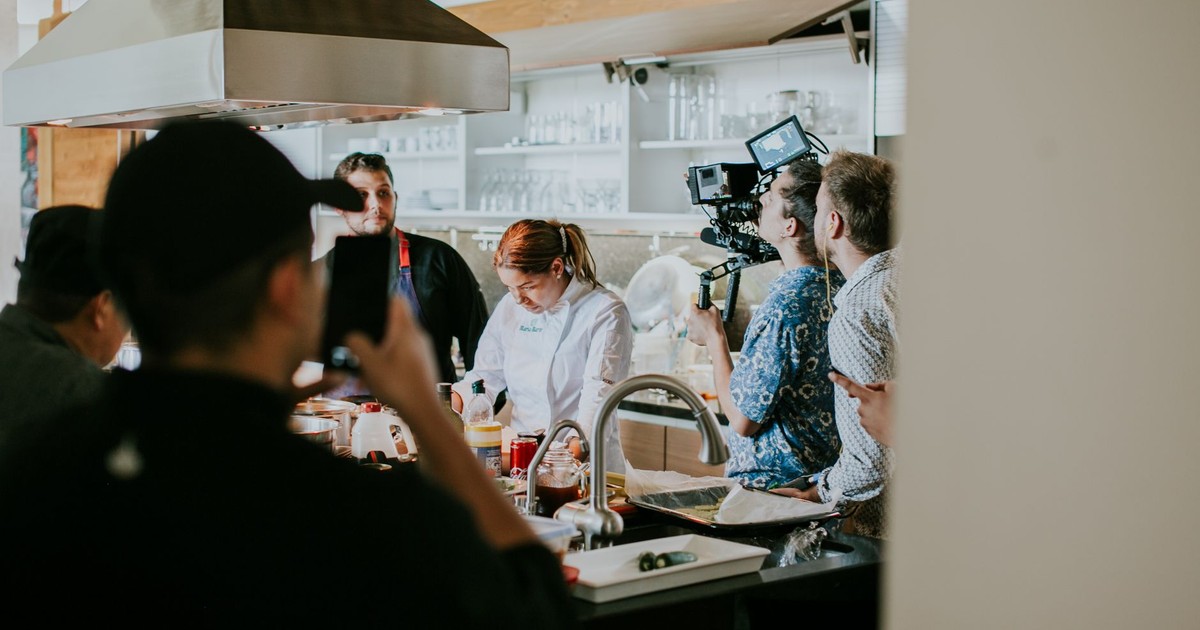
The show is called The Real Food Show, and its premise is straightforward enough. Kennedy will host online episodes encouraging families to cook healthy meals for less than $5 a serving whenever possible. The first episode debuted on July 31, and it features celebrity chefs helping to prepare meals like “Crispy Salmon Cakes with Apple, White Bean & Green Salad” and highlighting some personal favorites like kimchi, yogurt, and sauerkraut. The show is hosted directly on the HHS website, at hhs.gov/real-food-show, making it arguably the first cooking program ever produced and distributed by a U.S. federal government department.
Whether you think this is inspired public health communication or an unusual use of a cabinet secretary’s time likely depends on your broader view of Kennedy. But the show is not happening in a vacuum. It is the latest and most visible salvo in an eighteen-month effort to use the federal government’s reach to fundamentally change how Americans eat, cook, and think about food – and it comes with a policy backdrop far larger than salmon cakes.
The Show Itself: Format, Chefs, and What Kennedy Wants to Prove
Kennedy and a rotating panel of celebrity chefs will prepare inexpensive and nutritious meals “inspired” by President Trump’s health agenda. According to HHS, “Secretary Kennedy is bringing the Dietary Guidelines for Americans to life and showing that cooking with real food can be practical, approachable and affordable for every family.”
The first couple of episodes will feature chefs Andrew Gruel and Robert Irvine. The choice of both men is deliberate. Gruel is a California-based Food Network personality and sustainable seafood advocate. A graduate of Johnson & Wales University, he is the CEO and founder of American Gravy Restaurant Group, which comprises Calico Fishhouse, Big Parm Pizza, Two Birds Chicken, Butterleaf, Lolo’s Tacos, and 101 Burger. He is also a Fox News regular and, as of March 2025, a sitting member of the Huntington Beach City Council in California – a political profile that makes him a natural fit for a Trump administration initiative. Gruel argued on the show that Americans should eat more seafood because people are deficient in the nutrients found in fish, and the two men discussed revising their diets to eliminate processed foods and seed oils as they prepared the salmon cakes.
Irvine brings a different brand of television credibility. He is best known to Food Network audiences as the host of Restaurant: Impossible, which he hosted for 22 seasons. A veteran of the British Royal Navy, he learned to cook for a huge number of people under intense pressure. That background in high-volume, high-pressure meal preparation makes him an apt partner for a show explicitly aimed at families who feel that cooking real food from scratch is beyond their time or budget.
The show features graphics showing viewers how to make each dish and save money while eating better. It warns against processed foods like salad dressings, which are often high in sodium. Homemade vinaigrette ingredients, viewers are informed, cost about $1, and lemon peels contain pectin, a prebiotic fiber, and can be grated into the dressing for extra nutrition.
Kennedy’s pitch on cost is pointed. He said on the show: “Fast food is not less expensive. That meal costs $12 to $14. People can eat a lot cheaper at home and a lot better food.” He told USA TODAY that many Americans have forgotten how to cook, calling it a “lost art.”
Kennedy’s Personal Food Philosophy
Kennedy’s dietary views are well-documented and have generated their fair share of headlines over the years. He is known as a fermented foods aficionado, with an obsession involving vast quantities of fermented foods such as sauerkraut. He was in the habit of taking his own sauerkraut to restaurants, he said. “I used to carry it with me, but I got too many complaints,” he told USA TODAY. Asked if it was from fellow diners, Kennedy said: “My wife mainly.”
Kennedy, who carries around his own stash of kimchi and adheres to a mostly carnivorous diet, invited chef Andrew Gruel to the inaugural show. His stated rationale for the program goes beyond personal preference. As Kennedy put it: “I’m traveling across America, connecting with renowned chefs to show families how to cook delicious, nutritious meals with real ingredients and all at affordable prices.”
The Policy Engine Behind the Program
The Real Food Show does not exist independently of Kennedy’s broader agenda at HHS. It is best understood as the most consumer-facing expression of a wide-ranging nutrition policy overhaul that began the day he was confirmed.
On January 7, 2026, Kennedy and Agriculture Secretary Brooke Rollins released the Dietary Guidelines for Americans, 2025 – 2030, marking what HHS called “the most significant reset of federal nutrition policy in decades.” The new guidelines deliver a clear message: eat real food. The policy substance behind that phrase is significant. The guidelines promote eating more protein and feature a new inverted food pyramid. Americans should eat less packaged and highly processed foods and more protein and full-fat dairy, according to the guidelines. They blend elements of Kennedy’s MAHA agenda with well-established nutritional guidance and maintain existing recommendations on saturated fat intake.
The guidelines carry real regulatory weight beyond the dinner table. The most current dietary guidelines often form the criteria used in nutrition-related rulemakings. The FDA based its 2025 regulatory overhaul determining which food products could be labeled as “healthy” on the previous five-year standards. The guidelines will also inform USDA’s recalibration of a rule requiring increased food variety at grocery stores selling to Supplemental Nutrition Assistance Program users. “Requiring those retailers, those 250,000 retailers across America to double their stocking of healthier foods, that will allow us to immediately get these better foods into” communities, Agriculture Secretary Rollins said.
The guidelines are the capstone of a year-long push. In his tenure, Kennedy has used the MAHA branding to wage war on ultra-processed foods, pressure companies to phase out artificial food dyes, criticize fluoride in drinking water, and push to ban junk food from the program that subsidizes grocery store runs for low-income Americans. He has also extended the campaign into hospitals. The agency sent notices to hospitals asking them to align their food purchases with the administration’s 2025 – 30 dietary guidelines to ensure continued eligibility for Medicaid and Medicare payments.
The broader public health statistics Kennedy regularly cites to justify this agenda come from HHS’s own data. The U.S. faces what HHS describes as a national health emergency: nearly 90% of healthcare spending goes toward treating chronic disease, much of it linked to diet and lifestyle, and more than 70% of American adults are overweight or obese, with nearly 1 in 3 adolescents having prediabetes.
The MAHA Movement’s Food Agenda: Scope and Controversy
The cooking show may be the most visually accessible element of MAHA, but the movement’s food-related policy work has been operating on multiple tracks simultaneously.
On May 22, 2025, the White House released a report highlighting what it claimed were the causes of chronic disease in children. The report fleshed out themes central to the MAHA movement and focused heavily on the negative health effects of ultraprocessed foods. It cited research finding that nearly 70% of children’s diets and 50% of pregnant and postpartum women’s diets in the U.S. consist of ultraprocessed foods.
On July 23, 2025, federal agencies published a joint Request for Information to “gather information and data to help establish a federally recognized uniform definition for UPFs,” following statements in the MAHA Commission’s assessment that UPF overconsumption is one of the driving factors of what the assessment calls the “childhood chronic disease crisis.”
The political reception for Kennedy’s food agenda has been notably bipartisan on the consumer-facing elements. Kennedy has leaned heavily into his work on changing eating habits, which fits into the MAHA gestalt and polls well with both Democratic and Republican voters. Eighty-six percent of registered voters surveyed said it should be easier for every American family to access fresh fruits and vegetables, according to a 2025 poll released by Navigator Research.
The hospital food initiative has drawn more friction. The initiative from Kennedy is spurring backlash from some doctors and medical providers who say it fails to account for patients’ unique dietary needs. It’s also not clear that HHS has the regulatory authority to enforce its threat without going through a formal rulemaking process, lawyers and dietitians say.
Kennedy’s Make America Healthy Again movement has found common ground among a bipartisan group of voters, primarily those known as MAHA Moms, with its promise to combat chronic childhood diseases by reducing environmental toxins, ultra-processed foods, and what Kennedy calls “overmedicalization.”
Who Is Andrew Gruel, and Why Does It Matter?
The selection of Andrew Gruel as the inaugural cooking show guest is worth examining in detail, because he is not simply a convenient celebrity chef.
Gruel serves on the Huntington Beach City Council and is a frequent expert guest across major podcasts, streaming programs, and national television. He co-hosts The SoCal Restaurant Show on AM 830 and serves as Executive Director of Save the Brave, a 501(c)(3) dedicated to supporting veterans’ mental health. His political alignment with Fox News and conservative media outlets made him a known quantity in MAHA circles long before the RFK Jr. cooking show announcement.
His professional background also aligns specifically with the show’s emphasis on seafood. Gruel has a background in aquaculture and sustainable sourcing of seafood. He started a non-profit with the Aquarium of the Pacific in Long Beach focused on marine conservation and sustainability. During California’s extended COVID lockdowns, he and his wife Lauren created a fund to keep restaurant employees afloat, raising more than $500,000. They were named “Pandemic Heroes” by Restaurant Business Magazine alongside Guy Fieri and José Andrés.
Irvine, the show’s second confirmed chef, brings a different dimension. A portion of the proceeds from all of Irvine’s endeavors benefit the Robert Irvine Foundation, created in 2014, which gives back to servicemen and women and first responders by training service dogs, making mental health and wellness services available, and providing mobility devices for the disabled. For his charitable work and service on numerous USO tours, Irvine is the recipient of several civilian honors, including Honorary Chief Petty Officer of the United States Navy. That military and veterans profile maps neatly onto the Trump administration’s broader brand.
Reception and Public Reaction
The show’s debut drew immediate media attention – not all of it enthusiastic. Health Secretary Kennedy drew mockery from critics when he launched the cooking show, with some suggesting it would likely include roadkill – a reference to his well-publicized history with unusual dietary choices, including an admission that he once left a dead bear cub in New York’s Central Park. The Hollywood Reporter ran the headline “Hope You Like Raccoon Penis, Because RFK Jr. Has a New Cooking Show.”
Despite the mockery, the show found an audience. The first 20-minute episode of The Real Food Show, which as of Thursday had garnered more than 2,000 views on YouTube within hours of launch, suggesting that whatever critics think of Kennedy personally, there is an audience curious enough to watch a sitting cabinet secretary prepare crispy salmon cakes.
The show’s synopsis reads: “Every episode is packed with affordable, budget-friendly recipes and easy cooking techniques designed to save you time and money.” That value proposition – cheaper, healthier, simpler – is designed to speak directly to the Americans Kennedy wants to reach: households that have defaulted to fast food and packaged meals not out of preference but out of habit, cost concerns, or a sense that cooking from scratch is a skill beyond their reach.
What Happens Next
The Real Food Show is, on the surface, a cooking program. In practical terms, it is an extension of a policy infrastructure that Kennedy has been building since he was confirmed as HHS Secretary in February 2025 – one that spans the new Dietary Guidelines for Americans 2025 – 2030, the MAHA Commission’s childhood chronic disease assessment, the phaseout of synthetic food dyes, and pressure campaigns aimed at hospitals, SNAP retailers, and the food industry at large.
The show’s core argument is that the $12-to-$14 fast food meal is a false economy – that families with limited time and money can eat better and cheaper if they know how. That argument has broad political appeal. The polling on accessible, affordable healthy food is about as non-partisan as American public opinion gets, with 86% of registered voters supporting better access to fresh produce. Whether a government-hosted YouTube cooking show is the most effective vehicle for changing national eating habits is a legitimate question. Whether it is the most unusual intervention ever mounted from the offices of a U.S. cabinet department is, at this point, beyond debate.
The institutional significance of producing and distributing a cooking show directly through HHS.gov is not trivial. It represents Kennedy’s bet that public behavior changes faster through demonstration than through regulation – that watching a cabinet secretary sharpen a knife, dump store-bought sauerkraut, and argue that homemade vinaigrette costs $1 will do more for American health outcomes than another round of dietary guidelines no one reads. Whether that bet pays off will be measured not in YouTube view counts but in whether The Real Food Show eventually becomes a footnote in a larger story about how the federal government started treating food policy as a kitchen-table conversation rather than a regulatory document. The cynics will keep making raccoon jokes. The families who learn to make salmon cakes for under $5 probably won’t care.
Disclaimer: This information is not intended to be a substitute for professional medical advice, diagnosis, or treatment and is for information only. Always seek the advice of your physician or another qualified health provider with any questions about your medical condition and/or current medication. Do not disregard professional medical advice or delay seeking advice or treatment because of something you have read here.
AI Disclaimer: This article was created with the assistance of AI tools and reviewed by a human editor.