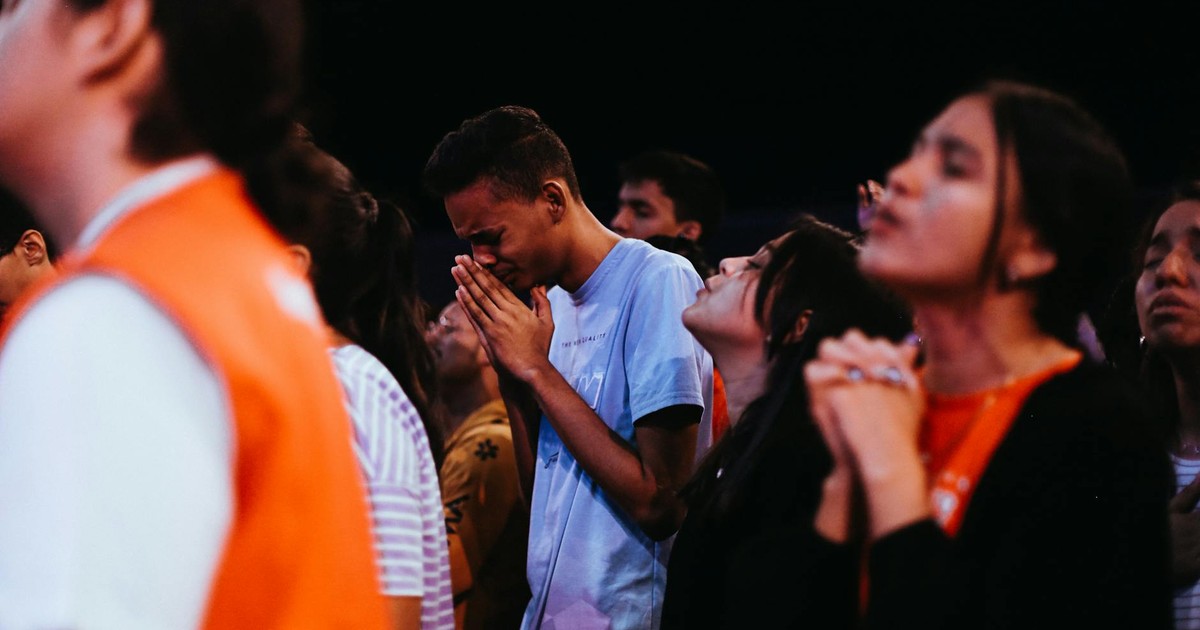

Ask someone in Jackson, Mississippi what they did last Sunday and there’s a reasonable chance they were at church. Ask the same question in Burlington, Vermont and the answer looks very different. Religion in America has never been evenly spread across its 50 states, and the gap between the most devout and the most secular is wider than most people imagine.
The “most religious states” question is one researchers have spent decades trying to answer systematically. What makes it difficult is that “religious” isn’t a single, clean variable. It’s whether you pray each morning. Whether you sit in a pew most weeks. Whether you genuinely believe in God, and whether faith shapes the way you live from Monday through Saturday, not just Sunday. Tick all four of those boxes at the highest level and researchers classify you as “highly religious.” The portrait that emerges when you map that category state by state is striking.
What follows is drawn from the most thorough state-by-state religious survey ever conducted in America, covering nearly 37,000 adults. The results confirm some things you’d expect and offer a few surprises along the way.
How the Rankings Work
The data comes from Pew Research Center’s 2023-24 Religious Landscape Study, which surveyed 36,908 adults across all 50 states and the District of Columbia. To gauge the religiousness of each state, Pew looked at four separate questions: the percentage of adults who pray daily, who believe in God or a universal spirit with absolute certainty, who consider religion very important in their lives, and who attend religious services at least once or twice a month. Each response received a score between 0 and 2, with the four categories tallying to an overall score between 0 and 8. The “highly religious” category represented all respondents who scored a 7 or 8. Pew then ranked all 50 states by the percentage of residents in that top category. The ranking below covers the 15 most religious states in the country by that measure.
1. Mississippi
Mississippi doesn’t just top the list of most religious states – it dominates it. Fifty percent of adults in the state are classified as highly religious, and it leads every individual metric Pew tracked. Mississippi comes up as number one for every other metric, including the “importance of religion,” “religious attendance,” “frequency of prayer,” and “belief in God.”
The state’s religious culture runs deep and is largely Protestant evangelical in character. Drive through the Mississippi Delta and you’ll pass churches roughly every half mile – small white wooden buildings, larger brick congregations, storefronts that have been converted into sanctuaries. Faith here isn’t compartmentalized into a single hour on Sunday. It shapes the vocabulary, the politics, the social calendar, and the way communities show up for each other in hard times.
In Mississippi, 61% of adults say religion is very important, 54% say they attend a religious service monthly, 62% say they pray daily, and 74% say they believe in God or a universal spirit. No other state matches that kind of across-the-board consistency.
2. South Carolina
South Carolina follows Mississippi with 46% of adults highly religious, with South Dakota and Louisiana tied next at 45%. That gap between South Carolina and the rest of the country below Mississippi is still significant.
Baptist and evangelical churches are heavily concentrated in the South, whereas Catholic strongholds align with areas shaped by European and Latin American immigration – and South Carolina fits that pattern precisely. The state’s religious character is shaped by a dense network of Baptist and evangelical churches, particularly in its rural interior and smaller cities. Charleston has historically been home to a more diverse denominational mix, but across the state as a whole, Protestant Christianity is the dominant frame through which most adults understand their lives, their families, and their communities.
South Carolina’s faith culture is also woven into its public identity in ways that go well beyond individual belief. Political campaigns routinely open with prayer. Local news leads with stories about church revivals. The rhythm of the school year accommodates major religious events without much controversy, because there isn’t much controversy to be had. Faith is simply the water most South Carolinians swim in.
3. South Dakota
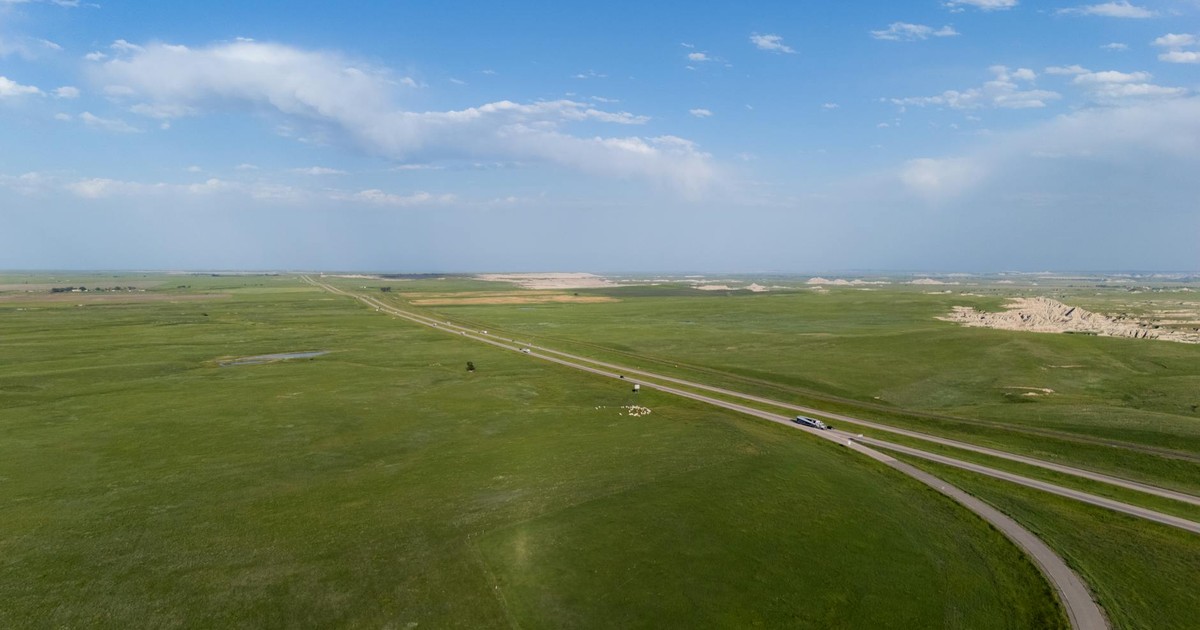
South Dakota’s presence this high on the list sometimes surprises people who associate deep religious conservatism primarily with the South. South Dakota and Louisiana are tied at 45% of adults classified as highly religious.
The state’s religiosity draws from a different stream than the Deep South. Lutheran, Catholic, and mainline Protestant traditions have deep roots here, shaped by the German-Russian and Scandinavian immigrant communities that settled the Great Plains in the late 19th century. Those communities built churches before they built schools, and that priority never entirely disappeared from the cultural memory.
There’s also a strong Native American spiritual tradition across much of South Dakota, though Pew’s survey measures conventional religious engagement, which may not fully capture that dimension. What the numbers do capture is a state where church attendance, daily prayer, and the expressed importance of religion remain unusually high relative to the national average.
4. Louisiana
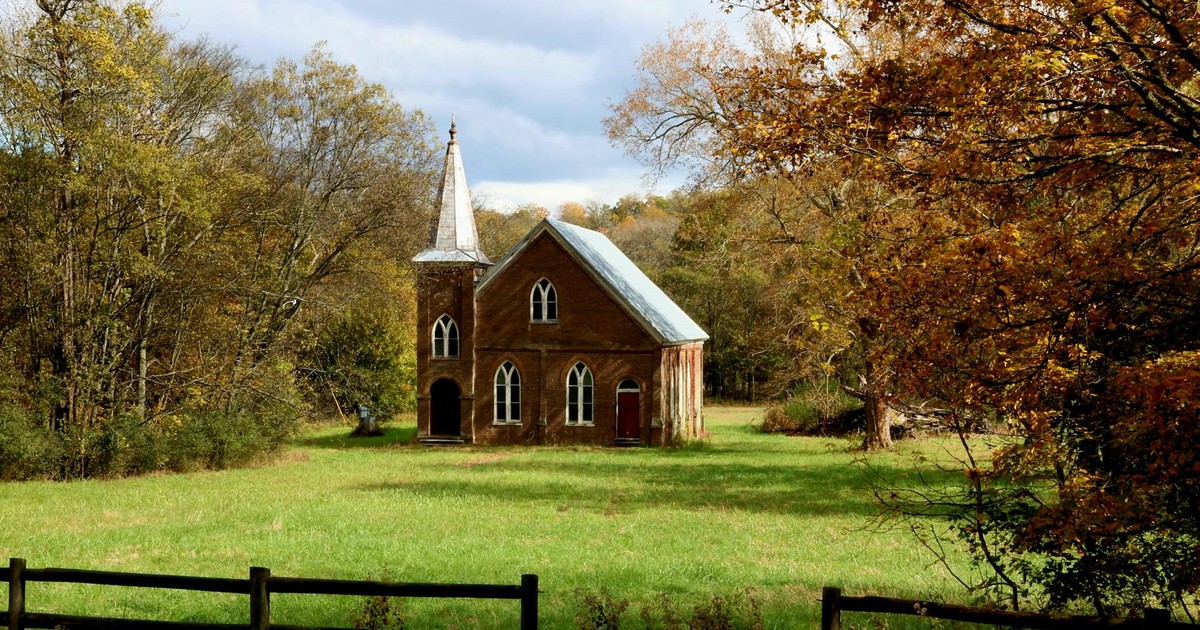
Louisiana ties South Dakota at 45% and brings a very different religious texture to the list. Catholicism has shaped Louisiana’s culture more deeply than almost any other state – from the names of its parishes (which are literally church parishes, not counties) to its calendar of festivals, Mardi Gras included, which is an explicitly Catholic observance marking the start of Lent.
That Catholic influence runs alongside a robust Baptist and Pentecostal presence in the northern and rural parts of the state, creating a religious profile that is both distinctly Southern and distinctly its own. Faith in Louisiana tends to be communal and expressive – sung out loud, worn publicly, and practiced as a collective act rather than a purely private one.
The state also ranks consistently high on the belief-in-God measure, which makes sense given a tradition where religious identity is so bound up with family heritage and regional culture that opting out can feel like opting out of Louisiana itself.
5. Tennessee
Tennessee places fifth, with 44% of adults classified as highly religious. Nashville may be known globally as Music City, but the city’s other nickname, the “Buckle of the Bible Belt,” is arguably more accurate as a description of what drives Tennessee’s identity.
The state is home to one of the densest concentrations of evangelical megachurches in the country. It hosts the headquarters of the Southern Baptist Convention, the largest Protestant denomination in the United States, and a significant share of the country’s Christian music and publishing industry. Faith is, in Tennessee, an industry as much as a personal commitment – though the two aren’t mutually exclusive.
Outside Nashville, the picture is even more uniformly devout. In rural East Tennessee, small Baptist and Church of Christ congregations anchor communities the way neighborhood bars anchor others: they’re where you see people, where social news travels, and where major life events get marked.
6. Utah
Utah is the list’s most obvious outlier, and the most interesting. Utah ranks sixth, with 42% of adults in the highly religious category. Unlike every other state in the top ten, Utah’s religiosity is driven not by evangelical Protestantism but by The Church of Jesus Christ of Latter-day Saints (LDS), whose global headquarters sits in Salt Lake City.
The LDS Church structures daily and weekly life in ways that few other faith traditions do in modern America. Members observe a weekly Sabbath that means no shopping, no sports, and no outside work. Young men and women are expected to serve two-year missions. Monday evenings are designated “Family Home Evening.” The church’s expectations of its members aren’t suggestions; they’re a comprehensive framework for how to live, and compliance rates are high.
What this means in practice is a state with unusual social cohesion around religious observance, very low rates of alcohol consumption, high rates of volunteerism, and a political and cultural uniformity that visitors often find striking. Utah is a reminder that “highly religious” doesn’t mean one thing – it means different things in different traditions, expressed through different practices and built into different community structures.
7. North Carolina
The rest of the top ten are: Tennessee (44 percent), Utah (42 percent), North Carolina (41 percent), Arkansas (40 percent), Alabama (40 percent) and Kansas (38 percent). North Carolina sits at number seven, with 41% of adults in the highly religious category. Its religious profile is in some ways a microcosm of the South itself: heavily Baptist in rural areas, more diverse in its growing metropolitan centers, and increasingly contested as the state’s demographics shift.
Charlotte and the Research Triangle have drawn hundreds of thousands of transplants from less religious parts of the country over the past two decades. That migration hasn’t erased North Carolina’s religious character, but it has complicated it. The megachurches of the Charlotte suburbs coexist with a growing population of religiously unaffiliated younger adults who moved south for the jobs and brought their secular habits with them.
The result is a state still measurably among the most religious in the country by Pew’s scale, but with a gap between its urban and rural populations that is widening. The 41% figure is a state average; in many rural counties, the share of highly religious adults is considerably higher.
8. Arkansas
Arkansas ranks eighth with 40% of adults classified as highly religious, tied with Alabama. The state’s faith culture is almost entirely Protestant and predominantly Baptist, with smaller Pentecostal and Church of Christ communities spread through the Ozarks and the Delta region.
What stands out about Arkansas is the degree to which church involvement remains a social expectation rather than a personal choice. In many small towns, not attending church is a minor but noticeable deviation – not necessarily judged harshly, but noticed. The social infrastructure of these communities is organized around the church calendar: vacation Bible school in the summer, homecoming services in the fall, Christmas cantatas in December.
Arkansas also has one of the higher rates of daily prayer in the country, which speaks to a religiosity that isn’t just about attendance but about private, daily practice. For many Arkansans, prayer before meals, before driving, and before bed is simply part of how time is organized.
9. Alabama
Alabama ties Arkansas at 40% and has, in some older surveys, ranked even higher. The state’s brand of Christianity is intense by almost any measure, and the social consequences of religion are felt in ways that go well beyond individual belief.
The state’s public culture treats Christianity as the default framework. Ten Commandments monuments outside courthouses, “In God We Trust” displays in public schools, elected officials who open legislative sessions with explicit Christian prayer – these aren’t fringe gestures in Alabama. They’re considered ordinary. The separation of church and state, as a practical matter, is considerably thinner here than in most of the country.
Alabama also has a strong Black church tradition, rooted in the Civil Rights Movement and still central to African American community life across the state. That tradition has its own distinct theology and expression but contributes to the overall religious intensity of a state where faith, across racial and denominational lines, remains a primary social institution.
10. Kansas
Kansas rounds out the top ten at 38% of adults highly religious. The state’s religious character draws from a mix of mainline Protestantism, evangelical Christianity, and a significant Catholic population in the eastern part of the state, particularly around Kansas City.
Kansas has long been associated in American cultural memory with a particular kind of plain, hardworking Protestant piety – the kind that built small towns around their churches and still holds Wednesday night services even when attendance is thin. That image is partly a stereotype, but it’s grounded in something real. The state consistently scores above the national average on every individual religious measure Pew tracks.
Wichita and Kansas City aside, Kansas is a predominantly rural state, and rural Kansas retains the kind of tight social fabric in which church is not an optional add-on to community life but a load-bearing structure. When the tornado sirens go off, people don’t just head to their basements – they head to prayer.
11. Oklahoma
The data, released in 2025 and representing the most recent information available as of early 2026, confirms that states ranked as most religious report consistently high levels across multiple measures of religious engagement – and Oklahoma fits squarely into that pattern, belonging firmly in the conversation about the most religious states in the country.
The state’s religious profile is overwhelmingly Baptist and evangelical Protestant, with Tulsa in particular having developed a reputation as a hub for charismatic and Pentecostal Christianity since the mid-20th century. Oral Roberts University was founded here. The Word of Faith movement drew significant national attention from Oklahoma in the 1970s and ’80s, and the infrastructure it built – churches, television ministries, Bible colleges – didn’t disappear when the spotlight moved on.
Oklahoma also has a large Native American population with its own complex relationship to Christianity – some communities where Christian faith was adopted under pressure during the 19th century, others where it was embraced genuinely, and still others where traditional spiritual practices and Christian worship coexist.
12. Georgia
Georgia’s position on this list reflects both its Deep South roots and the complicating influence of Atlanta, now one of the most diverse and cosmopolitan cities in the American South. Statewide, the share of highly religious adults remains well above the national average, consistent with a state where the phrase “What church do you go to?” functions as ordinary small talk.
The Black church in Georgia is among the most historically significant in the country. Ebenezer Baptist Church in Atlanta, where Martin Luther King Jr. preached, is both a religious institution and a national landmark. The tradition it represents – faith as a vehicle for justice, community organizing, and collective dignity – is alive and practiced weekly across hundreds of congregations statewide.
Georgia’s evangelical white Protestant population is equally robust, particularly outside Atlanta. The combination of these two deeply religious communities, different in theology and tradition but both deeply committed to faith as a central life organizing principle, keeps Georgia consistently in the upper tier of religious states despite the secular drift of its capital city.
Read More: Complete List off Faiths That Just Got Dropped From the Pentagon’s Recognized Religions List
13. West Virginia
West Virginia is a state whose religious character is often overlooked in national coverage, which tends to focus on economics and poverty. But faith runs very deep here. Church communities in West Virginia’s small towns and hollows function as the primary social institution, particularly in communities that have lost jobs, population, and most other anchor institutions over the past few decades.
The dominant tradition is Baptist and Pentecostal, with the latter particularly prominent in rural Appalachian communities. West Virginia’s brand of Pentecostalism, which in some corners includes the tradition of handling serpents as a demonstration of faith, is among the most distinctive expressions of American Christianity anywhere in the country. You don’t have to share the belief to appreciate that it speaks to a profound and visceral relationship with the divine.
The role of the church as a social safety net is especially visible in West Virginia, where formal government services are often sparse. Food banks, addiction recovery programs, and community support networks are frequently organized through local congregations – making religious involvement both a spiritual and a practical matter.
14. Texas
Texas is vast enough that its religious character varies significantly by region, but the statewide average keeps it firmly in the top fifteen most religious states. The state’s religious makeup is more diverse than most in this top fifteen. Texas has a large and deeply devout Catholic population, driven in part by its substantial Mexican American community, for whom faith and cultural identity are tightly interwoven. Alongside that, the state’s evangelical Protestant megachurch culture – Lakewood Church in Houston draws tens of thousands weekly – is as visible and influential as anywhere in the country.
Dallas and Houston are home to some of the largest congregations in America, but they’re also home to rapidly growing populations of the religiously unaffiliated. The tension between Texas’s deeply religious rural and suburban character and its increasingly secular urban cores is one of the defining demographic stories playing out in the state right now.
15. Kentucky
Kentucky closes the list and brings the kind of faith culture that people outside the South often encounter only in passing – deeply personal, communally expressed, and tied to a specific place in ways that are hard to transplant. The state’s religious character is primarily Baptist and evangelical Protestant, with pockets of Methodist tradition dating back to circuit riders who moved through the Appalachian region in the early 19th century.
The relationship between faith and place is unusually strong in Kentucky. Churches here are often identified with specific hollers, specific ridges, specific families that have attended for four and five generations. The building isn’t just where you worship; it’s where your grandparents were buried, where your parents were married, where you were baptized. That kind of accumulated history makes religious practice feel less like a personal choice and more like a fundamental part of who you are and where you come from. For Americans in communities like these, the stories and traditions at the core of their faith aren’t abstract – they’re the grammar of everyday life.
Read More: 10 Everyday Things That Are Forbidden by the Bible (But Most of Us Do Anyway)
What the Map Is Actually Telling Us
Gregory Smith, co-author of Pew’s Religious Landscape Study, put it plainly: “These kinds of generational differences are a big part of what’s driven the long-term declines in American religion. As older cohorts of highly religious, older people have passed away, they have been replaced by new cohorts of young adults who are less religious than their parents and grandparents.” That dynamic is visible in every state on this list, where younger residents consistently show lower levels of religious engagement than their elders. The question isn’t whether that gap will grow – it will – but how fast, and whether the deeply rooted religious cultures of the South and parts of the Midwest can absorb it.
The least religious state is Vermont, with just 13% of adults highly religious, followed by New Hampshire at 15% and Maine at 17%. That gap between Mississippi’s 50% and Vermont’s 13% illustrates just how dramatically religiosity varies across the country. It’s the difference between a culture where faith is the organizing principle of daily life and one where it’s a largely private matter for a minority.
What the most religious states share isn’t just belief. They share a way of organizing community life around faith that has proven remarkably durable. Churches in Mississippi and South Carolina and West Virginia aren’t just buildings where people pray. They’re where weddings happen and funerals are held and the bereaved get casseroles. They’re where teenagers find their social world and where adults find their accountability structures. That infrastructure doesn’t disappear just because the theology is questioned – and that may be part of why faith persists in these places even as the national average continues to slide. The states on this list aren’t holdouts waiting to catch up with the rest of the country. For millions of people, this is simply how life is organized, and it works.
AI Disclaimer: This article was created with the assistance of AI tools and reviewed by a human editor.