

The Department of Defense cut its official list of recognized military faiths from 211 down to 31 in one stroke, dropping roughly 180 belief systems for the first time since 2017. The memo that did it was signed by Anthony Tata, Under Secretary of Defense for Personnel and Readiness, on May 20, 2026. What the Pentagon didn’t explain publicly was precisely which faiths got cut and why. What we do know is who’s no longer on the list.
Recognition on the Pentagon’s faith list directly affects a service member’s ability to access chaplain services, request religious accommodations, and have their faith recorded in official military records. When a service member enlists, they’re asked to identify their religious preference, and that designation is recorded in their personnel file and on their military ID tags, known as dog tags. Being removed from that list doesn’t just feel symbolic.
For many service members, it determines whether a chaplain can be formally assigned to support them, whether their faith gets flagged for dietary or observance accommodations, and whether they’re seen, administratively, as someone with a recognized spiritual identity at all. Here is the complete list of the faiths the Pentagon dropped.
1. Atheism

The military will no longer recognize Atheism as a legitimate affiliation under the new system. Atheism isn’t a religion but a declared absence of religious belief, which makes its removal particularly pointed in a military context. Atheist service members had previously been able to identify themselves through the faith code system, which helped chaplains understand they might need a non-religious form of pastoral support: counseling around grief, existential questions, or moral injury that has nothing to do with prayer.
Critics of the exclusion, including Friendly Atheist writer Hemant Mehta, argue there are clear reasons to include more faiths, “not just for accuracy, but because it makes it easier for people of minority beliefs to get the help they need and to gather with other people who may share their beliefs within the military.” For atheist service members, the practical consequence is being folded into a generic “other” category, which offers no pathway to targeted chaplaincy outreach or support.
2. Asatru
Asatru is a modern revival of the pre-Christian Norse and Germanic religious tradition, centered on the worship of deities from the Norse pantheon – Odin, Thor, Freya – along with ancestor veneration and a deep connection to land, lineage, and fate. It has a documented presence within the U.S. military, particularly among service members of Scandinavian or Northern European heritage who feel the tradition aligns with warrior ethics and personal honor codes.
In September 2025, Hegseth had already made public remarks singling out “Nordic Pagans” specifically, months before the formal policy change. That Asatru practitioners were named in those remarks, and that Asatru was then removed from the recognized list, has not gone unnoticed in the faith community. According to a 2026 report by The Wild Hunt, which covers Pagan and earth-based religious communities, Asatru is among the faith codes explicitly excluded from the revised list alongside Atheists, Deists, Druids, Eckankar, Heathens, Humanists, Magick practitioners, New Age churches, Pagans, Rosicrucians, Shamans, Spiritualists, members of The Troth, Unitarian Universalists, and various Wiccan traditions.
3. Deism

Deism holds that a creator god exists but does not intervene in human affairs: no miracles, no prayers answered, no divine scripture. It was held by several of America’s founding fathers, including Thomas Jefferson and Benjamin Franklin. For Deist service members, the chaplaincy recognition mattered primarily as a marker of a theistic-but-non-institutional belief, one that sits uncomfortably between “religious” and “no religion” in most administrative systems.
Deists are now excluded from the revised list, leaving them to choose between claiming agnosticism, which remains recognized, or identifying as “other.” Neither option accurately reflects what a Deist actually believes.
4. Druidry

Druidry is a nature-based spiritual path with roots in Celtic tradition, emphasizing connection to the natural world, the cycles of the seasons, and the sacred in everyday life. Modern Druidry, practiced through organizations like the Order of Bards, Ovates and Druids, is distinct from historical Druidism and functions for its practitioners as a fully developed religion with theology, ritual, and community. There are an estimated 100,000 to several hundred thousand Druids worldwide, and the tradition has had a presence in the U.S. military for decades.
Religious affiliation codes are used by the military to identify service members’ faith preferences and assist chaplaincies in planning religious support across the armed forces. Without a Druidry code, service members who follow that path lose the formal channel through which they could have requested faith-specific accommodations: observances tied to seasonal festivals, for example, or access to clergy from their tradition.
5. Eckankar
Eckankar is a relatively modern spiritual movement founded in 1965 by Paul Twitchell, centered on the concept of “soul travel” and personal experience of the divine through light and sound meditation. It has a dedicated global following and describes itself as the “religion of the light and sound of God.” Practitioners, known as Eckists, follow a series of spiritual exercises designed to bring them into what they believe is direct contact with higher divine consciousness.
Eckankar is among the religious affiliation codes removed from the new system. For the relatively small number of Eckankar-identifying service members, the practical effect is that a faith that was formally recognized, and therefore plannable for by a chaplain, simply disappears from the administrative record.
6. Heathens
Heathenry is the broader umbrella term for modern revivalist Germanic and Norse paganism, of which Asatru is one branch. While Asatru tends to focus on specific Norse deities, Heathenry encompasses a wider range of reconstructionist practices drawing on the pre-Christian traditions of Germanic, Anglo-Saxon, and Scandinavian peoples. Practitioners generally treat Heathenry and Asatru as related but not identical traditions, the way Catholics and Lutherans are both Christian but are not the same thing.
The revised military list cuts Heathens as a named group, and the fact that Asatru and Heathenry were separately named in the removal confirms the old system had correctly treated them as two distinct traditions. The new system collapses that entirely.
7. Humanism

Secular Humanism is a non-theistic worldview that centers human reason, ethics, and dignity without reference to the supernatural. It is recognized as a religion by the IRS, has received constitutional protections in U.S. courts, and has its own endorsed chaplains in some civilian contexts. For Humanist service members, the faith code wasn’t about prayer; it was about accessing philosophical and ethical support during some of the most morally complex situations a person can face: combat, loss, decisions about when and whether to use lethal force.
The new list drops Humanists, and roughly two-thirds of the 31 remaining faiths are denominations of Christianity. That ratio has drawn sharp criticism from religious freedom advocates. The Military Religious Freedom Foundation called the new recognized faith list a “middle finger to the United States Constitution’s separation of church and state,” with co-founder Mikey Weinstein stating the reduction is “getting closer and closer to Christian nationalism.”
8. Magick (Practitioners)

The term “Magick,” spelled with a “k” to distinguish it from stage magic, a convention introduced by early 20th-century occultist Aleister Crowley, refers to a broad practice of ritual spiritual work that appears across Wicca, Thelema, and other Western esoteric traditions. Magick practitioners in the military context are typically affiliated with broader Pagan or esoteric traditions and use ritual practice as the primary expression of their spiritual life. Their inclusion in the previous list reflected the military’s acknowledgment that esoteric and ritual spiritual paths are real, practiced belief systems with genuine pastoral needs.
Magick practitioners are explicitly named among the groups excluded by the revised list. With no recognized category to fall under, a practitioner whose spiritual life is built around ritual work is now administratively invisible.
9. New Age Churches

“New Age” as a military faith code wasn’t about crystals on a shelf. It was the formal designation for a broad set of spiritual movements that draw from Eastern philosophy, Western esotericism, and personal spirituality outside established religious institutions. For service members who identify as New Age, the category captured a genuine orientation toward spirituality: belief in a higher power, personal spiritual practice, but no alignment with an organized denomination.
With New Age churches removed from the list, service members who identified under that code now face a particularly awkward mismatch. They believe in something – often deeply – but the new list offers them nothing that fits. Their only options are agnosticism, “other,” or checking a box for a tradition that isn’t theirs.
10. Paganism
Paganism is one of the largest umbrella categories on the old list, covering earth-based, polytheistic, and nature-centered spiritual traditions that don’t fit into the Abrahamic or major Asian religious frameworks. In the U.S. military specifically, Paganism has a long-established presence. The 2017 expansion of faith and belief codes, which the current reforms have now reversed, was endorsed by the Armed Forces Chaplains Board, who broadened the list specifically to improve demographic tracking and chaplaincy planning. That expansion was intended to provide a more accurate assessment of chaplaincy requirements across the services. Pagan service members benefited directly from it. They’ve now been cut out of a policy the military itself, less than a decade ago, said made it more effective at supporting troops.
For Pagan service members whose entire spiritual orientation centers on the earth, the natural world, and pre-Christian traditions, being told that their faith doesn’t exist in the Pentagon’s new world is not a minor administrative inconvenience.
11. Rosicrucianism
Rosicrucianism is a Western esoteric tradition tracing its origins to 17th-century manifestos describing a secret brotherhood possessing ancient wisdom. Modern Rosicrucianism is practiced through organizations like AMORC (the Ancient Mystical Order Rosae Crucis) and involves a blend of Hermetic philosophy, mysticism, and metaphysical study. It has a small but dedicated following in the U.S. and has been practiced quietly by military personnel who found in it a contemplative, intellectually rigorous spiritual system.
Rosicrucians are explicitly named among the groups removed from the updated Pentagon list. Given Rosicrucianism’s emphasis on study, personal transformation, and inner development, its practitioners are among the least likely to demand high-visibility chaplaincy resources, and among the most likely to quietly lose access to any support pathway at all.
12. Shamanism
Shamanism refers to spiritual practices centered on the shaman, a practitioner who enters altered states of consciousness to interact with the spirit world for healing, guidance, and ritual purposes. Indigenous shamanic traditions exist across North American, Siberian, Central Asian, and South American cultures. For Native American service members in particular, shamanic practices may be tied directly to tribal religious traditions. In that context, removing Shamanism from the recognized list doesn’t just affect a belief code; it cuts into Indigenous religious rights.
Service members whose faith codes have been eliminated will likely need to be reclassified under a generic “other” or unaffiliated designation, a categorization that has historically resulted in reduced access to faith-specific resources and chaplain support. For a Lakota soldier whose spiritual life involves ceremonies, sweat lodges, and connection to ancestral tradition, “other” is not an adequate substitute for recognition.
13. Spiritualism
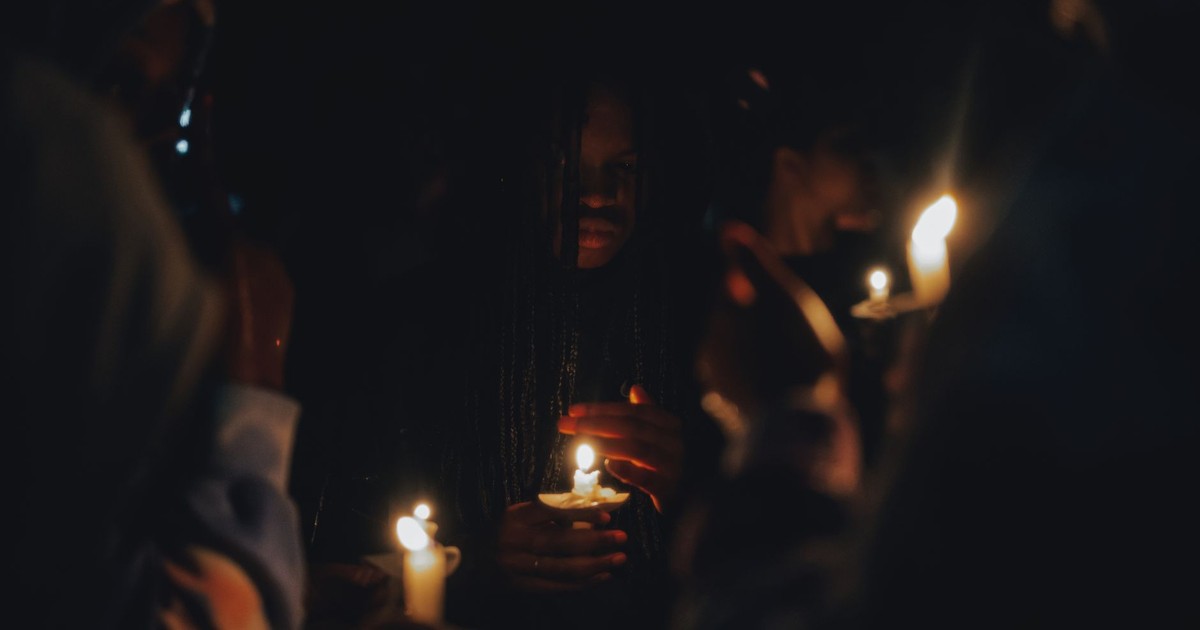
Spiritualism is an organized religious movement, most active in the 19th and early 20th centuries, centered on belief in the survival of the human spirit after death and the ability to communicate with the deceased, typically through a medium. It has its own churches, denominations, and ordained ministers. The National Spiritualist Association of Churches has been operating in the U.S. since 1893. For Spiritualist service members – particularly those grappling with loss, death, and what comes after in a profession that confronts mortality directly – access to a chaplain who understands their framework carries real weight.
One individual who attempted to communicate up the chain to the chief of chaplains and to Hegseth directly told Military.com that spiritual abuse or trauma affecting more than 8-in-10 service members can have negative ramifications including PTSD. “Having appropriate spiritual care is paramount for their well-being,” they said, adding that “stripping these codes…and leaving them identified as ‘other’ puts them at a risk of being re-traumatized.”
14. The Troth
The Troth is a specific organization within Heathenry: a formally incorporated religious organization dedicated to Norse and Germanic paganism that explicitly distances itself from white nationalist interpretations of the tradition. It has an established membership structure, ordained clergy, and a code of ethics. Its inclusion in the old military list acknowledged that Heathenry isn’t monolithic and that the organizational identity of The Troth mattered enough to merit its own code, separate from the broader Heathen and Asatru designations.
The Troth is among the religious affiliation codes removed under the new system. Its removal is particularly notable given that The Troth’s explicit anti-racist stance made it a mainstream, institutionally organized faith group, not a fringe label. That it was cut anyway suggests the criteria for inclusion were based on size and familiarity, not on whether a tradition was coherently organized.
15. Unitarian Universalism

Unitarian Universalism is a theologically open, socially progressive religious tradition with a 500-year history. It has over 1,000 congregations across the United States, ordained ministers, a formal institutional structure, and full recognition by state and federal authorities as a religious organization. It draws members from Christian, Jewish, Buddhist, Humanist, and Pagan backgrounds, and its theology centers on personal freedom of belief rather than doctrinal conformity.
An unofficial list circulating among military personnel suggests the new recognized list predominantly includes Christian denominations as well as Buddhists, Jews, Baha’is, Muslims, Sikhs, and broad categories of “No Religion” or “Other Religions.” The exclusion of Unitarian Universalism, one of the largest and most institutionally established non-evangelical Protestant traditions in the U.S., has struck many observers as the clearest signal that this list was not built around size, institutional organization, or cultural presence in the military. It was built around theological conservatism. By contrast, the Department of Veterans Affairs currently recognizes more than 220 belief systems and maintains more than 80 emblems for headstones.
16. Wicca (Various Traditions)

Wicca is the largest neo-Pagan religious movement in the United States, with an estimated 1 to 1.5 million practitioners. It has been legally recognized as a religion in the U.S. since 1986 following a federal court ruling, and the pentacle, a central Wiccan symbol, was formally approved for U.S. military headstones and markers in 2007 after a decade-long legal battle. Wiccan service members have had recognized chaplaincy codes for years, including on-base circles, Wiccan-identifying chaplain assistants, and formal requests for religious accommodations tied to Sabbat observances.
“Various Wiccans” being listed as a named removed category, plural, acknowledging that Wicca itself has distinct traditions including Gardnerian, Alexandrian, Dianic, and eclectic Wicca, shows the old system had reached a level of specificity that the new one has abandoned entirely. A former U.S. Army chaplain who spoke to Military.com anonymously said: “When I raised my hand to become an Army chaplain, I swore that I would support and defend the Constitution.” The implication was clear: in their view, that oath is now harder to keep.
Read More: 9 Bible Verses That Mean Something Completely Different in Their Original Context
What Happens to the 31 That Stayed
The Tata memo calls for the previously instituted faith and belief codes to be revised within a 60-day period from its issuance, meaning the new system is set to take effect by late July 2026. The memo also notes that service members will not be limited to the new list when selecting information for their dog tags, but the revised list, which includes Agnostics, Buddhists, Hindus, Muslims, Jews, Sikhs, and a wide range of Christian-based groups including Baptists, Catholics, Lutherans, and Methodists, is what drives chaplaincy planning and official religious support.
The dog-tag carve-out is a small concession with limited practical reach. What goes on a dog tag is a personal record. What goes in a chaplain’s planning system is what determines whether someone actually gets pastoral care. Hegseth has stated that 82% of religious service members use only six of the codes, which means the 18% who don’t are now largely on their own. Some of them are Wiccans with more legal recognition in U.S. courts than many of the Christian denominations that kept their spot on the new list. Some are Humanists who’ve served in combat and need ethical support frameworks, not Bible verses. Some are Heathen soldiers who found in the old traditions a language for warrior culture, sacrifice, and honor that the standard chaplaincy repertoire never provided.
Legal advocates are already scrutinizing whether the reduced list constitutes a violation of the Religious Freedom Restoration Act of 1993, which requires the federal government to demonstrate a compelling interest and use the least restrictive means before burdening religious exercise. The Pentagon’s argument is that a simpler list serves most service members better. That argument holds, until you’re the one who just got erased from it.
The Part Nobody Is Saying Out Loud

A policy this sweeping, executed this fast, with this little public explanation, isn’t neutral administration. The Pentagon dropped religions that have had formal recognition in U.S. courts, traditions practiced by thousands of service members, belief systems with ordained clergy and institutional structures, and a non-theistic worldview that the IRS itself classifies as a religion. None of that earned any of them a place on the new list.
What did earn a place was being a denomination of Christianity, or being one of a handful of non-Christian faiths large enough to be politically difficult to exclude. Everyone else got folded into “other,” which is not a pastoral care strategy. It’s an administrative shrug. The 16 faith communities named in this list aren’t fringe or obscure, and the people who belong to them aren’t less deserving of chaplain support because their numbers are smaller. Some of these traditions go back further than the United States does. The question of whether the government can constitutionally exclude them from military recognition, under the Religious Freedom Restoration Act, has not been settled. That legal argument is only getting started.
AI Disclaimer: This article was created with the assistance of AI tools and reviewed by a human editor.