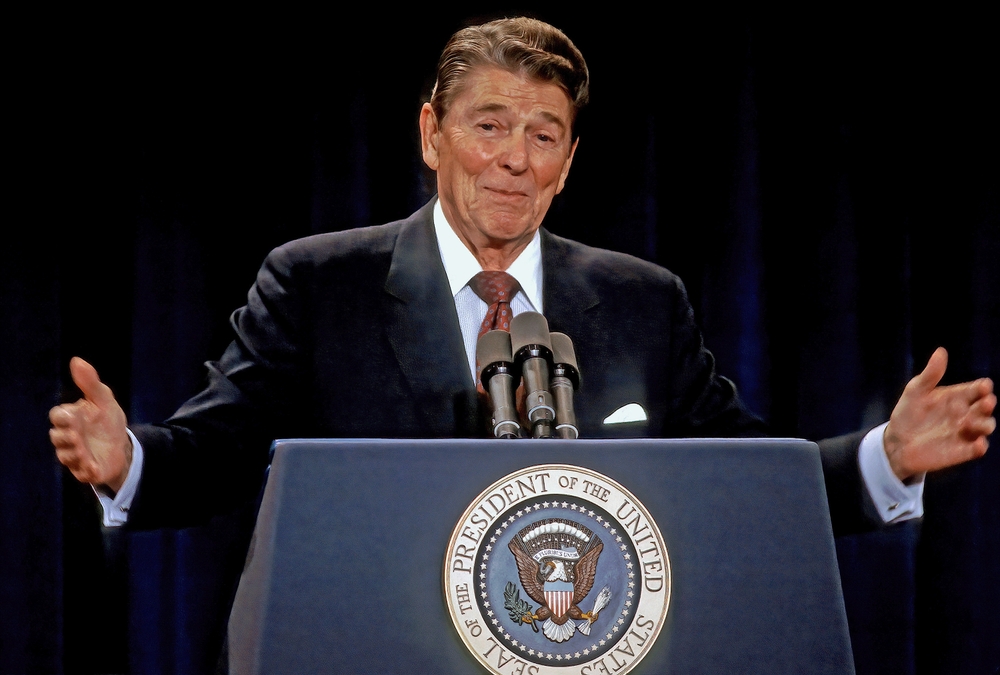

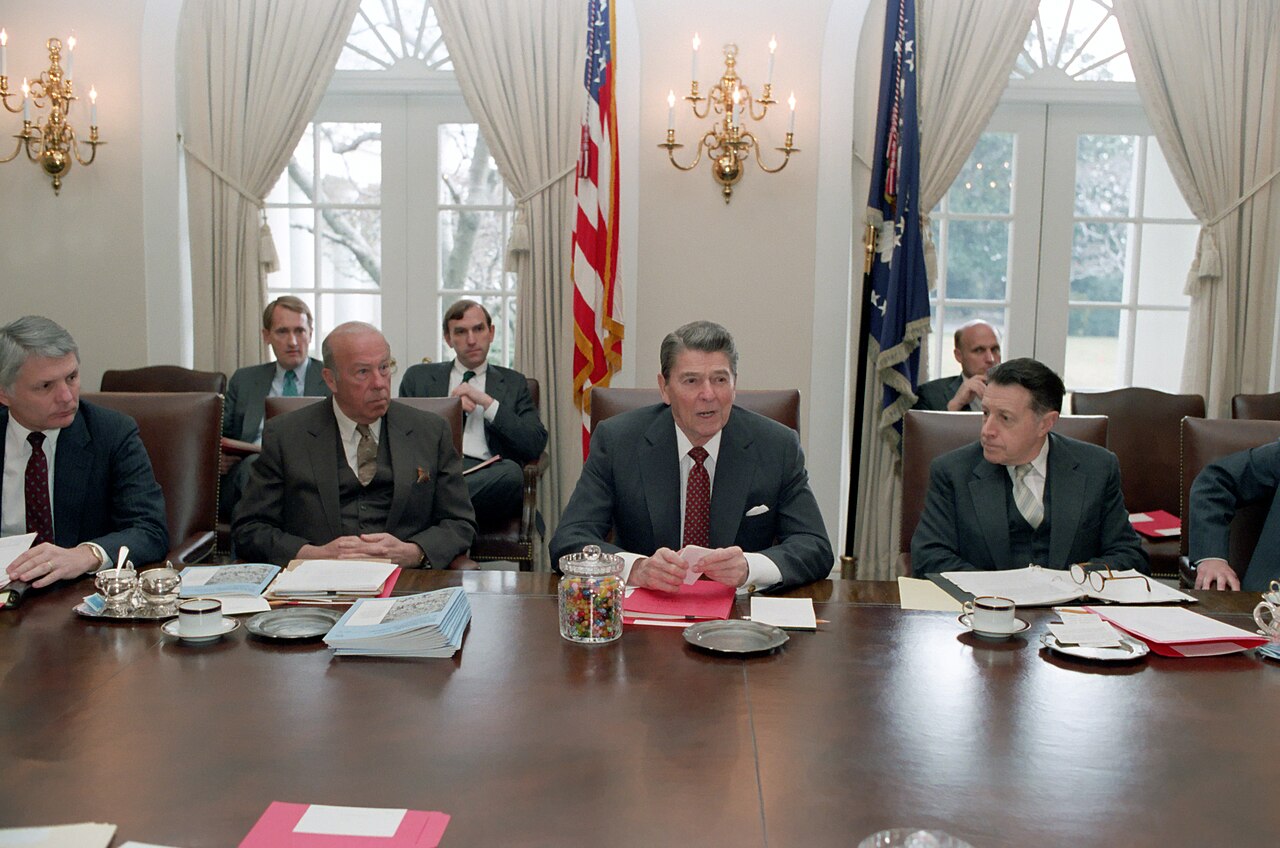
The jar that sat on the cabinet room table during some of the most consequential meetings of the Cold War era didn’t hold state papers or military briefings. It held jelly beans. Ronald Reagan’s obsession with the small, sugar-shelled candies was so well-documented, so unapologetically central to his public persona, that the Herman Goelitz Candy Company eventually had to build an entirely new factory to keep up with demand. A sitting president had, essentially, single-handedly turned a niche California confectionery into a national phenomenon.
Most people know Reagan liked jelly beans. Fewer know the full story of how deeply that preference shaped both his presidency and an entire candy company, or how a flavor now eaten by millions of people around the world exists entirely because of a political inauguration. Or that a zip-lock bag labeled “Compliments of the White House” once floated through zero gravity on the space shuttle Challenger. It started, like a lot of things in Reagan’s life, in California.
From Pipe Smoke to Jelly Beans
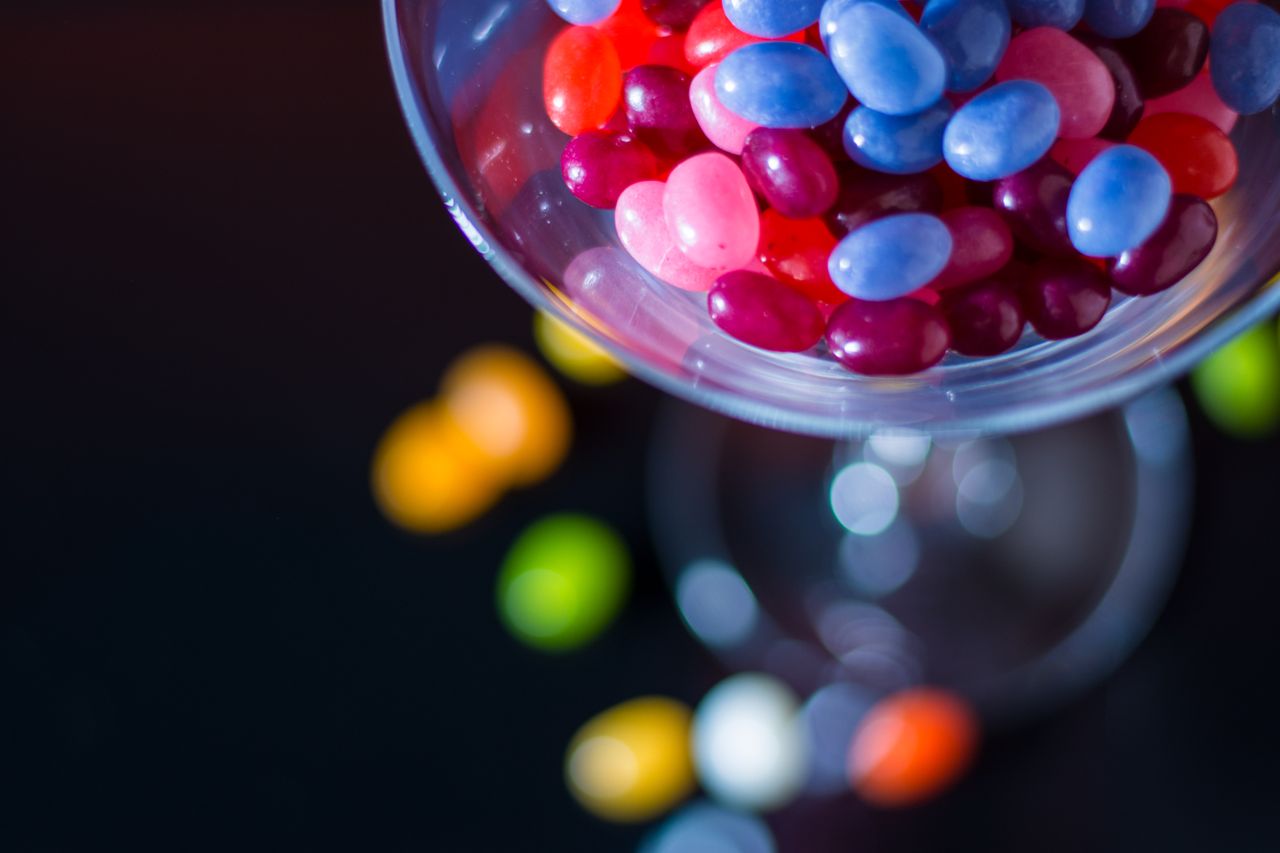
When Ronald Reagan ran for Governor of California in 1966, he began eating Goelitz Mini Jelly Beans as part of his effort to give up pipe smoking. The Reagan Library records his Oval Office jelly bean jar as one of the era’s defining artifacts, and the habit that produced it started well before Washington. The Herman Goelitz Candy Company, based in Oakland, started sending a monthly shipment to the Governor’s Office throughout Reagan’s two terms in Sacramento. The company also made a custom-designed jelly bean jar for Reagan.
During those gubernatorial years, Goelitz supplied Reagan’s office regularly, and he and his visitors worked through two dozen one-pound bags a month, amounting to roughly 10,200 beans. What started as a nicotine substitute had become something closer to a ritual. Meetings didn’t begin without the jar being passed around. Reagan himself wrote to the company in 1973: “we can hardly start a meeting or make a decision without passing around the jar of jelly beans.”
Reagan’s attempt to give up pipe smoking was successful, and jelly beans quickly became synonymous with the 40th president. But the specific brand he’d come to prefer was about to change, and with it, the entire trajectory of the company supplying him.
After Reagan left the governorship, he continued to receive shipments of Goelitz Mini Gourmet Jelly Beans directly from the company. When Herman Goelitz introduced its Jelly Belly brand of jelly beans in 1976, it began including the new brand in Reagan’s regular shipment, and within two years, the shipment consisted entirely of the Jelly Belly brand. Reagan’s personal favorite Jelly Belly flavor was licorice. Not cherry, not watermelon. Black licorice – the flavor most people fish out of the bag and set aside.
The Photograph That Changed Everything
The company had not publicized its connection to Reagan, and had been supplying him with beans throughout his gubernatorial career without fanfare. In 1980, a journalist from Time snapped a photo of Reagan eating the beans during a presidential campaign stop, and the Jelly Belly logo was clearly visible in the picture.
According to Jelly Belly president and CEO Lisa Rowland Brasher, the company’s initial reaction was alarm. Their phone “started ringing off the hook” with people wanting to know about their relationship with Reagan. The small, family-owned company was quickly overwhelmed with orders, receiving so many that at one point they were 77 weeks behind in production.
Reagan’s influence was so great that the company’s profits doubled the year after his candy preference became public. Eventually, they built a new facility to keep up with demand. A single photo, taken almost incidentally during a campaign stop, had done more for Jelly Belly’s commercial fortunes than any advertising campaign could have managed.
Reagan Jelly Belly Beans: The White House Order
As president, Reagan placed a standing order of 720 bags per month, totaling 306,070 beans, to be distributed among the White House, Capitol Hill, and other federal buildings. According to the Reagan Foundation, jars appeared at cabinet meetings, social events, and important meetings with dignitaries from around the world. The beans were simply there, a constant ambient presence, like the carpet or the flags.
Reagan ate them in the Oval Office, on Air Force One, and with heads of state. Photographs exist of the president meeting with British Prime Minister Margaret Thatcher over a jar of American jelly beans. It’s a genuinely odd image when you think about it – two of the most powerful leaders of the Western world, flanked by advisors and security, reaching into a candy jar.
The Goelitz Company also came up with a candy container made specifically for Air Force One, designed so the jelly beans would not pop out or spill during turbulence. When the president of the United States needs a specially engineered jelly bean holder for his personal aircraft, the candy has long since stopped being a personal quirk and become something closer to a presidential institution.
Reagan himself had a theory about what the candy revealed. In cabinet meetings, jelly beans served as a kind of character test: “You can tell a lot about a fella’s character by whether he picks out all of one color or just grabs a handful,” he told interviewers. Whether he actually drew political conclusions from people’s jelly bean habits or was just making conversation is hard to say. But the fact that he said it at all tells you something about how naturally the candy fit into his image of easy-going, unpretentious authority.
The Inauguration and the Birth of Blueberry
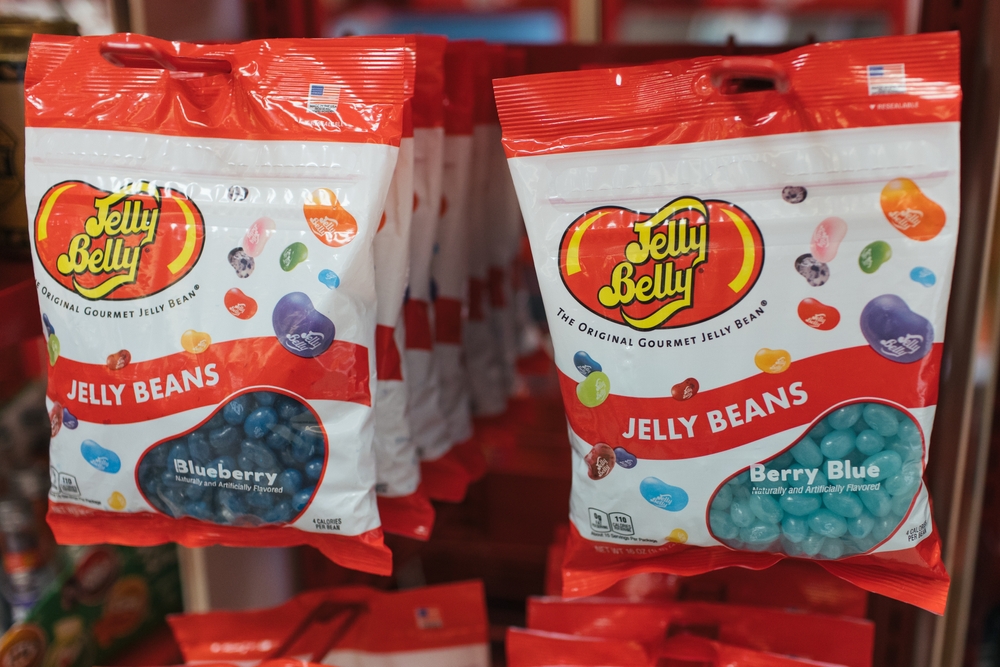
When Reagan won the presidency in 1980, the inauguration planning committee reached out to Jelly Belly with a request: they wanted patriotic beans for the celebrations. Red and white were covered – Jelly Belly already had red and white-colored beans in Very Cherry and Coconut respectively, but there was no blue jelly bean at the time. To remedy this, Jelly Belly made a new blueberry-flavored bean to complete the trifecta of American colors.
Three and a half tons of red, white, and blue Jelly Belly jelly beans were shipped to Washington, D.C. for the 1981 inaugural festivities. Three and a half tons – roughly the weight of a large pickup truck, entirely in jelly beans.
Blueberry, invented to satisfy a president’s request for a color scheme at a single event, went on to become a permanent fixture of the product lineup. Forty years later, it remains among the most popular beans in the range, eaten by people who have no idea it exists because of a January afternoon in 1981.
In February 1981, Herman G. Rowland, the president of Herman Goelitz and a fourth-generation descendant of the company’s founders, received official government authorization to develop a Jelly Belly jar with the Presidential Seal on it. These presidential jars, each in its own blue gift box, were given by Reagan to heads of state, diplomats, and many other White House guests. Reagan later bestowed one on Bill Clinton during the latter’s inauguration. A jar of jelly beans handed from one president to the next, sealed with the insignia of the office.
Into Orbit
The strangest chapter in the Reagan jelly bean story happened 200 miles above the Earth’s surface. In June 1983, according to UPI Archives, Sally Ride and her four male crewmates aboard the shuttle Challenger munched on jelly beans provided by President Reagan and caught the colored beans in their mouths as they floated in space. Commander Robert Crippen noted that “the crew of flight seven had an opportunity to visit the President, who supplied us with one of his favorite candies – some jelly beans straight from the White House.” Co-pilot Frederick Hauck displayed the red, yellow, black, and white beans floating from a plastic zip-lock bag labeled “Compliments of the White House.”
The flight also carried the first American female astronaut, Sally Ride. So the first jelly beans in space traveled alongside the first American woman in space, tucked into a bag personally assembled from a president’s private stash.
A Legacy Built in Candy and Bean Portraits
Over the years, Jelly Belly expanded well beyond the small company that Reagan helped popularize. They now produce around 15 billion beans a year. The Reagan connection remains central to the company’s identity. After Reagan’s death in 2004, the company placed black ribbons over jelly bean portraits of him hanging in the factory.
A portrait of the president was made from 10,000 Jelly Belly beans and hangs in the Ronald Reagan Presidential Library in Simi Valley, California. The artist, Peter Rocha, became well known for creating jelly bean portraits, and the Reagan piece is among the most viewed items in the library’s collection.
Toward the end of his presidency, Reagan switched allegiance to M&Ms, which became the official candy of the White House. The jelly bean era had a formal endpoint. But by then, the cultural association was permanent.
Read More: 18 Foods That Were Totally Normal in the 1970s — but Are Banned Now
The Number That Stops People
The figure that tends to stop people is 720. While in the White House, President Reagan kept a standing order for 720 bags of Reagan Jelly Belly beans every single month – distributed not just to the Oval Office but across Capitol Hill and federal buildings throughout Washington. That’s not a man who liked jelly beans. That’s a man who built a supply chain around them, who staffed jars across the capital, who sent them into orbit, who handed them to foreign leaders in officially sealed gift boxes bearing the Presidential Seal of the United States of America.
The scale of that habit produced real, lasting consequences. A small, family-owned candy company in Northern California doubled its profits. A factory had to be built. A new flavor was invented for a single event. And blueberry, a flavor that didn’t exist before January 1981, became one of the most popular candies in the country because a president wanted something blue for his party.
Reagan’s jelly bean obsession wasn’t a footnote beside the history. For Jelly Belly, it was the history. The entire modern identity of that company – its scale, its most popular flavors, its presidential-seal gift jars – runs directly back to a California politician in 1966 who was trying to stop smoking and reached for a bag of candy instead.
AI Disclaimer: This article was created with the assistance of AI tools and reviewed by a human editor.