
Most people who’ve thought seriously about a civilizational breakdown spend their energy stockpiling the right things: water filtration tablets, heirloom seeds, antibiotics, a hand-crank radio. What they spend far less time thinking about is the enormous pile of completely useless things they already own, items that represent thousands of dollars and years of careful acquisition, which will become, the morning after everything falls apart, roughly as useful as a decorative gourd.
The mental exercise of imagining a post-apocalyptic world tends to get hijacked by dramatic visuals: abandoned highways, flickering emergency broadcasts, people learning to make fire. What it rarely accounts for is the comedy of the specific. The person who shows up to the survivor’s trading post clutching a vintage bottle of Moët. The guy trying to barter with a Gold Amex card. The neighborhood influencer asking if anyone has Wi-Fi. These are not fringe cases. They are, statistically, the majority of us.
The list of post-apocalyptic worthless items is longer and funnier than most people expect. Some of them are obvious in retrospect. Others will genuinely surprise you. All of them say something real about which parts of modern life are built on infrastructure so fragile that one sustained grid failure turns them into landfill.
1. Cryptocurrency
Between 2021 and 2025, the number of listed cryptocurrency projects surged from 428,383 to nearly 20.2 million. In a functioning world with internet connectivity, cloud servers, and electricity, that represents an extraordinary proliferation of digital assets. In a world without any of those things, it represents 20.2 million entries in a database nobody can access.
Cryptocurrency’s entire existence depends on a live, distributed network of nodes processing transactions in real time. No internet, no blockchain. No blockchain, no wallet access. No wallet access, and your seven-figure Bitcoin portfolio is a string of numbers memorized in your head that you cannot spend on so much as a can of beans. The failure rate in the current world already tells the story: in 2024, a reported 1,382,010 tokens collapsed, and 2025 dwarfed that entirely, with 11,564,909 failed tokens. In an apocalypse, the remainder would follow instantly.
The deeper irony is that crypto was partly sold as a hedge against institutional collapse, a currency that exists outside government control and central bank manipulation. That framing assumed the internet survives. If the internet doesn’t survive, your decentralized rebellion against the financial system is stored somewhere unreachable, and the person who traded you a working generator for three chickens and a bag of rice just made the smartest financial decision of the decade.
2. Paper Money and Credit Cards
Cash feels like the foundational fallback, the thing you go to when everything else fails. Pull enough of it out of the ATM before the banks close, stuff it in a bag, and at least you have something tangible. Except that paper money is only worth anything because everyone has silently agreed that it is. That agreement requires a functioning government, a working banking system, and some baseline faith that the piece of cotton-linen fiber in your hand will be accepted somewhere tomorrow.
Hyperinflation is technically defined as an inflation rate exceeding 50 percent per month, and it occurs when a government prints excessive amounts of money without corresponding economic growth, leading to dramatic currency devaluation. Post-World War I Germany reached a monthly rate of 29,500 percent in October 1923. Hungary after World War II holds the record for the most extreme monthly inflation rate ever, at 41.9 quadrillion percent for July 1946, with prices doubling every 15.3 hours. In both cases, people burned banknotes for warmth because they cost less in fuel value than actual firewood. A post-apocalyptic scenario doesn’t need to hit those extremes to render cash useless. It just needs supply chains to collapse and the government issuing the currency to stop functioning.
Credit cards are even simpler. They are a promise backed by a financial institution that itself is backed by a network of servers and regulatory frameworks. When the power goes out for good, your Platinum card becomes a moderately sturdy piece of polycarbonate. Useful for scraping frost off a windshield, maybe. For buying food from someone with a working farm, worthless.
3. Designer Fashion and Luxury Clothing
After reaching €364 billion in 2024, the global personal luxury goods market is forecast to total €358 billion in 2025, reflecting a mild 2% erosion. A substantial portion of that was silk blouses, cashmere coats, Italian leather shoes with soles thinner than a paperback novel, and evening gowns designed to be worn once to an event that required a car service to reach. None of these serve a survival function.
The problem with designer clothing in a collapse scenario isn’t just impracticality. It’s that the markers of status it communicates are entirely context-dependent. A Hermès Birkin bag signals wealth and taste to someone who knows what a Hermès Birkin bag is, in a world where that knowledge translates to social access. In a world where social access is determined by whether you have antibiotics and can fix a diesel generator, the bag signals nothing. The person carrying it is just someone with less useful bag space than everyone else.
Silk in particular is a disaster. It can’t be washed in a river without destroying it. It doesn’t retain warmth when wet. It tears easily and can’t be repaired without specialized tools. The apocalypse will be a golden age for flannel, denim, and wool. The silk evening gown will be repurposed as a bandage or traded for a potato, whichever comes first.
4. Electric Vehicles
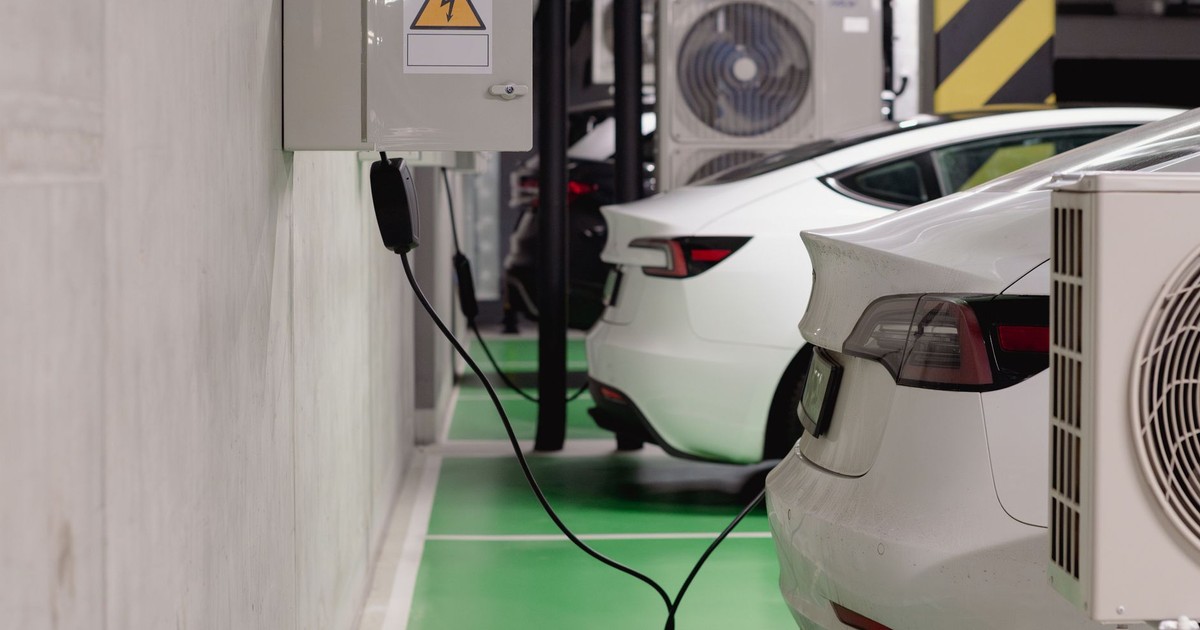
An electric vehicle in a world without a working power grid is a very large, very heavy object that doesn’t move. That’s the whole problem. EVs require a charging infrastructure that itself depends on consistent electricity generation and distribution. When the grid goes down permanently, the charging stations go with it, and a car with a 300-mile range has a range of exactly however far the battery currently has in it before it becomes a stationary structure.
The situation is worsened by the complexity of EV engineering. These are extraordinarily sophisticated machines. The software systems, battery management computers, and sensor arrays that make them run require specialized diagnostic equipment to maintain or repair. A community of survivors with a working mechanic can keep a 1990s diesel truck running with improvised parts for decades. Nobody in that community is going to be able to service a battery management system or recode a bricked ECU without a computer, proprietary software, and spare components that haven’t been manufactured since before everything went wrong.
Internal combustion vehicles running on diesel or gasoline have their own problems in a collapse, but at least their fuel can in theory be sourced, refined, or synthesized with enough resourcefulness. An EV’s fuel source requires a working national grid. The only post-collapse EV use case anyone has convincingly argued is as an enormous and very expensive paperweight.
5. Streaming Subscriptions

Your Netflix, Spotify, Max, Hulu, Disney+, Apple TV+, and whatever other services currently auto-renew on the third of the month will, in a post-apocalyptic scenario, represent a combined monthly charge of roughly nothing, to an account that no longer exists, at a bank that has ceased to operate, billed to a card that has no function. The content itself lives on servers that require power, cooling systems, and active maintenance by employees who are presumably elsewhere.
This is worth noting not because anyone thinks their Hulu subscription would survive a civilizational collapse, but because of the sheer proportion of what we currently call entertainment that exists only as a licensed stream. People don’t own their music libraries anymore. They access them. They don’t own their movie collections. They subscribe to them. The distinction matters precisely when access disappears. The person who still has physical DVDs and a solar-powered player has a meaningful quality-of-life advantage over the person who cancelled their disc subscription in 2019 because streaming “made it pointless.”
6. Makeup and High-End Cosmetics
Foundation, concealer, contour palettes, setting sprays, highlighters, false lash kits, and thirty-step skincare routines collectively represent one of the largest categories of discretionary spending on the planet. In a functioning society, they serve real purposes: professional presentation, confidence, self-expression, cultural ritual. In a survival situation, they offer essentially none of these.
The more specific problem is shelf life and formulation. High-end cosmetics are not designed for harsh conditions. Liquid foundations separate in temperature extremes. Mascara dries out within months of opening. Aerosol products become dangerous when exposed to heat or flame. The preservatives and emulsifiers that keep them stable have a window, and that window closes fast without climate-controlled storage. Some skincare ingredients, like retinoids, can actually cause sun sensitivity, which is specifically the last thing you want when you’re spending all day outside doing physically demanding work without access to sunscreen.
A small amount of practical hygiene product, basic soap, petroleum jelly, antiseptic, has genuine survival value. The fifteen-piece luxury skincare routine in the $400 branded bag does not.
7. Gym Memberships and Fitness Apps

Nobody in a post-collapse scenario is going to need a Peloton subscription or a ClassPass account. This is because surviving will involve walking substantial distances, carrying heavy loads, growing food, cutting wood, constructing shelters, and doing physical labor for most of the day. The fitness component of daily life will be handled entirely by actual survival, without any need for gamified workout metrics or monthly billing cycles.
The gym membership problem is subtler than it looks. Gyms, like streaming services, are access-based rather than ownership-based. You’re buying time in a physical space that requires staffing, electricity, water, plumbing, and commercial real estate to function. None of those persist in a serious collapse. The equipment inside, free weights, cable machines, resistance bands, is potentially useful in isolation if you can get to it. But the membership, the QR code on your phone, the app that tracks your personal records: these are gone the moment the membership management server stops running.
8. Loyalty Points and Air Miles
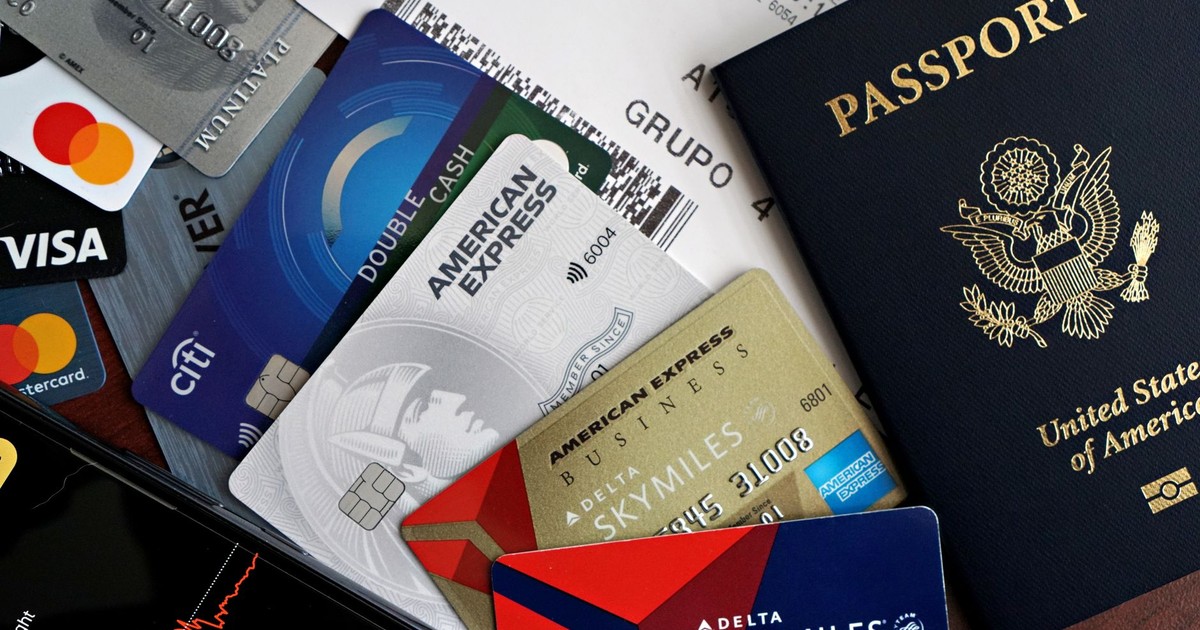
Somewhere right now, someone has 2.4 million frequent flyer miles, accumulated over fifteen years of strategic credit card spending, status matches, and the kind of redemption optimization that requires a spreadsheet and two browser tabs open simultaneously. Those miles exist as entries in an airline’s loyalty program database. That database requires servers. Those servers require power. The airline itself requires fuel supply chains, regulatory frameworks, functioning airports, and passengers who have somewhere to go.
In a scenario where civilization has taken a serious structural hit, the airline loyalty program is not the part that holds together. Your points evaporate the moment the servers go offline, which is also likely the moment the airline itself ceases to operate. The person with 2.4 million miles gets exactly the same value from their stockpile as the person who never flew at all. The one genuine use of a physical airline boarding pass in the aftermath is as scrap paper, and even that’s a stretch.
9. Smart Home Devices

The smart home industry has spent the last decade convincing consumers that controlling their thermostat via a phone app while lying in bed is a significant quality-of-life improvement, and to be fair, in normal conditions it is. The problem is that every single component of the smart home ecosystem, the hub, the devices, the app, the cloud servers that process commands, the Wi-Fi network, the broadband connection, and the electricity itself, has to be working simultaneously for any of it to function.
A smart lock that runs on Wi-Fi and a rechargeable battery is a lock that stops working when the battery dies or the network disappears. At that point, the door is either locked permanently or not at all, depending on the fail-state of the model, which is almost certainly not written on the device anywhere. A smart thermostat without connectivity is a thermostat that doesn’t know what temperature it’s supposed to maintain. A voice-activated lightbulb in a grid-down situation is simply a lightbulb that you have to get up and switch on manually, assuming it still works at all, which it often doesn’t without the firmware update that it can no longer download.
10. NFTs and Digital Art

The NFT market peaked, crashed, reinflated briefly, and then deflated again in a cycle that functioned as a fairly efficient preview of what would happen to digital assets in a total collapse, just compressed into a few years rather than a sudden event. According to CoinGecko research, 11.6 million cryptocurrency projects failed in 2025 alone, accounting for 86.3% of all project closures between 2021 and 2025.
An NFT is a token on a blockchain that certifies your ownership of a digital asset, usually an image file that exists somewhere on a server you don’t control. The file is not stored in the token. The token is not stored on your device. Everything about the NFT, the art, the certificate of ownership, the community around it, depends on internet infrastructure remaining intact. When that infrastructure fails, your NFT of a pixelated cartoon ape is a reference to a file that no longer loads, certified by a blockchain that no longer processes, in a wallet nobody can access. It is, in the most literal sense, nothing.
11. Social Media Clout and Follower Counts

Influencer status is a genuinely valuable economic asset in the current world. Millions of dollars in brand deals, licensing revenue, and platform monetization flow annually to people who have built audiences on Instagram, TikTok, YouTube, and their successors. The asset, in every case, is the relationship between the creator and the audience, mediated by a platform that requires servers, investors, advertising clients, and a consumer economy to justify its existence.
Strip all of that away and the follower count means nothing, because the platform doesn’t exist and neither does the audience as a coherent group. The influencer with twelve million followers and no other marketable skills is in a significantly worse position than the person who can weld, identify edible plants, treat wounds, or purify water. Practical knowledge accrues in the person. Digital clout accrues in an account. One of those survives a grid collapse. The other doesn’t survive a billing cycle without electricity.
12. Luxury Vehicles (Internal Combustion)
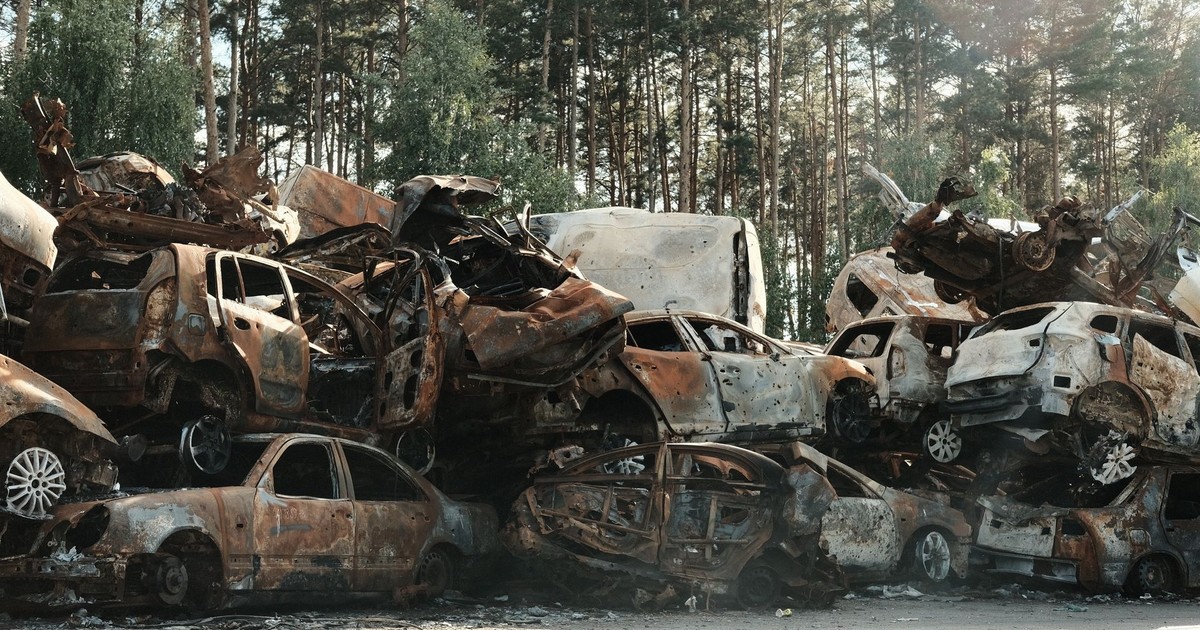
Even setting aside the EV problem, a 2025 luxury sedan presents real issues in a world where supply chains have stopped. Modern high-end vehicles are extraordinarily computerized. A flagship Mercedes or BMW contains dozens of ECUs (Engine Control Units, the computers that manage engine performance, transmission, safety systems, and driver assists) that communicate constantly with each other and with the cloud. Many modern luxury vehicles won’t run correctly, or at all, if certain sensors fail and can’t be reset with proprietary diagnostic software.
The irony is that the vehicles most valuable in a post-collapse world are the ones that currently have the lowest resale value: pre-1990 diesel trucks, older Land Rovers, military surplus vehicles built to run with minimal electronics and maximum simplicity. The person driving a $120,000 Range Rover and the person driving a $4,000 1985 diesel pickup are in very different positions when the parts supply chain stops. Simplicity, repairability, and fuel flexibility matter. Ambient interior lighting and massaging seats do not.
13. Professional Certifications in Non-Essential Fields

A CPA license, an MBA, a real estate broker certification, a digital marketing qualification, a social media management credential: all of these represent real skills that command real money in a functioning economy. Societal collapse is the complete breakdown of governmental, social, and financial systems, and any economy that remains is a survival economy. In a survival economy, the skills that matter are the ones that keep people alive: food production, water treatment, basic medicine, construction, animal husbandry, mechanics.
This isn’t a permanent state. Societies that rebuild eventually need accountants, lawyers, and administrators again. But in the acute phase of a collapse, the person who knows how to set a broken bone, deliver a baby without medical equipment, preserve meat without refrigeration, or repair a water pump is immediately and concretely valuable. The person whose expertise is in Q4 financial reporting or optimizing Google Ads spend is, for the time being, going to need to learn something else.
14. Subscription Software and Cloud Storage

Your creative suite subscription, your project management platform, your ten thousand photos backed up to the cloud, your entire digital document archive, your years of saved work: these exist in data centers that require constant power, cooling, and maintenance staff to preserve. When those stop, the data doesn’t transfer to a local backup you own. It simply becomes inaccessible, and depending on the nature and duration of the collapse, eventually unrecoverable.
The practical takeaway from this, even in a non-apocalyptic world, is that the shift from software ownership to software subscription has quietly transferred an enormous amount of control away from users. You don’t own your creative tools anymore. You license them month to month. You don’t own your stored work in any physical sense. You have access to it, conditionally, as long as you pay and the service remains online. Most people haven’t thought seriously about what that means until something disrupts the service, even briefly.
15. Golf Club Memberships and Country Club Access

Saving the most elegantly pointless for last. A golf club membership, particularly the kind that involves five-figure initiation fees, a waitlist measured in years, and a monthly minimum spend at the clubhouse, represents one of the most exclusively contextual status symbols in existence. It signals wealth and social access in a world where golf courses are maintained, greens are kept, golf carts are charged, and there’s a functioning leisure class with the free time to use them.
In a post-apocalyptic scenario, a golf course is actually one of the most valuable pieces of land in the region, provided someone can pivot quickly enough. Eighteen holes of flat, mostly open, often south-facing turf, usually equipped with irrigation infrastructure, has enormous agricultural potential. The fairways become crop fields. The sand traps become drainage zones. The clubhouse becomes a community shelter or field hospital. The membership card becomes a coaster. The person who owned the land, as opposed to the access rights to it, will do considerably better than the person whose name was on the waiting list.
Read More: 12 Items Goodwill Won’t Take Anymore and What to Do Instead
What Actually Holds Value

The consistent thread running through every item on this list is the same: things that depend on infrastructure you don’t control become worthless the moment that infrastructure fails. What holds value is what you can carry, what you can do with your hands, what you can teach someone else, and what keeps a person alive in the next seventy-two hours.
In a partial economic collapse, the traditional money-based economy falters and people turn to barter for necessities. At some point, people have to begin producing tradable goods and services to survive. That might mean doing your current job for food and supplies instead of money, having a tradable skill like welding or woodworking, or having useful knowledge like herbal medicine. Skills, physical tools, seeds, medicine, and the knowledge of how to use them, those are the durable assets. Your Peloton subscription is not.
None of this requires actual apocalyptic conditions to be worth thinking about. The same logic applies, more gently, to economic disruptions, job losses, and supply chain crises that fall well short of civilizational collapse. The things that served you in a period of extreme abundance are not always the things that serve you when abundance contracts. That gap between what we own and what we actually need is worth examining long before anything dramatic happens. Most of what fills our lives has a silent dependency on systems we never think about, right up until the moment those systems aren’t there.
AI Disclaimer: This article was created with the assistance of AI tools and reviewed by a human editor.