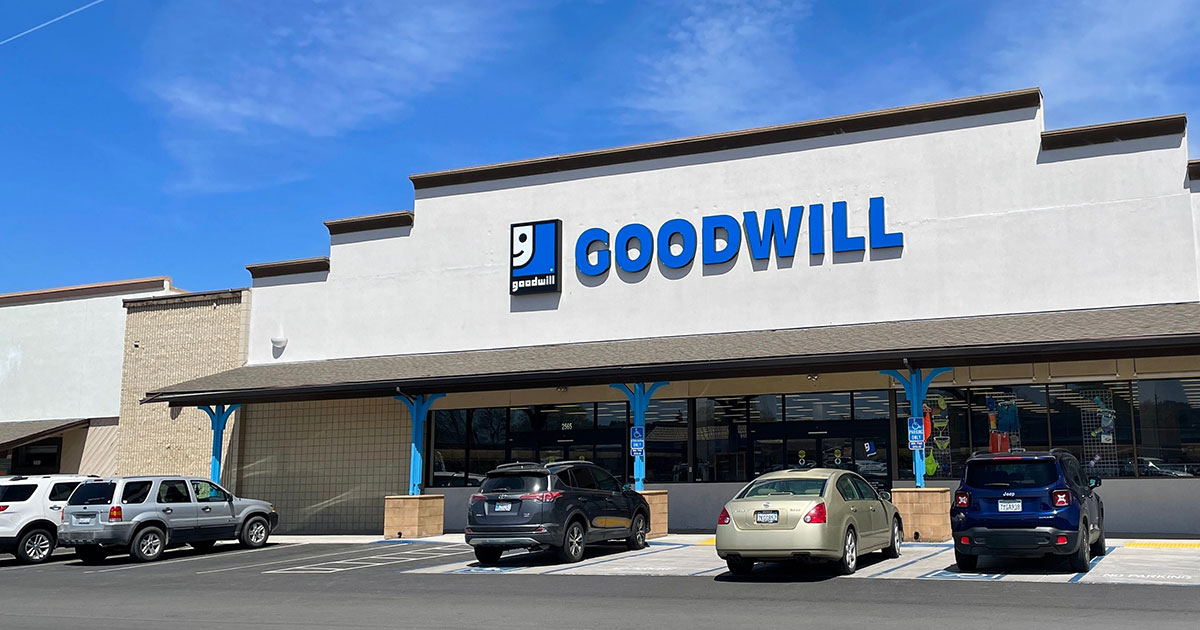
Most of us have made the same optimistic mistake at some point. You bag up everything that’s been sitting in the garage or cluttering the spare room, tell yourself you’re doing something good for the community, and drive it all to the Goodwill donation center. Then the person at the drop-off window starts shaking their head.
It turns out that Goodwill – a network running hundreds of donation centers across the country – can’t take everything you bring. And the list of what they’ll turn away is longer than most donors expect. The reasons aren’t arbitrary. Safety regulations, health standards, liability concerns, and the very practical reality that some items cost more to process than they’d ever bring in at the register all play a part. Thrift stores operate very differently from donation centers that simply redistribute goods. Most donated items must be processed, sorted, priced, and sold in retail environments that follow strict guidelines.
Understanding what gets rejected before you make the trip doesn’t just save you the hassle of loading items back into your car. It also protects the organization itself. Accepting items that cannot be sold creates an added cost and hinders Goodwill’s ability to fund its mission of changing lives through education, training, and employment. So if you want your donation to actually make a difference, here’s exactly what to leave at home.
1. Hazardous Materials and Chemicals
This is the one most people know about in theory but still get wrong in practice. The paint cans in your garage, the half-used can of turpentine, the pesticides sitting on a shelf since a previous owner left them – none of it can go to Goodwill. Hazardous materials, including liquid cleaners, paints, detergents, fertilizers, weed killers, chemicals, and motor oil, are firmly on the no-accept list.
The reason is pretty straightforward. Materials like paint, kerosene, propane, and other chemicals require specialized disposal, and Goodwill is not licensed to sell or dispose of hazardous materials. A donation center isn’t a hazardous waste facility. If one of those containers leaks during unloading or storage, it creates an immediate health risk for staff and a costly disposal headache for the organization. The full list includes chemicals, paint, batteries, gasoline, and pesticides, as well as pressurized containers like propane, helium, or oxygen tanks.
If you’re sitting on leftover paint, the EPA’s recycling search tool lets you enter your zip code to find local drop-off options. Habitat for Humanity ReStores accept usable paint in many areas, and municipal hazardous waste collection events handle the rest.
2. Large Appliances
The washing machine that still technically works, the chest freezer you’re replacing, the window air conditioner from the upstairs bedroom – these feel like genuinely useful items to donate. But most Goodwill locations won’t take them. Large appliances such as refrigerators, freezers, stoves and ovens, washers and dryers, air conditioners, dehumidifiers, furnaces, trash compactors, water heaters, and freon-based appliances are excluded.
The issue isn’t just space. Items like refrigerators, ovens, and air conditioners are often declined because they are difficult to transport and may present safety issues. Testing a large appliance properly, storing it, moving it on the floor, and then actually selling it to someone who can get it home takes more resources than most donation centers have available. Some items are refused because they cost more to transport, repair, or refurbish than they can be sold for in stores.
Your best bet for large appliances is to contact the manufacturer about haul-away programs when buying a replacement, check if your municipality offers bulk item pickup, or list the item on a local buy-nothing group where someone will often pick it up directly from your home.
3. Mattresses and Bedding
This one surprises people because a mattress in good condition feels like something someone else could genuinely use. But Goodwill locations across the country uniformly decline them. Due to concerns such as bedbugs and allergens, mattresses, box springs, and related bedding are generally not accepted.
Bedbugs are the main issue, and it’s not an overblown concern. A mattress that looks perfectly clean to the naked eye can harbor pests that would spread through an entire store. There’s also no reliable way for donation center staff to inspect a mattress thoroughly in the few seconds they have at the drop-off window. The restriction on mattresses and box springs is now primarily driven by the threat of bedbug infestations.
Some mattress retailers will take your old mattress when delivering a new one. Local sanitation departments sometimes offer bulk mattress pickup or recycling. If the mattress is relatively new and genuinely clean, nonprofit organizations that furnish homes for families in crisis – like Furnishing Hope or similar groups – may be worth a call.
4. Baby Safety Equipment
This is one where the stakes are high enough that no amount of good intentions changes the answer. Children’s items including baby furniture, cribs, strollers, car seats, highchairs, playpens, changing tables, bassinettes, and baby walkers are not accepted.
The reason comes down to safety standards and liability. Cribs, car seats, walkers, and other products that do not meet the current safety standards of the U.S. Consumer Product Safety Commission – including recalled items – cannot be accepted. Safety standards for baby gear evolve regularly, and a crib or car seat that was perfectly legal when purchased may no longer meet current requirements. Goodwill staff have no way to verify this quickly and cannot take on the legal exposure that comes with reselling a safety item that later fails.
If a helmet or car seat has been involved in a crash, it isn’t as safe or reliable as it was before the accident and should not be donated or used again, no matter how minor the crash was. Before disposing of any baby safety item, check the Consumer Product Safety Commission’s recall database to see if it has been recalled – and follow their disposal instructions.
5. Used Cosmetics and Personal Care Products
The half-used bottle of shampoo, the lipstick you bought and never loved, the collection of nail polishes you’ve been meaning to pass along – Goodwill won’t accept any of it. Cosmetics and hair care products are on Goodwill of Greater Washington’s list of items they cannot accept.
The hygiene logic is obvious once you think about it. Used makeup or skincare products are a hard no – even if they look fine, they can carry bacteria or cause reactions. Opened products have been in contact with someone’s skin, and there’s no way to verify their safety or sanitary condition for resale. Partially used or open personal care items such as nail polish remover, perfume, shampoo, shaving cream, and hairsprays are excluded.

Sealed, unopened personal care products are sometimes accepted depending on the location, so it’s worth calling ahead if you have something that’s never been opened. For items you’ve already used but haven’t finished, most are best simply used up, given to a friend, or disposed of normally.
6. Mold-Damaged or Wet Items
It might feel obvious, but enough people try to donate mold-damaged items that it made Goodwill’s formal no-accept list. Items that are wet, mildewed, or moldy cannot be accepted. This covers the box of books that got damp in the basement, the jacket that spent too long in a pile, or the area rug that smells vaguely like something went wrong.
The problem isn’t just that no one wants to buy a moldy item. Mold spreads. A single contaminated donation can affect other items nearby during sorting and storage. Staff handling moldy donations are also exposed to potential health risks without proper protective gear, which is not part of a typical donation center workday.
If an item got wet, let it dry out completely and assess it honestly before donating. If there’s any visible mold, visible staining from water damage, or a musty smell you can’t resolve, the kindest thing to do is dispose of it rather than pass the problem along.
7. Firearms, Ammunition, and Weapons
Firearms and fireworks are explicitly listed as items Goodwill cannot accept. This extends beyond the obvious. Hunting rifles, handguns, ammunition, fireworks, and other explosive or flammable materials are all off-limits. Some locations also decline hunting knives, even though standard kitchen knives are typically fine.
Firearms, ammunition, and even realistic replicas are strictly off-limits. Staff can’t safely assess them, and anything that looks like a weapon can create immediate safety concerns. This isn’t a policy based solely on the organization’s values – there are legal dimensions to the transfer of firearms that a retail charity simply isn’t equipped to manage.
If you have unwanted firearms, guns and ammunition can be surrendered at your local police station – call the non-emergency line ahead of time to explain the situation. Some local gun shops will also accept surrendered firearms or help facilitate a lawful transfer.
8. Medical Equipment and Mobility Devices
This one catches a lot of well-meaning donors off guard. When a family member no longer needs a wheelchair, a pair of crutches, or a walker, donating it to Goodwill feels like the logical move. Medical supplies, crutches, and portable toilets are on Goodwill of Greater Washington’s list of items they cannot accept.
The issue is primarily liability. Items related to safety and health are among the most frequently declined, including recalled products and used medical equipment. Goodwill cannot certify that a wheelchair or mobility device is safe for the next user, hasn’t been compromised structurally, or hasn’t been recalled. If something goes wrong, the exposure for the organization is significant.
The good news is that medical equipment often has better homes available. Many hospitals and healthcare nonprofits accept gently used durable medical equipment. Organizations like the American Red Cross and local Lions Club chapters frequently coordinate equipment loans and donations to people who need them.
9. Building Materials and Construction Debris
After a renovation, the temptation to donate leftover tiles, lumber, old sinks, and extra bags of grout is real. It feels wasteful to throw them away when someone could use them. Building materials such as carpet, shutters, sinks, and flooring are not accepted by Goodwill.

The reason is practical rather than moral. These items are heavy, difficult to sort, take up enormous amounts of floor and storage space, and don’t fit the retail model that Goodwill operates. Many Goodwill locations cannot accept construction materials such as lumber, bricks, concrete, carpet, or shingles. The costs of receiving, storing, and moving these items would far outweigh any revenue they might generate.
Habitat for Humanity’s ReStore is the recommended alternative for building materials. ReStores are specifically set up to receive and sell this kind of donation, and the proceeds directly fund Habitat for Humanity’s homebuilding work. It’s the right destination for materials that Goodwill simply can’t handle.
10. Recalled Consumer Products
Any item that has been recalled by its manufacturer or flagged by the U.S. Consumer Product Safety Commission is off-limits – full stop. If an item is no longer compliant with the Consumer Products Safety Commission’s current safety standards, it’s illegal to sell or donate it.
Safety standards change often, and there’s no easy way to confirm if an item is still compliant or has been recalled. This applies to everything from baby gear to kitchen appliances to children’s toys. The fact that an item was fine when you bought it doesn’t mean it’s still legal to put back into circulation. Goodwill’s staff can’t realistically screen every donation against a constantly changing database of recalls, so the policy protects both the organization and the next buyer.
Before donating any product, particularly anything that’s been sitting unused for a few years, check the CPSC recall database. If the item is on the list, it needs to be disposed of properly, not passed along.
11. Food and Beverages
It might seem like a stretch that anyone would show up to donate food, but it happens enough to be worth naming. Food and beverages are explicitly listed as items Goodwill cannot accept. This applies equally to canned goods, packaged items, and anything perishable.
Goodwill is not a food bank. It doesn’t have the storage infrastructure, the food safety certifications, or the distribution systems that food-assistance organizations maintain. Accepting food donations would create liability around expiration dates, proper storage conditions, and food handling regulations. Food, pharmaceuticals, weapons, adult content, medical devices, and construction debris either violate health codes or offer no resale value for Goodwill.
If you have nonperishable food to donate, your local food bank or food pantry is exactly where it belongs. Feeding America’s website allows you to search for local food banks by zip code and confirm what they accept.
12. Items That Are Broken, Damaged, or Missing Parts
This is the most common source of rejected donations, and it’s also the one that feels most personal when it’s turned away. Whether it’s a chair missing two legs or a coffee maker with a shredded cord, Goodwill does not accept items that need to be repaired – and by passing along something unusable, donors are also passing the burden of its disposal to the organization.
Goodwill asks that all donated items be in working order and in good, clean condition, since they cannot repair or refurbish donated items. There’s no repair department at the back of the store. Whatever arrives needs to be ready to go directly onto the sales floor. Used medical equipment and items that may pose hygiene concerns are regularly declined, and Goodwill also tends to reject items that are damaged beyond reasonable repair or missing essential parts, even if they appear mostly functional.
The honest test is the one Goodwill itself suggests: would you pay money for this item in its current condition? If the answer is no, it’s not a donation – it’s disposal dressed up in good intentions.
Making Your Donation Count
Knowing what Goodwill won’t take is really just the flip side of knowing how to donate well. The organization exists to fund employment programs and job training, and that mission depends entirely on the resale revenue generated by the goods on its shelves. Every unsellable item that arrives through the drop-off window creates extra work, extra cost, and a distraction from what the organization actually does.
Goodwill is not just one organization – it’s a network of over 160 independent organizations across the United States and Canada. That means policies can vary slightly by region, and calling ahead before dropping off anything unusual is always the right move. What one location can’t take, another sometimes can. If what you have doesn’t fit Goodwill’s guidelines, that doesn’t mean it has nowhere to go. Habitat for Humanity, local shelters, food banks, medical equipment charities, and municipal hazardous waste programs all exist to receive what Goodwill can’t. The goal – keeping usable things out of landfills and in the hands of people who need them – is the same. It just takes a bit more sorting to get there.
AI Disclaimer: This article was created with the assistance of AI tools and reviewed by a human editor.