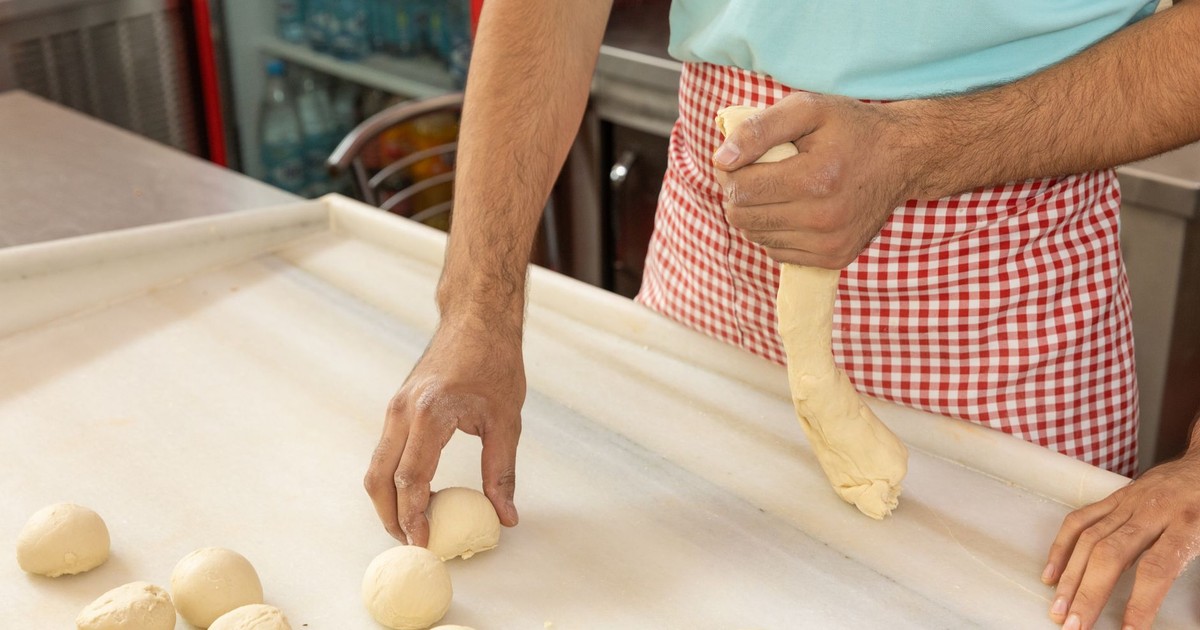

The frozen dough arrived at Walmart bakeries in 25-pound bulk cases stamped with the Pillsbury name. Bakery staff proofed it, baked it, and set it out under the heat lamps. Customers picked up fresh rolls and went home. None of them knew the dough had been recalled. Most had already eaten the rolls before the recall even went public.
That is the straightforward, unsettling core of one of the more striking food safety actions of summer 2026. General Mills recalled nearly 736,000 Pillsbury bread rolls due to possible glass contamination, according to a notice posted by the U.S. Food and Drug Administration. The product never sat in a grocery aisle. Most shoppers who bought a roll at their local Walmart in-store bakery had no idea they were eating something sourced from a recalled bulk dough supply.
The recall didn’t make headlines the day it happened. The FDA said the recall was initiated on June 19 and classified as Class II on July 13. Nearly a month passed between the moment General Mills notified its buyers and the moment the FDA’s enforcement report went public. For anyone who bought a fresh roll at a Walmart bakery in between, that’s a significant gap.
What Products Are Covered
The recall included 3,080 cases of Pillsbury Bread Rolls “Hard Roll Dough,” each containing 180 rolls, for a total of 554,400 rolls, and 1,260 cases of Pillsbury Bread Rolls “Kaiser Roll Dough,” each containing 144 rolls, for a total of 181,440 rolls. Add those numbers together and you get 735,840 individual rolls, all traced back to two specific frozen dough products manufactured by General Mills under its Pillsbury brand.
The product names, UPC codes, use-by dates, and lot codes appear on the bulk dough cases used in Walmart bakeries, not on the fresh rolls sold to shoppers. They are most useful to food-service operators and bakery staff; most shoppers won’t have access to these codes. That’s a meaningful practical detail. If you bought a fresh roll at a Walmart bakery counter over the past several weeks, there’s no label to check and no package in your freezer to cross-reference. The identification trail starts and ends at the commercial kitchen level.
For anyone working in food service or bakery operations who still needs to verify their stock: according to AARP, the Hard Roll Dough carries lot numbers 11JUN6JL and 12JUN6JL, with “Better if Used by” dates of October 12 and October 13, 2026. The recall numbers are H-1154-2026 and H-1155-2026, respectively. The Kaiser Roll Dough shares lot number 12JUN6JL and the October 13 date. Both products should be kept frozen, and both should be pulled from inventory immediately if they match these identifiers.
The Glass Contamination: What the FDA Classification Means
The notice says the bread rolls were recalled due to “potential foreign material (glass).” That phrasing, lifted directly from the FDA enforcement report, is clinical in a way that undersells the actual risk. Glass in food isn’t a theoretical concern. Depending on the size and shape of the fragment, it can cause cuts inside the mouth or throat, damage to the digestive tract, or internal injury that doesn’t always announce itself immediately.
The FDA classified the recall as Class II on July 13. A Class II recall means that using the product could cause “temporary or medically reversible” health consequences, according to Fox Business. The FDA assigns recalls one of three classifications based on the relative degree of health hazard. Class I is reserved for products where there is a reasonable probability of serious harm or death. Class III covers situations where the product is not likely to cause adverse health consequences. Class II, by definition, means real risk exists but is considered unlikely to be permanent or life-threatening. For something like a glass fragment in food, the practical implication is that injury is possible but expected to be treatable rather than catastrophic.
The issue was discovered internally, leading to a recall initiated on June 19 by the firm and classified on July 13, 2026. General Mills found the problem itself. The recall wasn’t triggered by a consumer complaint or a hospital visit. The company identified the contamination risk through its own processes and initiated the action voluntarily.
Where the Recalled Products Were Distributed

The products were distributed in Arkansas, California, Florida, Georgia, Indiana, Louisiana, Maine, Montana, New Mexico, New York, Ohio, Oklahoma, Pennsylvania, South Carolina, Tennessee, Texas, Virginia, Washington, and Wyoming. That’s 19 states spanning every region of the country, from the Northeast to the Pacific Northwest, and deep into the South. No single geographic cluster defines where these rolls landed.
The FDA listing does not identify specific retailers, grocery stores, or food-service customers that received the recalled products. General Mills identified Walmart in-store bakeries as the point of sale in its statement. That detail narrows things considerably for concerned consumers. This wasn’t a retail product sold frozen in the bread aisle. The rolls were baked fresh at Walmart bakery counters, which means the exposure was specific to people who purchased baked goods from those counters in states on the distribution list during the affected period. Shoppers who don’t buy from in-store bakeries have no reason for concern with this recall.
Understanding which food products are currently on shelves and which have been pulled is something that food safety reporters track closely, particularly as food supply chains grow more layered between manufacturer and consumer.
General Mills’ Response
A General Mills spokesperson said in an email to CBS News: “Food safety is our top priority at General Mills. Out of an abundance of caution, in mid-June, we issued a voluntary recall of two frozen dough products baked onsite and sold exclusively at Walmart in-store bakeries in the United States. This voluntary recall is limited in scope, highly contained and all potential impacted product has been removed.”
The brand hasn’t shared how the error could have occurred. That’s a gap in the public record that matters. Glass contamination in a food manufacturing setting typically points to a broken piece of equipment, a broken light fixture, or a defective piece of production machinery. General Mills has not publicly identified a root cause, and the FDA enforcement report does not specify one either. For consumers and food-service operators, the absence of that information makes it harder to assess whether the problem has been fully resolved.
The recalled rolls are intended primarily for commercial food service, rather than individual customers. That distinction shapes how this recall works in practice. The Pillsbury brand has an enormous retail footprint in American grocery stores – the crescent roll tubes, the biscuit cans, the ready-to-bake cookie dough – but this particular recall covers frozen bulk dough sold in large commercial cases to businesses, not products sitting in a home refrigerator. If your Pillsbury products came from a grocery store shelf, they are unaffected.
What This Means for Food-Service Operators
For restaurants, cafeterias, catering operations, or anyone else running a commercial kitchen, the action here is clear. Pull any cases matching the above lot numbers and UPCs, stop using them immediately, and contact General Mills for disposal instructions or credit. General Mills began notifying its buyers of the issue via email on June 19. The FDA officially finalized its classification of the recall on July 13, and the agency notes that establishments and food-service operators holding these specified lots should stop using them immediately and contact General Mills Sales, Inc. for disposal instructions or credit.
For individual consumers who bought baked rolls from a Walmart in-store bakery in one of the 19 states listed above, the situation is different and considerably harder to act on. Those rolls were baked on-site, unmarked with lot codes, and most have already been consumed. If someone experienced an unusual oral or gastrointestinal injury after eating bread rolls from a Walmart bakery in recent weeks, that’s worth a conversation with a doctor and potentially a report to the FDA’s MedWatch system, which accepts adverse event reports from consumers.
Read More: 10 Everyday Medications You Should Never Mix With Your Morning Coffee (no matter what)
The Part That Doesn’t Resolve Neatly

The people most exposed to the potential risk are also the least informed. Commercial food-service operators received email notifications in mid-June. The FDA enforcement report went live in mid-July. Individual shoppers who picked up a fresh roll at a Walmart bakery counter in the weeks in between were never directly notified of anything, because there was no system to notify them. That’s not a failure specific to General Mills or Walmart. It’s simply how a food recall works when the recalled product is an ingredient baked into something else on-site. Accountability runs from manufacturer to commercial buyer, and it stops there.
The recall’s Class II classification is accurate in the narrow technical sense – glass contamination at this scale, in this context, is unlikely to result in mass serious injury. But “temporary or medically reversible” is still a wide range of outcomes. A small shard of glass in a dinner roll is not a hypothetical discomfort. The system caught this one through internal discovery, which is better than the alternative. For anyone who eats food prepared in commercial kitchens – which, at this point, is nearly all of us – the more useful question is how often the gap between a supplier’s recall notice and a consumer’s awareness is measured in weeks rather than hours.
Disclaimer: This information is not intended to be a substitute for professional medical advice, diagnosis, or treatment and is for information only. Always seek the advice of your physician or another qualified health provider with any questions about your medical condition and/or current medication. Do not disregard professional medical advice or delay seeking advice or treatment because of something you have read here.
AI Disclaimer: This article was created with the assistance of AI tools and reviewed by a human editor.