
There’s a moment on every flight – the drinks cart making its way down the aisle, the slight clatter of ice, a flight attendant offering options with a practiced smile – where most of us don’t think twice. You order whatever you’d order anywhere. Coffee, maybe. A Diet Coke. A Bloody Mary if it’s noon and you’re already on vacation in your head. The flight attendant nods, pours, moves on. No reaction. No raised eyebrow. But here’s the thing: they noticed. They always notice.
Flight attendants spend more accumulated hours in the air than most of us spend in traffic, and years of that experience tends to produce opinions. Quiet ones. About what passengers eat, what they drink, and what they’re ordering that, behind that professional smile, is sending a silent alert through the crew. Some of it’s about your health – what the altitude is actually doing to your body while you’re convinced you’re fine. Some of it’s about their workload. And some of it involves what’s actually in your cup, which is considerably more interesting than you’d hope.
1. Coffee or Tea
This is the one flight attendants bring up the most, and it has nothing to do with taste. The issue is the water.
Planes have a single water tank. That same tank supplies drinking water, hand-washing water, and water for the lavatories. So when your coffee is handed over mid-flight, it’s been brewed with water that’s been doing some fairly varied work. Airlines are required by the EPA to test water systems, but the results aren’t always reassuring. A recent analysis by the Center for Food as Medicine & Longevity, which examined more than 35,000 water samples from 10 major and 11 regional airlines over three years, found that three major U.S. carriers – American Airlines, JetBlue, and Spirit – earned a “D” rating, while Delta and Frontier topped the list with “A” grades.
The EPA has conducted multiple surveys of aircraft water systems, with findings showing that roughly one in eight planes failed water safety standards, including tests for coliform bacteria. While the water is technically heated to near-boiling temperatures to brew coffee and tea, altitude changes the boiling point, which means that’s not always enough to guarantee safety. There’s also a more stomach-turning logistics issue: flight attendants are supposed to dispose of leftover coffee not in a sink but down the toilet, which means bringing the coffee pot into the lavatory and, as one cabin crew member pointed out, risking backsplash directly back into the pot, which then goes straight into the coffee maker.
Flight attendants are blunt about their own habits: “Flight attendants will not drink hot water on the plane. They will not drink plain coffee, and they will not drink plain tea.” That’s not drama – it’s years of watching how those machines actually get used. If the people serving it won’t drink it, you now have all the information you need.
2. Diet Coke
This one isn’t about health – it’s about what it does to the service cart at 35,000 feet, and why experienced crew members quietly dread the moment someone three rows back orders one.
When you open a soda, the pressurized CO2 inside escapes into the lower-pressure air, creating fizz. At higher altitudes, where the pressure difference is greater, sodas foam more and go flat faster. This extra fizz means it takes longer to pour a single can of Diet Coke compared to other beverages, slowing down the service process. Diet Coke is uniquely bad for this because of what’s in it. Diet Coke contains potassium benzoate and aspartame, which are “surfactants” – chemicals that lower a liquid’s surface tension. Between the lack of sugar and the lower surface tension, Diet Coke can be explosively bubbly.
One veteran flight attendant described it plainly: “The worst culprit for this is Diet Coke. I literally have to sit and wait for the bubbles to fall before I can continue pouring. If all three passengers ask for Diet Coke I’ll often get them started, take another three drink orders, serve those, and then finish the Diet Cokes.” If you are committed to your Diet Coke habit in the air, the one workaround that flight attendants actually appreciate is asking for the whole can rather than a poured glass. That way, you get a cup with ice and can wait for the fizz to subside yourself – and the person serving 150 other passengers gets to keep moving.
3. The Bloody Mary
There’s something about a Bloody Mary on a plane that feels like a personality statement. It says you’re not stressed about the flight, you’ve done this before, you know how to travel. And here’s the maddening part: it genuinely does taste better up there.
According to a study published in the Journal of Experimental Psychology: Human Perception and Performance, the level of sound in your surroundings changes how humans perceive taste. In a study where participants rated the intensity of different flavors as background noise increased to aircraft levels, sweetness was dulled but umami intensity – the savory, rich depth you get from tomato juice – actually rose. So the Bloody Mary at altitude really is hitting differently. The trouble is what that same drink is doing to your body while you’re enjoying it.
Bloody Marys have a high sodium content that causes your body to retain water, making you uncomfortable. Flight attendant Sue Fogwell told Travel + Leisure, “Due to the very high sodium content, I always avoid drinking Mr. & Mrs. T/bloody mary mix and tomato juice.” An American Airlines flight attendant told The Sun – whose account has been widely cited as that of Andrea Song – was even more direct: “I always avoid high sodium foods in the days prior as joints especially in the legs, feet and ankles tend to swell. I also avoid tomato juice at all costs. A bloody mary mix contains 12 times more sodium than a soft drink.” The cabin air is one of the most dehydrating environments you’ll sit in, drier than most deserts. Pouring 12 times the sodium of a standard soft drink into that equation and then sitting still for six hours is where flight attendants quietly do the math and feel a small, involuntary concern.
4. Multiple Rounds of Alcohol
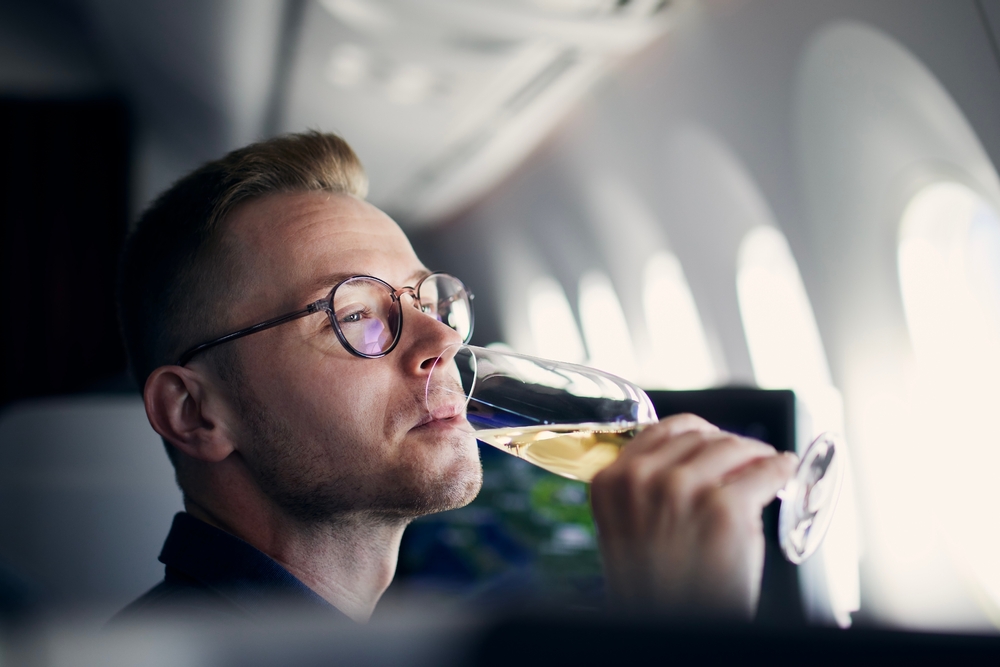
A drink or two on a long flight is a different conversation than what flight attendants are actually watching for. The concern kicks in around round three, and it’s rooted in basic physiology.
The combination of high altitude and alcohol can make you feel light-headed and more drunk than you would on the ground. When pressure is decreased in the airplane, the body can’t absorb oxygen as well – it’s not that blood alcohol is technically higher, but the decreased oxygen in the cabin means you feel the impacts of a drink sooner. This isn’t a myth. New research found that alcohol compounds the effects of high altitude on the body, putting extra burden on the cardiovascular system, reducing blood oxygen levels, compounding dehydration, and impairing sleep quality.
The safety dimension is real and legally structured. FAA regulations prohibit travelers from consuming alcohol on board an aircraft unless served by a flight attendant, and flight attendants are not permitted to serve a passenger who appears intoxicated. Alcohol factors into 27% of reported disruptive passenger incidents. Every time someone orders a third drink, a mental calculation happens on the crew’s side – tracking consumption, watching demeanor, making a judgment call they are legally responsible for. Alcohol impairments become more severe at altitude, where lower oxygen levels can heighten intoxication effects. When you order that third drink, you’re not just ordering a drink – you’re triggering a mental calculation the flight attendant is required to make.
5. Anything With Ice
The water tank problem doesn’t stop with hot drinks. It extends to the ice. The ice on airplanes is often made with the same unfiltered water used for coffee and tea, which means it can carry bacteria or other contaminants from the plane’s water tanks. According to food safety expert Melvin Kramer, flight attendants can accidentally contaminate ice cubes by using incorrect food handling procedures or scooping and storing the ice with poorly cleaned utensils and bins. The freezing process kills some bacteria – but not all, and not reliably in conditions where the ice scoop has been touching various surfaces throughout a service.
Many flight attendants skip the ice in their own drinks, and that should tell you something. This doesn’t mean that every ice cube on every flight is compromised. The range across airlines, routes, and maintenance schedules is significant. But if you already know the water situation and you’re trying to reduce variables on a long-haul flight, asking for a canned or bottled drink without ice is the simplest workaround crew members themselves tend to use.
6. Orange Juice
Orange juice has an innocuous reputation – it’s bright, it’s vitamin C, it feels like the responsible choice. Flight attendants who’ve watched hundreds of people order it and then spend the next two hours wincing near a lavatory door beg to differ.
At altitude, your digestive system already functions under stress. Cabin pressure affects how your body processes food and beverages, and orange juice’s high acidity becomes even more problematic when you’re flying. Passengers who order orange juice – especially mixed with alcohol like screwdrivers or mimosas – often complain of stomach discomfort later in the flight. The acidic nature combined with reduced cabin pressure creates a recipe for heartburn and nausea that nobody wants to deal with in a cramped airplane bathroom.
The concentrate versions served on most flights are particularly harsh, being more concentrated than fresh juice. Your stomach acid levels change at altitude, making you more susceptible to acid reflux and indigestion. None of that is unique to air travel – orange juice is acidic on the ground too – but the combination of reduced cabin pressure, a digestive system already under mild physiological stress, and the inability to do anything about it for the next four hours is a combination flight attendants have watched play out more times than they’d like.
7. Your Own Duty-Free Alcohol Mixed Into Something
This one isn’t just about crew annoyance – it’s a federal regulation, and a surprisingly common misconception among passengers. You cannot legally drink your own alcohol on a commercial flight. FAA regulations (14 CFR § 121.575) explicitly prohibit passengers from consuming personal alcohol unless it is served by flight attendants. That bottle of wine you picked up in the duty-free shop, the mini vodka in your carry-on, the “just mixing it into my Coke, nobody will notice” move – flight attendants can immediately spot self-service attempts: mini bottles, discreet mixing, sudden behavior changes. The training is specific and the signs are obvious to anyone who’s worked a cabin for more than a few months.
Airlines are legally responsible for monitoring alcohol consumption to ensure everyone’s safety. If you consume your own supply, the crew cannot track your intake, which is why it is strictly prohibited. Violations result in fines ranging from $500 to $40,823, potential arrest, and airline bans. The crew isn’t being precious about it – they’re legally on the hook for what happens in their cabin, and a passenger they didn’t serve who is now behaving erratically is a scenario that ends with a diversion, law enforcement at the gate, and paperwork for everyone.
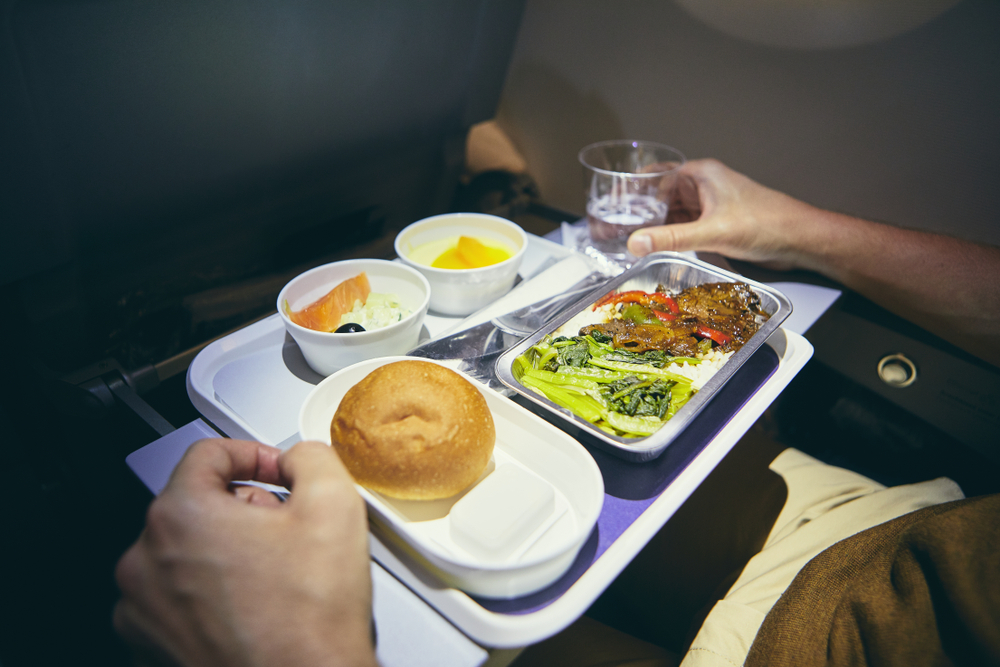
8. The Fish or Meat Dish
Ask a flight attendant whether they eat the fish on long-haul flights and watch how quickly they answer. The hesitation alone is informative. In-flight meals are reheated rather than freshly cooked, and fish doesn’t always fare well in that process. Several flight attendants describe fish dishes as among the least forgiving when it comes to texture and smell. The structural problem is logistics: that fillet was cooked somewhere on the ground, loaded onto a catering cart, stored at a regulated temperature, transported to the plane, and then reheated in a galley oven that’s running on the aviation equivalent of a toaster setting. Proteins that rely on precise cooking temperatures can easily dry out or become unpleasant. There is also a higher risk of spoilage or foodborne illness from eating fish on a plane, according to former flight attendants.
The meat concern is broader and comes down to one word: delays. Flight attendants suggest avoiding any meat dish on the basis of storage risk. As one former crew member explained, “You’re putting the trust of storing any meat in the flight attendant’s hands, and delays happen, and mechanical issues happen; if the cooked meals aren’t stored appropriately or have exceeded the storing time allotted for the meal, you can be in trouble.” On the ground, a restaurant kitchen has checks, refrigeration, and someone whose job it is to watch all of it. On a delayed flight, nobody gets to check if the catering cart has been sitting at the wrong temperature for an hour. Most of the time it’s fine. The times it isn’t are memorable, and flight attendants have seen them.
What to Actually Order
None of this is an invitation to white-knuckle every flight with nothing but anxiety and a sealed bottle of water. The simplest takeaway from everything flight attendants consistently say is this: if it comes pre-sealed and doesn’t require the plane’s water system to produce it, you’re in a relatively good position. Canned sodas (though not Diet Coke if you want to keep the crew moving), juice cartons, bottled water, ginger ale – these are the things crew members actually reach for on their own time.
The bigger picture is that flying puts your body into a mildly unusual physiological state. Lower oxygen, lower humidity, reduced pressure, dulled taste buds, a digestive system that’s not operating at peak efficiency – all of it real, all of it measurable. The things that flight attendants quietly flag when you order them aren’t arbitrary preferences. They’re the distilled knowledge of people who have watched what happens to passengers at altitude, thousands of times, over years.
You don’t have to follow any of it. But the next time you’re about to order a third Bloody Mary at 36,000 feet and the flight attendant gives you a perfectly neutral smile, know that somewhere behind it, a small calculation just completed. The math isn’t personal. It’s just what happens when you’ve seen enough.
AI Disclaimer: This article was created with the assistance of AI tools and reviewed by a human editor.