

The argument you can’t solve with Google. The instinct that pulls you outside when the news gets too heavy. The dawning sense that the more information you have, the less clarity you feel. These aren’t signs of personal failure. They’re signs of living in a time when the old rules about how to treat the land, how to talk to each other, and how to sit with uncertainty have been discarded, and nobody officially replaced them.
Native American proverbs represent hundreds of distinct Indigenous nations, each with its own language and philosophical tradition. Most of these sayings were never written down. They traveled orally from elders to youth, with the repetition intentional, helping wisdom settle into memory and daily life. How many of them describe exactly the problems we are currently failing to solve: the refusal to listen, the illusion that land and community are infinitely expendable, the exhausting loudness of people who talk instead of act.
The sayings below survived forced removal, a boarding school system designed to erase everything they carried, and a century of being dismissed as folklore. That alone tells you something about how sturdy these ideas are.
1. “It Is Better to Have Less Thunder in the Mouth and More Lightning in the Hand” (Apache)
This Apache proverb, recorded at Legends of America, cuts straight to the gap between talk and action. The thunder is noise, announcement, the performance of intention. The lightning is what actually strikes. In a world running on hot takes, content strategies, and politicians who mistake a speech for a policy, the Apache were identifying something that social media would eventually amplify to a deafening pitch: the danger of confusing speaking about a thing with doing the thing.
The contemporary relevance is almost uncomfortable. Scroll through any major public debate on climate, healthcare, or community safety, and you’ll find thousands of people producing enormous amounts of thunder. Very little lightning. The proverb doesn’t shame talkers; it asks a harder question. After all the words, what has actually changed? What has moved in the physical world?
It holds for private life just as well. The partner who keeps promising to show up differently but never does. The friend who has the right things to say about grief and none of the right behaviors. The proverb was handed down by people who survived by acting precisely and efficiently. For them, the cost of confusing words with deeds was literal. For us, it’s usually slower, but the damage is just as real.
2. “We Do Not Inherit the Earth From Our Ancestors; We Borrow It From Our Children” (Attributed Across Multiple Nations)

This saying appears in various forms across multiple Indigenous traditions, and the repetition is the point. The idea that land is a loan, not a possession, cuts against the logic of extraction that has defined the modern era’s relationship with the natural world. You don’t ransack a borrowed thing. You return it in good condition, or better.
The ecological weight of this is obvious and documented. But the saying goes further than environmentalism. Borrowing implies obligation. It changes the frame from “what can I get from this?” to “what do I owe, and to whom?” That shift from rights to responsibilities is one of the most uncomfortable moves in contemporary ethics, and Indigenous traditions applied it to land, water, and community thousands of years before it became a philosophical position debated in university seminars.
The forced removal of the Cherokee, Muscogee, Seminole, Chickasaw, and Choctaw nations from their southeastern homelands between 1830 and 1850, known as the Trail of Tears, resulted in the deaths of an estimated 15,000 people across all the nations removed, according to Britannica, and the destruction of communities that had maintained these traditions for millennia. The people who carried this proverb lost the very land it described. The history doesn’t neutralize the saying. It makes it more precise.
3. “Humankind Has Not Woven the Web of Life. We Are but One Thread Within It.” (Chief Seattle, Duwamish)

Chief Seattle, of the Duwamish nation, put it this way, as preserved at Xavier University’s Jesuit Resource archive: “Humankind has not woven the web of life. We are but one thread within it. Whatever we do to the web, we do to ourselves. All things are bound together. All things connect.” The metaphor is precise where it needs to be. A web can hold weight only because every thread is connected to every other. Pull one out, and the structure weakens in places you didn’t predict.
Beyond environmental advocacy, Chief Seattle’s formulation is a statement about causality, about the hubris of believing you can extract from or damage one part of a system without consequence to yourself. That pattern shows up in public health, in economics, in how companies treat workers, in how communities treat their most vulnerable members. The web holds, or it doesn’t. And when it fails, it rarely fails only where you pulled.
For anyone sitting with a sense of helplessness in the face of large-scale problems, there’s a useful flip side here. One thread can also reinforce the web. The logic of interconnection runs both ways.
4. “Listen, or Your Tongue Will Make You Deaf” (Tribe Unknown)

This proverb states simply: “Listen, or your tongue will make you deaf.” The anatomy is backwards, which is exactly the point. Physiologically, speaking and hearing are separate functions. But the proverb observes what actually happens in most conversations, especially difficult ones: the person waiting to speak stops receiving what is being said. The tongue creates a kind of internal noise that drowns out everything else.
Oral tradition across many Native nations placed listening at the center of learning, not as a passive act but as an active one. As Legends of America notes in its collection of Indigenous proverbs, this warning appears consistently across tribal traditions. What you lose when you stop listening is not just information. You lose the ability to be changed by another person. And a person who can’t be changed by others eventually makes decisions in a vacuum.
In 2026, when the loudest voice in almost every room is often the least informed one, and when platforms are designed to reward speaking over listening, this proverb addresses something close to a civilizational habit.
5. “One Finger Cannot Lift a Pebble” (Hopi)

The Hopi proverb “One finger cannot lift a pebble” is one of the simplest on this list and one of the hardest to argue with. It doesn’t romanticize community. It doesn’t claim that togetherness is inherently healing. It just states a structural fact: some things require more than one person, no matter how capable or determined that person is.
This lands differently now than it might have even ten years ago. The last decade has been heavily shaped by the mythology of the individual – the single founder who disrupted an industry, the solo activist who changed a law, the one person who kept the family together. These stories are sometimes true and always partial. Every one of those individuals was operating inside networks of support, learning, and circumstance that the mythology quietly erases.
The Hopi had every reason to understand collective action with clarity. Their communities survived in the high desert of what is now Arizona by cooperating on water management, food storage, and defense. Solo heroism would have been a death sentence. The pebble proverb is not motivational advice. It’s the residue of hard-won knowledge about what actually keeps people alive.
6. “Don’t Let Yesterday Use Up Too Much of Today” (Cherokee)

The Cherokee proverb “Don’t let yesterday use up too much of today” sounds almost like a therapy session distilled into a single sentence. It is not. Therapy tends to argue that the past must be examined and processed; this proverb argues something slightly different. It doesn’t deny that yesterday happened. It asks how much real estate the past should occupy in the present.
Rumination is one of the best-documented contributors to depression and anxiety. A 2024 study published in Cognitive Therapy and Research found that people who replay past events in a pattern of high ruminative inertia showed consistently worse depression and social anxiety outcomes at 90-day follow-up than those who could disengage from the cycle. The Cherokee proverb makes no claim to clinical precision, but the principle is sound. The past has authority. It shouldn’t have squatters’ rights.
The urgency behind this saying is also worth sitting with. The word “use up” implies a limited resource. Today has a finite amount of attention, energy, and decision-making capacity. Spend most of it relitigating what happened last year, and you’ve already spent the day before noon. That is a recognizable experience for anyone who has driven to work still arguing with someone in their head.
7. “Seek Wisdom, Not Knowledge. Knowledge Is of the Past; Wisdom Is of the Future.” (Lumbee)

The Lumbee saying “Seek wisdom, not knowledge. Knowledge is of the past; Wisdom is of the future” draws a line that most modern education ignores entirely. Knowledge, in this framing, is accumulated record. It tells you what has already happened, what has already been decided. Wisdom is something else: the capacity to make good decisions with incomplete information about an uncertain future.
We have built entire societies around the accumulation and credentialing of knowledge. There are degrees for it, rankings for it, job titles that signal how much of it you possess. What the Lumbee tradition identifies is the gap between knowing a great deal and knowing what to do next. That gap is visible everywhere in contemporary life, from expert predictions that constantly miss their mark to leaders who can cite every relevant statistic while making demonstrably poor decisions.
Wisdom, in many Indigenous frameworks, wasn’t acquired through study alone. It came from observation, from lived experience, from failure, from listening to elders who had faced similar situations, and from the humility to know what you still didn’t understand. None of that converts efficiently into a credential. Which is probably why it’s rarer.
Read More: The Hidden Truth of Christianity’s First Bible and the Gospel that Was Erased
8. “When You Were Born, You Cried and the World Rejoiced. Live So That When You Die, the World Cries and You Rejoice.” (Cherokee)

This Cherokee saying runs: “When you were born, you cried and the world rejoiced. Live your life so that when you die, the world cries and you rejoice.” It’s a teaching about what a life of meaning looks like from both ends.
A newborn’s cry is typically read as the arrival of something joyful, a sound of life. This proverb inverts the perspective: it notices that the person crying is the one who has just arrived, thrust into an uncertain world. The world rejoicing at that moment has not yet been disappointed or validated by who that person will become. The whole weight is on what comes next.
Living in a way that reverses those positions at death – the world grieving, the dying person at peace – requires decades of specific choices about integrity, generosity, and presence. It’s not about fame or legacy in the conventional sense. It’s about whether the people who actually knew you feel the gap you leave. That’s a harder standard than recognition, and it’s one worth holding onto early.
9. “When All the Trees Have Been Cut Down, When All the Animals Have Been Hunted, When All the Waters Are Polluted, When All the Air Is Unsafe to Breathe, Only Then Will You Discover You Cannot Eat Money.” (Cree Prophecy)
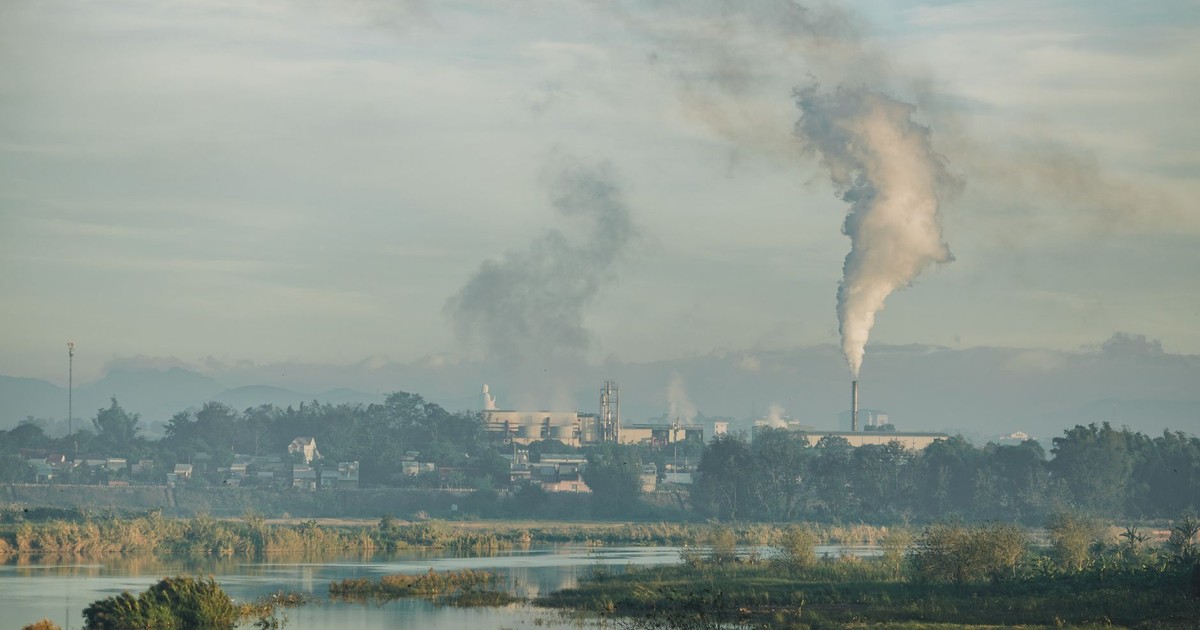
The Cree prophecy’s rhetorical structure is its argument. Each “when” is not a hypothetical. It’s a step in a progression, and the progression leads somewhere specific. The punchline is not surprising. The fact that the world has proceeded step by step down exactly this path, knowing the punchline in advance, is.
The prophecy predates the industrial scale of environmental damage by centuries. It doesn’t predict a specific date or a specific catastrophe. It describes a logic: the logic of treating living systems as infinitely withdrawable rather than as accounts that can be overdrawn. As the collection at Legends of America reflects, many Native American proverbs speak through images of animals, rivers, wind, and fire – not as symbols to dominate or control, but as relatives to listen to and learn from. The Cree were not speaking metaphorically about trees and water. They were speaking about relatives.
No environmental argument made since has been sharper or more efficient. And no environmental argument made since has been more completely ignored by the people with the power to act on it.
10. “Man’s Law Changes With His Understanding of Man. Only the Laws of the Spirit Remain Always the Same.” (Crow)

The Crow proverb holds that “Man’s law changes with his understanding of man. Only the laws of the spirit remain always the same.” This is not a religious argument so much as an empirical observation. Every legal code in human history has been revised. Practices once sanctified in law – slavery, the legal nonpersonhood of women, child labor – have been overturned not because the universe changed but because human understanding caught up to something it should have known earlier.
The proverb doesn’t celebrate that revision as progress, exactly. It observes it as a pattern. Human law is contingent, a reflection of whoever held power when the law was written and whatever they understood or chose not to understand. The “laws of the spirit” referenced here aren’t necessarily theological. In many Indigenous traditions, they describe the structural conditions of life: that community requires reciprocity, that taken-from things eventually cease to give, that cruelty produces its own consequences regardless of whether the legal system records it.
Despite catastrophic disruptions, including the boarding school era that deliberately attempted to eradicate Indigenous languages and cultural practices, these sayings survived through the determination of elders who continued to teach in secret. The World Data’s 2025 analysis of Native language preservation reports that of the estimated 300-plus languages spoken across what is now the United States before European contact, only 170-plus remain spoken today, with over 135 classified as critically endangered. Some projections suggest that without significant action, fewer than 20 Native languages may still be in active use by 2050. The Crow proverb is a fair description of why these sayings outlasted the systems built to suppress them: some understandings are more durable than the laws written against them.
What Lasts
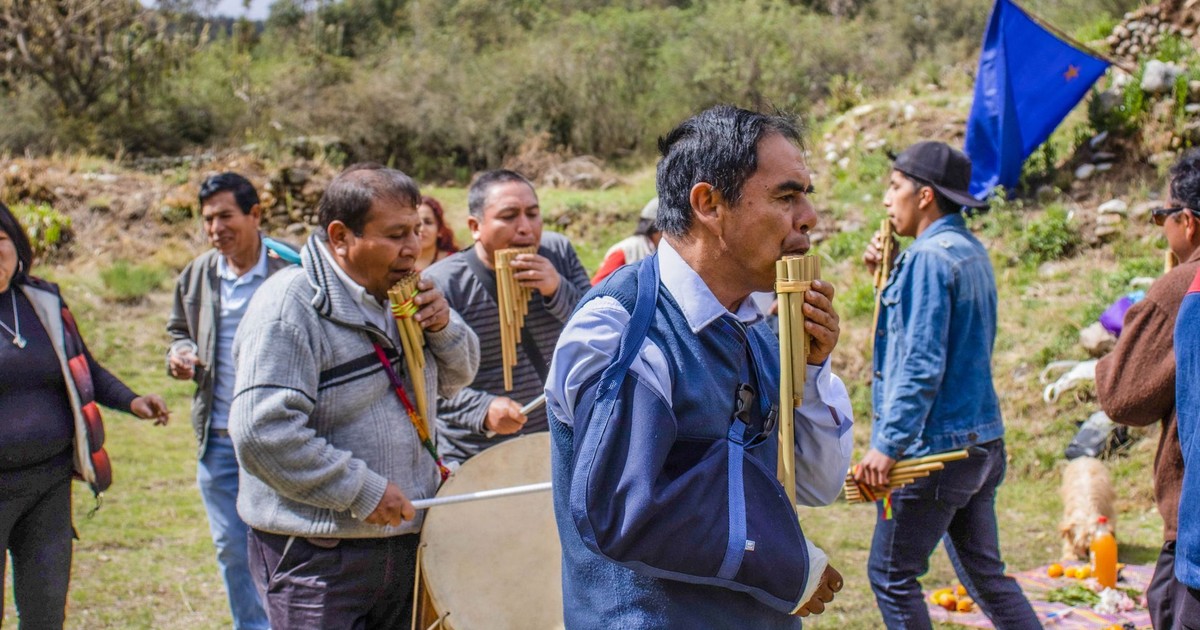
The reason these Native American sayings keep circulating in difficult times isn’t because people are searching for something exotic or ancient. It’s because they solve a specific problem: they say the true thing in the fewest words. Most of what we produce in the way of cultural guidance right now is long, conditional, and heavily caveated. These proverbs are none of those things.
Native American proverbs continue to play an active role in daily conversation, education, and cultural expression. They appear in political speeches, legal proceedings, family gatherings, and increasingly in social media and popular culture. That reach matters, but so does accuracy. Many sayings circulate online attributed loosely to “Native American tradition” when their actual tribal origins are more specific, or sometimes unverifiable. Seeking out those specific origins, and giving credit where it is traceable, is the difference between drawing on a tradition and simply mining it.
The point isn’t to collect these as inspiration for a difficult Monday. Each of these sayings describes a pattern – ecological, relational, civic – that keeps producing the same consequences regardless of the century. The thread is still there. The question is whether enough people will pick it up.
AI Disclaimer: This article was created with the assistance of AI tools and reviewed by a human editor.