

The argument that happens most often when Christians argue about the Bible isn’t about what a verse means. It’s about which verses made it into the book in the first place, and why. The selection process that produced the New Testament was messier, more contested, and more politically charged than most people sitting in Sunday services have ever been told.
Most people assume the Bible was assembled by early church leaders who carefully preserved the original teachings of Jesus. That’s partly true. But it skips over the part where a single provocative theologian forced the Church’s hand, where texts beloved by early communities were literally buried in the Egyptian desert, and where a woman named Mary was written out of the story so completely that the gospel bearing her name didn’t surface again for more than 1,600 years.
The earliest Christian Bible wasn’t built through consensus. It was built through argument, reaction, and in some cases suppression. Understanding that history doesn’t dissolve the faith – it gives it some texture.
The Man Who Built the Earliest Christian Bible
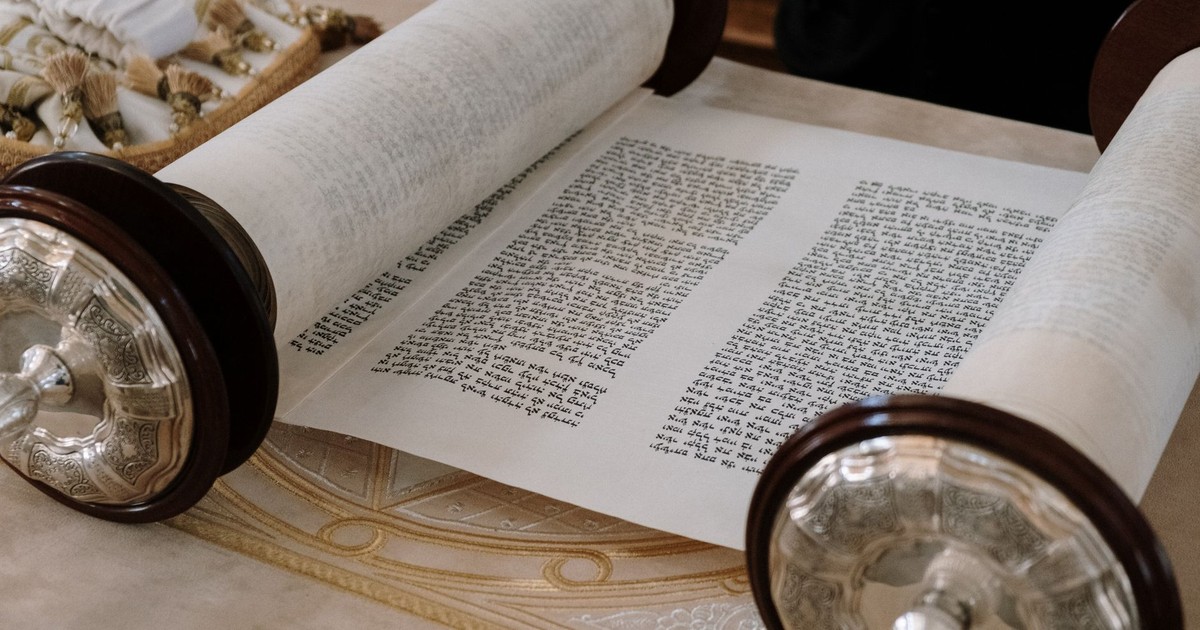
Marcion of Sinope was the first person to codify a Christian canon. His version consisted of only eleven books, grouped into two sections: the Evangelikon, a shorter version of the Gospel of Luke, and the Apostolikon, a selection of ten epistles of Paul the Apostle. No Matthew. No Mark. No John. No Acts. No Revelation. No Old Testament at all.
Marcion, a theologian from Asia Minor who traveled to Rome and was later excommunicated for his views, may have been the first of record to propose a definitive, exclusive list of Christian scriptures, compiled sometime between 130 and 140 AD. He arrived in Rome carrying a substantial donation for the local church – reportedly 200,000 sesterces. Four years later, he was excommunicated and his money was returned to him. He then founded his own church.
His theology was the sticking point. Marcion preached that the benevolent God of the Gospel who sent Jesus into the world as the savior was the true Supreme Being, different and opposed to the malevolent deity identified with Yahweh in the Hebrew Bible. He read the Old Testament literally and concluded it described a different, lesser god entirely. This reading led Marcion to a radical decision: these Jewish scriptures must be thrown out of the church.
So he took scissors – or rather, a knife – to the texts he did accept. The 2nd-century writer Tertullian stated that Marcion “expunged [from the Gospel of Luke] all the things that oppose his view… but retained those things that accord with his opinion.” According to this view, Marcion eliminated the first two chapters of Luke concerning the nativity, and began his gospel at Capernaum. No manger. No shepherds. No flight to Egypt. No genealogy tracing Jesus back through Jewish lineage. Marcion composed what Tertullian described as a mutilated version of Luke and “dismembered” parts of Paul’s epistles, all subject to his editorial “knife.” This collection was circulating around 140 AD at the earliest.
The reactive logic it set in motion is where the story gets interesting. Marcionism became a catalyst in the process of developing the New Testament canon by forcing the proto-orthodox Church to respond to his version. The Bible you can buy at any bookstore today exists partly because church leaders felt compelled to define an authoritative alternative to Marcion’s version. The heretic forced orthodoxy’s hand.
What the Church Decided to Bury

The story doesn’t end with Marcion. Roughly 200 years after he was excommunicated, in December 1945, an Egyptian farmer discovered a sealed earthenware jar containing 13 codices near the cliffs of Jabal al-Tarif – an area called Nag Hammadi. This discovery included a large number of primary Gnostic texts – scriptures once thought to have been entirely destroyed during the early Christian struggle to define orthodoxy – including the Gospel of Thomas, the Gospel of Philip, and the Gospel of Truth.
Scholars speculate the works were buried in response to a letter from Bishop Athanasius declaring a strict canon of Christian scripture. The timing lines up: Athanasius sent his famous Easter letter defining the 27-book New Testament in 367 AD, and the Nag Hammadi texts appear to have been hidden around that time, possibly by monks who could not bring themselves to destroy them.
The Gospel of Thomas is unlike anything in the canonical New Testament. It is a collection of 114 sayings of Jesus about salvation and life. In contrast to the New Testament gospels, which focus on the crucifixion and resurrection, the Gospel of Thomas presents a figure of Jesus who does not die for anyone’s sins on the cross and does not rise from the dead on the third day. Although the Nag Hammadi Coptic version dates from the 4th century, the original Greek version could date from the year 50, making it even earlier than the New Testament gospels. That is a genuinely uncomfortable fact for anyone who believes the canonical four gospels represent a complete and original picture of Jesus.
Then there is the Gospel of Mary – almost certainly Mary Magdalene. The Gospel of Mary presents her as Jesus’s closest disciple, receiving private teachings the other apostles did not understand. Peter explicitly challenges her authority in the text. A tradition with female leadership from its origin could not be used to justify permanent exclusion of women from priesthood, which is why these texts had to be buried. That last observation comes from a particular interpretive tradition, but the historical core of it is solid: texts that handed spiritual authority to women disappeared, and texts that concentrated it in male apostolic succession survived.
The Counterargument Deserves a Fair Hearing
The strongest argument against treating all of this as a scandal is that canon formation, however messy, still required discernment. The Church didn’t simply choose texts that served its political interests and destroy everything else. Many of the excluded texts – including several in the Nag Hammadi library – were late compositions, likely written 100 to 200 years after the events they describe, often drawing on Greek philosophical traditions that have little to do with the Jewish context in which Jesus actually lived and taught.
Historians of early Christianity have also pointed out that Marcion’s canon had its own ideological problems: his rejection of the entire Hebrew Bible required him to treat large sections of even Paul’s letters as later forgeries, since Paul quoted the Old Testament constantly. His solution was to keep cutting, producing a Christianity so stripped of its Jewish roots that it barely resembled what Jesus himself practiced.
These are legitimate points. The people who assembled the current canon were not simply power-hungry politicians burning inconvenient gospels. They were also trying to preserve a coherent theological tradition against what they saw as serious distortions.
But acknowledging the complexity of canon formation doesn’t undermine Christianity – it actually deepens it. A faith tradition that can withstand honest historical scrutiny is stronger than one that requires its adherents to pretend the first four centuries of church history were tidier than they were.
Why This Matters Right Now

According to Barna’s 2025 data, weekly Bible reading among U.S. adults has climbed to 42 percent – up 12 points from a 15-year low of 30 percent in 2024, and now the highest rate since 2012. Among self-identified Christians, that figure reaches 50 percent. Yet a smaller percentage strongly affirms the Bible’s authority: only 36 percent of adults say the Bible is completely accurate in its teachings, down from 43 percent in 2000. More people are opening the book. Fewer are taking institutional claims about it entirely on faith.
That gap between curiosity and conviction is real, and it describes something honest about where a lot of readers are sitting right now. The history of Marcion, the Nag Hammadi library, the Gospel of Mary, and the political battles of the 4th-century councils – all of it is precisely the kind of context that people asking harder questions about scripture deserve to have access to.
Read More: The Biggest Christian Hoaxes of All Time — And What They Tell Us
The Honest Reckoning

The earliest Christian Bible was not the one we have now. It was assembled over centuries through a combination of genuine theological discernment, political necessity, and in some cases outright suppression. Acknowledging that is not the same as saying the resulting canon is worthless or that Christianity is built on a lie. It is saying that the version of scripture handed to most believers has almost never come with its full backstory attached.
Marcion’s knife, the sealed jar in the Egyptian cliffs, Peter arguing with Mary in a document that got buried for 1,600 years – these aren’t footnotes to Christian history. They are the actual record of how contested and human the process of building a religion really is. Some of these arguments go back further than the Church itself. Naming that isn’t a conclusion – but it’s usually where the real conversation starts.
AI Disclaimer: This article was created with the assistance of AI tools and reviewed by a human editor.