

The argument started over a Bible verse. George Hull, a tobacconist from New York and committed atheist, was visiting Iowa in the late 1860s when a Methodist preacher named Henry Turk insisted that the Genesis line “there were giants in the earth in those days” should be read as plain historical fact. Hull thought this was ridiculous. What he did about it would become one of the most audacious stunts in American religious history, and it would make him a small fortune in the process.
That story is one thread in a much longer history of deception woven across the life of Christianity. For as long as the faith has existed, so have forgeries, fabricated relics, invented documents, and outright cons built on its name. Some were crafted for money. Some for political power. Some, as in the case of the Protocols of the Elders of Zion, for something far darker. The Christian hoaxes history that spans these centuries is less a story about the cynicism of forgers and more about the very human hunger they knew how to exploit: the desire for something you can hold in your hand that proves what you already believe in your heart.
The hoaxes that endured the longest weren’t the clumsy ones. They were the ones built on an intimate knowledge of their audience.
The Donation of Constantine: A Forgery That Ran an Empire
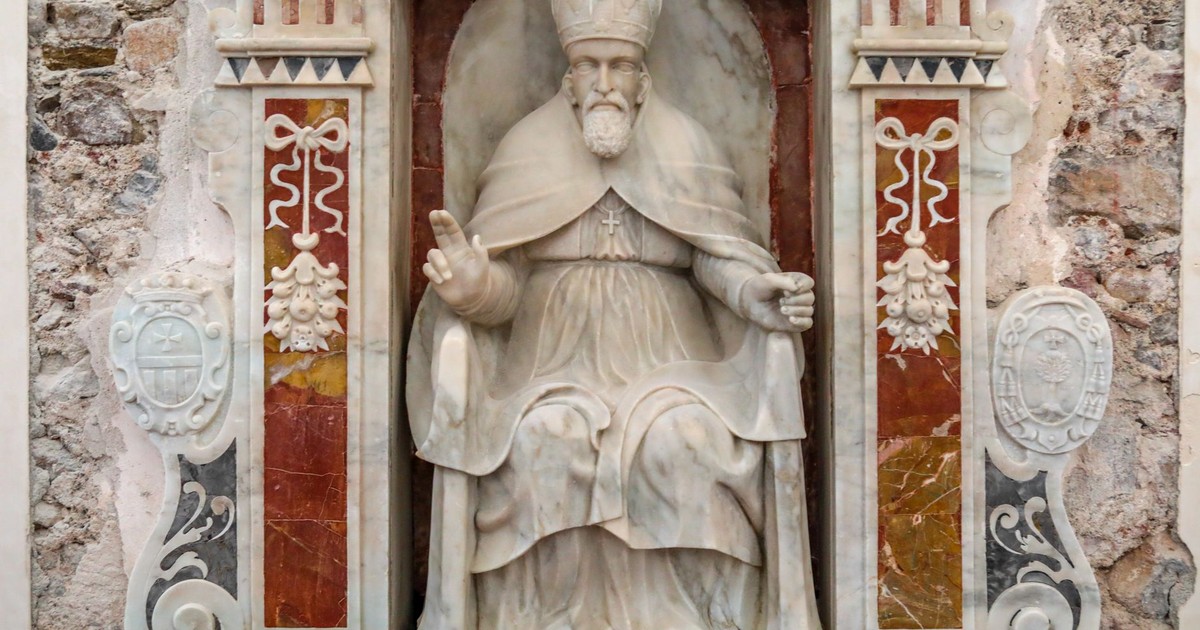
The Donation of Constantine is the best-known and most important forgery of the Middle Ages, a document purporting to record the Roman emperor Constantine the Great’s bestowal of vast territory and spiritual and temporal power on Pope Sylvester I and his successors. Constantine, one of history’s most consequential rulers, died in 337 AD. The document claiming to record his extraordinary gift to the Church didn’t appear until roughly 400 years later.
Likely forged sometime between the 750s and early 760s and widely accepted as authentic for nearly 700 years, the Donation of Constantine provided the papacy with legal and spiritual justification to claim supreme authority over secular rulers. In specific terms, Constantine was said to have bestowed upon the pope supremacy over the sees of Antioch, Alexandria, Constantinople, and Jerusalem and all the world’s churches – and, most importantly, gave the pope control of the imperial palace in Rome and all the regions of the Western Empire, effectively conveying the notion that the pope had the right to appoint secular rulers in the West.
The document claimed that around 315 – 317 AD, Constantine was cured of leprosy by Pope Sylvester I, and that in gratitude, he surrendered his power and lands to the pope, who then generously gave that power back, allowing the emperor his reign. It’s a story that would be remarkable if true. The problem is that multiple lines of evidence – historical, linguistic, and administrative – make it impossible.
In 1440, Italian priest, humanist, and rhetorician Lorenzo Valla circulated a manuscript proving on historical and linguistic grounds that the Donation of Constantine was a forgery. He concluded that the Latin was too poor for a 4th-century Roman text, that there was no evidence of any change in the administration of the Western Roman Empire that could be attributed to such a document, and that portions were blatantly plagiarized from a 5th-century text on Pope Sylvester’s life. The document also referenced political structures and ecclesiastical titles that simply didn’t exist in Constantine’s era.
Because of Church opposition, the essay was not formally published in print until 1517, and it became popular among Protestants, with an English translation published for Thomas Cromwell in 1534. Even after the document’s authenticity was unmasked, the Church persisted in holding to the legitimacy of its content for another century and a half – only after the respected Catholic historian and cardinal Cesare Baronio judged it a forgery around 1600 in his sweeping Annales Ecclesiastici was the Donation widely conceded to be a fabrication.
A document claiming an emperor handed his entire empire to a pope was accepted, without serious challenge, for the better part of seven centuries. That fact says as much about institutional power as it does about the forgery itself.
The Shroud of Turin: The Relic That Won’t Stay Buried
Few objects in Christian hoaxes history have generated more scientific scrutiny, more passionate defenders, or more persistent controversy than a 14-foot length of linen cloth kept in the Cathedral of Saint John the Baptist in Turin, Italy. The Shroud of Turin bears an image of a crucified man and has captivated people for centuries, stirring debate over whether the relic once wrapped the body of Jesus Christ. For some, it serves as visual proof of the resurrection; for others, it is a medieval relic made by an artist in the 14th century.
The earliest unambiguous references to the Shroud date to the 14th century. More specifically, it emerged around 1355, when a knight named Geoffroy de Charny began publicly displaying the cloth in the small French town of Lirey. The local church authorities were unconvinced from the start. The starting point of investigation for historians has long been a letter the Bishop of Troyes sent Pope Clement VII in 1389, in which Pierre d’Arcis stated the cloth had been “cunningly painted” and was “not miraculously wrought or bestowed,” adding that the masses were being deceived for financial gain.
A 2025 study pushed the skepticism even further back. In his Problemata, composed between 1370 and his death in 1382, 14th-century scholar Nicole Oresme denounced the Shroud – then displayed in Lirey – as a “patent” example of clerical deception. These writings were uncovered by Nicolas Sarzeaud, a researcher at the Université Catholique de Louvain in Belgium, who published the findings in the Journal of Medieval History.
Sarzeaud consulted with Professor Andrea Nicolotti, Professor of the History of Christianity at the University of Turin, who said that Oresme’s document adds “further historical evidence that even in the Middle Ages, they knew that the Shroud was not authentic.”
The scientific picture is equally contested. A 1988 radiocarbon dating test dated the cloth to between 1260 and 1390 AD, suggesting it was a medieval fabrication – though this result remains widely disputed, with critics arguing that the sample used for testing may have originated from a portion of the cloth that was repaired in the Middle Ages. Supporters point to the fact that the image shows no pigment, no brushstrokes, and no conventional explanation for how it was made. The debate over the physical cloth hasn’t closed. But the question of whether serious people – medieval bishops, 14th-century philosophers – considered it genuine in their own time has. They didn’t.
The Cardiff Giant: An Atheist’s Joke on Biblical Literalists
Hull, an atheist, objected to Reverend Turk’s scriptural literalism, finding it absurd that anyone would believe giants had ever existed. He concocted the hoax in 1868, having the stone quarried in Iowa, then transported to Chicago where masons carved the figure. The execution was meticulous.
Hull hired men to quarry an eleven-foot block of gypsum near Fort Dodge, Iowa, which he shipped by train to Chicago to be sculpted into the giant. The finished 3,000-pound figure was shipped again to Cardiff and buried to await its debut. To age it convincingly, the giant’s surface was beaten with steel knitting needles embedded in a board to simulate pores, and rubbed with sulfuric acid to create a deeper, vintage-like color. By the time the giant was in the ground, Hull had spent the equivalent of $63,000 in today’s money on the hoax.
On October 16, 1869, Newell put the plan into action by hiring a pair of unsuspecting workers to dig a well near his barn. The men didn’t have to dig far before their shovels hit what appeared to be a stone foot. Word spread instantly. Crowds paid to view it. Scientists debated its authenticity. Clergy cited it as evidence that Genesis was literal history. Then P.T. Barnum arrived.
Hull traded his stake in the giant to a syndicate of investors, who refused to sell their gypsum monster to Barnum despite his persistent overtures. After the businessmen wouldn’t sell him their stony cash cow, Barnum created a replica and began showing it as the real thing. Hull confessed everything to the press on December 10, 1869, stating proudly that he intended for the hoax to be exposed to reveal the tendency of the Christian community to believe in things too easily and to counter the fundamentalist belief that giants once roamed the earth.
The con worked better than he probably imagined. The very believers he meant to embarrass were the ones who flocked to see it, their faith in biblical giants reinforced – at least temporarily – by a stone statue carved in Chicago and aged with sulfuric acid.
The giant eventually passed between various owners and toured the carnival circuit before being sold to the Farmers’ Museum in Cooperstown, New York, where it’s been on permanent display since 1948. It’s still drawing a crowd.
The Protocols of the Elders of Zion: The Deadliest Forgery
The Protocols of the Elders of Zion is a fabricated antisemitic text first published in the Russian Empire around 1903 that purports to record a Jewish plan for world domination. Historians agree it was produced by plagiarizing earlier political satires and political fiction and then disseminated for reactionary purposes. The booklet’s twenty-four sections spell out the alleged secret plans of Jewish leaders seeking world domination. They represent the most notorious political forgery of modern times.
The target audience, and the intended beneficiary, was the crumbling Tsarist regime in Russia. The text fit the reactionary, counter-revolutionary agenda of parts of the Czarist political establishment and was used as a political tool to blame Jews for social and political turmoil. Contemporary research traces its origins to agents linked to the Czarist secret police, the Okhrana, who compounded and circulated the forgery. Late Tsarist Russia was wracked by social unrest, revolutionary movements, and pressure for liberal reforms. Antisemitism provided a convenient scapegoat – by portraying Jews as a unified, secretive force undermining Christian civilization, the document sought to redirect popular anger.
The forgery was exposed in print within two decades. The spurious character of the Protocols was first revealed in 1921 by Philip Graves of The Times (London), who demonstrated their obvious resemblance to a satire on Napoleon III by the French lawyer Maurice Joly, published in 1864. The forgery finding was later affirmed in legal settings, with a Swiss court in the 1930s ruling the Protocols to be fraudulent. Exposure made no difference to those who wanted it to be true. Joseph Goebbels, Nazi Germany’s Minister of Public Enlightenment and Propaganda, understood that the Protocols could be used to demonize Jews. He referenced the Protocols in his diary, writing that he believed in the “inner, but not the factual, truth” of the document, even while acknowledging it was a forgery.
The embrace of this forgery within Christian nationalist circles gave it a theological framing that only deepened its reach. The Protocols drew on popular antisemitic notions rooted in medieval Europe from the time of the Crusades, including libels that Jews used the blood of Christian children for Passover, poisoned wells, and spread the plague – pretexts used for the wholesale destruction of Jewish communities throughout Europe, with tales circulating of secret rabbinical conferences whose aim was to subjugate and exterminate Christians.
Despite being a documented forgery, people seeking to spread conspiracy theories about Jews have used the Protocols for more than 120 years. A document that tells people what they already want to believe doesn’t need to be true to survive. That longevity isn’t a mystery. It’s a feature.
The Pattern Running Through All of It
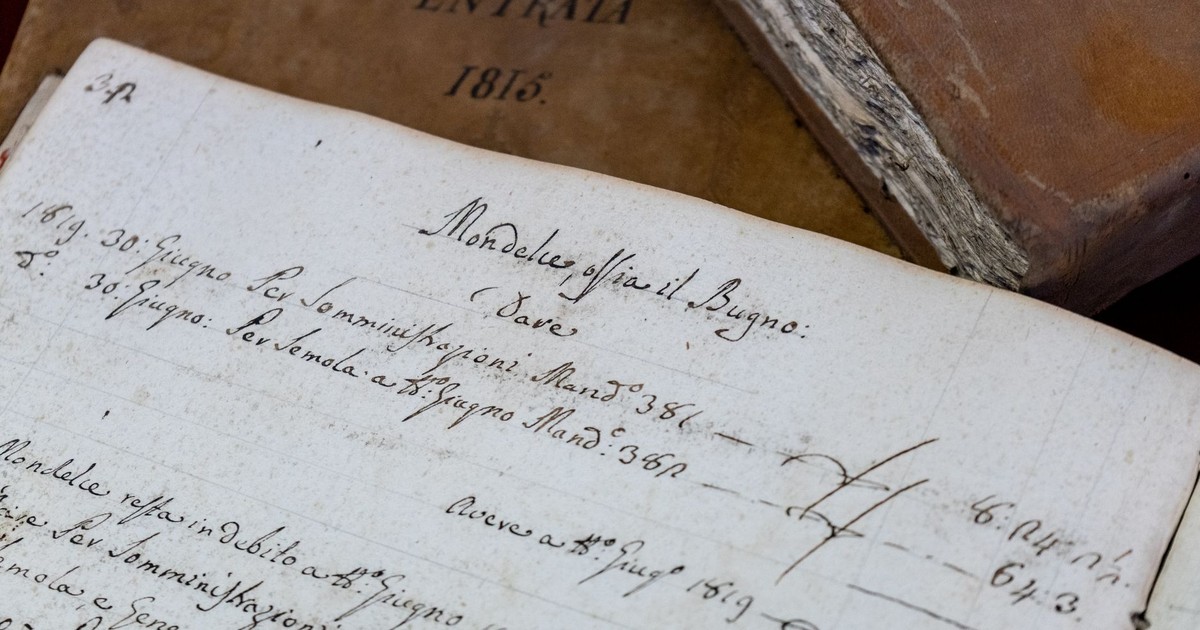
Each of these episodes sits within a broader pattern in Christian hoaxes history – and the pattern isn’t really about greed or even cynicism. The forger of the Donation of Constantine understood that the medieval Church needed a document, not a miracle, to consolidate its territorial claims. The creators of the Shroud understood that pilgrims needed an object. Hull understood that biblical literalists needed a body. The architects of the Protocols understood that a frightened population needed an enemy with a face.
What all of them correctly read was the gap between belief and evidence – and the lengths to which people will go, or be led, to close it. That’s not a critique of faith as such. People across centuries have sought tangible confirmation of what they hold spiritually true, and forgers across centuries have known how to offer it to them at the right price, whether that price was money, political allegiance, or the persecution of others.
You can find writing on the psychology of belief and deception across the history of religion, and the thread running through each of these stories is consistent: the forgery didn’t create the belief. It fed something that was already there.
Read More: 8 Notorious ‘History Facts’ Most People Believe to Be True But Are Completely Made Up
What History Actually Teaches Us Here
The exposure of a hoax rarely destroys it. The Donation of Constantine was proven false in 1440, and the Church kept using it for 160 more years. The Shroud of Turin was publicly denounced by the Bishop of Troyes in 1389 and remains in a cathedral in Turin today, drawing pilgrims from around the world. The Protocols were exposed in The Times in 1921 and are still circulating in 2026. George Hull confessed to the Cardiff Giant scam within months of its “discovery,” and a crowd still gathered to watch the confession.
That persistence says something important about how forgeries function in communities of belief. A document or an object isn’t just information. It’s a focal point for identity, for community, for the feeling of being confirmed in what you already hold to be true. Stripping away the document doesn’t strip away those things. The Donation of Constantine wasn’t just about Constantine. It was about the legitimacy of an institution, the security of a worldview, the stakes of an entire civilization organized around religious authority. Telling people the paperwork was faked doesn’t make those stakes feel any smaller.
Some of these hoaxes caused embarrassment. One of them provided cover for genocide. The Cardiff Giant is a great story; the Protocols are a horror. Both are forgeries. The difference between them isn’t the technique of fabrication. It’s the hatred, or the absence of it, embedded in the intent. And in the case of the Protocols, that hatred was not incidental to the forgery – it was the point of it. The document was a tool for persecution dressed up in the language of secret conspiracy, and it worked precisely because the audience for it was already primed to believe that Jews were a threat. The forger didn’t invent that fear. He just gave it a cover story.
That’s the thing that connects all four of these cases, across centuries and across very different stakes. Forgers don’t create belief out of nothing. They build on ground that is already prepared – by institutions hungry for legitimacy, by pilgrims hungry for proof, by populations hungry for an explanation. Knowing that doesn’t make the forgeries less damaging. But it does make clear where the real work of prevention lies: not in exposing the documents after the fact, but in understanding why the ground was so ready to receive them.
AI Disclaimer: This article was created with the assistance of AI tools and reviewed by a human editor.