
Most of us spend a fair amount of time thinking about what we put into our bodies. The food we eat, the water we drink, the supplements we take. What we don’t tend to think about is what’s getting in without our permission – and doing so quietly, steadily, for years.
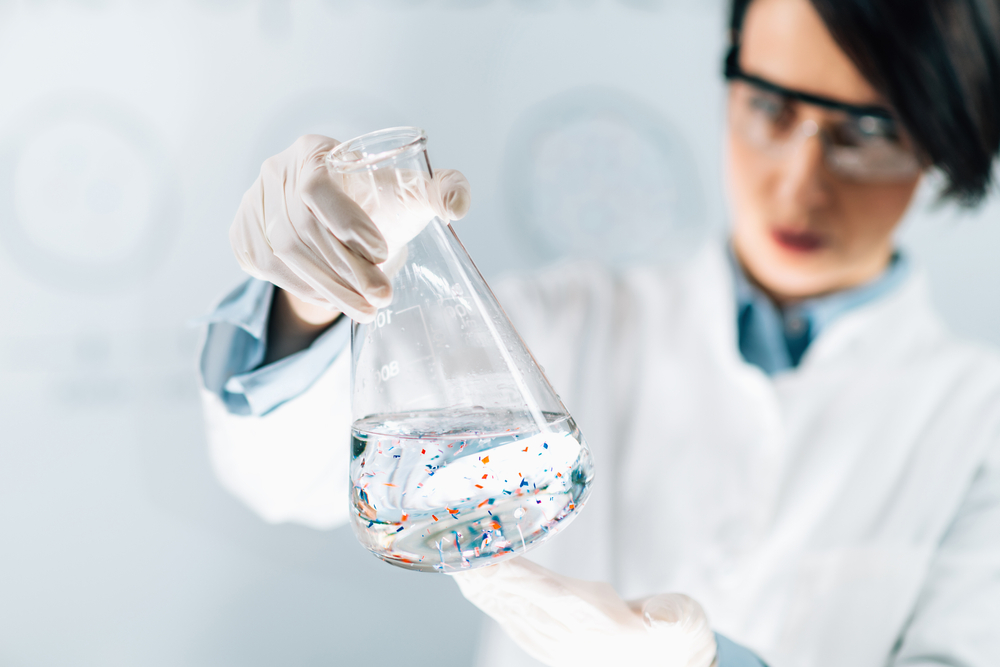
Microplastics are everywhere now. In the ocean. In the soil. In the air you breathe on a Tuesday morning in a mid-sized American city with no industry nearby. Scientists have been finding them in human blood, lungs, liver, and placentas for some time. But what happened in early 2025 crossed a line that researchers hadn’t expected to cross quite so soon: plastic particles turned up inside human brain tissue.
Not in trace amounts. Not as a footnote. In quantities that, when the lead researcher was asked to describe them, prompted him to say he never would have imagined it, and was not comfortable with what he found.
What the Science Actually Found
Researchers used multiple methods to confirm the presence of microplastics and nanoplastics in human kidney, liver, and brain tissue. The particles found in these organs consisted primarily of polyethylene, with smaller but significant concentrations of other plastic types.
The team from the University of New Mexico analyzed postmortem samples from 52 human brains, including 28 autopsied in 2016 and 24 from 2024. They found microplastics in every single brain sample – and a 50 percent higher concentration in the 2024 samples than in those from 2016. The brain also contained higher levels than other organs like the kidney and liver.
The New Lede reported that the median concentration in brain samples from people who died in 2024 was nearly 5,000 micrograms of plastic per gram of brain tissue, adding up to almost 0.5 percent by weight. That total was 50 percent higher than it was in brain samples acquired just eight years earlier in 2016. To put that in physical terms: the 2024 samples held about 7 grams of microplastics – the equivalent of a plastic spoon in weight.
Brain tissues harbored higher proportions of polyethylene compared to the liver or kidney, and electron microscopy confirmed that the brain particles present were largely nanoscale shard-like fragments – meaning the smallest, most penetrating type of plastic particle, not the kind you can see with the naked eye.
The study, published in Nature Medicine, which has been the subject of scientific controversy, with numerous critical comments published, was also notable for what it showed about dementia. Brain tissue from people who had been diagnosed with dementia had up to 10 times as much plastic in their brains as everyone else. The lead researcher was careful to flag that correlation is not causation – he emphasized that a causal relationship cannot be established yet, in part because the brain’s normal clearance mechanisms are often impaired in dementia. So did the plastic contribute to the dementia, or did the dementia simply mean less plastic was being cleared? Nobody knows yet. But the question of whether long-term microplastic exposure could exacerbate neurodegenerative disease is now one researchers are actively working to answer.
How Plastic Gets Into the Brain
The blood-brain barrier is one of the body’s most sophisticated defense systems. Think of it as a very selective bouncer for your brain: it lets in glucose and oxygen, and keeps out pathogens and most toxins. The discovery that plastic particles are getting through it has been a significant moment for neuroscience.
The study confirms that these bits of plastic can cross the blood-brain barrier, which is the protective membrane that helps regulate what molecules enter the brain from circulating blood. Research has demonstrated that these particles can cross critical biological barriers, including the blood-brain barrier and the placenta, gaining access to the central nervous system, influenced by factors such as particle size, charge, and the particle’s surface properties.
Microplastics enter the body through three main routes: swallowing them in food and water, breathing them in from indoor and outdoor air, and absorbing them through contact with personal care products. Of these, ingestion accounts for the largest share. Once they’re in the bloodstream, the smallest particles – nanoplastics, which are tinier than one micron, or about one hundredth the width of a human hair – appear to be the ones making it all the way to the brain.
Once present, these particles trigger multiple detrimental pathways, including oxidative stress (a kind of cellular damage caused by unstable molecules), persistent neuroinflammation, mitochondrial dysfunction that leads to energy deficits, disruption of neurotransmitter systems, and direct neuronal damage. Again, much of this comes from lab studies and animal models, not from human clinical trials. The honest scientific position right now is: we know the plastic is there, and we know it’s capable of causing harm. Whether it’s actively causing harm at the concentrations currently found in human brains remains under investigation.
More than half of all plastic ever made has been made since 2002, and production is on track to double by 2040 – which makes the 50 percent jump in brain concentrations between 2016 and 2024 feel less like a surprise and more like an inevitability. The accumulation in our bodies mirrors what’s happening in the environment around us.
The Kitchen Is the Easiest Place to Start
The good news – and there is genuine good news here – is that most of the significant sources of microplastic exposure in daily life are things you have direct control over. The kitchen, specifically, is where small habit changes add up.
The single most impactful thing most people can do involves the microwave. Microwaving food in plastic containers is one of the most concentrated sources of microplastic exposure you’ll encounter. According to ScienceInsights, a single square centimeter of plastic container can release up to 4.22 million microplastic particles and 2.11 billion nanoplastic particles after just three minutes of microwave heating. Even containers labeled microwave-safe are not free from this problem. The fix is straightforward: transfer food to glass or ceramic before reheating.
Storage matters too. Beyond Plastics recommends switching away from plastic containers and plastic cling wrap to glass, metal, or ceramic food storage containers to reduce your daily exposure meaningfully. Replacing plastic cutting boards with wooden or bamboo ones is another practical step – plastic boards shed particles every time a knife drags across them, especially as they age and develop grooves.
Drinking water is the other big lever. Bottled water consistently contains more microplastics than tap water, largely because plastic bottles shed particles during storage and transport. Installing a home water filter – especially systems that use reverse osmosis or activated carbon – may help reduce the presence of microplastics. A stainless steel or glass bottle refilled from filtered tap water beats a plastic bottle on every measure.
A growing body of evidence suggests that microplastics can harm our health, in particular the digestive, reproductive, and respiratory systems, and that nanoplastics may be even more harmful. While you can’t completely avoid microplastics, there are actions you can take to reduce the amount you’re exposed to every day.
Reducing Exposure When You Travel
Travel is where most good habits quietly fall apart. You’re in airports, hotels, unfamiliar cities, grabbing food from whoever has it. The plastic exposure that comes with traveling – from the bottled water on the nightstand, to the single-use cups at the hotel coffee station, to the takeout containers piling up in your room – is real and worth thinking about without becoming obsessive about it.
The most practical travel habit is also the simplest: bring your own water bottle. A good stainless steel bottle means you never need to buy a plastic one, whether you’re in a hotel, an airport, or a street market in another country. Most airports and many hotels now have filtered water refill stations. Use them. The airport coffee in the paper cup with the plastic lid delivers plastic particles into your drink; the same coffee in your own steel travel mug does not.
When it comes to food, the wrapping matters as much as the food itself. Takeout in styrofoam, hot food in plastic clamshell containers, coffee in paper cups lined with plastic – all types of disposable cups tested so far, including paper cups lined with plastic, have been found to release microplastics into the beverages they contain, with more released when the beverage is hot. Transferring food out of plastic or foam packaging before eating, wherever possible, reduces how much ends up in your meal.
Hotel rooms present their own low-hanging fruit. The tiny plastic-wrapped toiletries, the plastic cups by the sink, the single-use plastic kettle cups – none of these are essential. Packing a small bag with your own toiletries in reusable containers cuts your plastic exposure and your waste simultaneously. If a hotel offers a refillable glass water carafe, use it instead of the mini plastic bottles.
Airports specifically are plastic environments, from the shrink-wrapped sandwiches to the plastic cutlery in the terminal food halls. Eating before you fly, or packing food in a reusable container, sounds fussy until you consider what you’re actually avoiding. Eating fresh, minimally packaged food – at local markets, independent restaurants, places that use less imported, heavily packaged produce – generally means less plastic contact. It’s also usually better food.
What’s Not Worth Panicking About
The instinct, when confronted with research like this, is to feel like the world has become irredeemably contaminated and nothing you do makes any difference. That’s understandable. It’s also not quite right.
The science on microplastics in the brain is new and still being debated. The German Federal Institute for Risk Assessment concluded that the study is noteworthy in terms of topicality and novelty, but that it has methodological weaknesses regarding sample preparation and detection. That’s a legitimate scientific caution, not a dismissal – it means more rigorous work is needed, not that the findings are meaningless. Scientists consistently emphasize that there is still much we don’t know. Finding plastics in the body does not automatically mean they are directly causing disease, and many long-term effects are still being studied.
The microplastic problem is also not a problem any individual person created. Individuals can make simple changes today, but ultimately, we need smart policies that curb our society’s dependence on plastic and favor safer materials to lower exposures linked to health concerns, as researchers at NYU Langone have put it. The burden isn’t yours alone to carry.
The Quiet Part
The thing about microplastics is that they don’t announce themselves. They don’t taste like anything, don’t make you feel sick the day they arrive. They accumulate slowly, invisibly, in the same organs you’re counting on to keep you upright and thinking clearly for the next several decades. And the evidence that they’re in all of us, and increasing, is now beyond dispute.
That’s uncomfortable to sit with. The honest response to discomfort like this is not to catastrophize and not to dismiss – it’s to make the changes that are actually within reach and let the rest go. Switch your food storage to glass. Stop microwaving in plastic. Carry a bottle you refill. Choose restaurants that don’t serve in styrofoam. These aren’t dramatic lifestyle overhauls. They’re small recalibrations that reduce a real exposure, repeated across years.
You can’t undo the plastic that’s already in you. Nobody can. But you can meaningfully change the rate at which more arrives. That turns out to be exactly what the research supports – not perfection, just a consistent reduction in the highest-exposure habits you already have.
AI Disclaimer: This article was created with the assistance of AI tools and reviewed by a human editor.