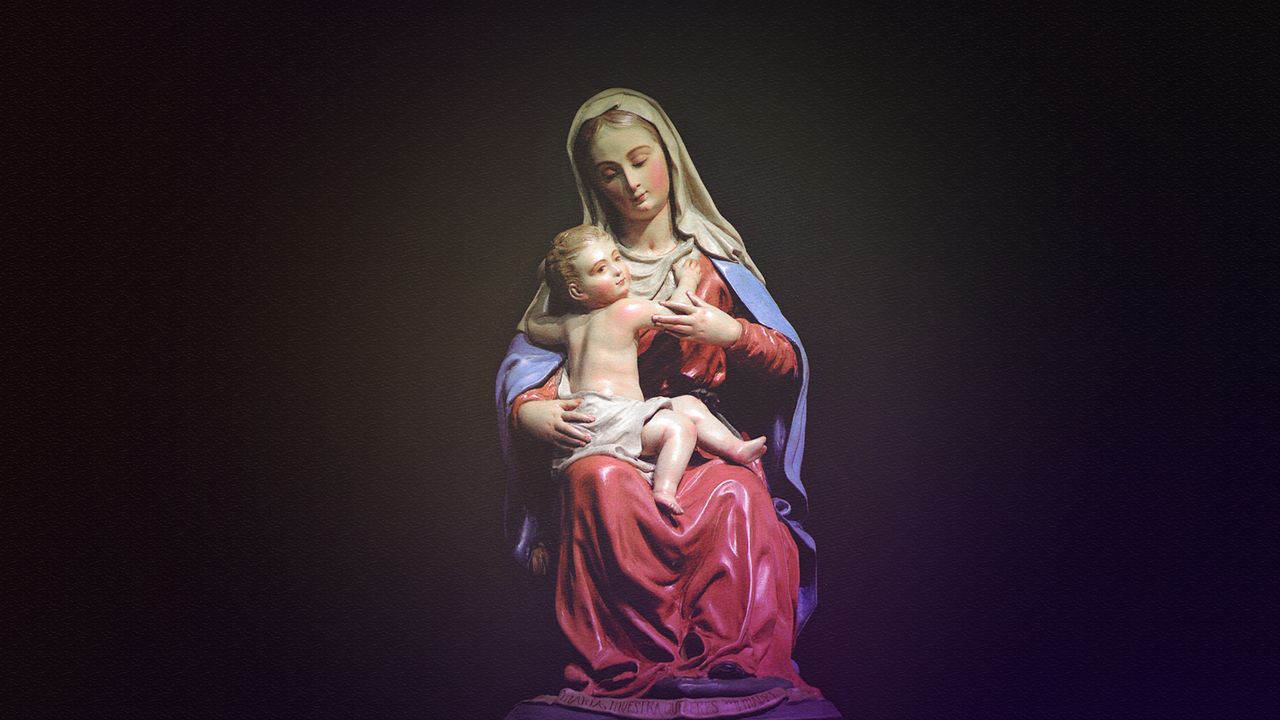

The real name Mary was given at birth – Miriam, in Aramaic – is one of those details that gets lost almost immediately in the telling. Through the centuries, the story of the woman whose real name was Miriam has changed the world. And yet for all the cathedrals raised in her name, all the Pietàs and gilded mosaics, the flesh-and-blood woman underneath remains startlingly hard to see. The icons multiplied for two thousand years. The facts did not keep pace.
That gap between the image and the person is not accidental. From Michelangelo’s Pietà to the gilded mosaics of Byzantium, she is most often depicted as serene, youthful, and eternally pure – yet behind the halo and icons lies a very different woman, one whose flesh-and-blood life has been obscured by centuries of theological patina. Peel that back, and you find something more interesting than the icon: a teenage girl in a Roman-occupied village, navigating one of the most dangerous situations a woman of her time could face, with no guarantee of how it would end.
What historians and archaeologists can actually confirm about Mary, mother of Jesus, is both less and more than the tradition suggests. Less, because the documentary record is thin almost to the point of vanishing. More, because the fragments that do survive, read carefully and in context, sketch out a life of genuine consequence – a woman who outlasted her son’s execution, held a fractured movement together, and was then, over the centuries, systematically remade into something she almost certainly was not.
A Name Lost in Translation
Mary of Nazareth, the mother of Jesus Christ, is one of the most venerated women from the ancient world. But the woman venerated across centuries of Christianity bore a different name in daily life. Miriam – a common Jewish name in first-century Galilee – became Mary through layers of translation: first into Greek, then into Latin, then into the European vernaculars that carried the Gospels westward. By the time the name solidified in Western tradition, the Galilean girl had already become something more stylized than historical.
Archaeological excavations of first-century Nazareth have revealed that there were approximately 100 homes there during Jesus’s lifetime. That number tells you something important. Nazareth was not a town in any meaningful sense. It was a hamlet – a cluster of families who would have known each other’s business completely. Mary grew up in a place where privacy barely existed, where reputation was communal property, and where the rules governing women’s lives were enforced not by distant authorities but by the neighbors watching from the next courtyard.
There is no historical record of Mary as the mother of Jesus outside the Christian scriptures. Given her residence in a hamlet in Judea’s farming region, she was not likely from a wealthy or influential urban family with the means to record their ancestry. The Romans, who documented their own world obsessively, kept poor records of the peoples they governed. A peasant woman in occupied Galilee would not have warranted a line in any administrative register. She existed below the threshold of official notice.
What the Texts Actually Say
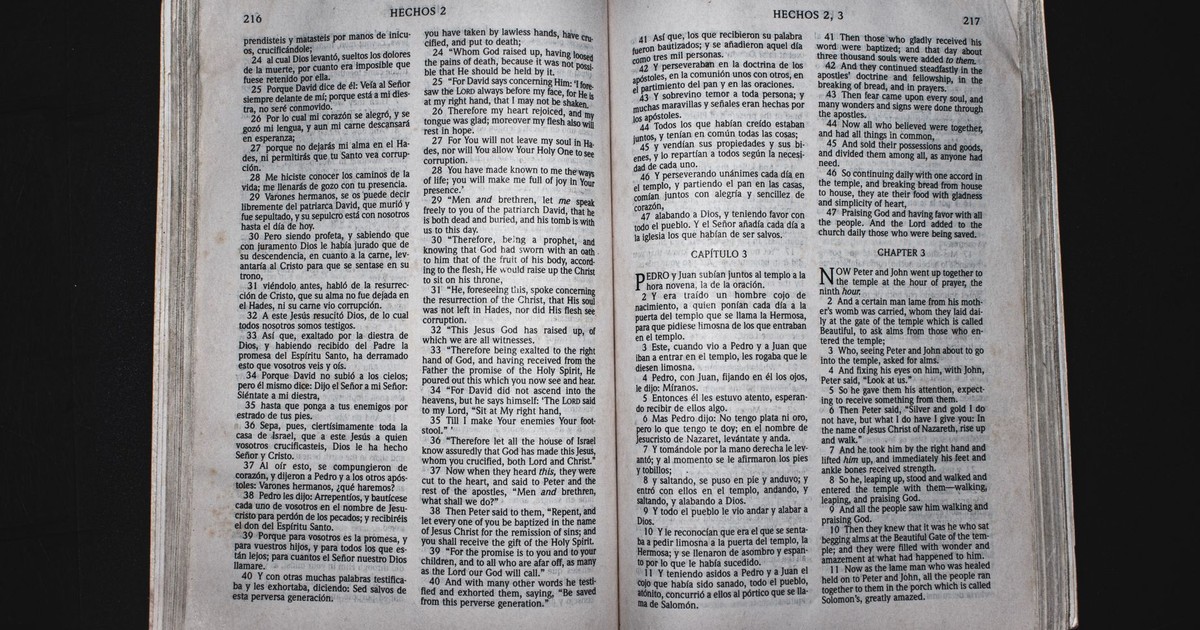
The earliest source for Christianity is the letters of Paul the Apostle. Written before the canonical Gospels, Paul did not name her. There is only: “But when the fullness of time had come, God sent his son, born of a woman, born under the law.” That single phrase – “born of a woman” – is all the first generation of Christian writing gives us. No name. No location. No story. The woman who would become the most depicted figure in Western art gets one anonymous clause in Paul’s letter to the Galatians.
The Gospels of Mark, Matthew, Luke, and John, written between roughly 70 and 100 CE, are our principal sources for Mary. And even there, her presence is uneven. The Gospel of Mark – the earliest, and in most scholars’ view the most historically grounded – opens with the adult Jesus beginning his ministry. Mary appears briefly, and not always flatteringly. In one scene, her family comes to collect Jesus, apparently believing he has lost his mind. The crowd tells him his mother and brothers are outside. He responds by gesturing to the people around him and saying they are his family.
Scholars today think that Mary’s ancestry may be recorded, indirectly, in the genealogy given for Jesus in Luke 3:23-38 – mainly because the account there doesn’t match Joseph’s heritage as listed in Matthew 1:2-16. If the Lukan genealogy traces Mary’s line rather than Joseph’s, it suggests she came from the tribe of Judah. But this is inference, not documentation.
The World She Lived In
To understand what Mary’s life actually looked like, the religious drama has to be set aside for a moment and replaced with the social reality of first-century Jewish Galilee. The adage “you marry the family” was even more true in Mary and Joseph’s time than today. In the first century, marriages were transactional unions between families. Children did not choose their spouses; parents would arrange marriages on behalf of their children.
Scholars summarize first-century Jewish practice as favoring betrothal soon after puberty, commonly placing girls between 12 and 15 at the time of betrothal and first pregnancy. That means Mary was almost certainly a young teenager when the events described in the Gospels began. Not the serene blue-robed figure of Renaissance painting, but a girl who had barely entered adulthood by the standards of any era, navigating a pregnancy that, under the law of her community, carried mortal risk.
As Joseph’s betrothed, Mary risked being charged with adultery for conceiving a child – she could legally have been stoned to death. Only Joseph’s decision to marry her and legally accept her child as his own saved Mary from an adulteress’s fate. Whatever one makes of the theological dimension of the nativity story, the social dimension is stark. A pregnant, unmarried woman in Nazareth in the first century BCE had very few options. The fact that she survived, and that her child survived with her, required someone – Joseph – to take a significant personal and social risk on her behalf.
Sepphoris, the capital of Galilee, doesn’t appear in the New Testament, yet it is a vital key for understanding Mary’s origins and background. Located just a few miles from Nazareth, it was the region’s hub of commerce and government – the city that shaped the economic and cultural world that Mary and her family inhabited. Some scholars argue, based on the tradition that her parents Joachim and Anna came from Sepphoris, that Mary herself may have been born there before the family relocated. Tradition holds that Jesus’s grandparents, Joachim and Anna, parents of Mary, were from Sepphoris. If that is correct, Mary was not simply a village girl – she had roots in a cosmopolitan regional capital.
The Archaeology of an Ordinary Life
Despite the Annunciation’s importance in the faith, early Christian texts give “few concrete details about where the event occurred,” according to James D. Tabor, retired professor of religious studies at the University of North Carolina at Charlotte. That absence of precision is, itself, historically telling. The earliest Christians were not compiling a tourist guide. The stories were theological, not geographical.
Generations of pilgrims have long visited two different sites in Nazareth where they believe the Annunciation happened: a cave where Mary supposedly lived and a well she likely used. Biblical archaeologists have examined these sites hoping for evidence that dates to the time of the Annunciation, opening the door to the possibility that Mary had been there.
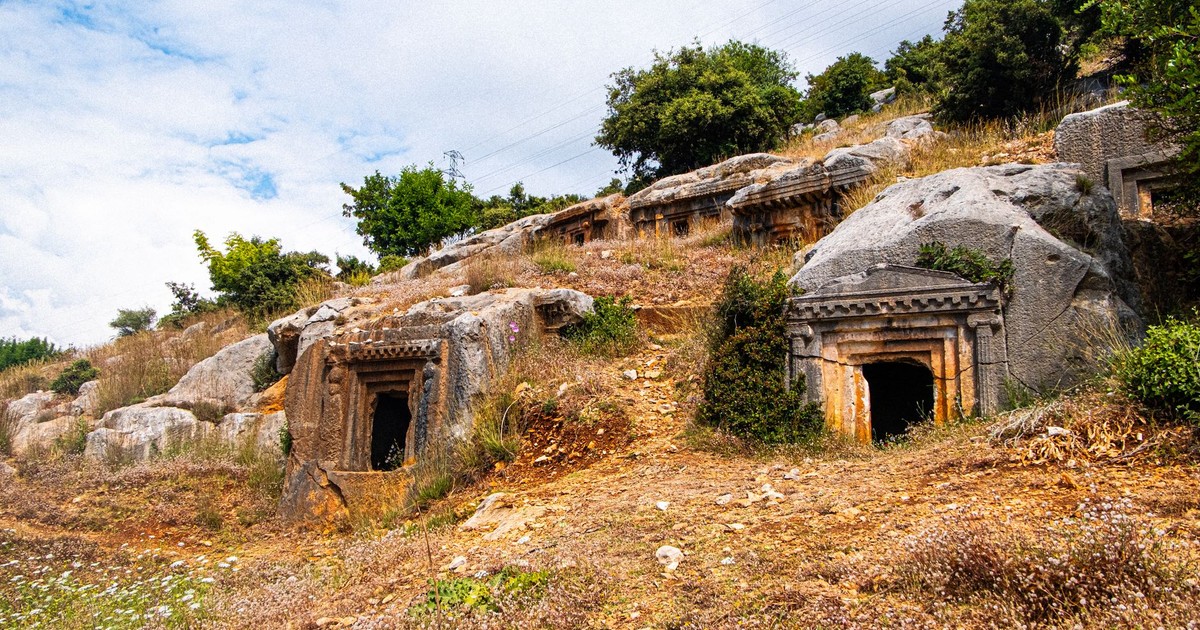
Archaeologists have uncovered the remains of what appears to be a first-century AD domestic building, most likely a courtyard house, under a convent three hundred feet north of the traditional Annunciation site. Whether Mary or her family ever occupied that specific building is impossible to say. But the structure tells us what domestic life in first-century Nazareth looked like for ordinary families: small, shared, built around a central courtyard, with livestock and people in close proximity. Nothing about it suggests comfort or privacy.
These excavations have given researchers a deeper understanding of ancient Nazareth, how early Christians venerated Mary, and the religious experiences of pilgrims – if not a definitive answer about the location of the Annunciation. The archaeology, in other words, confirms the world she inhabited without confirming the details of her particular story.
After the Crucifixion
One of the more contested questions in the historical record concerns where Mary was when Jesus died. The historical truth is that it is most unlikely that Mary was present in Jerusalem when Jesus died. His death was unexpected and sudden, and she could not have known it was about to happen. She was almost certainly in Galilee at the time – not standing at the foot of the cross. She was, after all, in her late forties by then, and the journey from Galilee to Jerusalem and back was arduous, covering 80 to 90 miles.
Of the four Gospel accounts of Jesus’s death, only one suggests that Mary was there. Scholars acknowledge that the three Gospels that do not include Mary at the crucifixion are the most historically accurate – and they name the women who were present, but Mary’s name is not among them. The Gospel of John, which is the latest of the four and the most theologically shaped, is the only account that places her at the foot of the cross. The scene there is charged with symbolism: Jesus entrusts his mother to the care of the Beloved Disciple. It reads, to historians, more like a theological statement about community and inheritance than a straightforward eyewitness report.
What followed the crucifixion is equally unclear. An early Christian tradition holds that John later came to Ephesus, where he worked and died, and that he brought his adopted mother with him. These hints provided the basis for the belief that Mary also lived in Ephesus with John. But the evidence that Mary actually stayed in Ephesus is not very strong, and there are stronger indications that her permanent home was in Jerusalem.
Read More: Jesus never went by “Jesus.” Historians claim. What he was really called
Across Faiths
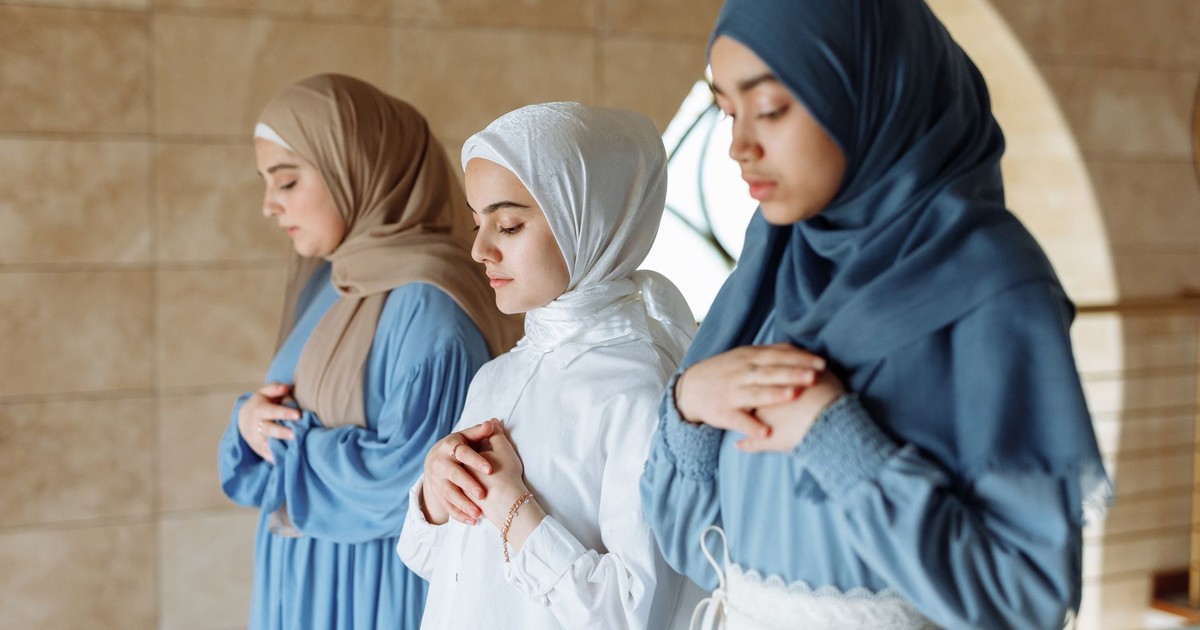
Mary is celebrated by Eastern Orthodox Churches, Catholicism, and various Protestant denominations as “the mother of God.” In Islam, the nineteenth surah of the Quran) – the Surah of Maryam – is devoted entirely to her. That breadth of veneration is remarkable for a woman about whom the surviving historical record is so thin. She is the only woman to have an entire chapter of the Quran named for her, and her standing in Islam is formally higher than that of any other woman in the faith’s tradition.
Mary holds the highest position in Islam among all women and is mentioned numerous times in the Quran, including in a chapter named after her. The Quranic Mary is not quite the same figure as the Christian Mary – the theology differs – but the reverence is comparable, and the core of the story (a chosen woman, a miraculous conception, a son of profound importance) is shared. That convergence across two of the world’s largest religions, based on such fragmentary original evidence, is itself a historical fact worth sitting with.
What This Actually Means
The distance between what we know about Mary, mother of Jesus, and what has been built in her name is perhaps the most striking thing about her story. Two millennia of art, theology, devotion, and institutional religion rest on a foundation that can be summarized in a handful of verified fragments: a young Jewish woman from a small Galilean village, probably in her mid-teens when her first son was born, who lived through Roman occupation, survived her son’s execution, and continued to be present in the early movement his followers built. She bore children, lost a husband, walked the roads of a land under military occupation, and outlived something no parent is supposed to outlive.
The image that replaced her – serene, ageless, divinely distant – was not a distortion born of malice. It was built by people trying to communicate something they found true and profound. But it did come at a cost. The harder, more specific version of her life – a teenage girl taking a risk that could have killed her, in a hamlet where everyone knew everyone’s business, watched over by a man who chose to protect her when he didn’t have to – is actually more arresting than the icon. It doesn’t need the gold leaf. It stands up without it.
Some of the silence around her is simply the silence of history. Peasant women in occupied territories don’t leave records. But some of it is something else: the systematic replacement of a complicated human being with a symbol that was easier to use. The symbol spread. The person receded. What archaeology and scholarship keep finding, dig by dig and text by text, is that she was there – in a courtyard house in Nazareth, in a world that was brutal and specific and nothing like a painting.
AI Disclaimer: This article was created with the assistance of AI tools and reviewed by a human editor.