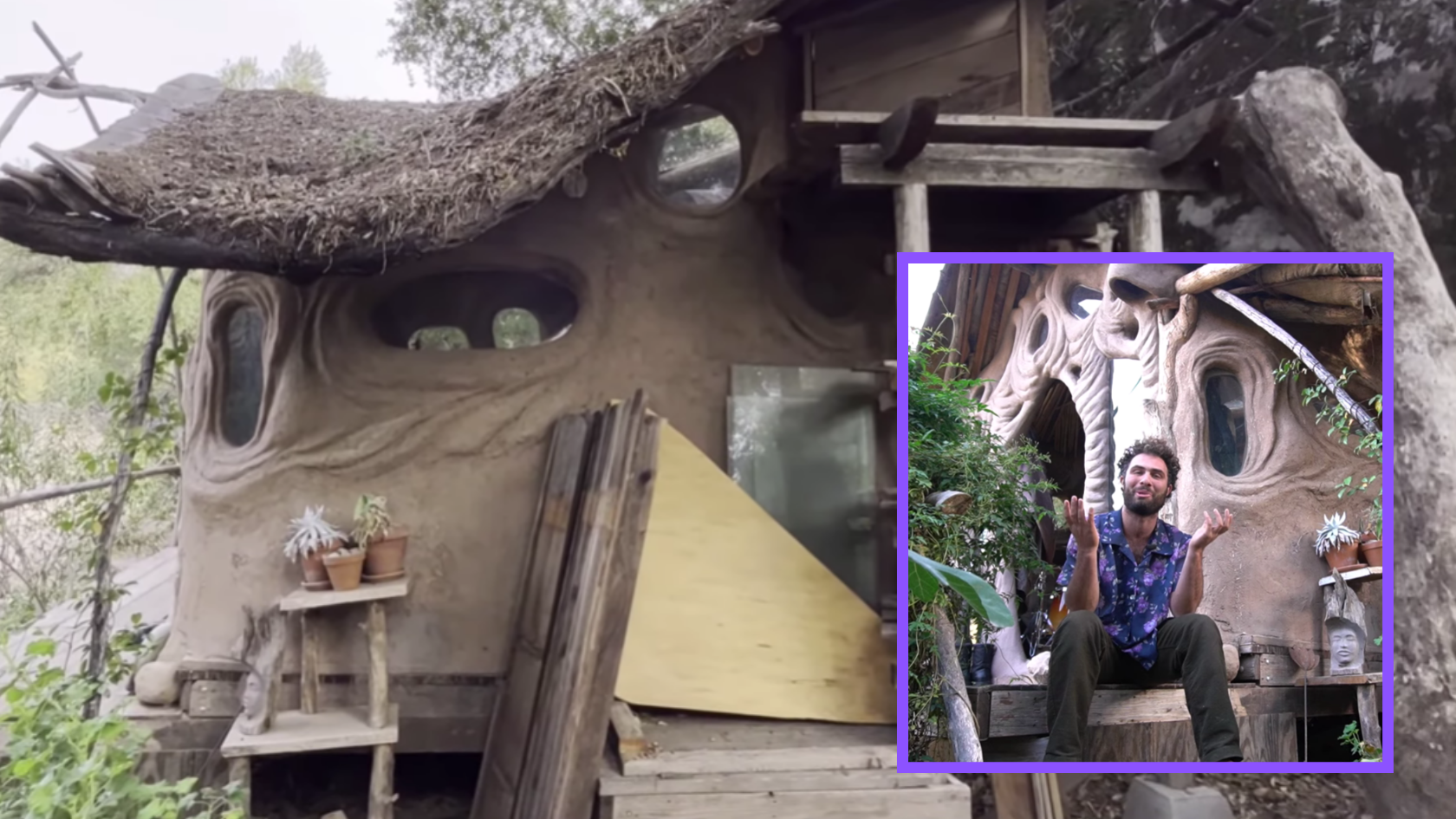

For most people, the words “affordable home” barely mean anything anymore. Housing costs are so high in so many places that even modest spaces can come with years of financial pressure attached. That is why a handmade cob home built for about $200 feels so striking. It cuts straight across the idea that a house has to begin with debt. In Sage Stoneman’s case, the low cash cost came from using free materials found on the property, reclaimed wood, and secondhand glass, while the only items he paid for were small basics like screws, glue, and silicone.
What stands out about this home is not just the number. It is the way the place was built around need rather than excess. The house gives him room for the things that matter to him, including music-making and writing, without dragging a mortgage into every part of daily life. He built it in California and shaped it to feel close to the land, with organic forms that echo the natural world around it. The result is a home that feels less like a financial product and more like a place to live. That difference is what gives the house its weight. It is small in cash cost, but large in what it represents.
Cob Gives The House Its Character
Cob is one of those materials that sounds almost too simple to be taken seriously until you see what it can do. At its core, cob is an earthen mix built from natural ingredients, commonly clay, sand, and straw. Sage Stoneman’s home uses cob in a way that highlights exactly why the material still draws attention today. It allows for rounded walls, curved lines, and shapes that feel softer and more alive than the straight edges people usually associate with housing. The home does not try to copy a conventional suburban design on a smaller budget. It follows a completely different visual language.
That matters because the structure is not only practical. It is expressive. Stoneman has described the design as a reflection of nature, and that comes through in the flowing shapes and the general feel of the space. Natural building often attracts people for environmental reasons, but the look and feel matter too. Cob can create homes that feel warm, personal, and shaped by the hands that made them. Instead of polished sameness, you get texture, curves, and a more direct relationship between material and maker, in a housing world full of standard boxes, which alone can make a place feel different before you even think about money.
The $200 Cost Came Down To Materials, Ingenuity, And Labor
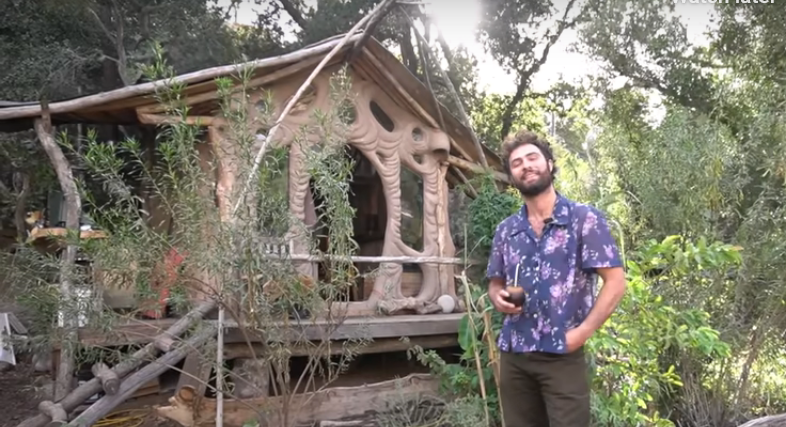
The most important thing to understand about the $200 figure is that it was not the result of some secret discount or miracle building hack. It came from a very specific setup. The cob and wood used in the house were free because they came from the property itself. The windows used secondhand glass. Additional wood was reclaimed from construction waste tied to other projects. The money that actually left his pocket covered a short list of purchased items: screws, glue, and silicone.
That kind of building requires a level of resourcefulness most people are not used to seeing in modern housing. Instead of starting with a shopping list for brand-new materials, the process began with what was already there and what could be recovered from elsewhere. It also depended on his own labor. A house like this does not appear because someone signs papers and hires a crew to handle the rest. It comes together because the builder is willing to shape the materials, solve problems, and spend real time making the structure livable. That does not make the home less impressive. It makes it more so. The price only makes sense once you factor in the work, creativity, and willingness to build outside the standard system.
Debt-Free Living Changes The Feel Of Everyday Life
A home without rent or a mortgage changes more than a monthly budget. It changes how a person experiences work, time, and pressure. When housing is not the biggest bill in the room, the rest of life can open up in ways that are hard to overstate. Stoneman’s cob home allows him to live debt-free, which is one of the central facts repeated across coverage of the house. That one detail reshapes the whole picture.
For many people, home ownership is supposed to feel like security, but in practice, it can feel like a decades-long financial obligation. A debt-free home flips that equation. Instead of the house demanding constant income to justify its existence, it gives something back right away, breathing room. That can mean more flexibility in work choices, less background stress, and a stronger sense that life is not permanently tied to a bank. It does not mean there are no costs at all. Land, upkeep, and basic living expenses still exist. But removing the biggest recurring burden changes the tone of daily life. It can make a person feel less trapped, less rushed, and more able to build a life around what matters rather than what must be paid next.
The Home Was Built To Support A Certain Kind Of Life
This house is easy to misunderstand if you only look at the price. It is not just a cheap structure. It is a home shaped around a very clear set of values. Stoneman has said he lives this way because it supports his mental, emotional, physical, and spiritual health. That makes the house feel less like a novelty and more like an extension of how he wants to live.
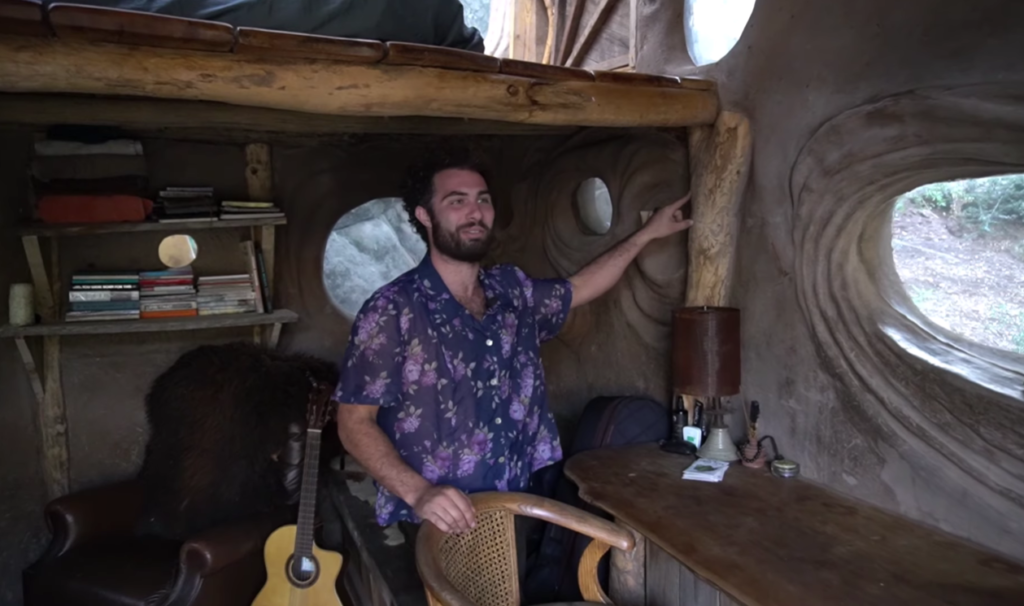
The interior is described as having enough room for his essential pursuits, including music-making and writing. That phrase matters, “essential pursuits.” The house is not trying to contain everything a modern consumer lifestyle might demand. It is built around what he actually needs. That is a very different starting point from the one many people are given. Instead of asking how much house can be packed into a budget, this kind of approach asks what space is truly necessary for a meaningful life. The answer, in this case, is far smaller and far more intentional than many people expect. That does not make the home lesser. It makes it specific, and that specificity is part of its strength.
Reclaimed Materials Give The House Another Layer Of Meaning
There is something powerful about a house built partly from what other people left behind. In this home, secondhand glass and reclaimed wood were not backup options. They were part of the plan. Construction waste from other projects became building material instead of landfill. That choice helped keep the cash cost down, but it also gave the house a deeper sense of character.
New materials can make a build look uniform and polished, but reclaimed pieces tend to carry more story in them. They come with imperfections, variations, and signs of earlier use. In a home like this, those details do not feel like flaws. They feel honest. The materials are doing what a natural home should do, showing their age, origin, and texture rather than hiding it. There is also a practical intelligence in using what already exists. Housing is often treated as though every project must start from scratch with brand-new components. This build suggests another route. By reclaiming materials and pairing them with natural resources from the land, the home becomes more than cheap. It becomes a kind of conversation between place, waste, and need.
The Design Feels More Organic Than Conventional
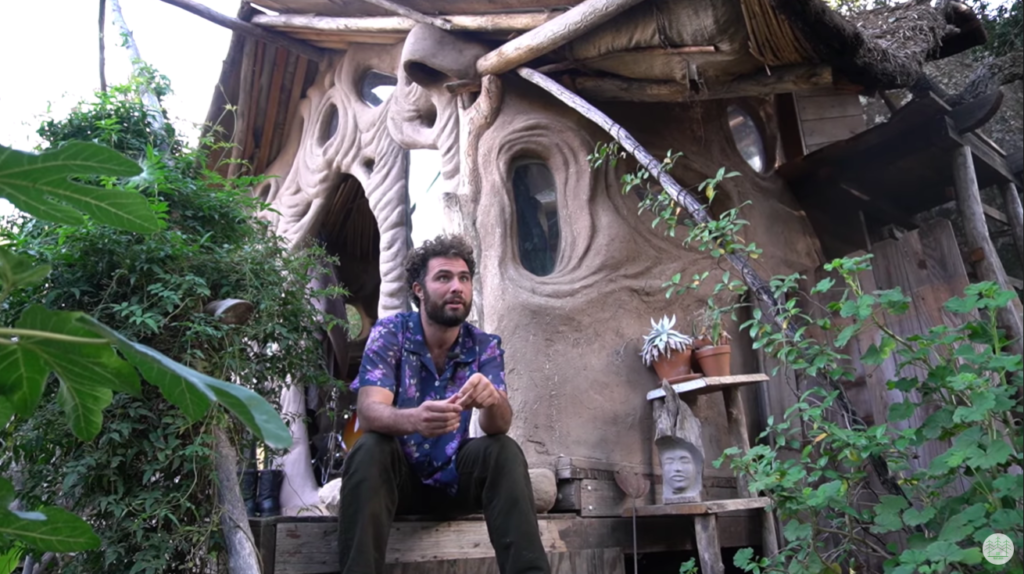
One reason so many people are drawn to cob homes is that they do not look like standard houses. Stoneman’s home was shaped to feel like a reflection of nature, and that comes through in the rounded forms and flowing design. He has spoken about liking organic shapes and finding them beautiful. The house does not seem interested in straight lines for their own sake. It feels almost grown rather than assembled.
That aesthetic choice matters because people often assume low-cost housing has to feel harsh, temporary, or stripped of personality. This home pushes back on that assumption. It is inexpensive in dollar terms, but it is not emotionally thin. It has mood, texture, and a sense of identity. That is part of what makes it memorable. It shows that affordability does not have to mean lifelessness. In fact, building by hand with earth-based materials can sometimes create spaces that feel more personal than much more expensive homes. There is a softness in rounded walls and irregular forms that changes how a room feels. It reminds you that shelter does not have to be standardized to be real.
Smaller Homes Ask Different Questions
A house like this naturally raises a bigger issue: how much space does a person actually need? Modern housing often treats size as proof of success. More rooms, more square footage, more storage, more upgrades. But the cob home points in the opposite direction. It suggests that enough can be enough. It gives space for living, creating, resting, and thinking without turning home into a huge financial machine.
That shift in scale changes how people relate to their space. A smaller home is usually easier to maintain. It asks less in utilities, less in furnishing, and less in cleaning. It can also make a person more honest about what they use and what they are storing out of habit. This is not about pretending everyone should want the same kind of home. It is about recognizing that many people have been trained to chase space they neither need nor truly enjoy maintaining. A home like this offers another view. It asks whether freedom, comfort, and beauty might matter more than size. For a lot of people, that is an uncomfortable question. It also happens to be a useful one.
Natural Building Is About Access As Much As Architecture
One of the most direct statements tied to this home is Stoneman’s belief that natural building and self-made homes should be accessible, and not just accessible, but guaranteed to all humans. That is a much bigger claim than simply saying cob houses are attractive or affordable. It places housing in the realm of human need rather than luxury or speculation.
That is part of why homes like this keep resonating. They point toward a version of shelter that is more direct and less filtered through finance. The materials are basic. The methods are hands-on. The structure meets a need without needing to become a lifelong payment plan. Of course, building codes, land access, climate, and skill all complicate how widely this approach can be adopted. But the principle behind it remains powerful. If a safe, meaningful living space can be created with earth, reclaimed materials, and labor, then the standard housing model begins to look less inevitable than people have been taught to believe. That idea alone can change how a person thinks about what a home is for.
This Kind Of Home Is Not Easily Replicated, But It Still Matters
It is important to be realistic. Most people are not going to build a fully livable home for $200. The conditions that made that possible here were unusually specific, free materials on the property, reclaimed resources, and a builder able and willing to do the work himself. Land costs alone would change the picture dramatically for many people. Local regulations could also make this kind of building much harder in some places.
Still, the fact that not everyone can copy it exactly does not make the example less useful. The value of the home is not only in its dollar figure. It is in the way it widens the imagination. It shows that housing can be handmade, small, earth-based, and far less expensive than mainstream assumptions suggest. Even if someone never builds a cob home themselves, they may come away questioning how much they need, how much they want to owe, and what kind of shelter actually fits their life. Those questions matter. They can shape choices far beyond natural building.
Why Homes Like This Keep Getting Attention
People are hungry for alternatives, especially when housing feels more out of reach every year. That is one reason this cob home keeps drawing interest. It is not only unusual. It speaks to a frustration many people already feel. The standard path to housing is expensive, rigid, and often deeply stressful. A house built with natural materials, reclaimed parts, and almost no cash offers a complete contrast to that model.
There is also the emotional pull of a place that looks handmade in the truest sense. This home does not feel mass-produced or financially engineered. It feels personal. It reflects its builder, its location, and its materials. That kind of authenticity is rare enough to stand out. In a world full of polished listings and inflated prices, a simple cob home can feel almost radical. Not because it is loud, but because it is quiet in all the right ways. It does not try to impress through scale. It impresses because it exists at all, and because it proves that another way of building a life is possible.
Final Thoughts
Sage Stoneman’s cob home shows what can happen when a person builds around need, freedom, and local materials instead of debt. The house cost about $200 out of pocket because the cob and wood were free on the property, the windows used secondhand glass, more wood came from construction waste, and the purchased supplies were limited to screws, glue, and silicone. That combination made the build unusually inexpensive, but the more important result is the life it supports.
The home provides room for the essentials, space to create, and a way of living that is not tied to a mortgage. It reflects nature in its design, uses reclaimed materials with intention, and shows how much shelter can change when it is approached as a human need first and a financial product second. Most people will not build this exact house. But that is not the only reason it matters. It matters because it pushes against the idea that home must always mean debt, stress, and decades of repayment. Sometimes it can also mean clay, reclaimed glass, simple tools, and a life with a little more room to breathe.
This article was created with the assistance of AI tools and reviewed by a human editor.