

No family in American history has lost so many of its own, so publicly, and across so many generations. The Kennedys produced a president, an attorney general, senators, ambassadors, and two men shot dead while their families watched. They buried sons who died in wars, daughters who never came home from plane trips, grandchildren who overdosed, and great-grandchildren taken by cancer in their thirties. Of the nine children of family patriarch Joseph P. Kennedy Sr., four died unnatural deaths – two were assassinated and two were killed in plane crashes – and two others endured devastating life events, including a lobotomy and a near-fatal accident.
After a car crash in 1969, Ted Kennedy, who had by that point lost four of his siblings prematurely, wondered if “some awful curse did actually hang over all the Kennedys.” He was the one who said it out loud, but almost every American old enough to remember was thinking it. The losses span eight decades, three generations, and nearly every category of tragedy imaginable: assassination, plane crash, overdose, drowning, cancer, suicide, stroke.
Thirty dark chapters from one family’s history follow below, starting where the losses did and ending where they haven’t stopped.
1. Rosemary Kennedy’s Lobotomy (1941)
In November 1941, a 23-year-old woman had her brain surgically altered while she was conscious, without her knowledge or consent, arranged by her own father. That is where the Kennedy family tragedies begin.
Rosemary Kennedy had begun experiencing violent mood swings and fits as she reached her early twenties, making her mental illness much harder to hide. Her father, Joseph Kennedy Sr., decided to arrange an experimental new procedure – a lobotomy – choosing not to inform his family until after it was complete. The surgeons were Dr. Walter Freeman and Dr. James Watts. The procedure was botched, leaving Rosemary with severe cognitive and physical impairments and removing her ability to walk or speak coherently. She spent the rest of her life in private institutions, hidden away as the family feared knowledge of her condition could damage their political ambitions.
Later assessments suggested Rosemary may have suffered from depression rather than an intellectual disability – meaning the surgery may have been performed on a woman who had a treatable condition. According to reports, her mother did not visit her for 20 years and her father never did. The lobotomy was not revealed to the public until 1987, when historian Doris Kearns Goodwin disclosed it in her book The Fitzgeralds and the Kennedys. Rosemary died in 2005 at age 86, having spent 64 years in an institution.
2. Joseph Kennedy Jr. Killed in WWII (1944)
The eldest son, Joseph Patrick Kennedy Jr., was expected to follow his father into politics and, perhaps, the presidency. Instead, he became the first sibling to die prematurely. In 1944, during a secret mission in World War II, his military aircraft exploded over England.
On August 12, 1944, while piloting a converted B-24 Liberator loaded with explosives on a top-secret drone mission, the explosives detonated prematurely before he and his co-pilot could bail out. The exact cause of the explosions was never determined. He was 29 years old. Upon hearing of his older brother’s death, John F. Kennedy, himself a wounded war hero, said, “Now the burden falls on me.” That burden would lead him to the White House – and to Dallas.
3. William Cavendish, Kick Kennedy’s Husband, Killed in Action (1944)
One month after Joe Jr.’s death, the family received a second devastating telegram. William Cavendish, Marquess of Hartington, newlywed husband of Kathleen Kennedy, was fatally shot by a German sniper while leading his company in Belgium.
Kathleen “Kick” Kennedy had defied her deeply Catholic family by marrying Cavendish, a Protestant, on May 6, 1944. The family, including her mother Rose, refused to attend the wedding. Cavendish was killed on September 10, 1944, approximately four months after the wedding. Kick was widowed at 24, having already been estranged from her family over the marriage. She never remarried, and would follow him into death just four years later.
4. Kathleen “Kick” Kennedy Dies in a Plane Crash (1948)
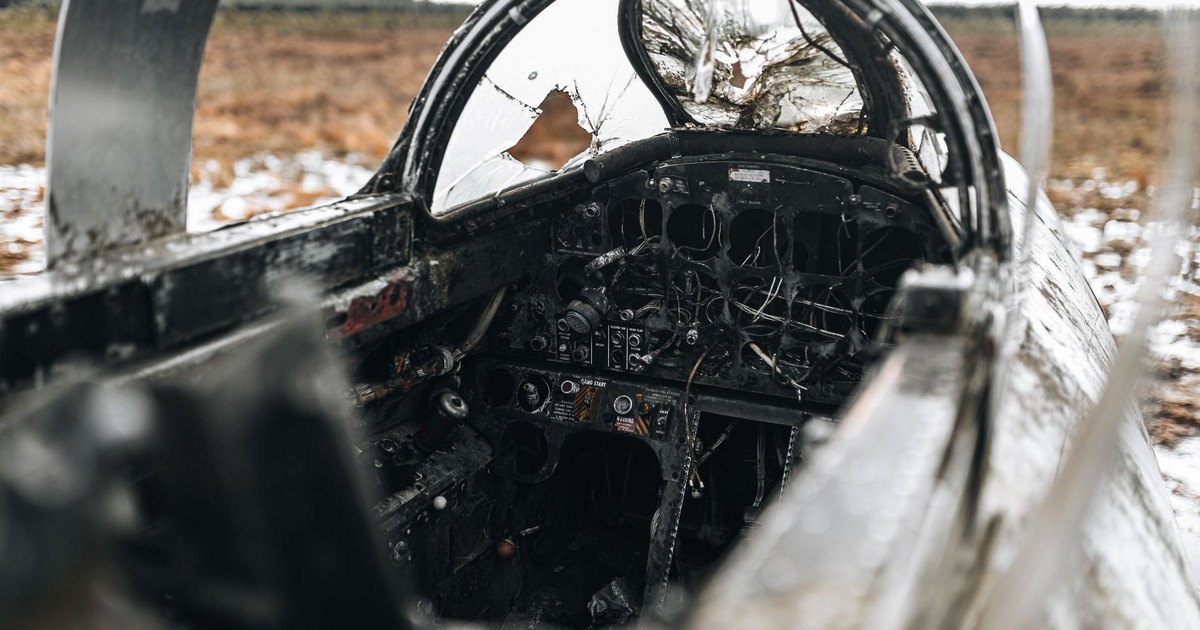
Kathleen “Kick” Kennedy, the daughter of Joseph Sr. and Rose Kennedy, died in a plane crash in France on May 13, 1948. She was 28 and was on the way to the French Riviera with her lover, Earl Peter Wentworth-Fitzwilliam.
Her father Joe Sr. was the only Kennedy to attend her funeral. Rose refused. Kick was buried in England, on the Cavendish family estate, far from Hyannis Port, and largely erased from the family’s public narrative for years – too inconvenient a figure for a family building a Catholic political dynasty.
5. JFK’s Miscarriage, Stillbirth, and the Death of Patrick Kennedy (1956 – 1963)
The public rarely saw Jacqueline Kennedy grieve privately. But the losses were real and multiple. On August 7, 1963, Jacqueline Kennedy gave birth to a premature baby boy, who was quickly baptized and named Patrick. He lived 39 hours, succumbing to complications of hyaline membrane disease despite desperate attempts to save him. The couple had already suffered one miscarriage and a stillbirth.
Patrick’s death raised the profile of infantile respiratory diseases into the public consciousness and encouraged more research on the topic. Patrick Kennedy Bouvier was buried at Holyhood Cemetery in Brookline, Massachusetts. He was three months old at the time of his father’s assassination, which means JFK died having recently buried an infant son.
6. The Assassination of President John F. Kennedy (1963)
John F. Kennedy, the 35th president of the United States, was assassinated while riding in a presidential motorcade through Dealey Plaza in Dallas, Texas, on Friday, November 22, 1963. Kennedy was in the vehicle with his wife Jacqueline, Texas Governor John Connally, and Connally’s wife Nellie, when he was fatally shot from the nearby Texas School Book Depository by Lee Harvey Oswald, a former U.S. Marine. The motorcade rushed to Parkland Memorial Hospital, where Kennedy was pronounced dead about 30 minutes after the shooting.
Oswald never stood trial for the murder. Two days after Kennedy’s assassination, Oswald was shot to death by Jack Ruby, a local nightclub owner with connections to the criminal underworld, in the basement of Dallas City Hall. A special commission, the Warren Commission, investigated the assassination and the subsequent killing of the alleged assassin from November 1963 to September 1964. Its report concluded that neither Oswald nor Ruby “was part of any conspiracy, domestic or foreign, to assassinate President Kennedy.” However, in March 1979, the House Select Committee on Assassinations reported that a second gunman may also have fired a shot and that the president was probably assassinated as a result of a conspiracy. The question has never been definitively resolved. In March 2025, the Trump administration released tens of thousands of pages of documents concerning the assassination. The documents did not resolve all lingering questions but did reveal CIA surveillance of Oswald before the shooting – including an intercepted call he made to the Soviet Embassy in Mexico City in October 1963.
7. Ted Kennedy’s Plane Crash (1964)
Less than a year after his brother’s assassination, Edward “Ted” Kennedy was nearly killed himself. In 1964, Ted Kennedy suffered a broken back when his private plane crashed in Southampton, Massachusetts. Indiana Senator Birch Bayh also survived the crash, but the pilot and one of Kennedy’s aides were killed.
The crash occurred in June 1964, as Ted Kennedy was running for reelection to the Senate. He spent months recovering in hospital. That he survived was considered extraordinary given the condition of the aircraft. His political career resumed – though a different kind of disaster, five years later on a bridge in Massachusetts, would define the rest of it.
8. The Assassination of Robert F. Kennedy (1968)
By 1968, RFK was a leading candidate for the Democratic presidential nomination, following in the footsteps of his brother John. Shortly after winning the California primary on June 5, 1968, RFK was shot by Sirhan Sirhan, a young Palestinian who claimed to have acted in retaliation for RFK’s pro-Israeli stance during the 1967 Six Day War.
The motives for the assassination remain disputed. Sirhan initially said he acted in response to Kennedy’s support for Israel during the Six-Day War, but later changed his account, claiming he had “acted unconsciously, possibly as a result of hypnotic brainwashing.” He was sentenced to death in 1969, but his sentence was commuted to life in prison. In 2021, a parole board recommended his release, but California Governor Gavin Newsom rejected the decision. Sirhan, now 81, is expected to be eligible to seek parole again in 2027. Robert Kennedy was 42 years old and the father of 11 children when he died.
9. The Chappaquiddick Incident (1969)
On July 18, 1969, Ted Kennedy accidentally drove his car off a bridge on Chappaquiddick Island, Massachusetts, resulting in the drowning death of 28-year-old passenger Mary Jo Kopechne. In his televised statement a week later, Ted said that on the night of the incident, he wondered “whether some awful curse did actually hang over all the Kennedys.” Ted did not report the accident to the police until the next morning and pled guilty to a charge of leaving the scene of an accident, receiving a suspended sentence.
The incident effectively ended his presidential prospects, though he served in the Senate for 47 years. Mary Jo Kopechne’s family never received a full account of what happened inside that car. The truth of what Ted Kennedy knew, and when he knew it, remains contested to this day.
10. Joseph P. Kennedy Sr. Suffers a Severe Stroke (1961 – 1969)
Joseph Kennedy Sr., the architect of the entire dynasty, suffered a catastrophic stroke in December 1961 – just months after seeing his son inaugurated as president. The last time JFK saw his father was in October in Hyannis Port. After saying goodbye, JFK said to his friend Dave Powers about his dad, who was wheelchair-bound after the stroke, “He’s the one who made all this possible, and look at him now.”
Joe Sr. lost the ability to speak. He could understand everything happening around him – including, presumably, the news of his son’s assassination in 1963 and Bobby’s in 1968. He watched the family he built and the country he had bet on absorb those two losses without being able to say a word. He died in November 1969, mute for eight years.
11. Pam Kelley Paralyzed in Kennedy Jeep Crash (1973)
On August 13, 1973, Joseph P. Kennedy II was the driver of a Jeep in Nantucket, Massachusetts, that crashed and left his passenger, Pam Kelley, paralyzed.
Kennedy was 20 at the time. Kelley, a close family friend, was left permanently unable to walk. The crash received comparatively little press attention, but for Kelley, the consequences were lifelong. The incident was one of several in this period in which Kennedy family members’ reckless behavior resulted in other people bearing the permanent physical cost.
12. Edward M. Kennedy Jr. Loses His Leg to Cancer (1973)
In November 1973, Edward M. Kennedy Jr., age 12, had his right leg surgically amputated as a result of bone cancer. He underwent an experimental two-year drug treatment to cure the cancer.
Ted Kennedy sat with his son through every treatment. By all accounts, the experience shaped Ted Kennedy’s subsequent decades-long advocacy for universal healthcare. Young Teddy’s survival came at an enormous cost, and the image of his father helping him walk up the steps of the Capitol on prosthetic legs became one of the defining photographs of the Kennedy family in the 1970s.
13. A Bomb Explodes Near Caroline Kennedy (1975)
On October 23, 1975, in London, a bomb exploded under a car belonging to member of Parliament Hugh Fraser, who was hosting Caroline Kennedy. They were about to drive to Kennedy’s art class, but had not yet gone out to the car.
The bomb killed a neighbor walking past the vehicle. Caroline, who was 18 at the time and studying in London, was unhurt – but the proximity was enough. The IRA was blamed. The incident received relatively modest attention in the US press but was a genuine near-miss for JFK’s only surviving child.
14. David Kennedy’s Drug Addiction and Death (1968 – 1984)
The day after his own near-death experience, David watched his father’s assassination live on television. Kennedy turned to recreational drug use to cope with the trauma he had experienced, and a car accident in 1973 left him addicted to opioids. Despite numerous trips to rehab following minor overdoses, David never kicked his addiction. He was found dead in April 1984, having overdosed on a combination of cocaine and prescription medication.
David Anthony Kennedy died at a Palm Beach hotel in Florida on April 25, 1984. He was 28. He had spent more than half his life trying to outrun what he had seen on television at age thirteen. He never managed it.
15. Jacqueline Kennedy Onassis Dies of Cancer (1994)
Jacqueline Kennedy Onassis had survived more than almost anyone in the Kennedy orbit – her husband’s assassination beside her in an open car, the grief that followed, a second marriage to Aristotle Onassis, and decades of intense public scrutiny. On May 19, 1994, Jacqueline Lee Kennedy Onassis died of lymphoma that was discovered at a hospital visit after a fall from a horse.
She died at the age of 64, sparing her the loss of her only son. JFK Jr. would be dead within five years. The fact that she didn’t live to see it is the only mercy in the timeline.
16. Michael Kennedy Dies in a Skiing Accident (1997)
Michael L. Kennedy, the son of Robert F. Kennedy, died after a ski injury in Colorado on New Year’s Eve in 1997. The businessman was skiing at the Aspen Mountain resort with family members when he crashed into a tree. He was taken to a local hospital and was later pronounced dead.
Michael Kennedy was 39 years old. His death followed a period of significant personal scandal – allegations had surfaced that year that he had had an inappropriate relationship with the family’s teenage babysitter. He had separated from his wife the same year. His death came at a moment when his reputation was already in freefall, and it closed that chapter without resolution.
17. JFK Jr., Carolyn Bessette-Kennedy, and Lauren Bessette Die in Plane Crash (1999)
On the night of July 16, 1999, John F. Kennedy Jr., his wife Carolyn Bessette Kennedy, and her sister Lauren Bessette were killed off the coast of Martha’s Vineyard, Massachusetts, when the plane that John F. Kennedy Jr. was piloting crashed. Questions were raised about whether Kennedy’s relative inexperience as a pilot played a role in the crash. The official National Transportation Safety Board investigation found that Kennedy became disoriented because of haze and darkness. Kennedy was 38 at the time of his death; his wife was 33; and her sister was 34.
JFK Jr. had been widely speculated as a future president. He was charming, extraordinarily popular, and had built a credible career in law and magazine publishing. His death at 38, in circumstances that bore an almost uncanny resemblance to other Kennedy plane crashes, was front-page news around the world for days. He and Carolyn had been married three years. They had no children.
18. Ted Kennedy Diagnosed with a Brain Tumor (2008 – 2009)
In May 2008, Senator Edward Kennedy was diagnosed with glioblastoma, an aggressive and almost always fatal form of brain cancer. Edward had been elected to the US Senate from Massachusetts in 1962 at the age of 30, winning reelection ever since, until his death from a brain tumor in 2009.
Ted Kennedy had served in the Senate for 47 years, longer than any other Kennedy. He had outlived both his brothers, survived a plane crash and a car accident, buried nephews and nieces, and remained one of the most effective legislators in American history throughout it all. He died on August 25, 2009, at age 77. The last of Joseph Kennedy’s sons was gone.
19. Kara Kennedy Dies of Heart Failure After Cancer Battle (2011)
Kara Kennedy, the daughter of the late Edward Kennedy, died of heart failure after working out at a gym in Washington, D.C., on September 16, 2011. The TV producer, who was 51, was diagnosed with lung cancer in 2002. She had a malignant tumor removed from her lung in 2003 and was in remission for years before her heart gave out.
Her death arrived two years after her father’s, leaving Ted Kennedy’s children without both parents within a short span.
20. Mary Richardson Kennedy Dies by Suicide (2012)
Mary Richardson Kennedy died by suicide while hashing out a divorce battle with Robert F. Kennedy Jr. on May 16, 2012. She was 52. She had hanged herself in the barn of their Bedford, New York estate. According to Mary’s family, she had struggled with depression and alcohol.
She and Robert tied the knot in 1994 and separated in 2010. They shared four children: Conor, Kyra, William, and Aidan. The divorce proceedings had been protracted and bitter, with personal details made public in court filings. Her family released a statement that made clear she had been fighting real illness. She was 52 years old.
21. Christopher Lawford, Kennedy Nephew, Dies of a Heart Attack (2018)
Christopher Lawford was the son of Peter Lawford and Patricia Kennedy, which made him a nephew of JFK, RFK, and Ted Kennedy. He had battled severe addiction for much of his adult life and had written openly about his recovery. He became an advocate for addiction treatment in his later years and authored a memoir about his experience.
Lawford died of a heart attack in September 2018 at age 63 while at a gym in Vancouver. His death followed decades of struggle with the same substance issues that had claimed several of his cousins. He was, by most accounts, in recovery and doing meaningful work at the time of his death.
22. Saoirse Kennedy Hill Dies of an Accidental Overdose (2019)
Saoirse Kennedy Hill died from an accidental overdose at the age of 22 on August 1, 2019. She was the granddaughter of Robert F. Kennedy and the daughter of Courtney Kennedy Hill. She died at the family’s Massachusetts estate.
Before her death, Hill had written about depression and suicide in high school. She had been open about her mental health struggles and had survived a previous overdose. Her death at 22, in the family compound in Hyannis Port, was devastating not only for how young she was but for how clearly it showed that the addiction and mental health crises running through the third generation of Kennedys had reached the fourth.
23. Maeve Kennedy McKean and Her Son Gideon Drown in the Chesapeake Bay (2020)

Maeve Fahey Kennedy McKean, the granddaughter of Robert F. Kennedy, and her eight-year-old son, Gideon, drowned in the Chesapeake Bay in Maryland on April 2, 2020. She was 40. The mother and son had gotten into a canoe to fetch a soccer ball that had fallen into the water when Gideon was playing with friends. According to Maeve’s husband, David, the water was choppy and the two “got farther out than they could handle, and couldn’t get back in.” Maeve’s body was found on April 6, and Gideon’s on April 8.
The accident happened during the first weeks of the COVID-19 pandemic, when the world was locked down and emergency services were already under strain. It was, by any measure, a random and senseless accident – and yet it arrived with the inevitability that marks every entry in this list.
24. Tatiana Schlossberg Dies of Cancer at 35 (2025)
Caroline Kennedy’s daughter Tatiana Schlossberg died on December 30, 2025, following a terminal diagnosis of acute myeloid leukemia. She had revealed her diagnosis in a November 2025 essay published in The New Yorker, writing that “I have added a new tragedy to [my mother’s] life, to our family’s life, and there’s nothing I can do to stop it.” She was 35.
Tatiana was JFK’s granddaughter – a journalist and environmental writer who had carved out a thoughtful public career well outside the political spotlight her family name typically attracted. Her death reignited discussion of the Kennedy family tragedies, coming nearly 62 years to the day after her grandfather was shot in Dallas.
25. The Forgotten Stillbirth: Arabella Kennedy (1956)
Before Patrick Kennedy’s 1963 death made international headlines, Jacqueline Kennedy had already buried a child. In August 1956, she suffered a stillbirth. The baby girl was delivered while JFK was on a Mediterranean sailing trip and he was reportedly informed of his daughter’s death by a journalist before family could reach him. The baby was initially buried unnamed in a Newport cemetery.
When Kennedy was assassinated in 1963, the stillborn daughter’s remains were exhumed and reburied with her father at Arlington National Cemetery. The baby was given the name Arabella posthumously. She had no birth certificate and barely registered in the public record – which is its own kind of erasure.
26. JFK’s Wartime Injuries and the PT-109 Disaster (1943)
Before he was president, John F. Kennedy nearly died in the Pacific. In August 1943, the patrol torpedo boat he commanded – PT-109 – was rammed and sunk by a Japanese destroyer in the Solomon Islands. Two of his crew were killed. Kennedy swam for hours through open water, towing an injured crewman by his life jacket clenched between his teeth, to reach an island.
The experience left Kennedy with spinal injuries that plagued him for the rest of his life and led to the extensive use of painkillers during his presidency – a fact kept from the public for decades. The heroism was real, but so was the permanent physical damage. He entered the White House already a man in chronic pain.
27. Joseph P. Kennedy Jr.’s Girlfriend Murdered (1974)
On January 23, 1974, Athalia Ponsell Lindsley, who had dated Joseph P. Kennedy Jr. until his death, was murdered at her home.
Lindsley had been one of the last women romantically linked to Joe Jr. before his 1944 death. Nearly 30 years later, she was killed on her doorstep in St. Augustine, Florida, with a machete. The murder was eventually attributed to her neighbor, James Rinard, but the case dragged through the courts for years. It was a grim postscript to a relationship that had itself been cut short by the war.
28. The Kennedy Family’s Decades-Long Battle With Addiction
The addiction crisis running through the Kennedy family is not a single event but a sustained catastrophe spanning three generations. David Kennedy died of an overdose in 1984. Saoirse Kennedy Hill died of an overdose in 2019. Christopher Lawford fought addiction for decades before his death in 2018. Robert F. Kennedy Jr. has publicly discussed his own addiction struggles.
Kennedy family members turned to recreational drug use to cope with the accumulated trauma they had experienced, with car accidents and legal troubles compounding addiction to opioids. The pattern across the third and fourth generations reads less like individual failures and more like the downstream effect of growing up in a family where grief was never formally processed – where the next campaign, the next office, the next obligation was always more pressing than sitting with what had been lost.
29. The Marquess of Hartington’s Death Widows Kathleen at 24 (1944)
This entry deserves its own reading separate from Kathleen’s eventual death, because the sequence of loss she endured in a single year was almost incomprehensible. She had been widowed when her husband, the Marquess of Hartington, was killed by a sniper in Belgium less than a month after Joseph Jr.’s death.
In the summer of 1944, within weeks of each other, Kathleen lost her brother and her husband. She had alienated her own mother by marrying outside the Catholic faith. She was 24, alone in England, grieving two men while her family largely kept their distance. That she managed any coherent life for the remaining four years before her own death is something.
30. The RFK Assassination Files and Ongoing Secrecy (2025 – 2026)
The release of previously classified government documents has continued to add layers to the Kennedy family’s most defining tragedies rather than resolving them. In March 2025, the Trump administration released tens of thousands of pages of documents concerning JFK’s assassination. The documents revealed how much the CIA had observed Oswald before the shooting, raising questions about what, if anything, government agencies knew and failed to act on.
Decades of declassification have answered some questions and generated others. The Kennedy name is associated with tragic loss across every generation – the assassinations, the three separate plane crashes, and in December 2025, the death of JFK’s granddaughter Tatiana Schlossberg from cancer at age 35. What remains consistent for anyone who reads through the full chronology is that this family’s story is far from over.
Read More: These Are 28 Of The Most Feared People In History: Who Made the List?
What Stays With You
The sheer accumulation is what does it. Any single one of these losses – a president shot, a senator killed on the campaign trail, a daughter institutionalized by her own father, a 22-year-old granddaughter found dead in a family home – would define most families forever. The Kennedys absorbed all of it, generation after generation, and kept producing senators and ambassadors and public servants and writers and activists. That’s not a footnote. That’s something.
But the losses aren’t separate events. They’re connected by family – by shared blood, shared childhood summers in Hyannis Port, shared dinner tables where people sat and then stopped sitting. The addiction crises in the third generation trace directly back to the assassinations of the second. David Kennedy watched his father die on television at age 13 and spent the rest of his short life trying to unsee it. These aren’t coincidences lined up on a timeline. They’re consequences.
Grief, left unaddressed inside a culture of relentless forward motion, doesn’t disappear. It travels. It shows up differently in each generation – as addiction, as recklessness, as the kind of sorrow that people who look fine on the outside carry in places no profile or biography quite reaches. The Kennedys are not a curse. They are a family that lost too much, too fast, in front of too many people – and kept going anyway, because that was all they knew how to do.
AI Disclaimer: This article was created with the assistance of AI tools and reviewed by a human editor.