
The argument that history belongs to its conquerors is only half true. It also belongs to those who made entire populations hold their breath. The feared people in history didn’t just kill – they reshaped how civilizations thought about safety, obedience, and survival itself. Their names became warnings, passed down through centuries long after their armies had turned to dust.
Fear at a civilizational scale works differently from personal terror. A tyrant who makes one city cower is merely dangerous. The figures on this list made nations rearrange themselves, prompted mass migrations, and caused entire peoples to change their language, religion, or name. Some wielded fear with cold strategy. Others seemed almost consumed by it themselves, paranoid and erratic in their violence. What unites them is not ideology or era – it’s the fact that the world, for a time, oriented itself around them.
This list spans four thousand years and six continents. It covers emperors and revolutionaries, conquerors and inquisitors, kings and dictators. Some are figures you know well; others deserve far more attention than they typically receive. None of them should be celebrated. But all of them should be understood.
1. Genghis Khan (1162 – 1227)
Genghis Khan united the steppe tribes of Mongolia, creating an unstoppable war machine that carved out the largest contiguous land empire in history. What set him apart from other conquerors wasn’t just scale – it was the deliberate use of terror as military doctrine. Cities that surrendered were spared. If a besieged city didn’t surrender, all citizens were slaughtered. Word spread ahead of his armies faster than the armies themselves. By the time the Mongols arrived at the gates of a new city, half the psychological work was already done.
Scholarly estimates of the death toll from Genghis Khan’s campaigns range from 20 to 60 million people, a figure so enormous that archaeologists have found entire regions of Central Asia and Persia where the population simply never recovered for centuries. Whole agricultural systems were destroyed. Irrigation networks that had taken generations to build were dismantled or abandoned. The Mongol expansion didn’t just kill people – it erased the infrastructure of civilizations.
What makes him so difficult to assess is that alongside the slaughter, he created one of the most sophisticated administrative empires of the medieval world. He promoted meritocracy over aristocracy, established religious tolerance, and opened the Silk Road to trade. The fear he inspired and the system he built were not in spite of each other. They were the same project.
2. Tamerlane (1336 – 1405)
This Turco-Mongol conqueror tried to recreate Genghis Khan’s empire through campaigns that killed an estimated 17 million people across Central Asia and the Middle East. Tamerlane, also known as Timur, was an admirer of Genghis Khan who took the original blueprint and added a flair for spectacle. Cities that resisted him faced massacres so extreme that pyramids of skulls were reportedly erected as warnings. These weren’t just atrocities – they were announcements. The skull towers said: we were here, and this is what resistance looks like.
He made terror his trademark, building towers from the bodies of living victims. Claiming to act in Islam’s name, he died while marching his armies toward China in 1405, leaving a legacy of magnificent architecture built on rivers of blood. The city of Samarkand, which he made his capital, still stands as one of the architectural jewels of Central Asia – built largely with craftsmen and artisans he deported from conquered cities.
The contradiction at the heart of Tamerlane is hard to sit with. He commissioned stunning mosques and mausoleums. He was a chess player of considerable skill. He also personally ordered the execution of hundreds of thousands of people. The fear he generated was not a byproduct of conquest. It was the product itself.
3. Vlad III of Wallachia (1431 – 1476)
Vlad III of Wallachia gained notoriety for his preferred method of execution – impalement. Thousands of enemies and criminals were reportedly killed in this manner. Although some view him as a defender of his territory against Ottoman expansion, his extreme brutality inspired fear throughout Europe and later influenced the legend of Dracula.
The scale of what Vlad accomplished psychologically is remarkable. Most historians estimate that anywhere from 40,000 to 100,000 victims were impaled during Vlad’s three reigns as prince. In 1462, Mehmed II – the man who conquered Constantinople and was well-renowned for his own psychological tactics – was forced to retreat in disgust at the sight of 20,000 impaled corpses outside Vlad’s capital. When the Ottoman Sultan who sacked Constantinople turns his army around and goes home, you have achieved something extraordinary in the history of deterrence.
In Romania, Vlad is still regarded in some circles as a national hero. The impalement was, in part, a defense strategy – a prince of a small principality holding off one of the most powerful empires on earth with sheer psychological force. That context doesn’t soften the cruelty. But it does explain why fear, for Vlad, was less a character flaw and more a foreign policy.
4. Attila the Hun (c. 406 – 453)
Known as the “Scourge of God,” Attila led the Huns in devastating campaigns across Europe. His armies raided Roman territories and left widespread destruction in their wake. Attila’s military successes made him one of the most feared leaders of late antiquity. His reputation for ferocity continues to endure more than 1,500 years after his death.
What gave Attila’s reputation its particular edge was how little the Roman Empire – still nominally the mightiest power in the world – could do to stop him. He attacked both the Eastern and Western Roman Empires, extracted enormous tribute payments, and at one point reportedly considered marrying into the Roman ruling class after receiving an appeal from a Roman princess. The Roman senate bribed him rather than fight him. That was the posture that the most powerful empire on earth adopted toward Attila: pay him and pray he moves on.
He died, anticlimactically, of a nosebleed on his wedding night in 453 AD – a death so mundane it reads almost like a joke told at the expense of history. But the fear he had installed in the consciousness of European civilization lasted for generations. His name became a synonym for unstoppable destruction long before it became a Frankish epic.
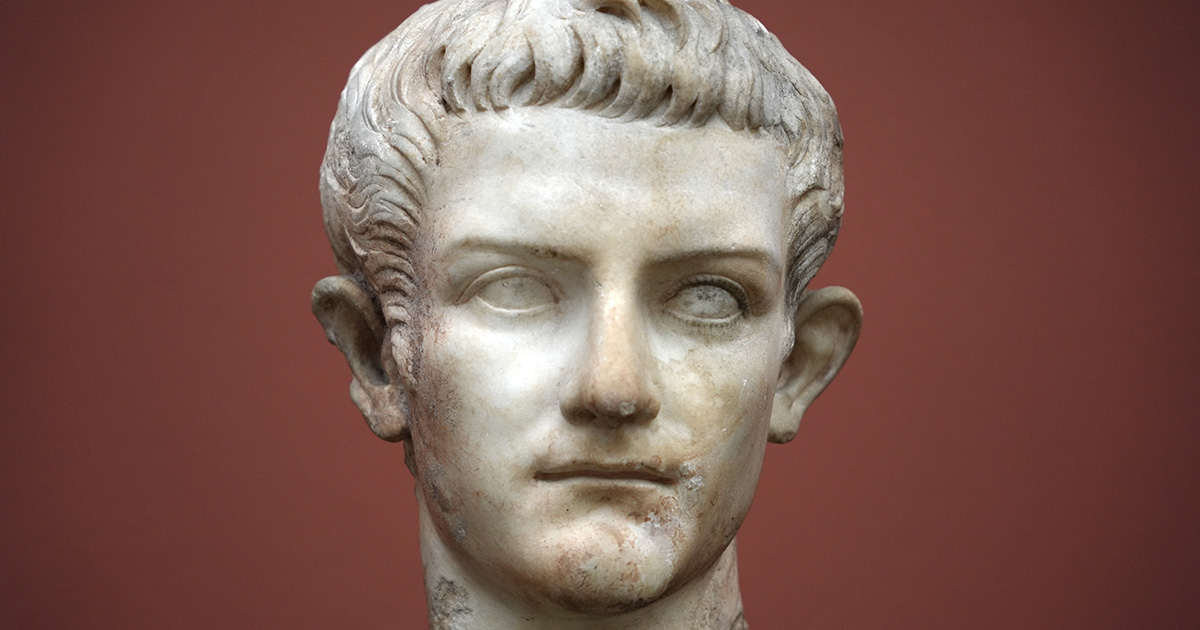
5. Caligula (12 – 41 AD)
Caligula ruled the Roman Empire for less than four years but remains one of history’s most infamous emperors. Ancient sources describe him as erratic, cruel, and obsessed with absolute power. Stories of arbitrary executions, humiliation of political rivals, and extravagant behaviour helped cement his reputation as a symbol of imperial excess and tyranny. Although historians debate the accuracy of some claims, his name remains synonymous with despotic rule.
The particular horror of Caligula wasn’t mass warfare – it was the randomness. Under a tyrant with a clear ideology, citizens can at least attempt compliance. Under Caligula, compliance offered no protection. Senators were forced into degrading public performances. Men of high standing were executed for no documented reason. He reportedly appointed his horse to a consulship, not because he admired the horse but because he wanted to humiliate the institution of the consulship itself. The message was: nothing you hold sacred is beyond my mockery.
He was assassinated by members of his own Praetorian Guard in 41 AD after less than four years in power. The relief in Rome was immediate and palpable. His successor, Claudius, was found hiding behind a curtain in the palace – terrified, like almost everyone else, of what Caligula might do next.
6. Ivan the Terrible (1530 – 1584)
Ivan IV became Russia’s first tsar and expanded the country’s territory significantly. However, he also became known for violent repression and political terror. His secret police, known as the Oprichniki, carried out brutal campaigns against perceived enemies. Ivan’s reign was marked by executions, torture, and massacres, earning him the nickname “Ivan the Terrible.”
He created the Oprichnina, a personal death squad that massacred thousands in Novgorod alone, drowning, impaling, and roasting citizens suspected of disloyalty. In one tragic moment of uncontrolled fury, he struck his own son and heir with an iron staff, killing him – a loss that haunted Ivan until his death from stroke in 1584. The Novgorod massacre of 1570 reportedly lasted five weeks. The city, once one of the great trading centers of northern Europe, never fully recovered its former prominence.
The tragedy of Ivan is that the early years of his reign showed genuine promise – legal reform, military expansion, the establishment of printing in Russia. Then came the death of his first wife, Anastasia, and with it what contemporaries described as a complete psychological collapse. The second half of his reign reads less like a political program and more like a man dismantling his own kingdom in a sustained fit of paranoid rage.
7. Adolf Hitler (1889 – 1945)
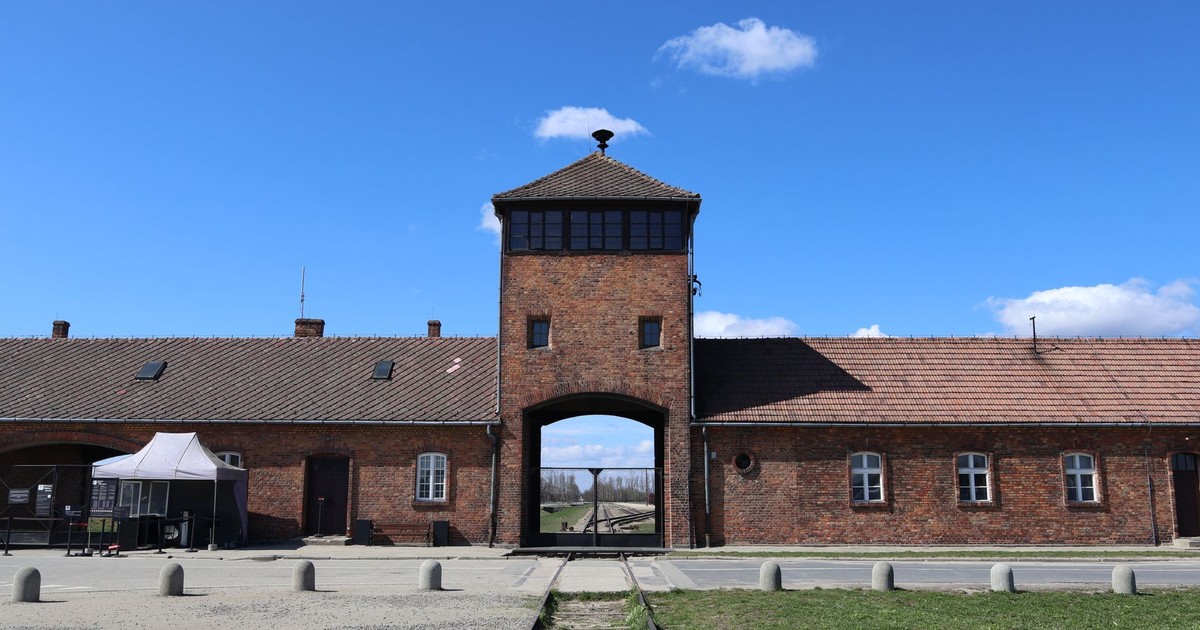
As the leader of Nazi Germany, Adolf Hitler orchestrated World War II and the Holocaust, resulting in tens of millions of deaths, including the systematic murder of six million Jews. What made him uniquely terrifying among the feared people in history was not just the scale of the killing but its industrial organization. The Holocaust was not a pogrom or a battlefield atrocity – it was a bureaucracy. It required train schedules, administrative records, camp architects, and thousands of ordinary people willing to do their jobs.
His regime propagated the unprecedented horror of the Holocaust – the attempt to eradicate an entire people on racial grounds – as historian Timothy Snyder wrote in 2011, distinguishing Hitler’s project from Stalin’s as unique in its eliminationist intent. The question of what made him so dangerous in the political context of 1930s Germany is answered in part by the story of his rise. In just 53 days after being appointed Chancellor in January 1933, he dismantled the democratic institutions of the Weimar Republic through a combination of legal decrees and manufactured terror, turning a fragile democracy into a one-party dictatorship before most people understood what was happening.
He died by suicide in April 1945 as Soviet forces entered Berlin. The city was in ruins. Germany was divided for the next four decades. The shadow he cast over the 20th century – and the vocabulary of genocide, fascism, and totalitarianism that his crimes forced the world to develop – is still present in every serious political conversation about the dangers of unchecked power.
8. Joseph Stalin (1878 – 1953)
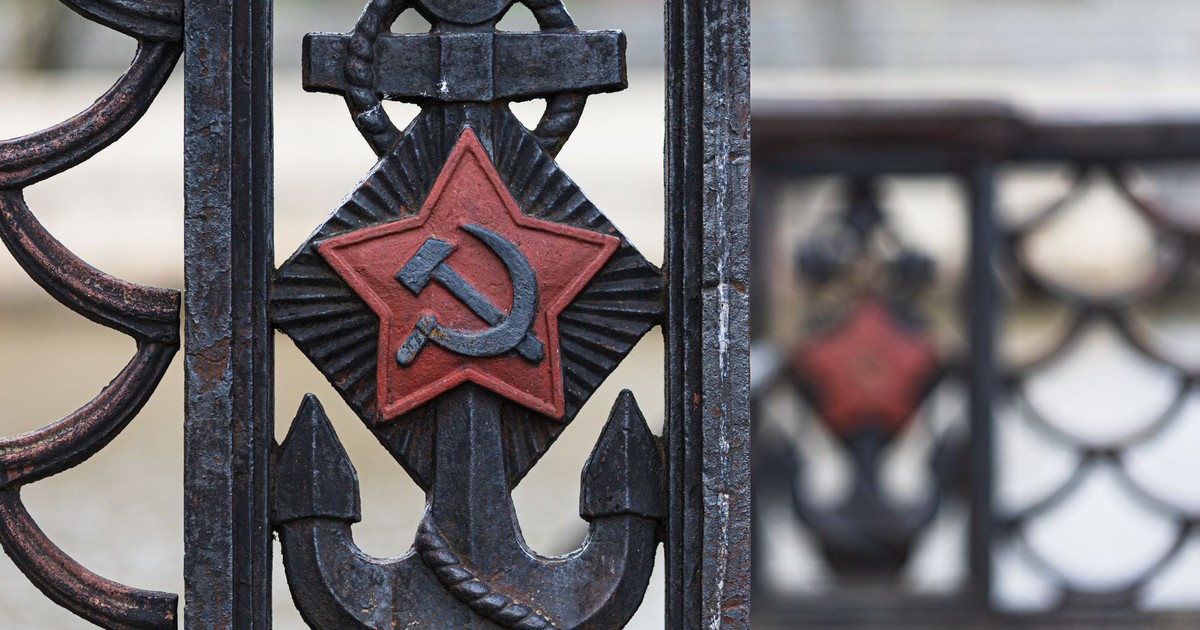
In Stalin’s Soviet Union, fear was policy. Through purges, forced labor camps, engineered famines, and mass arrests, Joseph Stalin consolidated power with brutal precision. The Gulag – the vast network of labor camps stretching across Siberia and the Soviet Far East – became his primary instrument of social control. People were sent there not just for crimes, but for the category of person they represented: the educated, the religious, the independent farmer, the ethnic minority who happened to live on strategically important land.
According to historians who studied Soviet archives before and after the fall of the Soviet Union, Joseph Stalin likely killed between six million and 20 million people. The range is wide because Stalin was also a meticulous destroyer of records. In Ukraine alone between 1932 and 1933, more than three million people died as a result of famine caused by Stalin’s collectivization policies – what Ukrainians call the Holodomor, the death by hunger. The famine was not an accident of weather or mismanagement. Grain was exported while the population starved, and the borders were sealed to prevent people from leaving.
What made Stalin specifically terrifying, beyond the numbers, was his ability to make people doubt their own loyalty. The purges of the 1930s swept up not just enemies but allies, not just opponents but the people who had helped him rise. To live in Stalinist Russia was to understand that no record of past service offered any protection at all.
9. Mao Zedong (1893 – 1976)
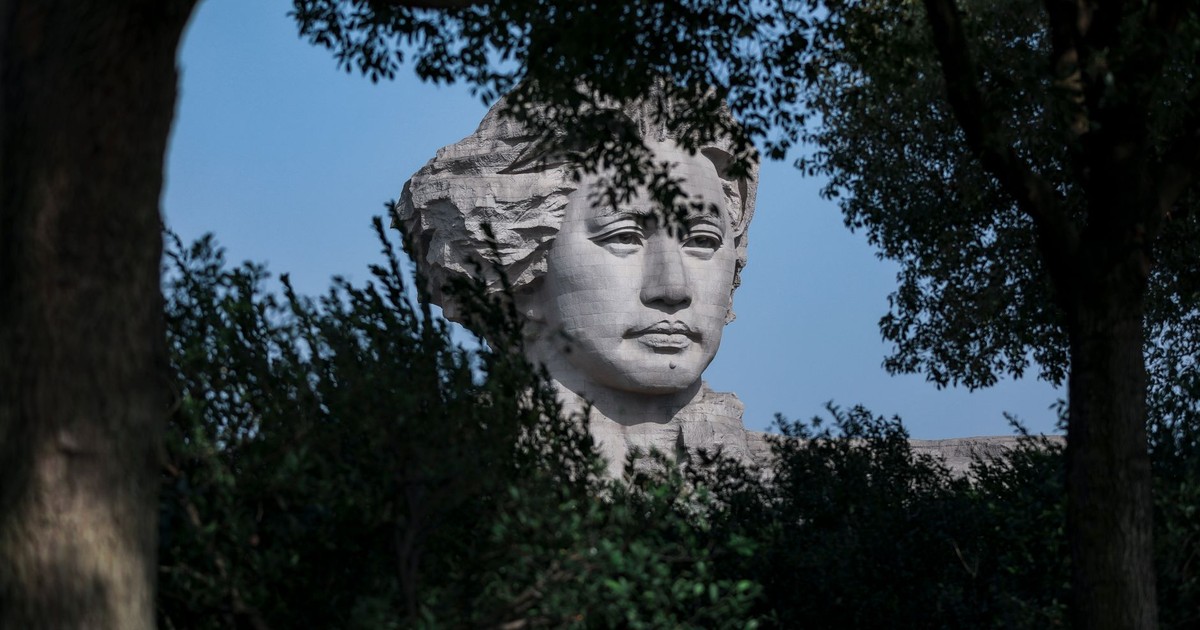
In raw numbers, Mao Zedong likely leads history’s deadliest leaders, with an estimated 45 to 70 million deaths attributed to his rule, according to a historical analysis of twentieth-century death tolls. The largest single catastrophe was the Great Leap Forward – a forced industrialization campaign between 1958 and 1962 that collectivized agriculture and melted down farming tools to produce steel in backyard furnaces. The predictable result was agricultural collapse and the worst famine in recorded history.
What compounds the horror is the information suppression. Local officials who reported starvation were accused of sabotage. Farmers who hid grain to feed their families faced execution. The machinery of the state was deployed not to address the famine but to deny it – to insist that production targets were being met even as millions died in their villages. People who had survived the chaos of the warlord era and the Japanese invasion and a civil war died of hunger during peacetime under a government that knew exactly what was happening.
Mao’s legacy in China remains contested. His portrait still hangs on Tiananmen Square. The official Communist Party position, established in 1981, holds that he was “70% correct and 30% wrong.” The 30% includes tens of millions of deaths.
10. Pol Pot (1925 – 1998)
Pol Pot, born Saloth Sar, headed Cambodia’s Khmer Rouge totalitarian regime from 1975 to 1979. His government forced mass evacuations of cities and caused the deaths of an estimated one to three million Cambodians through forced labor, starvation, disease, torture, and execution during the Cambodian genocide. The defining fact about Pol Pot’s Cambodia is the proportion: those deaths represented roughly 25% of Cambodia’s entire population.
One detention center, S-21, was so notorious that only seven of the roughly 20,000 people imprisoned there are known to have survived. The Khmer Rouge took particular aim at intellectuals, city residents, ethnic Vietnamese, civil servants, and religious leaders. Wearing glasses was, at various points, enough to mark you as an intellectual and therefore an enemy of the state. The revolution consumed not just its opponents but its own educated supporters – people who had studied in Paris alongside Pol Pot himself and returned to Cambodia full of idealism.
After being ousted by Vietnamese forces in 1979, he retreated to Thailand, leading Khmer Rouge forces against the new government. Though removed from leadership in 1985, he remained a key figure until 1997. Pol Pot died in 1998, with the cause of death attributed to heart failure. He was never tried for the genocide. He died under house arrest in a jungle camp, attended by a handful of followers, the year before an international tribunal was established to prosecute Khmer Rouge leaders.
11. Tomás de Torquemada (1420 – 1498)
As the first Grand Inquisitor of Spain, Torquemada became the face of the Spanish Inquisition. He pursued religious conformity through investigations, imprisonment, and punishment of suspected heretics. His name remains closely linked to religious persecution and intolerance in late medieval Europe.
As the Spanish Inquisition’s first Grand Inquisitor, this Dominican friar oversaw at least 2,000 executions and tortured over 100,000 people accused of heresy. Jews, Muslims, and converted Christians lived in constant terror of his fanatical purges, which featured public burnings known as auto-da-fés. His zealous anti-Semitism helped drive thousands into exile and left Spain’s cultural life devastated long after his natural death in 1498.
What Torquemada understood that made him so effective was that fear of accusation is more powerful than fear of guilt. You didn’t have to do anything wrong to find yourself before the Inquisition’s tribunal. You just needed a neighbor who bore you a grudge, or a business rival who wanted your property, or a relative whose faith was questioned. The Inquisition created a social atmosphere in which nobody was safe, which was precisely the point.
12. Robespierre (1758 – 1794)
Maximilien Robespierre was the chief ideological architect of the Reign of Terror – the period between 1793 and 1794 in which the French Revolutionary government sent somewhere between 16,000 and 40,000 people to the guillotine. What made him specifically terrifying was that he genuinely believed he was doing good. He had been a vocal opponent of the death penalty earlier in his career. He came to power promising liberty, equality, and the end of aristocratic tyranny.
The logic of the Terror, as Robespierre articulated it, was that the revolution required the elimination of its enemies, and anyone who questioned the revolution was by definition an enemy. This circular reasoning made the guillotine an argument you couldn’t win. Former allies, revolutionary colleagues, and moderate voices all ended up at the blade. The fear he generated was not the fear of a monster but the fear of a true believer – and that, in some ways, is harder to reason with.
He was arrested and guillotined in July 1794 – his own jaw was shattered by a failed suicide attempt before his execution – and the Reign of Terror ended almost immediately after his death. The revolution, at last, could breathe again.
13. Kim Il-sung (1912 – 1994)
Kim Il-sung founded the Democratic People’s Republic of Korea in 1948 and established a dynasty of fear that continues to this day. He orchestrated the Korean War, which began in 1950 with an invasion of South Korea and resulted in an estimated 2.5 million civilian deaths. He then spent the next four decades building one of the most complete surveillance states in human history.
The cult of personality he established in North Korea went beyond anything even Stalin or Mao had achieved. Kim was not presented as a great leader – he was presented as a quasi-divine figure, the sun around which Korean life revolved. Children were taught that he could control the weather. His biography was mandatory reading. Families were collectively punished for the political crimes of individual members, with three generations sent to labor camps as a unit. The fear he created didn’t die with him. His son and grandson continued the dynasty, and North Korea remains the most closed and controlled society on earth.
14. Saddam Hussein (1937 – 2006)
Saddam Hussein ruled Iraq from 1979 until his capture by US forces in 2003. In those 24 years, he launched a catastrophic eight-year war against Iran, invaded Kuwait, and conducted a systematic campaign of genocide against the Kurdish population of northern Iraq, including the Anfal campaign of 1986 to 1989 in which an estimated 50,000 to 180,000 Kurds were killed and hundreds of villages destroyed.
The particular texture of fear under Saddam was its domestic intimacy. His secret police – the Mukhabarat – reached into ordinary family life. Children were encouraged to report their parents. Colleagues reported colleagues. His son Uday was by most accounts even more sadistic than his father, running a personal torture apparatus that targeted athletes who underperformed in international competition. Saddam was hanged in December 2006 following conviction for crimes against humanity, but the destabilization his removal triggered reshaped the entire Middle East.
15. Idi Amin (1925 – 2003)
Idi Amin ruled Uganda from 1971 to 1979 after taking power in a military coup. His regime became notorious for political repression, torture, and human rights abuses. Thousands of opponents were killed or disappeared during his rule. Economic disruption and instability further damaged the country, leaving behind a legacy of fear and violence.
Estimates of the death toll under Amin range from 100,000 to 500,000 people. He expelled Uganda’s Asian community – roughly 80,000 people who represented the backbone of the Ugandan economy – in 1972, giving them 90 days to leave. He reportedly kept the heads of opponents in his refrigerator. He declared himself “Conqueror of the British Empire” and “King of Scotland,” a grandiosity that struck the outside world as almost theatrical but was deadly serious to the people living under his rule.
He was eventually driven from power by a Tanzanian military intervention in 1979, fled to Libya, and ultimately spent his final years in Saudi Arabia, where he died in 2003 having never been tried for any of his crimes. That last fact – the impunity – is not a footnote. It is part of what makes his story so uncomfortable.
16. Heinrich Himmler (1900 – 1945)
If Hitler was the face of Nazi terror, Heinrich Himmler was the man who made it function. As head of the SS and the Gestapo, he oversaw the architecture of the Holocaust from its earliest stages – the concentration camps, the death squads known as Einsatzgruppen that followed the German army into the Soviet Union killing Jews en masse, and ultimately the death camps of Poland where the systematic murder of six million people was carried out.
What made Himmler particularly chilling to his contemporaries was how ordinary he seemed. He was not a screaming demagogue. He was an administrator, a former chicken farmer with a pince-nez and a bureaucratic manner. He organized genocide with the same attention to detail that he brought to agricultural management. He was captured by British forces in May 1945, swallowed a cyanide capsule hidden in a dental cavity, and died within fifteen minutes – denying the Nuremberg tribunal the chance to try him.
17. Josef Mengele (1911 – 1979)
Josef Mengele was the SS physician at Auschwitz concentration camp who became known as the “Angel of Death.” His particular notoriety came from his medical experiments on prisoners – especially twins – which he conducted without anesthesia and with no legitimate scientific purpose. Mengele’s most infamous experiments involved twins, attempting to change their sex, alter their eye color with chemicals, and literally sew prisoners together to see if he could create conjoined twins. He experimented on thousands of twins, and only a tiny fraction survived.
After the war, Mengele escaped to South America and died in Brazil after suffering a stroke while swimming in 1979. He spent 34 years as a fugitive, moving between Argentina, Paraguay, and Brazil with the help of Nazi networks. Israeli Mossad agents who hunted down Adolf Eichmann in 1960 came close to finding Mengele several times but never caught him. His crimes against medical ethics remain a foundational reference point in bioethics education.
18. Leopold II of Belgium (1835 – 1909)
Leopold II of Belgium is one of the most systematically underdiscussed mass murderers in Western history, in part because his crimes took place in Africa and in part because he was, by European standards, a respectable constitutional monarch. Belgium’s king ran the Congo Free State as his personal property, turning it into a nightmare of forced rubber extraction that cost an estimated 10 million Congolese lives. Workers who failed to meet rubber quotas had their hands chopped off, while disease and starvation ravaged communities stripped of everything for Leopold’s profit. When journalists exposed the atrocities, international outrage finally forced him to give up his deadly private dominion in 1908.
The Congo Free State was not a colony of Belgium – it was Leopold’s personal property, registered in his own name. He never visited it. He ran it from Brussels like a company that happened to employ slave labor and cut off hands. The severed hand became the Congo’s defining image during his reign – soldiers were required to present a hand as proof that they hadn’t wasted bullets, which meant that when bullets were used for hunting, hands were cut from living people to make up the quota. The scale of suffering he organized from the comfort of his palaces makes him one of the most monstrous figures of the 19th century.
19. Hideki Tojo (1884 – 1948)
Hideki Tojo served as Japan’s prime minister during World War II and played a major role in directing the country’s wartime policies. His government oversaw military campaigns across Asia that resulted in significant civilian suffering. Following Japan’s defeat, Tojo was convicted of war crimes and executed.
Tojo authorized and oversaw campaigns that included the Rape of Nanjing – in which an estimated 200,000 to 300,000 Chinese civilians were killed in a six-week massacre – and the use of forced labor across occupied Asia, including the deaths of tens of thousands of Allied prisoners of war. He was also central to the decision to attack Pearl Harbor. The fear he generated was not personal in the way of Stalin or Amin – it was the fear of an occupying army that operated under orders permitting mass atrocity, backed by a code of military conduct that regarded surrender as disgrace and treated civilians accordingly.
He was hanged at Sugamo Prison in December 1948 after conviction by the International Military Tribunal for the Far East. His ashes were scattered at sea to prevent them from becoming a nationalist shrine.
20. Nero (37 – 68 AD)
Nero ruled Rome from 54 to 68 AD and managed to generate genuine fear across all levels of Roman society – senators, soldiers, Christians, and the Roman public alike. He is most associated with the Great Fire of Rome in 64 AD, which he allegedly watched from a tower while playing the lyre, and which he subsequently blamed on the Christian community, launching the first official Roman persecution of Christians.
His executions of his own family members define the personal dimension of his cruelty. He had his mother Agrippina murdered, his first wife Octavia executed, and reportedly kicked his pregnant second wife Poppaea to death. These were not acts of state policy – they were expressions of a character so volatile and so insecure that proximity to him was itself a survival risk. He committed suicide in 68 AD with the help of a servant, reportedly saying “what an artist dies in me” as he died – a final vanity that tells you almost everything you need to know.
21. Francisco Pizarro (1471 – 1541)
Francisco Pizarro conquered the Inca Empire – at the time one of the largest empires on earth – with fewer than 200 soldiers and a strategy built almost entirely on psychological terror and diplomatic treachery. He captured the Inca emperor Atahualpa in 1532, accepted a ransom of an entire room filled with gold and silver, and then executed Atahualpa anyway. That single act of betrayal, carried out with complete impunity, broke the spine of Inca resistance.
What followed was a systematic destruction of Inca civilization: the looting of temples, the forced conversion of the population to Catholicism, the imposition of the encomienda system of forced labor that killed hundreds of thousands through disease, overwork, and starvation. Pizarro was murdered by former allies in 1541, never having been held accountable for the civilization he dismantled. The Spanish crown ultimately disapproved of his methods, not his goals – the gold kept flowing regardless.
22. Kim Jong-il (1941 – 2011)
Kim Jong-il inherited the world’s only communist dynasty from his father Kim Il-sung in 1994 and made it significantly more isolated and more paranoid. He presided over a famine in the mid-1990s that killed an estimated 600,000 to 1 million North Koreans – between 3% and 5% of the total population – while continuing to fund a nuclear weapons program and maintaining a sprawling network of political prison camps estimated to hold 150,000 to 200,000 people at any given time.
What gave Kim Jong-il his particular brand of fear was his unpredictability combined with the weapons he possessed. He developed North Korea’s long-range missile program, conducted the country’s first nuclear test in 2006, and engaged in periodic military provocations that kept the entire Korean peninsula in a state of perpetual low-level crisis. He also developed a personal mythology – claiming to have shot a 38-under-par round of golf on his first attempt – that would be purely comedic if not for the deaths that accompanied it.
23. Sejanus (20 BC – 31 AD)
Lucius Aelius Sejanus served as Praetorian Prefect under Emperor Tiberius and managed, for nearly a decade, to be the second most feared man in the Roman Empire. He consolidated the Praetorian Guard into a single barracks near Rome – previously they had been dispersed – giving him a private army within the city. He systematically eliminated Tiberius’s heirs and potential rivals through accusations of treason, and effectively governed Rome while Tiberius retreated to his villa on Capri.
The fear he generated was the distinctive fear of the political purge: nobody knew who was next on the list. Senators denounced their colleagues. Friends reported friends. He fell abruptly in 31 AD when Tiberius, apparently warned about his ambitions, sent a letter to the Senate condemning him. He was arrested, strangled, and his body thrown from the Tarpeian Rock – the same fate he had arranged for so many others. The Roman crowd then tore his body apart. Fear had merely changed its address.
24. Taira no Kiyomori (1118 – 1181)
Taira no Kiyomori was the first samurai to seize political control of the Japanese imperial court, rising from military commander to effectively running the entire country under a puppet emperor. His rise to power during the Heian period transformed Japan’s governing structure and inspired a fear in the Japanese aristocracy that no military figure before him had managed.
He was relentless in eliminating rival clans, executing members of the Minamoto clan that he should have finished off entirely – a strategic error that came back to destroy everything he built. His surviving Minamoto rivals eventually launched the Genpei War, and the Taira clan was annihilated after his death. The story of his rise and the destruction of his lineage became the basis for the Tale of the Heike, one of the great works of Japanese literature. His name remained a synonym for overreach and political terror in Japanese culture for centuries.
25. Gilles de Rais (1405 – 1440)
A French nobleman and military commander who fought alongside Joan of Arc, Gilles de Rais later became infamous for crimes that shocked medieval Europe. He was convicted of murdering numerous children and executed in 1440. His case remains one of the most notorious criminal scandals of the Middle Ages.
Gilles de Rais had been one of the most celebrated military heroes in France – wealthy, decorated, a companion of the woman who became a saint. The contrast with what followed was total. He was convicted of the murder of at least 40 children, with some estimates suggesting the number may have been in the hundreds. He confessed at trial. The fear he generated was different in nature from a conqueror’s fear – it was the intimate terror of a predator operating under the protection of rank and wealth. His case established in the European imagination the idea that nobility was no guarantee of humanity.
26. Louis Antoine de Saint-Just (1767 – 1794)
Saint-Just was the youngest member of the Committee of Public Safety and Robespierre’s most fervent ideological ally. He earned the nickname “Angel of Death” – partly for his youth and good looks, partly for his absolute certainty about who deserved to die. He wrote speeches justifying the Terror with the cold logical clarity of a man who had converted political philosophy into a killing program.
He was twenty-six years old when he was guillotined alongside Robespierre in July 1794. His aphorisms survived him: “Those who make revolutions by halves merely dig their own graves” is still quoted. His brief, lethal career demonstrated how quickly idealism can become a permission structure for mass execution – a lesson that later revolutionaries in Russia, China, and Cambodia would demonstrate at far greater scale.
27. Murad IV (1612 – 1640)
Murad IV became Sultan of the Ottoman Empire at age eleven and spent his reign systematically reasserting imperial authority through executions on a scale that alarmed even his own court. He reportedly executed more than 25,000 people during his reign of roughly 17 years. He would walk through Constantinople personally executing citizens he found drinking coffee or tobacco – both of which he had banned on pain of death.
He led the recapture of Baghdad from Persia in 1638, a campaign of genuine military achievement. But it is the personal nature of his terror that marks him out. He was known to execute men in his path during night walks through the city, apparently with his own hand. His reign was effective in stabilizing an empire that had been in administrative chaos, but the method was raw personal violence on a scale that made the Ottoman court deeply afraid of the man they served. He died at 27 from cirrhosis, which some contemporaries attributed to the wine he permitted himself while banning for everyone else.
28. Elizabeth Báthory (1560 – 1614)
Elizabeth Báthory, a Hungarian countess, is among the most feared people in history on a personal scale – not for armies or state terror, but for what she allegedly did within the walls of her own castle. She was accused of torturing and killing somewhere between 80 and 650 young women, primarily servants recruited from local villages under the promise of work. The trial records, compiled in 1611, contained testimony from hundreds of witnesses and surviving servants.
She was never formally tried – her noble rank protected her from execution – but she was walled into a set of rooms in Čachtice Castle in 1610, where she died four years later. The scale of the crimes attributed to her and the failure of the legal system to apply equal justice because of her aristocratic status made her a symbol of both horror and impunity. Whether the full extent of the accusations was accurate, or whether some of the testimony was coerced by enemies of her powerful family, historians still debate. What is not debated is that the villages surrounding her estates were emptied of young women by the fear of what happened there.
Read More: How Hitler Took Over Germany in Just 53 Days
What These Lives Actually Tell Us
The 28 most feared people in history came from every century and every corner of the earth. Some built empires. Some destroyed them. Some were rational strategists who calculated that terror was the most efficient tool available. Others – Caligula, Ivan in his later years, Nero – appear to have been genuinely unhinged, their violence less a policy than a symptom.
The thread that connects all of them is not cruelty for its own sake. It’s the relationship between fear and power. Every one of these figures understood, at some level, that fear is a form of control – that when people are afraid enough, they stop resisting, stop reporting, stop even noticing. The most effective version of this is the kind Stalin perfected: a fear so comprehensive that people begin to police themselves, preemptively eliminating any behavior that might attract attention, becoming agents of the very system oppressing them.
That’s the part worth sitting with. None of these people operated alone. They required participants, enablers, and bystanders. The guard who followed the order. The official who submitted the list. The neighbor who looked away. Scholars who have studied how these regimes functioned consistently find that the most durable terror states didn’t just punish dissent – they made ordinary people complicit enough that speaking out would mean implicating themselves. You can read about the biggest mistakes in human history and find this pattern again and again: not a single catastrophic decision, but a thousand small ones made by people who told themselves they had no choice.
Understanding how these figures rose, functioned, and stayed in power for as long as they did is less a study in individual evil and more a study in what ordinary people do when fear becomes the atmosphere they breathe. That distinction matters not because it excuses the architects of atrocity, but because it’s the only framing that actually explains how these things keep happening – and what it would take for them not to.
AI Disclaimer: This article was created with the assistance of AI tools and reviewed by a human editor.