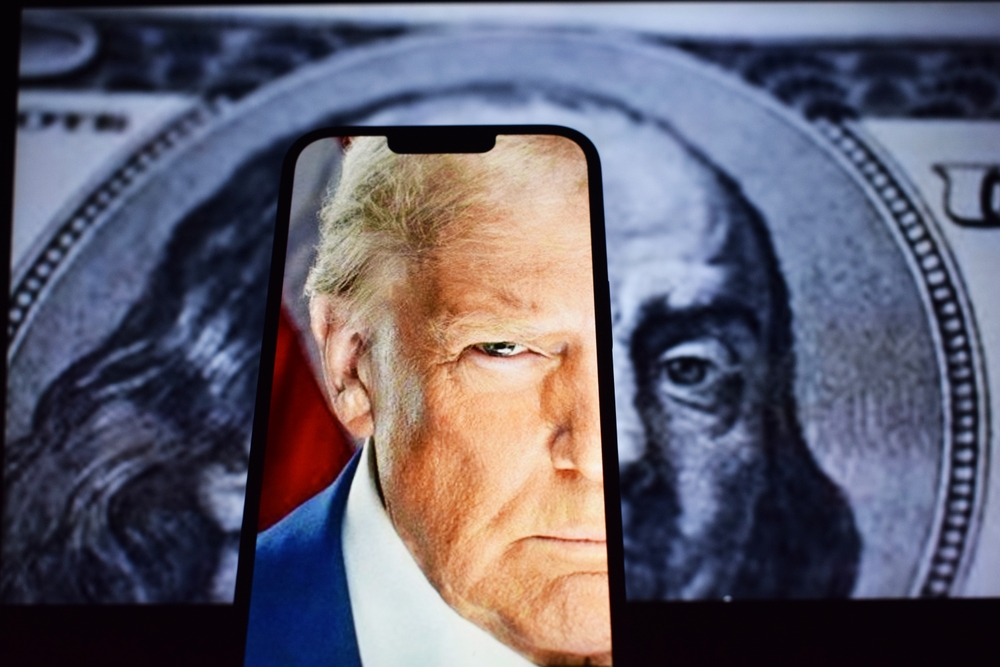

The word “FOREVER” sitting in a federal legal document is unusual enough on its own. Seeing it in a one-page addendum that permanently blocks the IRS from examining a sitting president’s tax history is something else entirely. The document was added to the Justice Department’s website on a Tuesday, hours after the acting attorney general testified before Congress. No press conference. No announcement during the testimony. Most people following the day’s news cycle would never have known it was there.
That single page has now become one of the most contested documents in recent American political history.
The addendum is a direct outgrowth of a $10 billion lawsuit Trump filed in January 2026. A government contractor named Charles Littlejohn, working inside the IRS through consulting firm Booz Allen Hamilton, stole and leaked the confidential tax returns of thousands of wealthy Americans between 2018 and 2020 – including Trump and his family. Those records were published by media outlets. Littlejohn pleaded guilty in October 2023 to one count of unauthorized disclosure and was sentenced to five years in federal prison. Trump sued the IRS over the breach, personally, not as president.
How It Got Here
Trump filed his $10 billion lawsuit against the IRS and Treasury Department alongside his sons Donald Trump Jr. and Eric Trump, and the Trump Organization. The suit alleged the government had failed to protect their confidential tax information. That framing mattered, because Trump was suing in his personal capacity while simultaneously serving as the president who oversees the very agencies he was suing.
U.S. District Judge Kathleen Williams, who presided over the case, had raised her own doubts about whether an actual “case and controversy” existed – a constitutional requirement for a federal court to have jurisdiction at all. According to NPR, a Justice Department official confirmed no agency “submitted any settlement documents nor filed any documents ensuring that settlement was appropriate where there was an outstanding question as to whether an actual case or controversy existed.” The case was dropped before the judge could force a reckoning with that question.
The Settlement – and What Was Hidden in It
The original settlement, announced Monday, created a $1.776 billion fund to compensate people who believed they had been targets of political “weaponization” or faced prosecutions for political aims. Under the agreement, according to Axios, Trump, his sons, and the Trump Organization received a formal apology but no direct monetary payment. The fund itself was already generating controversy when Monday’s announcement landed. Then came Tuesday’s addendum.
The one-page document, signed by Acting Attorney General Todd Blanche and added to the Justice Department website the following day, states that the IRS is “forever barred and precluded” from prosecuting or pursuing any claims related to Trump or affiliated individuals. The restrictions apply to tax returns filed before the settlement’s effective date of May 18, 2026. The government is also barred from looking into Trump’s family members, trusts, companies, and affiliated businesses.
Most federal officials, including the president, cannot stop the IRS from pursuing specific investigations. The attorney general, however, appears to be excluded from that restriction by law – and the addendum appears to exploit precisely that gap.
The Justice Department, for its part, said the addendum covers only existing audits, not future ones. Critics note that “existing audits” carries significant financial weight in that sentence.
The Man Who Signed It
The addendum was signed by Todd Blanche, acting Attorney General since April 2026. Before taking that role, Blanche had spent years as Trump’s personal criminal defense attorney, representing him in the classified documents case, the election interference case, and the hush money trial that ended in a New York state conviction.
Within two weeks of Blanche becoming deputy attorney general, the Justice Department’s top ethics lawyer told Blanche he would need to recuse himself from any cases involving Trump in his personal capacity. The settlement – and its addendum – involves Trump directly in his personal capacity as a plaintiff in a lawsuit he filed as a private citizen. The Justice Department has not addressed publicly whether that recusal obligation applied here.
On Tuesday morning, Blanche testified before a Senate committee. He made no mention of the addendum he would sign later that day. The document appeared on the Justice Department’s website a few hours after Blanche left Capitol Hill.
What Was Actually at Stake Financially
The tax immunity provision isn’t just symbolic. A ProPublica and New York Times investigation found that Trump used a dubious accounting maneuver to claim improper tax breaks from his troubled Chicago tower – and that losing the yearslong audit battle over that claim could mean a tax bill of more than $100 million.
The Chicago tower dispute centered on a specific allegation. When Trump sought to reap tax benefits from his losses on the project, the IRS argued he went too far and in effect wrote off the same losses twice. The first write-off came on his 2008 tax return, when he claimed that his investment in the condo-hotel tower met the tax code definition of “worthless” because his debt on the project meant he would never see a profit. ProPublica and the Times, working with tax experts, calculated that the revision sought by the IRS would create a new tax bill of more than $100 million, plus interest and potential penalties. That dispute had been running for well over a decade when the May 2026 settlement closed it permanently with a single page.
When the House Ways and Means Committee released six years of Trump’s tax returns in 2022, the documents showed he reduced or eliminated his federal tax burden by claiming massive losses. In 2016 and 2017, Trump and his wife Melania paid only $750 in taxes after reporting losing tens of millions in adjusted gross income. In 2020, they reported losing $4.8 million and paid no federal taxes.
The Critics – and the Defense
On Monday, 93 House Democrats filed an amicus brief in federal court seeking to block any potential settlement, warning that the arrangement creates a “specter of corruption unparalleled in American history” and could allow Trump to improperly direct public funds to himself, his family, and his allies.
The lawmakers argued that Trump was effectively operating on both sides of the dispute – serving as both the plaintiff suing the IRS and the president overseeing the agency, raising concerns about unconstitutional “self-dealing.” As they wrote in their motion: “Never in the history of the United States has a sitting President sought a monetary settlement from the government he leads – let alone sought many billions of dollars in taxpayer funds.”
Senator Jack Reed of Rhode Island put it more bluntly during Tuesday’s Senate hearing, calling it “an obvious abuse of power by the Department of Justice, by the president,” and adding: “He negotiated essentially with himself. You’re his appointee, the IRS are his appointees, he’s the plaintiff.” Reed later called Blanche “the president’s consigliere.”
According to ABC News, Brandon DeBot, the policy director of the Tax Law Center at NYU School of Law, called the arrangement “a breathtaking abuse of the tax and legal system,” adding that the Justice Department does not have the authority to offer the broad protections promised in the addendum.
The Justice Department’s response has been largely procedural. A spokesperson said: “As is customary in settlements, both sides have executed waivers of a variety of claims that were or could have been brought.”
While Trump’s settlement with the IRS does not allow him to directly receive money from his Anti-Weaponization Fund, the addendum barring the government from conducting audits of his tax returns – including those filed before the effective date of the settlement – could prove lucrative for the president.
The Trump Organization praised the deal. A spokesperson said the settlement “sends a clear bipartisan message that the weaponization of federal agencies for political purposes will not be tolerated.”
The Anti-Weaponization Fund will be overseen by a five-member commission appointed by the Attorney General, with one member selected in consultation with congressional leadership. Trump will have the power to fire any of the members. The Justice Department said there are “no partisan requirements to file a claim,” and it will process claims through December 15, 2028 – a month before Trump’s second term ends.
Read More: Trump Planning New Structure on White House Lawn
The Quiet Part
Look at the sequence. A president sues the government he leads. His own Justice Department negotiates the settlement on behalf of the other side. His own acting attorney general – a man who spent years as his personal criminal defense lawyer – signs the final document that permanently shields him from tax scrutiny. That document is added to a government website hours after the same acting attorney general testified before Congress without mentioning it.
The phrase “self-dealing” gets used so often in American political coverage that it risks losing its edge. This situation gives it a very concrete shape. Ethics watchdogs noted this is the first known instance of a president suing the government he leads. The judge who heard the case raised the same concern in her own language, questioning whether genuine adversity existed between the two sides, since Trump was effectively on both of them. The case was dropped before she had to answer it. The word “FOREVER” is right there on the page. And that page is now, officially, part of the legal record.
AI Disclaimer: This article was created with the assistance of AI tools and reviewed by a human editor.