

Smallpox is caused by the variola virus, a pathogen that had been circulating in human populations for well over a millennium before Europeans ever set foot in the Americas. Smallpox reached the island of Hispaniola in the early years of Spanish settlement, carried by colonizers during the late 15th and early 16th centuries. The virus affected human populations for at least 1,500 to 2,000 years, possibly longer, before eradication through a global vaccination campaign in 1980. Before eradication, it caused repeated epidemics around the world and is estimated to have killed hundreds of millions of people.
Two bodies lay in the dry soil of northern Chile for 400 to 500 years. One was a woman, 30 to 35 years old. The other was a man, 18 to 20. They were members of an Inca community living near Camarones Cove on the Pacific coast, at the southern edge of one of the largest empires on Earth. They almost certainly did not know what was killing them.
On July 30, 2026, a team of researchers published findings using ancient DNA extracted from those two mummies. They produced the first direct molecular evidence that European colonizers brought smallpox to the New World. For centuries, historians and scientists had operated on strong circumstantial evidence. Now there is a genome. Two of them, in fact, reaching from medieval Europe to the Andes.
An Accidental Discovery at an Inca Cemetery
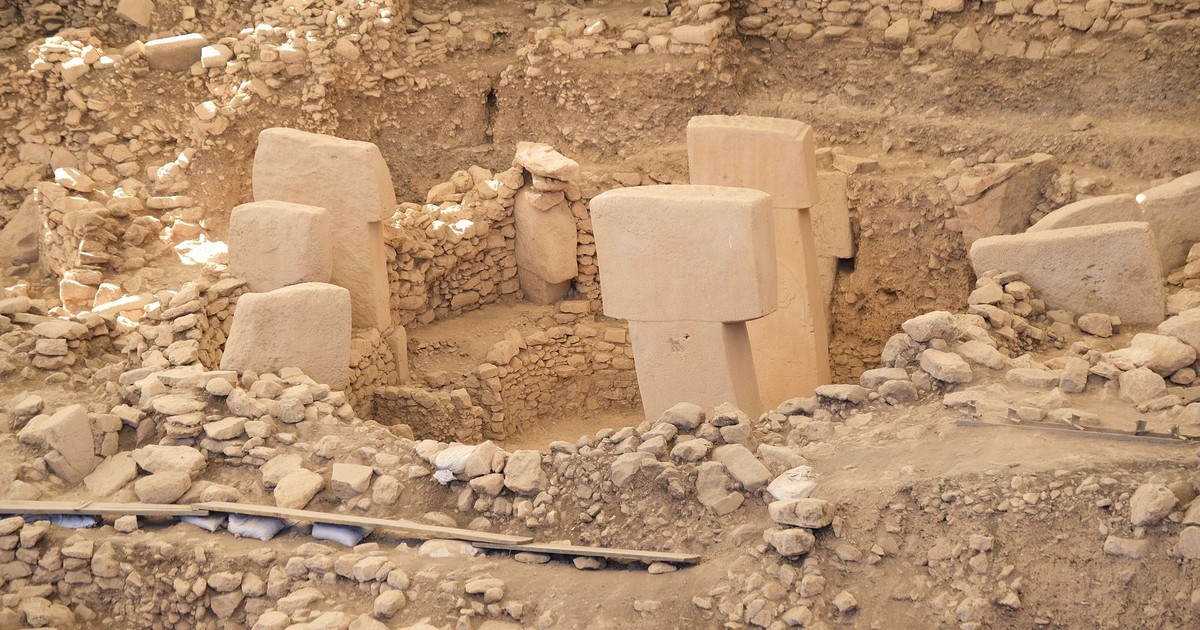
Researchers from Trinity College Dublin recovered and analyzed the first ancient smallpox virus genomes ever identified in the Americas from two individuals buried in northern Chile between the late 15th and early 17th centuries. The site, known as Camarones 9, sits near the Pacific coast in the Atacama region, one of the driest places on Earth. The two people whose bodies bore the smallpox pathogen lived in the southern reaches of the former Inca Empire.
Study co-author Shigeki Nakagome, a geneticist at Trinity College Dublin, told reporters that none of the team expected to find variola virus DNA in the samples they had collected. The research team was not targeting ancient pathogens. They were looking to understand human population history in the region. “I don’t think there was any historical record documenting smallpox in this particular community,” Nakagome said, “so no one expected the smallpox evidence.”
Bruno Romero González, a computational biologist and doctoral student at Trinity College Dublin and the study’s lead author, suggested screening the samples for ancient pathogens while the team was already working through the human genetic data. That pivot turned a population-history project into a landmark discovery. Until this study, there had been no direct genetic evidence linking colonial-era outbreaks in the Americas to strains circulating in the Old World.
What the Genomes Actually Revealed
Smallpox is caused by the variola virus, a pathogen that had been circulating in human populations for well over a millennium before Europeans ever set foot in the Americas. Smallpox reached the island of Hispaniola in the early years of Spanish settlement, carried by colonizers during the late 15th and early 16th centuries. The virus affected human populations for at least 1,500 to 2,000 years, possibly longer, before eradication through a global vaccination campaign in 1980. Before eradication, it caused repeated epidemics around the world and is estimated to have killed hundreds of millions of people.
The two Chilean mummies provided scientists with the earliest known smallpox genomes found in the Americas, dating between 1492 and 1631. The genomes are the first-ever DNA evidence that proves European colonization introduced smallpox to the Americas, according to the paper published in the journal Science on July 30, 2026.
The viral strain found in both mummies was named CAM9 by the researchers. While the CAM9 lineage died out well before smallpox was eventually eradicated, when the team built a family tree of the virus, this strain fitted neatly between medieval European strains and modern variants. A strain from a moment in history that scientists had known must have existed but had never been able to find.
The team compared the variant to other ancient and modern smallpox genomes. The Chilean variant split off from a European branch of the disease around the thirteenth century, confirming that European colonizers were the source of smallpox in the region. That split from a European strain around 1296 predated modern strains, placing it squarely in the evolutionary space between the medieval Old World and the colonial Americas.
Analysis of the two ancient viral genomes showed them to be almost identical, suggesting the two individuals were likely infected during the same outbreak or by the same circulating strain. A woman in her early thirties and a young man barely out of adolescence, dying within what the genomic evidence suggests was the same epidemic event.
How a Virus Becomes a Conqueror
The indigenous people of the Americas had no previous exposure to smallpox and therefore no natural immunity. The virus was transmitted by person-to-person contact, triggering a cataclysmic population collapse.
Smallpox is thought to have been responsible for some 4 million total deaths in Indigenous communities in the Americas after European colonizers arrived. Some broader estimates put the total death toll from all introduced diseases far higher. Smallpox began decimating Indigenous populations shortly after European colonizers arrived in the Americas during the late 15th century. Along with other infectious diseases like diphtheria, influenza, typhus, and measles, historians estimate 10 to 100 million people died in these epidemics within only a few centuries.
In the Americas, smallpox and other viral diseases killed large majorities of indigenous people in many regions, according to estimates that vary widely depending on location and time period. This helped the Spanish vanquish the Aztec Empire in modern-day Mexico, the Maya city-states in Central America, and the Inca Empire that stretched from modern-day Ecuador through Peru and into Chile.
The Inca Empire, at its height, was the largest empire in pre-Columbian America. By the time Spanish forces captured the emperor Atahualpa in 1532, smallpox had already been tearing through the Andean population for at least four years. The political and military collapse that followed was built on the ruins of an epidemic that had already done most of the work.
The Virus’s Own Evolution
The CAM9 genomes revealed not just where the virus came from, but how it was changing as it moved. The genomes preserve an intermediate stage in the virus’s specialization for humans. As variola adapted to its only known host, mutations disabled some genes that had become unnecessary. By comparing the Chilean genomes with ancient and modern strains, the researchers traced how that pattern developed.
Over time, this ancient variola strain became less able to infect animals. “Because of that, variola started to focus on targeting only humans,” Romero González explained, ultimately adapting to become more successful in infecting people.
The virus appears to have accumulated mutations at a relatively steady pace for centuries before entering an approximately 200-year period during which its genome changed much more slowly. That lull coincided with the height of European colonial expansion, when increasingly connected populations and repeated epidemics may have favored a virus that was already well adapted to humans. Its evolutionary pace picked up again around the start of widespread vaccination.
The researchers suggest this points to the virus having achieved an evolutionary optimum that let it spread with little need for further adaptation as it burned through populations lacking immunity. The conditions of colonial expansion, with tens of millions of immunologically naive people connected across new trade routes and under the pressure of displacement and violence, gave it ideal conditions to stay exactly as it was.
The study also adds to a small but growing body of evidence that the smallpox virus lost genes as it adapted to human hosts, a process that related viruses, such as the one that causes mpox, might also be using today.
Why the Historical Record Was Never Enough
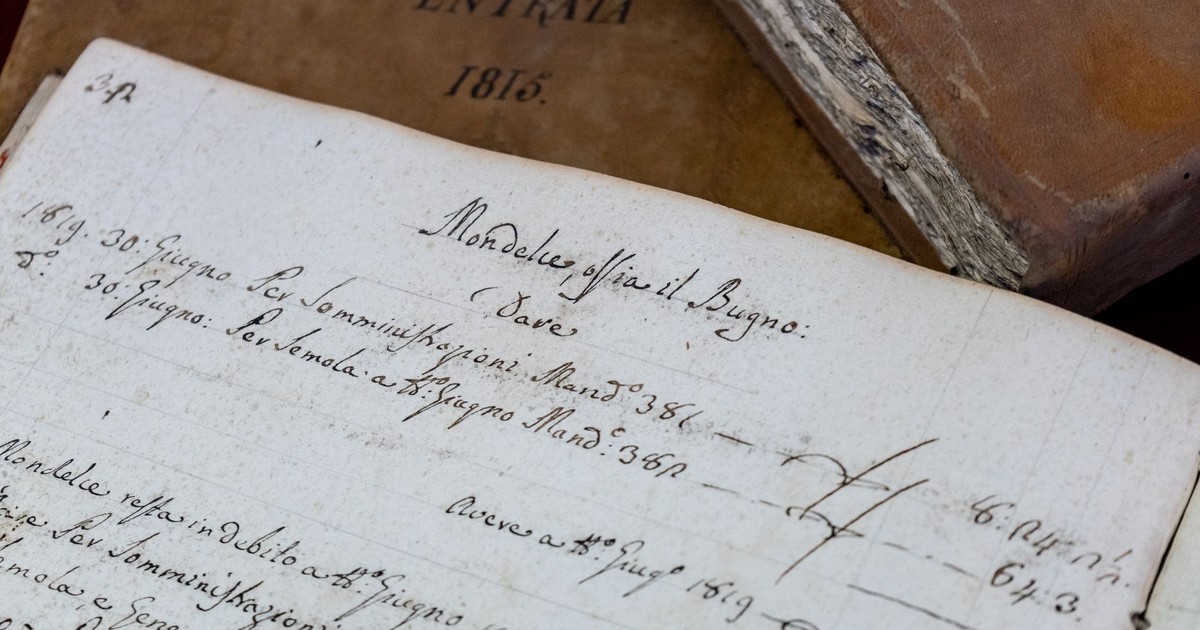
Previously, the evidence for smallpox’s European origin in the Americas had been a historical paper trail. Now, 500 years later, scientists have the first solid genetic evidence that it was indeed smallpox contracted from Europeans that led to the catastrophic population decline in Indigenous communities.
Written records from the colonial period are, by definition, records written by colonizers. They document what Spanish chroniclers observed and chose to record, in a language and from a perspective that Indigenous communities did not control. The genetic record in the mummies is different. It is the virus, preserved in bone, in a community that left no written testimony of what happened to it.
Anne Stone, an anthropologist at Arizona State University who was not involved in the study, told journalists covering the research: “This paper is really lovely because we know from the historical record that smallpox had a huge impact on Indigenous populations in the Americas,” adding that the molecular evidence now corroborates what the historical record long suggested.
The researchers themselves are careful about what the genomes can and cannot say. As Nakagome told ScienceAlert, the CAM9 genomes “serve as a snapshot of the viral evolution, helping us understand which evolutionary changes had already occurred before smallpox reached the Americas during the early colonial period, and which changes occurred later and eventually gave rise to the lineage ancestral to all 20th-century strains.” This is not a broad argument about colonialism. It is a genomic data point wedged into one of the most consequential moments in human history.
What This Actually Means
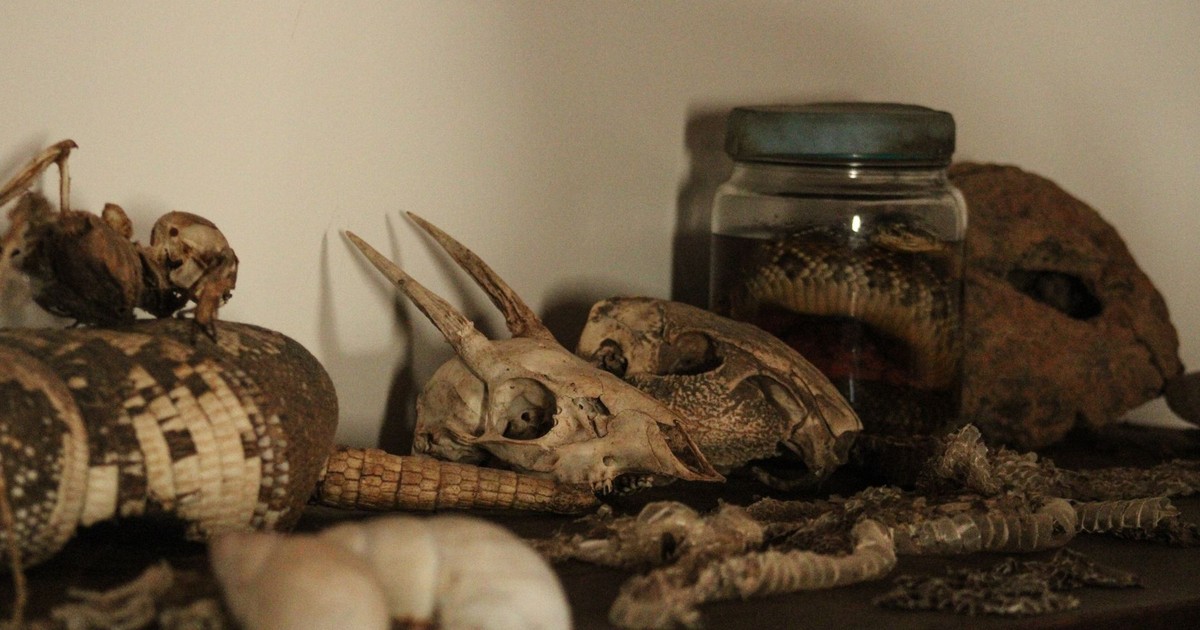
The two people buried near Camarones Cove were not famous. There are no chronicles about them. Their names are not recorded anywhere. The study gives them, 500 years after their deaths, a kind of biological testimony: evidence that what happened to their community happened the way history always suspected but could never genetically confirm.
For researchers, the next step is more samples. The Trinity College Dublin team has produced the strongest direct evidence to date that the disease was introduced through European colonization, but one site is one snapshot. The researchers hope that more ancient variola DNA will turn up across the Americas, filling in the picture of how the virus moved from the Caribbean coast where it first appeared in the early colonial period all the way to the Andean coast where these two people died.
The genetic mutation rate of the virus slowed dramatically in the Americas for a couple of centuries shortly after arrival. It sped up again in the 19th century, which the researchers suggest was connected to widespread vaccination drives. Vaccination put pressure back on the virus, forcing it to adapt again. The eradication campaign that finished smallpox off in 1980 was not the end of a static story. It was the end of a long arms race between a pathogen and the immune systems of the people it infected, a race that the Americas entered late and at enormous cost.
Understanding the evolutionary trajectory of variola gives virologists a cleaner model for anticipating how similar pathogens behave under pressure. The Inca mummies smallpox genomes are not just a historical artifact. They are comparative data for diseases that are still circulating.
What the Camarones site ultimately demonstrates is that the bodies of ordinary people, buried without ceremony or record in dry coastal soil, can carry evidence that rewrites the terms of a historical argument. The written record of colonization was always incomplete, filtered through the perspective of those who held the pen. Bone doesn’t editorialize. The variola DNA found in those two individuals confirms, at the molecular level, what Indigenous oral traditions and demographic histories have described for generations: that a catastrophic wave of disease arrived from Europe, and that it reshaped an entire hemisphere within a single human lifetime.
Disclaimer: This information is not intended to be a substitute for professional medical advice, diagnosis, or treatment and is for information only. Always seek the advice of your physician or another qualified health provider with any questions about your medical condition and/or current medication. Do not disregard professional medical advice or delay seeking advice or treatment because of something you have read here.
AI Disclaimer: This article was created with the assistance of AI tools and reviewed by a human editor.