

Visual puzzles have become a staple of online entertainment—and for good reason. An image that seems simple at first glance can quickly become baffling when you look closer, prompting intense debate, laughter, and self-reflection. One such viral sensation that has taken social media by storm is the question: “How many holes do you see in these shorts?” While the headline suggests a personality revelation (or even a psychological diagnosis), the real insight comes from how you interpret the image, not what number you ultimately arrive at. In this article, we’ll unpack the puzzle, explore what your answer might suggest about your thinking style, explain why quizzes like this are so popular, and add deeper context related to perception and personality.
Understanding the Puzzle
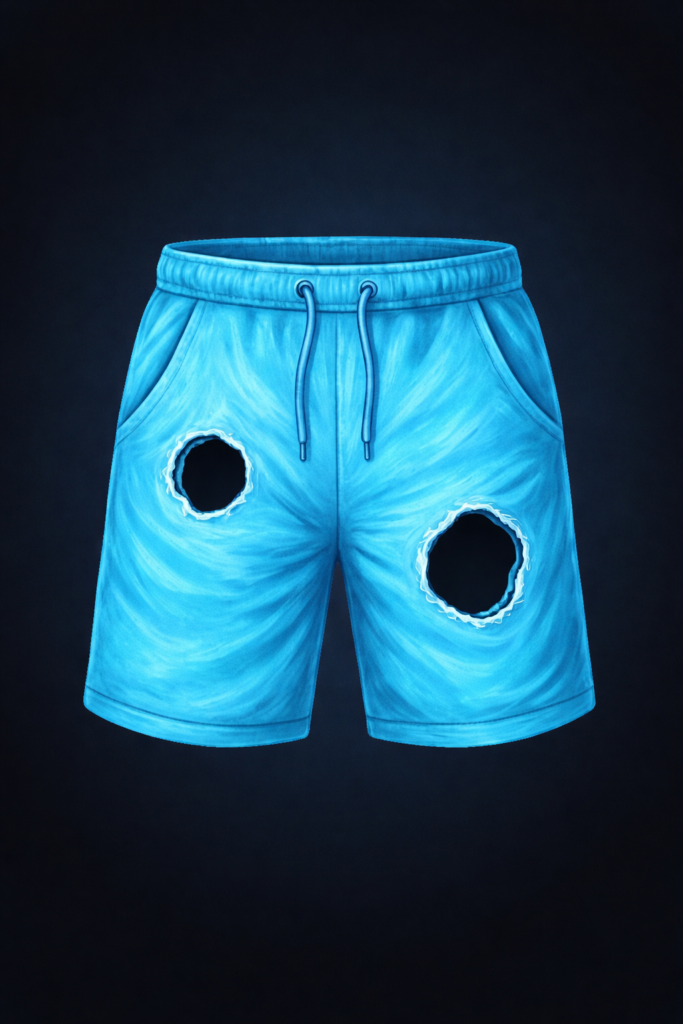
The puzzle features a pair of distressed denim shorts. They have obvious tears, functional openings for the legs, and a waistband. The rips are irregular, making it unclear where one hole ends and another begins. This is where people’s answers start to differ. Even though everyone is looking at the same image, the number of holes you count may not match someone else’s. That difference is the heart of the puzzle: it reveals your approach to noticing details, understanding structure, and interpreting what you see.
If You See 2 Holes

If you immediately spot just the two large tears—one on each leg—you are drawn to the most striking features. You naturally notice what stands out without overthinking extra layers or openings. This ability to quickly identify the obvious means you make rapid assessments and respond effectively to visual information.
Seeing only two holes also suggests you trust your first impressions. You act confidently on what’s immediately noticeable and don’t feel the need to overcomplicate matters. Your approach is efficient and practical—perfect for situations where quick thinking is more valuable than diving into every detail. People who notice two holes often excel in environments that require fast decision-making. You can focus on what’s essential, cut through distractions, and respond effectively without getting bogged down in unnecessary complexity.
If You See 5 Holes
If you counted five, you likely included the two main tears along with the three functional openings—the waistband and leg holes. This shows that you look beyond the surface, seeing the shorts as a complete object rather than just a flat image. You pay attention to how pieces fit together while still recognizing the most obvious elements.
People who see five holes are good at balancing instinct with thoughtfulness. You notice what stands out immediately but also consider how everything connects, which allows you to understand both visible details and the garment’s purpose. This approach is practical and versatile. You’re comfortable switching between noticing surface details and understanding the overall design. It’s a style that suits problem-solving, task management, and adapting to new situations. You see both the small pieces and the bigger picture—a skill that’s valuable in work and everyday life.
If You See 7, 8, or 9 Holes
Counting seven or more holes means you likely considered that each tear could extend through both the front and back of the fabric, or you noticed smaller openings others might overlook. This shows a strong attention to detail and a willingness to explore the full scope of what’s visible. You naturally look for patterns and connections beyond what’s immediately obvious.
People who see this many holes tend to enjoy thinking through complex problems. You dig deeper, question first impressions, and examine how different elements interact. This approach helps you uncover details that others might miss and gives you a broader perspective.
Those who notice seven or more holes often excel in planning, problem-solving, and analyzing layered information. You are comfortable handling intricate situations, anticipating outcomes, and seeing how individual parts contribute to the whole. Your perspective is both thorough and practical, making you well-equipped for challenges that require focus and adaptability.
Why People Love Tests Like This

Visual personality quizzes have surged in popularity because they tap into a mix of psychological and social motivators. Even though these quizzes are lightweight and entertaining, they often reveal meaningful insights about how the human mind works. One of their strongest appeals is the sense of instant self-discovery they provide. People are naturally drawn to learning new things about themselves, and even playful puzzles offer language to describe thought patterns and tendencies. When engaging with a visual quiz, it’s common to reflect on questions like: Why did I see that first? What does this say about how I think? Do I focus on details or the bigger picture? That moment of introspection delivers a satisfying emotional payoff and a subtle sense of self-understanding.
These quizzes also validate individual perspectives. Because multiple answers can be considered correct, participants often feel that their interpretation makes sense, providing a sense of recognition and affirmation. The curiosity sparked by images adds another layer of appeal. Our brains are wired to seek clarity, and when perception is challenged, the mind engages more deeply, turning even a simple puzzle into a playground for exploration.
Social connection is another driving factor. People naturally want to compare results with friends, discussing differences and debating interpretations. Conversations such as “How did you get seven?” or “We looked at the same image but saw something completely different” transform the quiz into a shared experience. Finally, these puzzles feel low-stakes yet stimulating. Unlike academic tests, they are playful and engaging without consequences, making them accessible and enjoyable for a wide audience while still providing insight into individual thinking styles.
What This Puzzle Suggests About Perception
Beyond mere entertainment, this visual puzzle highlights profound truths about how humans perceive and interpret the world. The task of counting holes may appear straightforward, but subjective analysis of an image—or of our own perception—rarely produces a single right or wrong answer. Instead, the way we interpret what we see often reveals more about our cognitive style and personality than it does about the image itself. Each person brings their own experiences, habits, and thought patterns to the task, and two people who count different numbers of holes are not necessarily in disagreement—they are simply processing the information through different mental frameworks.
Read More: 18 Times People Couldn’t Believe a Photo Was Real
Perception is far from passive. Our brains do not just record visual information; they actively assign meaning, fill in gaps, and draw conclusions based on prior knowledge and personal tendencies. This is why people interpret images in diverse ways. The brain is also wired to seek order, categorizing shapes, edges, and patterns wherever possible. When an object challenges this tendency—such as a torn, irregular piece of fabric—the brain must work harder to define boundaries and make sense of what it observes. This extra processing often reveals a person’s natural cognitive style, whether quick and instinctive, structured and methodical, or layered and analytical.
Unique expression in the puzzle further exposes cognitive bias. Some individuals naturally lean toward the simplest interpretation, others assume hidden depth, and still others instinctively analyze structure and function in detail. Even a single image can illuminate these tendencies, offering insight into the subtle ways people process information and approach complexity in both visual and real-world scenarios.
Deeper Perspectives on What This Puzzle Reveals

Beyond just counting holes, this puzzle can highlight how flexible your thinking is. Being able to see two holes, then reconsider five, or notice seven or more demonstrates adaptability and a willingness to explore new perspectives. It also taps into spatial awareness. Figuring out which openings belong to the front or back of the shorts, or how layers interact, exercises visual reasoning skills. People strong in this area often excel in design, engineering, or any task that requires understanding objects and their relationships.
Finally, your approach shows your natural problem-solving style. Some respond quickly to what’s obvious, others take time to see the structure, and some examine every detail before deciding. Understanding your style can help you recognize your strengths and the environments where you thrive.
What This All Means
The number you see is influenced by your prior experiences in ways you might not immediately recognize. For example, someone who has worked extensively with textiles, sewing, or tailoring may instinctively consider that holes exist on both sides of fabric and mentally account for the layers. In contrast, individuals who are familiar with 3D modeling, architecture, or design might approach the image with a sense of spatial awareness, imagining how openings connect through depth rather than simply judging the flat surface. Meanwhile, people accustomed to thinking in two dimensions may focus only on what is directly visible, evaluating shapes and patterns without accounting for hidden structure.
These differences highlight how our brains rely on accumulated knowledge and repeated practice when processing visual information. Experience provides mental shortcuts, allowing some people to detect subtleties others might overlook. It also shapes the way we organize and prioritize information, guiding what we notice first and how we interpret ambiguous or incomplete cues. Understanding this can help you recognize that perception is not purely objective; it is a reflection of personal history, learned skills, and habitual ways of approaching the world. In essence, every image you encounter is filtered through your unique experiences, shaping what you see and how you understand it.
Disclaimer: This article was written by the author with the assistance of AI and reviewed by an editor for accuracy and clarity.
Read More: The 6 Types of Gift Giver Personalities – Which Type Are You?