

The average American man spends about two hours watching YouTube tutorials before attempting a home repair he has absolutely no business touching. The plumber’s bill that follows is usually double what it would have been before he started.
That’s not an attack on competence. Plenty of the repairs on this list feel entirely doable from the outside: a crack here, a leaking pipe there, a wall that needs knocking down to open up the kitchen. The problem isn’t motivation or effort. It’s that some jobs carry consequences so far out of proportion with the original problem that the math only makes sense one way. A $300 plumber is cheaper than $15,000 in water damage. A licensed electrician costs less than a house fire.
These 17 are the ones most likely to turn a weekend project into a contractor emergency. Some are dangerous in ways that aren’t obvious until the ambulance arrives. Others simply destroy home value, void warranties, or create code violations that surface when you try to sell the house. All of them are the kinds of home repairs men shouldn’t fix themselves, no matter how many times they’ve done it before.
1. Electrical Panel Work
The Electrical Safety Foundation International reports that home electrical fires account for an estimated 51,000 fires each year, resulting in nearly 500 deaths, more than 1,400 injuries, and $1.3 billion in property damage. The electrical panel, also called the breaker box, is where that risk is concentrated. It handles the entire power load of the house, and the wiring inside is live even when individual breakers are switched off.
Because the human body contains a significant amount of water and conducts electricity well, contact with an energized power source can send current straight through the body. A household current of 15 amps or higher can cause cardiac arrest, impaired breathing, or violent muscle contractions that the person can’t control. Most residential circuits run at 15 to 20 amps. That’s not a number to experiment with on a Saturday afternoon.
The legality of performing your own electrical work varies by municipality, and many projects that seem simple require permits to ensure compliance with current codes. Failure to obtain the right permit can result in fines, legal problems, and complications when completing future property transactions. Skip the panel work entirely. This is one of the home repairs men shouldn’t fix, no exceptions.
2. Any Wiring Beyond Swapping a Light Fixture
Replacing a burned-out light fixture is at the edge of reasonable DIY territory. Running new wiring, moving outlets, adding circuits, or rewiring a room is a completely different job. Even the simplest DIY wiring errors can cause a fire, and common mistakes made by untrained homeowners include errors that can produce devastating results.
Working with circuits involves routing, selecting the right gauge wire, and ensuring there are no loose or bad connections. Without proper training, those factors are genuinely difficult to get right. One of the most common mistakes among amateurs is accidentally overloading a circuit. An overloaded circuit doesn’t always trip a breaker immediately. It can overheat slowly inside a wall for months before igniting.
Many appliances and electronics require professional installation to maintain warranty coverage. Attempting DIY wiring can render a warranty null and void, leaving the homeowner responsible for any future repairs or replacements. That applies to the appliance and, often, to the home insurance policy covering fire damage from faulty wiring.
3. Gas Line Repairs
Gas line work is one of the clearest cases where the gap between “I can smell the problem” and “I can fix the problem” is catastrophic. If there’s a detectable gas leak, the right response is to call the gas company immediately, not attempt to seal it. Carbon monoxide poisoning is typically caused by incorrectly installed gas lines or appliances, and most gas providers will send someone to diagnose and fix the issue at no charge.
Working with gas appliances, including water heaters and stoves, is risky without proper training. Gas leaks are a serious hazard, which is why a qualified technician should always be the one to install, maintain, or repair gas appliances. This includes replacing gas supply lines, moving gas hookups for a relocated appliance, and adding new gas connections for outdoor grills or fire pits.
The specific danger here is that a gas leak doesn’t always announce itself. A connection that passes a quick pressure test in the moment can develop a slow leak at a fitting that wasn’t torqued correctly. That leak accumulates in an enclosed space and waits for an ignition source. Call a licensed plumber or gas technician for anything beyond replacing a standard gas appliance connector that is already safely capped and turned off.
4. Roof Repairs
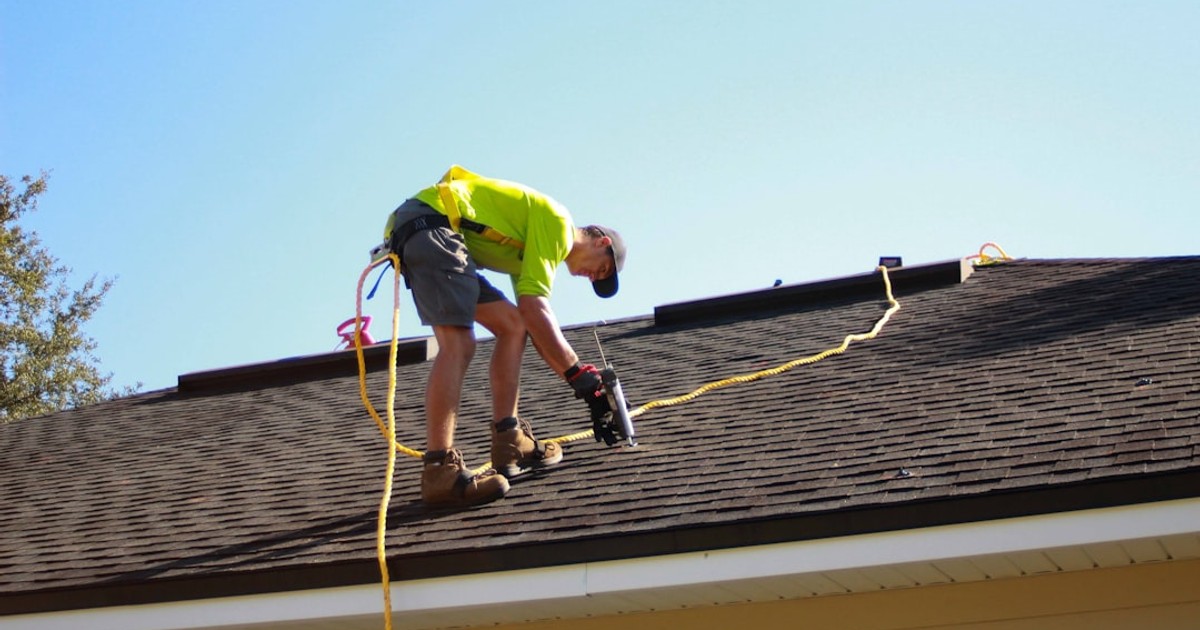
Every year, homeowners go up on roofs to patch a few shingles and come down via the ambulance route instead. One of the most common injuries associated with DIY roof repair is falling from a ladder. Getting hurt on a roof not only costs money in the form of medical bills, it also means losing income from missed work, while the roof itself may end up more damaged than before.
The physical risk is the most obvious problem, but it’s not the only one. Flashing, the metal strips around chimneys, vents, and skylights, is where most roof leaks originate. It requires precise skill to cut, fit, and seal correctly. DIYers tend to rely heavily on caulk or sealant, which cracks under thermal expansion. Improperly installed flashing allows water to wick beneath the shingles, and a slow, undetected leak can lead to extensive rot in the roof deck, framing, and attic, producing mold and thousands of dollars in structural repairs.
A professional roofing crew is insured against injury on your property. You are not insured against your own injury, and your homeowner’s policy may not cover damage you caused while doing unlicensed roof work.
5. Asbestos Removal or Disturbance
Homes built before 1980 may contain asbestos in insulation, floor tiles, roof shingles, drywall joint compound, and pipe lagging. The material is not dangerous when it’s sealed and intact. The moment it gets cut, sanded, drilled, or broken apart, microscopic fibers become airborne. Prolonged exposure can cause serious lung diseases including mesothelioma and asbestosis. Although asbestos in roofing material is generally less friable than other forms, the risk remains, especially as the material ages or gets damaged, and it should not be approached as a DIY project.
If you’re tearing out walls and find asbestos insulation, the correct response is to stop work immediately. The first step is hiring a certified asbestos professional to test samples before doing anything else. This is not a precaution that can be skipped to save money.
Removing asbestos from exterior locations, like a roof or siding, costs between $50 and $150 per square foot. Whole-home remediation can cost $5,700 or more. Those numbers sting, but mesothelioma has a documented latency period of 20 to 50 years. The disease shows up long after the exposure, and by then there’s no fixing it.
6. Foundation Cracks and Structural Issues
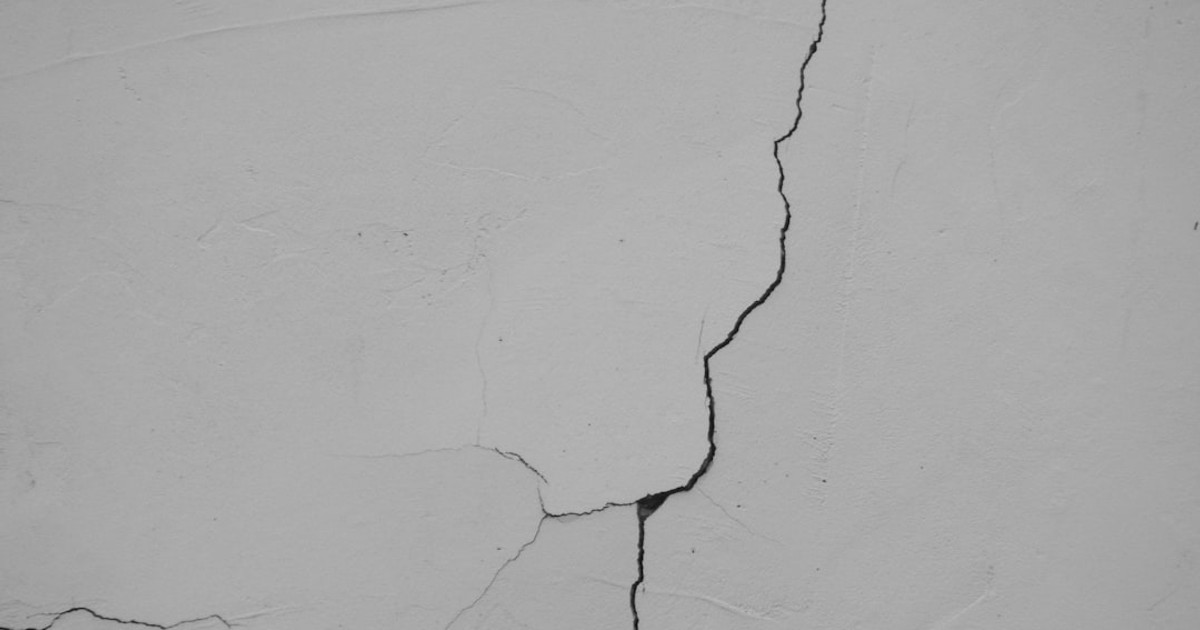
A hairline crack in a basement wall is easy to dismiss. Some cracks really are settling, cosmetic, and harmless. Others are symptoms of active water infiltration, soil movement, or structural failure. The problem is that distinguishing between the two requires a structural engineer or an experienced foundation contractor, not a can of hydraulic cement and a YouTube video.
Always hire a professional if you’re dealing with any load-bearing wall or making significant structural changes. Removing drywall creates dust that can irritate eyes, nose, and throat. More seriously, incorrect work on load-bearing walls can cause the structure to collapse or cause upper floors to start sagging.
Bob Vila’s foundation cost guide puts a full foundation replacement at $25,000 to $115,000, which is why addressing foundation problems early, even seemingly insignificant ones, saves money in the long run. Signs of a larger problem include cracks and fractures on outside walls or in the basement, sagging floors, buckling walls, and moisture or mold. A licensed foundation specialist can distinguish between cosmetic settling and active structural movement in a single inspection.
7. Load-Bearing Wall Removal
Open-plan kitchens are everywhere on home renovation shows, and the dramatic moment where a wall comes down is designed to make it look easy. It isn’t. Homeowners regularly remove walls without understanding whether they’re load-bearing, and the results can include house collapse or floors beginning to sag on the level above.
Identifying a load-bearing wall is not always straightforward. Walls that run perpendicular to floor joists, walls directly above or below other walls, and walls near the center of the house are common candidates, but none of those rules work in every case. The only reliable method is a structural assessment.
Any time you’re thinking about knocking down walls, adding rooms, or altering anything that might be supporting the house, a professional contractor or structural engineer should be consulted first. Incorrect modifications can lead to serious safety hazards and major legal complications. Angi’s 2026 structural engineer guide puts the cost of hiring a structural engineer for residential work at $200 to $1,500, with a load-bearing wall analysis typically running $250 to $1,000. The cost of a sagging floor or compromised roof structure is many times that.
8. Major Plumbing Work
Swapping a faucet washer or replacing a toilet flapper are reasonable DIY jobs. Anything involving the main sewer line, supply line rerouting, or drain stack modification is not. DIY plumbing repairs can lead to significant financial burdens down the road. Improper fixes result in recurring issues that require additional repairs and can cause extensive damage. The cumulative cost of those repeated fixes and associated damage often far exceeds what it would have cost to hire a professional plumber from the start.
Unlike electrical repairs, improper plumbing fixes are unlikely to cause immediate injury, but they take a serious toll financially. What starts as an annoying leak can quickly escalate to a flood, adding up to thousands of dollars in damage. Plumbing work involving the sewage system or hot water pipes is best left to professionals.
There’s also a code issue. Many jurisdictions require permits for plumbing work that goes beyond simple fixture replacement. Work done without permits creates problems at the point of sale, when a home inspector flags unpermitted modifications and the buyer’s bank decides the house is harder to finance.
9. HVAC Repair and Refrigerant Handling
Heating and cooling systems are one of the more appealing targets for DIY repair because the symptoms are obvious and the fixes seem like they should be simple: the unit isn’t cooling, or it’s making a noise. The reality is that HVAC repairs involve complex systems and refrigerants that are best left to trained technicians. Attempting these repairs without proper knowledge and equipment can result in costly damage and safety hazards.
Refrigerant is the specific sticking point. In the US, handling refrigerants like R-410A requires EPA Section 608 certification, and purchasing refrigerant without that federal certification is illegal. A system that’s low on refrigerant has a leak somewhere, and topping it off without finding and fixing the leak is a temporary measure that damages the compressor over time.
HVAC systems are complex and require specific expertise to repair correctly. Hiring a professional ensures the system operates efficiently, safely, and in compliance with building codes. An improperly repaired HVAC system can also produce carbon monoxide inside the home if heat exchangers are cracked or combustion venting is disturbed.
10. Mold Remediation Beyond Surface Spots
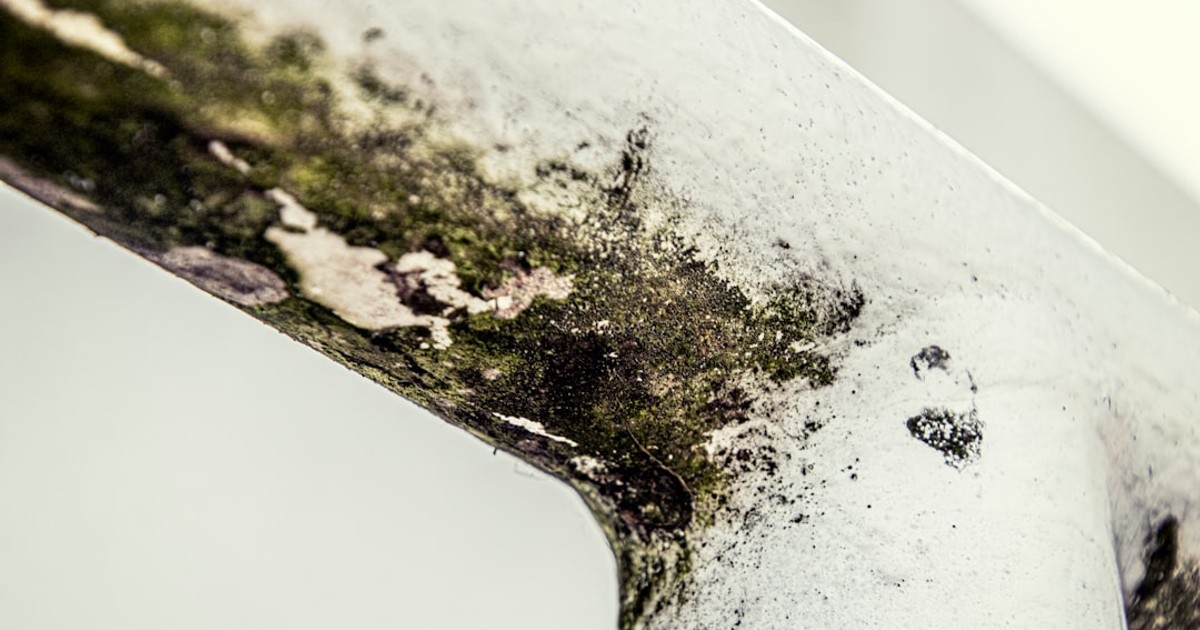
Wiping down a small patch of bathroom tile grout with a bleach solution is reasonable maintenance. Anything that looks like more than a few square inches, or that’s located behind drywall, under flooring, or in an attic, is a different situation entirely. Mold can cause respiratory problems and a range of health issues. It also spreads into areas requiring kitchen and bathroom repairs, impacting both the time and cost of renovation. Mold often grows behind walls, drywall, and wallpaper, or in spots where water has accumulated over time, and the smell may be the only sign that something is wrong.
The problem with DIY mold removal is containment. Professional remediation involves sealing the affected area, using negative air pressure systems (machines that draw air out of the space rather than allowing contaminated air to spread through the house), and disposing of contaminated materials according to specific protocols. None of that happens when someone rips out drywall and sprays bleach.
Water damage is an expensive and difficult problem, and the mold it creates represents a significant risk to health. If you find mold that covers more than 10 square feet, the EPA recommends professional remediation. If you find it behind walls, that threshold is effectively zero.
11. Basement Remodels
Basements look like simple renovation territory because the bones are already there and the ceiling is lower than a main floor, which makes everything feel less intimidating. DIYers tend to embrace basement renovations because mistakes seem easier to hide, but licensed contractor Mark Clement cautions that even seemingly simple tasks like framing basement walls have safety details that get overlooked. Specifically, fire-blocking and vapor barriers are two of the most commonly missed requirements in basement build-outs.
A vapor barrier prevents moisture from migrating through concrete walls and into your finished space. Skip it and you’ll have mold inside the walls within a few years. Skip fire-blocking, which involves filling the gaps in wall framing at floor level to prevent fire from traveling through wall cavities, and you may fail a home inspection or create a code violation that surfaces when you sell.
Basement underpinning, where the floor is excavated to increase ceiling height, is in a different category altogether. It requires structural support of the existing foundation during excavation, and a single error can destabilize the entire house. This is work for a licensed contractor with foundation experience, full stop.
12. Shower Waterproofing

The tile in a shower looks like the watertight layer. It isn’t. The tile is decorative. The waterproofing happens behind it, at the level of the shower pan and the wall membrane, before any tile goes up. When it comes to remodeling a shower, the waterproofing is the piece that requires a professional. Companies that specialize in shower pan waterproofing use layers of tar paper along with liquid or hot tar to create a durable, leak-proof surface, and because of the extreme temperatures involved, it’s a dangerous process that requires substantial practice to execute correctly.
A shower that looks fine for the first year can be leaking behind the tile the entire time. Water migrates through grout lines, accumulates between the tile backing and the wall studs, and produces rot and mold that isn’t visible until it’s produced serious structural damage.
Risking an improperly waterproofed shower means not just safety concerns but a leaking shower that requires the whole job to be redone. Professional tile contractors can also effectively waterproof shower walls before the tiling process begins. Getting the waterproofing right is the entire job. Everything else is cosmetic.
13. Window Replacement
Replacing a window seems like it sits in a reasonable DIY zone: remove the old frame, drop in the new unit, seal around the edges. The actual job involves structural considerations around the rough opening, proper flashing to prevent water intrusion behind the cladding, and ensuring the new window meets energy code requirements for the climate zone.
A window that’s installed without proper flashing creates one of the most expensive concealed water intrusion problems in residential construction. Water gets behind the exterior cladding, tracks down into the wall cavity, soaks the framing, and produces rot that doesn’t show up on the interior surface for years. By the time you see the water stain on the drywall, the structural damage is already done.
Older homes add another layer of complication. Windows in pre-1978 homes may have lead paint on the surrounding trim. Under the EPA’s Renovation, Repair and Painting Rule, disturbing lead paint without proper containment procedures is a federal violation, and fines for non-compliance can reach tens of thousands of dollars per incident. Hiring a certified renovator for any window work in a pre-1978 home is the only compliant option.
14. Drywall Taping and Mudding
This is one of the entries where the danger isn’t safety-related. Nobody gets hurt applying joint compound incorrectly. The damage is entirely to the quality of the finished wall and to the money spent making it look right afterward. Drywall mudding, also called joint compound application, is a crucial step in finishing drywall installation, and it’s a lot harder than it looks. According to renovation designer Kate Chipinski, it’s an art form best left to someone with experience. Even skilled DIYers find it challenging, which is why it’s worth hiring out.
The specific issue is that untrained mudding produces ridges, shrinkage cracks, and surface variation that only becomes fully visible after paint goes on under direct lighting. Fixing it at that point means sanding down the entire wall, re-mudding, re-sanding, and repainting. The cost of doing it wrong is usually higher than the cost of a professional plasterer.
If you’re patching a small nail hole or a ding, DIY is fine. If you’re finishing new drywall in a room that will be lit by windows or raking artificial light, hire a professional taper. The difference in result is immediately visible to anyone who walks in.
15. Tree Removal Near the House
A tree that’s close to the house, power lines, or the property line is not a standard felling job. Where the tree falls matters enormously, and controlling that with precision requires knowledge of weight distribution, the direction of lean, notch cutting angles, and back-cut timing. Extreme heights and chainsaws are a genuinely lethal combination for anyone without proper safety equipment and working knowledge of how trees fall. Without both, tree removal near structures should be left to professionals.
The specific danger is that a tree near a house often has its crown growing toward the structure because that’s where the light is. The crown is where most of the weight is. A standard felling notch will send the tree exactly where you don’t want it. Professional arborists use rigging systems, sectional removal from a bucket truck or climbing position, and experience reading how individual trees behave under cut.
Damage to a neighbor’s property from a tree you were removing yourself is typically not covered under your homeowner’s liability policy if the work was considered negligent. That’s a six-figure exposure on a job you were trying to save $800 on.
16. Garage Door Spring Replacement
Garage door torsion springs are under extreme tension. They’re rated for a specific number of cycles, and when they fail, they fail suddenly and violently. The springs are wound around a shaft above the door opening and held under several hundred pounds of torque. An uncontrolled release of that energy can cause serious injury.
This is a job that kills and injures DIYers regularly, specifically because the fix looks simple. The broken spring is visible, the replacement part is available at any hardware store, and the installation process makes visual sense. What doesn’t translate from watching it done is the actual technique required to safely wind a spring under tension using winding bars, and the consequences of getting it wrong mid-process.
A garage door technician can replace a torsion spring in under an hour for $150 to $300, including parts. The repair is routine for someone who does it daily with the right tools. For anyone else, it’s a job that presents genuine risk of injury from a spring release that can’t be predicted or stopped once it starts.
17. Septic System Repairs
Septic systems handle waste from homes not connected to municipal sewer lines. They involve buried tanks, distribution boxes, and drain fields that require specific knowledge to diagnose, repair, or expand. When it comes to maintaining home value, the quality of plumbing and septic work cannot be overlooked. Botched DIY repairs can be a red flag for potential buyers, who may view them as an indicator of the overall care and maintenance the home has received.
The immediate risks go beyond property value. Disturbing a septic tank without proper equipment and protective gear exposes you to hydrogen sulfide gas, which is produced by decomposing waste and is toxic at low concentrations. At higher concentrations, it causes loss of consciousness within seconds. Professionals working on septic systems use gas monitors and work in pairs for exactly this reason.
Unpermitted septic work also creates serious legal exposure. Many states require licensed contractors for any repair beyond basic pumping, and homeowners who modify septic systems without permits can face mandatory removal of the unpermitted work, significant fines, and liability if the system fails and contaminates neighboring property or a water supply.
Read More: 23 DIY Home Improvements You Should Never Hire Out
The Line Worth Knowing
The point here isn’t that men are uniquely incompetent around the house. Most of the people who attempt these repairs and end up in trouble are capable, resourceful people who simply ran into a job that was more complicated than it appeared from the outside. The problem is that the home repairs most likely to cause injury or serious financial damage are exactly the ones that look most approachable, because the failure mode is hidden until it isn’t.
The honest version of the cost calculation isn’t “can I save money by doing this myself?” It’s “what does it cost if I do this wrong?” For a gas line, the answer is potentially catastrophic. For a load-bearing wall, it’s structural. For electrical panel work, it’s a fire that starts inside a wall at 2am. Some of those outcomes are irreversible in ways that no insurance payout fixes. Knowing which jobs belong on someone else’s invoice is its own kind of competence.
AI Disclaimer: This article was created with the assistance of AI tools and reviewed by a human editor.