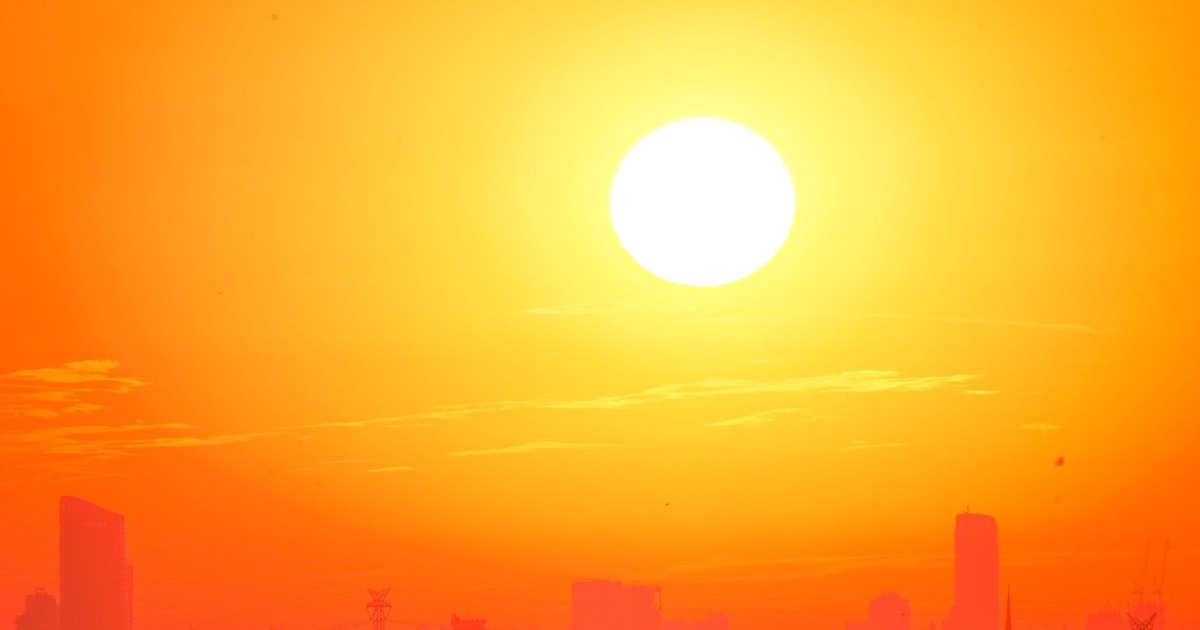

The last time Phoenix, Arizona set its all-time temperature record was July 1995, when the mercury hit 122°F (50°C). That record has come closer to falling with each passing summer. Last summer it didn’t. The summer of 2028 may be a different story entirely.
The last eleven years have included all eleven of the warmest years ever observed in the instrumental record, with the last three years occupying the top three spots. The planet is not oscillating around a norm. It is climbing a staircase, and a new UN report warns that the world is heading into another period of dangerous heat, with an 86% chance that at least one year between 2026 and 2030 will surpass 2024 as the hottest year ever recorded.
The cities most at risk aren’t abstract dots on a climate model. They’re places where tens of millions of people live, commute, sleep through nights that no longer cool down, and work jobs that can’t be done from air-conditioned offices. From Baghdad to Barcelona to the American Southwest, the conditions that produce all-time heat records are already assembling.
Why 2028 Is the Year to Watch
A UN News report from May 2026 found an 86% chance that at least one year between 2026 and 2030 will surpass 2024 as the hottest year ever recorded. The five-year climate prediction points toward El Niño conditions, particularly in 2027 and 2028, with an El Niño predicted for the end of 2026 that increases the chances of 2027 being the next record-breaking year.
El Niño is a periodic warming of the central and eastern Pacific Ocean that temporarily ratchets up global temperatures. On its own, it’s a natural fluctuation. Layered on top of decades of human-caused climate change, it can push cities past thresholds they’ve never crossed before.
El Niño events warm sea surface temperatures in the central and eastern tropical Pacific Ocean. When this happens, the east-to-west trade winds weaken, keeping warmer-than-normal air in the eastern and central tropical Pacific, temporarily raising global average temperatures. Several climate scientists forecast that 2027 will be the hottest year on record because of the lagging effects of El Niño, which is expected to peak in the fall or winter. When combined with long-term human-caused climate change, the warm, deep waters of an El Niño bring “a lot of extra heat to the surface, fueling a lot of extreme events for a lot of places around the world,” according to PBS NewsHour.
The UN report also found a 91% likelihood that average global temperatures will temporarily exceed 1.5 degrees Celsius above pre-industrial levels during at least one of the next five years. The 1.5°C mark is a key benchmark under the Paris Agreement, with scientists warning that exceeding it for prolonged periods would sharply increase the risks of extreme weather, ecosystem collapse, food insecurity, and displacement. Exceeding it in one calendar year doesn’t mean the long-term goal is officially dead, but it does mean that individual cities and regions will experience heat that their infrastructure, their emergency services, and their residents were never built for.
The Middle East: Cities Already at the Edge

Baghdad hit 116°F (47°C) this week. That sentence wouldn’t have meant much twenty years ago. The Iraqi capital has always been brutally hot in summer. In Kuwait City, Basra, Doha, Dubai, Riyadh, and Muscat, the main issue is not a single record day but the long duration of extreme heat, limited overnight relief, and high dependence on air conditioning. The region is already operating at the outer boundary of what human biology can withstand, and the distance between current records and what’s coming is narrowing fast.
China established a new national temperature record of 52.2°C in Xinjiang in 2023, Morocco reached 50.4°C the same year, and Türkiye recorded 50.5°C in 2025. These weren’t outliers in isolated desert locations. Morocco’s record was set in a populated area. Türkiye’s came from Silopi in Şırnak province, a city of real working people, not a remote monitoring station. National temperature records, which once stood for decades, are now falling within years of each other.
The Gulf cities face a particular problem: the combination of high temperatures and high humidity creates what scientists call a “wet bulb temperature.” This measures heat stress on the human body that accounts for both heat and moisture. Once wet bulb temperatures exceed roughly 35°C, the human body can no longer cool itself through sweating, even in the shade. Parts of the Persian Gulf have already briefly crossed that line. Dubai, Doha, and Kuwait City combine intense summer heat with humid coastal conditions that make their heat exposure categorically different from dry desert cities of similar temperature.
South Asia: When Hundreds of Millions Are in the Path
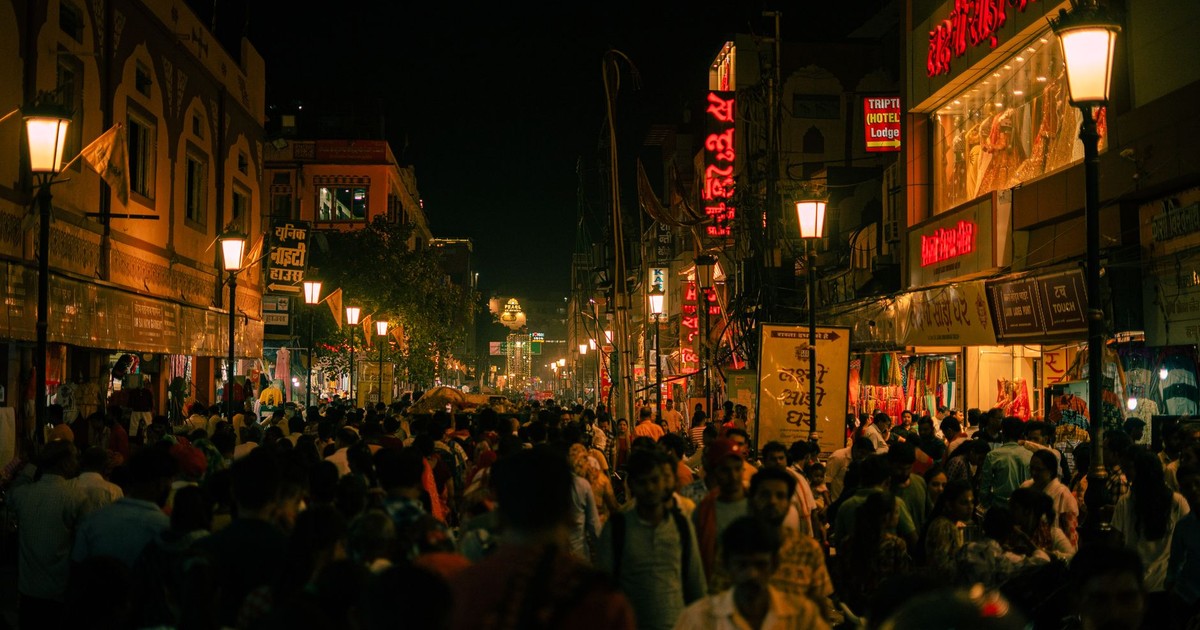
An estimated 770 million people, about 8.5% of Earth’s population, experienced a locally record warm annual average in 2025, with the largest population centers affected mostly in Asia, including approximately 450 million people in China, according to Berkeley Earth’s 2025 report.
India has been living with this reality for several years. Delhi, Lahore, and Karachi add the dimension of large population exposure to an already extreme heat picture. Delhi’s population of more than 32 million includes vast numbers of outdoor workers: construction laborers, rickshaw drivers, street vendors. For them, an all-time temperature record isn’t a weather statistic but a survival question.
During the 2026 heatwave, Prayagraj was among India’s hottest cities, with temperatures reaching around 44°C, while Etawah recorded temperatures above 48°C during the peak of the heatwave, and Bharatpur experienced persistent extreme heat with temperatures touching 48°C.
Cities across northern India are already far closer to their all-time records than most people realize. The combination of factors (a warming baseline, more frequent and intense El Niño events, and the urban heat island effect where concrete and asphalt absorb and radiate heat far more intensely than the surrounding countryside) means that the next strong El Niño cycle, forecast for 2027-2028, arrives when these cities have almost no margin left.
Europe: Records That Were “Once in a Century” Are Now Annual
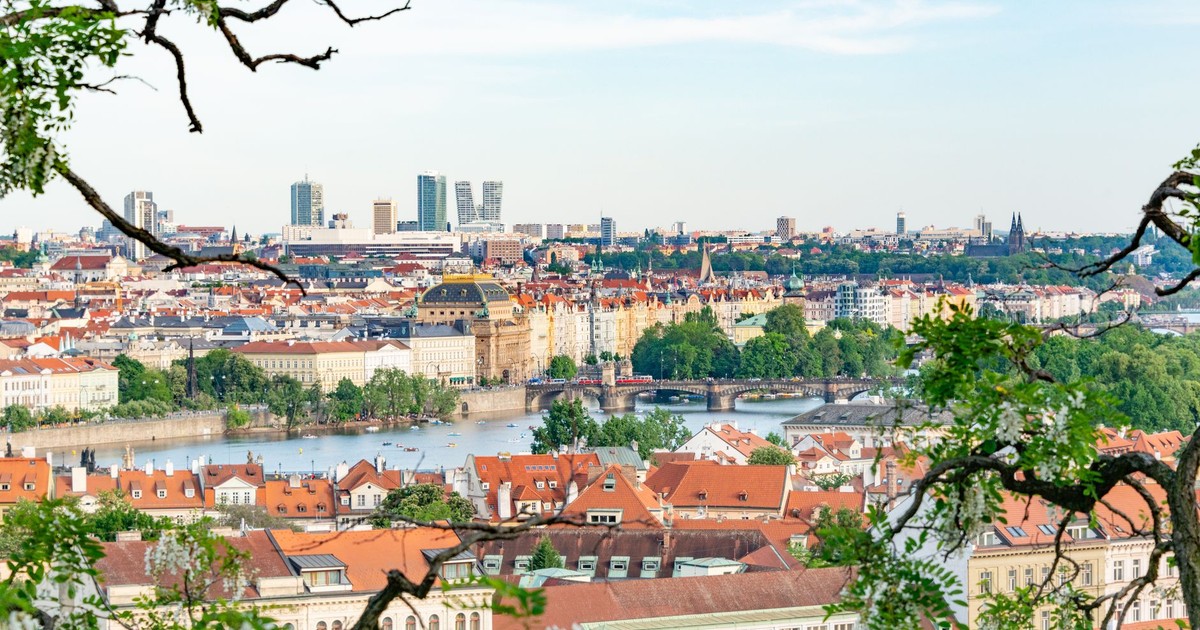
An AFP analysis of Copernicus data found that Central Asia, the Sahel region, and northern Europe experienced their hottest year on record in 2025. Spain confirmed separately that its summer of 2025 was the hottest ever measured, averaging 24.2°C between June and August. Then, in May 2026, before summer had technically even started, a heatwave tore across Western Europe that sent temperatures 10 to 15 degrees Celsius above normal for the time of year.
Barcelona’s Fabra Observatory recorded 40.5°C in July 2026, the highest temperature in more than one century of data, according to the Copernicus Climate Change Service, while Madrid experienced multiple days above 40°C, raising electricity demand for cooling. France broke all-time station records at dozens of monitoring locations. The UK saw temperatures in spring that climate scientists described as astonishing. Climate scientist Friederike Otto from Imperial College London warns that an entire year or more above 1.5°C will come with “a whole range of extreme weather events that exceeds anything we’ve experienced in the past,” and cities are woefully unprepared.
Southern European cities (Madrid, Seville, Athens, Rome) sit in a particularly difficult position. Their infrastructure, housing stock, and urban layouts were designed for a climate that no longer exists. Wide avenues, stone buildings that store heat, and limited green cover mean that city temperatures routinely run 5 to 8 degrees hotter than the surrounding countryside. When the regional temperature climbs, the city temperature climbs higher still. Heat-related illness and death in these cities has been climbing steadily since the early 2000s, and the trajectory between now and 2028 runs steeply upward.
The American Southwest: Phoenix, Las Vegas, and the Math of No Margin

Utah and Nevada saw their warmest years on record in 2025, with Utah breaking a record that had stood since 1934. Las Vegas and Reno both recorded their warmest December on record that year. Phoenix, meanwhile, has been erasing its own early-season benchmarks one by one. For Phoenix, 2026 brought the earliest 100-degree day since records began, and the city tied its all-time April high of 105°F in March.
Phoenix and Las Vegas show how dry heat can become dangerous when daytime extremes are frequent and nights remain warm. A decade ago, Phoenix’s overnight low in summer might dip to 85°F, uncomfortable but enough for the body to partially recover from a brutal day. Now nights in the low to mid-90s are common, which means people who lack air conditioning get no recovery window at all. By 2028, if the El Niño forecast holds, Phoenix’s all-time record of 122°F is in genuine jeopardy.
Las Vegas faces a compounding problem. It’s one of the fastest-growing cities in the United States, and every new roof, every new road, every new parking lot adds to the urban heat load. The city has planted trees and installed reflective surfaces in recent years, but the pace of development consistently outruns the pace of mitigation.
The Sahel and Sub-Saharan Africa: The Region the World Isn’t Watching

The cities that get the least attention in heat coverage are often the most exposed. Temperature records were beaten in several countries across the Sahel and West Africa in 2025, with Mali, Niger, Nigeria, Burkina Faso, and Chad seeing temperatures running 0.7°C to 1.5°C above their seasonal averages. That might sound modest next to a Phoenix headline about 110°F days, but in regions where electricity is unreliable, where air conditioning is a luxury most people don’t have, and where outdoor agricultural labor is unavoidable, a 1°C shift in the baseline is the difference between manageable and life-threatening.
Researchers tracking extreme heat attribution have found that heat events across the Sahel “have become almost 10 times more likely since 2015.” For cities in the Sahel, that acceleration is arriving on top of existing crises: food insecurity, conflict, water scarcity. The heat doesn’t operate in isolation from those pressures. It amplifies all of them simultaneously.
What the Numbers Actually Mean for People

Annual global temperatures between 2026 and 2030 are expected to range between 1.3°C and 1.9°C above the 1850-1900 average, according to the WMO’s most recent projection. That range matters because 1.9°C doesn’t sound that different from 1.3°C, but at the city level, those fractions of a degree translate into days when hospitals overflow, power grids fail, and outdoor workers get told to stay home.
The last 11 years have included all 11 of the warmest years observed in the instrumental record, with the last 3 years including all of the top 3 warmest, according to Berkeley Earth. Each record year doesn’t reset the clock. It raises the floor. The temperature from which the next El Niño launches is higher than the one before it, which means that by the time a strong El Niño arrives in 2027 or 2028, it will be pushing off an already elevated baseline.
Copernicus Climate Change Service director Carlo Buontempo put it plainly in early 2026: “Temperatures are going up. So we are bound to see new records. Whether it will be 2026, 2027, 2028 doesn’t matter too much. The direction of travel is very, very clear.”
The Direction of Travel
The cities mentioned here (Phoenix, Baghdad, Delhi, Madrid, Lagos, Las Vegas) are not being singled out because they drew the short straw. They’re on this list because the physics of where they are, combined with the trajectory of where the climate is heading, puts them in the window. The honest answer is that by 2028, the list of cities that haven’t broken an all-time heat record in the past three years may be shorter than the list of cities that have.
Records are being broken faster, in more places, and in seasons when they used to be unthinkable. Spain’s spring. France’s August. India’s March. Phoenix’s March. The seasonality of extreme heat is collapsing. It no longer stays politely within the calendar window we’d assigned to it.
Some of the cities facing heat records 2028 projections have heat action plans and cooling centers. Many don’t. And even the ones that do are working with infrastructure, budgets, and emergency systems calibrated to a climate that was true ten years ago. The distance between what cities are prepared for and what’s coming is the number that actually matters.
Naming that distance isn’t pessimism. It’s the only honest starting point for the conversation about what to do next. The cities that fare best in 2028 won’t be the ones that got lucky with the weather. They’ll be the ones that stopped treating extreme heat as an anomaly and started treating it as the new arithmetic.
Disclaimer: This information is not intended to be a substitute for professional medical advice, diagnosis, or treatment and is for information only. Always seek the advice of your physician or another qualified health provider with any questions about your medical condition and/or current medication. Do not disregard professional medical advice or delay seeking advice or treatment because of something you have read here.
AI Disclaimer: This article was created with the assistance of AI tools and reviewed by a human editor.