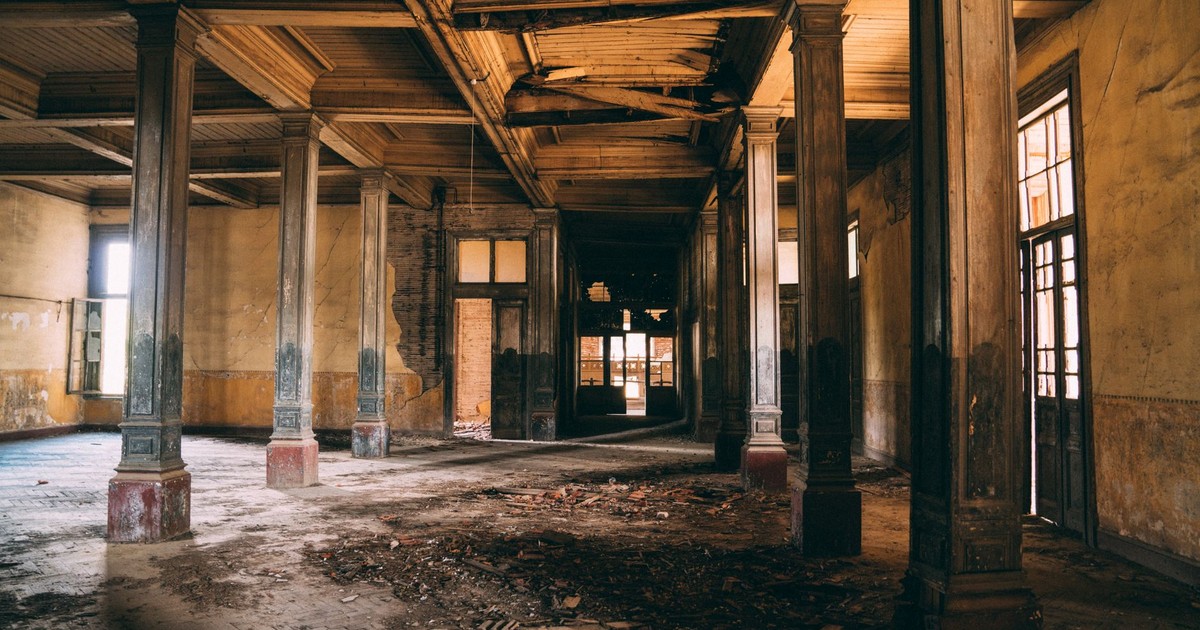

The argument that most haunted places in America are just gothic backdrops for Halloween tours misses something much harder to dismiss. Spend time inside Eastern State Penitentiary’s crumbling cellblocks, or stand in the isolation ward at Alcatraz after dark, and you start to understand why hardened skeptics walk out slightly unnerved by what they walked into. The history alone does something to a person, before a single strange sound is heard or a single shadow moves wrong.
What makes these places genuinely unsettling isn’t just the ghost stories, most of which began as local folklore and grew in the retelling. It’s the sheer weight of what happened in them. Centuries of solitary confinement, battlefield carnage, institutionalized suffering, murder, and grief have a way of pressing into walls and floors and corridors. Whether that pressure takes the form of a restless spirit or simply an atmosphere thick enough to change your breathing, the effect is real. People don’t keep coming back to these locations because they’ve been reassured. They come back because something, verifiable or not, refuses to leave them alone after the visit.
The fifteen places below span the country, from a fog-soaked island off San Francisco to a Louisiana plantation draped in Spanish moss. Each has its own claim on the category of “terrifying,” and each earns it through a combination of documented history and reported experience that has accumulated over decades. Whether you believe in haunted places America-wide or not, these are the ones that keep showing up on the list for a reason.
1. Eastern State Penitentiary, Philadelphia, Pennsylvania
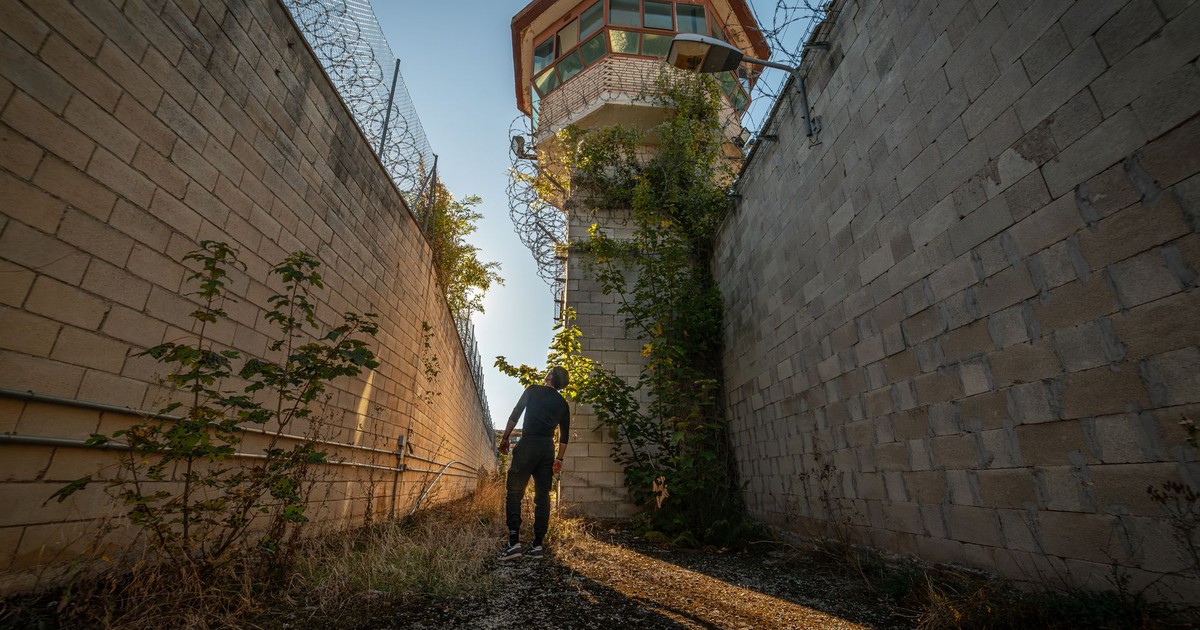
Eastern State Penitentiary is a former prison in Philadelphia, Pennsylvania, operational from 1829 until 1971. It was conceived as a reform institution by Philadelphia Quakers who believed that total isolation would inspire genuine penitence in criminals, rather than physical punishment. The word “penitentiary” itself traces back to this philosophy. At its completion, the building was the largest and most expensive public structure ever erected in the United States, and quickly became a model for more than 300 prisons worldwide.
The conditions it ultimately housed were far from reformatory. Prisoners faced isolation of up to 23 hours a day or more, which many accounts suggest drove them to madness rather than reform. Punishments included an ice bath after which prisoners were chained to an exterior wall until the moisture turned to ice on their skin, and the “mad chair,” a restraining device strapped so tightly prisoners lost feeling and circulation to their limbs. Al Capone spent eight months here in 1929, and by most accounts, even he was not immune to the atmosphere. Despite living in relative luxury thanks to his criminal network, an unseen force seemed to terrify him at night. Capone was known for letting out blood-curdling screams in the darkness, begging for someone named “Jimmy” to leave him alone. Many believe “Jimmy” may have been the spirit of James Clark, one of the men killed by Capone’s orders in the St. Valentine’s Day Massacre.
The almost 200-year-old prison shuttered in 1970 and has been an open museum since 1994, where members of the public can tour the ruins of one of America’s most well-known penitentiaries. Since reopening, the reports have accumulated steadily. One well-known account from the early 1990s involved a maintenance worker who entered Cellblock 4 and was struck by an intensely negative sensation. Shortly after, the worker reported seeing the faces of tormented souls appear on the cell walls and a shadowy apparition leaping across the cellblock. Cellblock 12 is considered another paranormal hotspot, said to be home to many disembodied voices, so loud that they echo through the long stone corridors, often accompanied by loud, cackling laughter.
2. Winchester Mystery House, San Jose, California
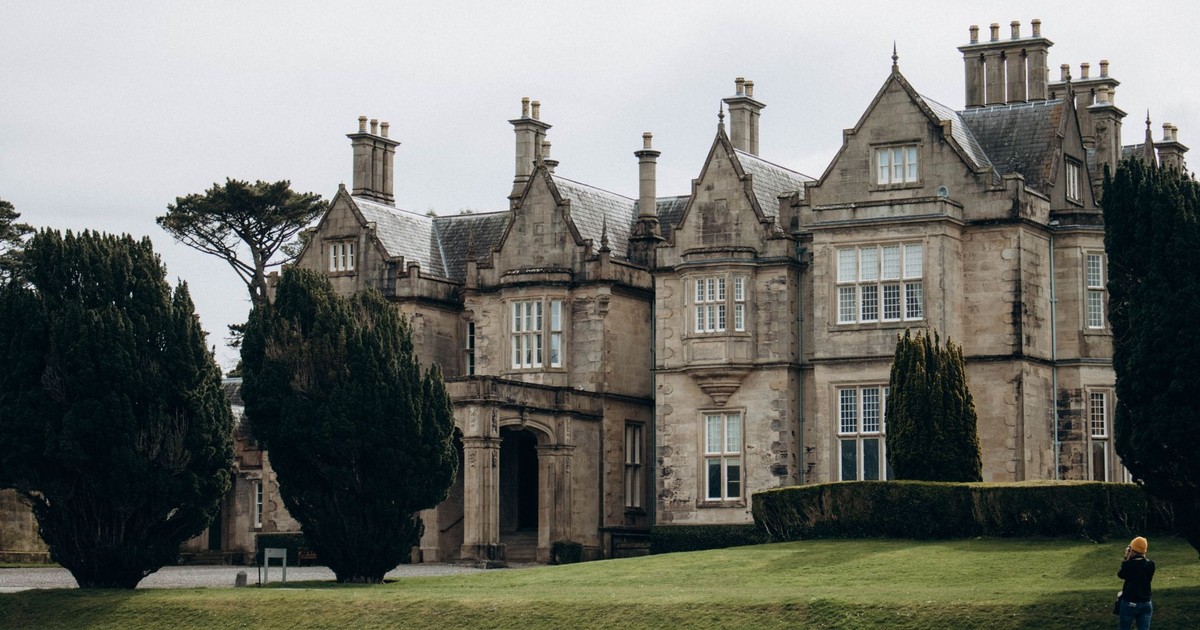
Few places in America embody the blurred lines between history, architecture, and legend as vividly as the Winchester Mystery House in San Jose, California. With staircases that lead to nowhere, hidden passageways, and doors that open into solid walls, the Victorian-era mansion has earned its place as one of the nation’s most iconic haunted sites. Its eerie reputation is rooted in a past shaped by grief, superstition, and a century’s worth of storytelling.
Sarah Winchester was the widow of William Wirt Winchester, heir to the Winchester Repeating Arms fortune. In 1884, Sarah purchased an unfinished eight-room farmhouse in California’s Santa Clara Valley, and construction continued until her death in 1922. Without formal blueprints or a master plan, the modest home evolved into a 24,000-square-foot labyrinth featuring 160 rooms, 10,000 windows, 2,000 doors, and countless architectural oddities. The popular legend says she was building to appease the spirits of those killed by Winchester rifles, adding new rooms and corridors to confuse them. Researchers, however, argue the house was never designed to confuse spirits at all. According to History.com, its odd features are mostly the result of earthquake damage, remodeling interruptions, or later additions made after her death to enhance the “mystery.”
What remains undeniable is the atmosphere. Footsteps when a person believes they are alone are one of the most consistent reports at Winchester. The house’s own historian, Janan Boehme, described hearing clear footsteps early in the day when nobody else was present, then finding no one upon checking. Since 1923, guests from around the world have paid a visit to answer the many “whys” associated with Sarah Winchester and her mysterious home. “Most leave inspired,” says Walter Magnuson, executive director, “and some depart with more questions than answers.”
3. Alcatraz Island, San Francisco, California
Alcatraz sits on a windswept island in San Francisco Bay, and even in daylight, with tour groups moving through its cellblocks, it maintains a particular quality of dread that most visitors find difficult to put into words. Alcatraz was home to some of the most famous and dangerous criminals in U.S. history, including Al Capone. The federal penitentiary operated from 1934 until its closure in 1963, and during that time it housed everything from Depression-era gangsters to Cold War-era spies.
The infamous island prison closed in 1963, but guards and visitors have long reported voices in the cellblocks, the sound of cell doors opening and closing, and a persistent feeling of being watched in the isolation ward. People report cell doors slamming and voices echoing after hours, especially in D-Block. Many of those accounts come from visitors who never believed in ghosts before, which makes them harder to dismiss.
The isolation ward, known as D-Block, is where the most extreme punishment cells were located. Prisoners confined there could go weeks without human contact, with no natural light and no sound beyond their own breathing. Park rangers who work at Alcatraz overnight have described unexplained laughter and running footsteps in corridors that show no one. One prisoner confined to the D-Block isolation cell in the 1940s reportedly screamed throughout the night that something with glowing red eyes was trapped inside with him. Whether these are the sounds of restless prisoners or the product of a building designed, almost architecturally, to amplify the worst impulses of the human imagination, the effect on visitors is the same.
4. Gettysburg Battlefield, Gettysburg, Pennsylvania
Gettysburg marked the deadliest battle of America’s deadliest war, claiming 7,000 lives and wounding another 33,000 soldiers between July 1 and July 3, 1863. The violent confrontation turned the quiet fields of Pennsylvania into a veritable hell on earth. In the aftermath, the dead outnumbered citizens 12 to 1.
The sheer scale of what happened here is worth sitting with before any ghost story is introduced. More than 50,000 men were killed or wounded in three days across rolling Pennsylvania farmland. Gettysburg is allegedly one of the most haunted places in America, and it seems not all of those soldiers have moved on. Rangers and visitors talk about hearing gunfire and screams, and some say they’ve seen full-body apparitions moving across the fields. Battlefield ghost tours have operated for decades, and the most reported sightings cluster around Devil’s Den, a rocky outcropping where Confederate sharpshooters took cover, and Little Round Top, where some of the most brutal close-combat fighting occurred.
What separates Gettysburg from manufactured haunts is the texture of the land itself. The battlefield is largely unchanged. The tree lines, the ridges, the stone walls are the same ones men died behind. Walking across that ground in the early morning, before the tourist buses arrive, feels less like visiting a historic site and more like intruding on something that hasn’t finished.
5. The Stanley Hotel, Estes Park, Colorado
One night in this hotel nestled in Colorado’s mountain wilderness inspired Stephen King’s best-selling novel-turned-horror film, The Shining. In 1909, F.O. and Flora Stanley opened the isolated resort, and reportedly never left. King stayed in Room 217 in 1974, and a nightmare he had that night became, within a few years, one of the most influential horror novels ever written.
According to staff, Mrs. Stanley can be heard playing her piano in the ballroom at night, and Mr. Stanley occasionally shows up in photographs. There have also been reports of bags being unpacked, lights turning off and on, and echoes of children’s laughter heard in the hallways. The paranormal reputation runs deeper than King’s visit. Room 217’s haunted history traces back to June 25, 1911, when a gas leak caused an explosion that launched head chambermaid Elizabeth Wilson from the room’s entrance to the dining hall below. She survived, returned to work at the hotel, and by most accounts never entirely left.
Built in 1909 and the inspiration for The Shining, the Stanley has a decades-long record of unexplained sounds, moving objects, and apparitions in its rooms and corridors. The hotel leans into this history now, offering ghost tours that draw thousands of visitors each year. Guest bedrooms even have a TV channel that plays The Shining on a 24-hour loop. Whether that’s terrifying or darkly funny probably depends on how you feel about Room 217.
6. The Myrtles Plantation, St. Francisville, Louisiana
Built in 1796, The Myrtles Plantation is believed to be one of America’s most haunted homes. It sits in the rolling hills of West Feliciana Parish in Louisiana, under enormous live oaks draped in Spanish moss, and the effect is that even arriving in daylight feels slightly Gothic. The plantation functioned for decades as a working estate using enslaved labor, and its history is inseparable from that violence.
The Southern mansion is rumored to have been built on a Native American burial ground and is alleged to have been the site of multiple untimely deaths. Its long haunted history includes sightings of a ghostly woman named Chloe and mysterious handprints on mirrors. The story of Chloe, an enslaved woman said to have been caught eavesdropping on her enslaver and punished horrifically before being wrongly accused and hanged, is one of the most persistent legends associated with the house. The ghost of Chloe, wearing a green turban, is one of the most frequently reported presences throughout the house.
Various paranormal investigation teams have explored the Myrtles Plantation, and their findings include unexplained noises, moving objects, and electronic voice phenomena. The Myrtles Plantation functions as a bed and breakfast, allowing guests to fully immerse themselves in the potentially paranormal experience. Staying overnight here means sleeping in rooms where guests before you have reported hands on their shoulders in the dark and faces in the mirrors that weren’t their own.
7. Salem, Massachusetts
In the spring of 1692, hysteria descended upon Salem, Massachusetts. Over several months, a group of young girls claiming to be possessed by the devil condemned a score of men and women to the gallows in one of history’s most infamous witch hunts. Many of these troubled spirits are said to still roam Salem today, including Giles Corey, an 80-year-old farmer accused of witchcraft and crushed to death after publicly questioning the girls’ motives.
Salem has spent the centuries since turning its darkest chapter into its defining identity, and the result is a town where the line between historical tourism and paranormal tourism has completely dissolved. The Witch House is at the top of most visitors’ lists. It’s the last remaining building in Salem with a direct connection to the witch trials. The Howard Street Cemetery, where Giles Corey is buried, is considered one of the most charged spots in town by paranormal investigators, partly because of a legend that his ghost appears before calamity strikes the city.
What makes Salem genuinely unsettling rather than merely theatrical is the documented history of mass hysteria and judicial murder that actually happened on this ground. Twenty people were executed, hundreds more imprisoned. The town’s relationship with that history, including the annual Salem Haunted Happenings festival, has evolved into something that feels less like commemoration and more like an ongoing reckoning. The ghosts, real or otherwise, have earned their place here.
8. The LaLaurie Mansion, New Orleans, Louisiana
New Orleans is routinely named among America’s most haunted cities, and within a city full of contenders, the LaLaurie Mansion on Royal Street has maintained its position at the top of that list for nearly two centuries. The four-story Greek Revival townhouse looks beautiful, which is the first unsettling thing about it.
Delphine LaLaurie was a prominent New Orleans socialite in the 1830s who, when a fire broke out in her home in 1834, was discovered to have been torturing enslaved people in her attic. When firefighters broke through the attic door, they found multiple people chained in conditions so horrifying that news of it spread through the city within hours and a mob descended on the house, forcing LaLaurie to flee to France. She never returned. The mansion changed hands repeatedly over the decades, with owners reporting unexplained screaming, apparitions in chains, and a general atmosphere described by multiple residents as oppressive and suffocating. Nicolas Cage purchased the property in 2007 and gave it up to foreclosure in 2009, citing financial difficulties, though the house’s reputation as a place where no one stays long predates him considerably.
Today, the LaLaurie Mansion is a private residence, not open to tours, which somehow makes it more compelling. The history is documented, the suffering that occurred inside is a matter of public record, and the building still stands at 1140 Royal Street, in the heart of the French Quarter, looking every bit like a place that holds onto things.
9. Trans-Allegheny Lunatic Asylum, Weston, West Virginia
This foreboding asylum began construction in 1858 and opened to patients in 1864. The massive structure was designed to maximize sunlight and fresh air, based on the belief that the building itself would serve as a healing environment. The intention and the reality of the institution diverged quickly and completely. By the 1950s, the facility, designed for 250 people, housed 2,400 patients in crowded conditions, with afflictions ranging from alcoholism to epilepsy. Patients were physically restrained and often given inhumane treatments, such as electroshock therapy and lobotomies. After more than a century in operation, the facility was forced to close in 1994 due to reforms in mental health treatment and the deterioration of the building.
Once home to thousands of patients, this vast asylum saw overcrowding, abuse, and tragedy. Now, it’s considered one of the most haunted places in the U.S. The building itself is one of the largest hand-cut stone structures in the world, with more than 242,000 square feet of corridors, wards, and operating rooms. Paranormal investigation groups regularly conduct overnight sessions here, and the Trans-Allegheny now offers its own ghost tours and flashlight tours that wind through the original ward buildings. Reports center on Ward Q, the violent ward, where the sounds of banging on walls and doors are still reported long after patients left.
10. The Whaley House, San Diego, California
The Whaley House is a historic house in San Diego, California, rumored to be haunted. Built in 1857, it is said to be haunted by the ghosts of the Whaley family, who endured personal tragedy in addition to a long history of hangings on their land. Specifically, the house was built on the site of a former gallows where a man named James “Yankee Jim” Robinson was publicly hanged in 1852, five years before Thomas Whaley broke ground on his family home. Multiple residents of the house over the years have described footsteps matching the heavy stride of a very tall man, moving through rooms where no one is standing.
The Whaley family itself was visited by extraordinary misfortune in the years they lived there. Their infant son died within the house, and one of their daughters, Violet, committed suicide on the property in 1885. The U.S. Commerce Department has officially recognized the Whaley House as one of the most haunted houses in America, a rare institutional acknowledgment of what is usually considered soft history. Visitors today describe seeing a woman in period clothing in the upstairs window and hearing theatrical laughter in the former courtroom, which occupied one wing of the house. The laughter, by many accounts, doesn’t sound like something anyone is putting on.
11. Lizzie Borden House, Fall River, Massachusetts
On the morning of August 4, 1892, Andrew Borden and his wife Abby were found hacked to death inside their home at 92 Second Street in Fall River, Massachusetts. Lizzie Borden was accused of brutally murdering her father and stepmother with an axe. The house where it happened still stands and is now a bed-and-breakfast for the bravest guests. She was acquitted at trial, which resolved the legal question and nothing else. The case has never been closed in any meaningful sense, and the house has held its charge ever since.
The scene of one of America’s most famous murders, the haunted house still echoes with tension. Visitors can stay overnight and possibly hear footsteps, whispers, or even the voice of Lizzie Borden herself. It’s a staple on any ghost tour of New England. The furniture and interior have been kept deliberately close to their 1892 configuration. The décor remains nearly identical to that infamous day. Staying overnight is an experience few forget.
What makes the Lizzie Borden House particularly effective as a site of dread is its ordinariness. It’s a plain Victorian house on a plain street. There is no gothic architecture, no dramatic setting. Just a modest home where something went very wrong on a hot August morning, and where the question of who did it and why has never been satisfactorily answered. That unresolved quality seems to be what keeps people reporting things in the night.
12. The RMS Queen Mary, Long Beach, California
The Queen Mary launched in 1936 and served as one of the most luxurious ocean liners in the world before being requisitioned as a troopship during World War II. During the war, she carried hundreds of thousands of Allied soldiers across the Atlantic, and in October 1942, she accidentally collided with her escort ship, the HMS Curacoa, slicing it in half and killing 338 men. She was under orders not to stop. That single event, and the silence that followed it, is considered by many researchers of the ship’s history to be the source of some of its darkest energy.
Once a luxurious ocean liner, the Queen Mary now harbors not just memories of opulent voyages but also a host of restless spirits. Docked in Long Beach, California, it’s said to be a paranormal hotspot. Reports include unexplained voices, footsteps, and apparitions. The forward cargo hold, where the collision occurred, and the engine room, where two workers were crushed to death by a watertight door, are the most frequently investigated areas. The ship’s second-class swimming pool, long since drained, is where a woman named Jackie is said to appear, still in her 1930s bathing costume, looking for a way out.
13. St. Augustine Lighthouse, St. Augustine, Florida
St. Augustine is the oldest continuously occupied European settlement in the United States, established by Spanish colonists in 1565, and its lighthouse has been watching over the inlet since 1874. The original lighthouse on the site was swallowed by the Atlantic in the 1870s as erosion consumed the shoreline, and during construction of the current tower, two daughters of the lighthouse keeper’s superintendent drowned in the harbor after a handcar they were playing on rolled off a dock. Their names were Mary and Eliza Pittee.
Those two girls are the most reported presences in the lighthouse today. Workers during a 1980s restoration reported seeing a young girl at the top of the tower, waving down, and a number of visitors have described a child’s laughter coming from the base of the spiral staircase when no children are present. Investigators from the TAPS paranormal research group conducted several investigations and reported unexplained audio recordings and moving shadows in the keeper’s house. The lighthouse is fully operational and open to the public, and its 219-step climb to the top remains one of the most exhilarating, and reportedly uneasy, ascents in Florida. If unusual American destinations interest you, St. Augustine’s layered history makes it one of the most rewarding places to spend a few days on the East Coast.
14. The Ohio State Reformatory, Mansfield, Ohio
Construction on the Ohio State Reformatory began in 1886, and the building that resulted is one of the most architecturally overwhelming prison structures in America. Six stories of Gothic Victorian towers rise over the surrounding farmland in Mansfield, Ohio, and the building’s East Cell Block, which held the world’s largest free-standing steel cell block at the time of construction, is now a rusting, vertiginous grid of cells stacked six stories high that you can look straight up through.
The reformatory housed inmates from 1896 until 1990, and during that time saw a significant number of deaths, both among the prison population and staff. The warden’s wife, Helen Glattke, died inside the administration wing in 1950 after being struck by a rifle that reportedly discharged when it fell from a closet shelf. The warden himself, Arthur Glattke, died of a heart attack in his office nine years later. Both are reported to have remained. The reformatory gained wider recognition as the filming location for The Shawshank Redemption in 1994, but its paranormal reputation predates the film considerably. The Mansfield Reformatory Preservation Society now runs ghost tours and overnight investigation events throughout the year, and the reports from those events include unexplained cold spots on the sixth-floor isolation cells and a consistent smell of roses in the warden’s quarters, long attributed to Helen Glattke.
15. The Villisca Axe Murder House, Villisca, Iowa
On the night of June 9, 1912, someone entered a modest white house in the small town of Villisca, Iowa, and killed eight people with an axe: Josiah Moore, his wife Sarah, their four children, and two young girls who were sleeping over. The killer was never identified. Multiple suspects were tried over the following decade, and all were acquitted or had charges dropped. The case remains unsolved.
The house at 508 East Second Street in Villisca has been preserved and is open for tours and overnight stays. The axe murder room, as the master bedroom is called by the current owners, is where the Moore parents were killed, and it’s where the most consistent paranormal reports originate. Investigators and overnight guests have documented furniture moving, disembodied voices, and children’s figures reported in the hallway leading to the room where the six children died. The Villisca house is unusual in that its terror isn’t softened by time or distance. The crime was recent enough to feel present, the victims’ names are known, and the person who killed them walked away. That open wound in the historical record is what gives the house its particular weight. Standing in the hallway at 3am, which guests are permitted to do, that unresolved fact presses down harder than any ghost story would.
Read More: These Are 28 Of The Most Feared People In History: Who Made the List?
What Makes a Place Actually Terrifying
The fifteen locations on this list share something that goes beyond cold spots and unexplained laughter. Every one of them is a site where documented, historically verifiable suffering happened, often on a scale that defies easy comprehension. The suffering is the foundation. The paranormal reports are what grow from it, whether you interpret them as evidence of restless spirits, the psychological weight of history pressing on visitors, or something in between that science hasn’t yet named.
What most people find, if they visit even one of these places seriously rather than as a theme-park outing, is that the question “is it haunted?” starts to feel like the wrong question. The more honest question is: what does it mean that we still feel these places, that their histories don’t stay contained in the past, that a prison closed in 1971 or a battlefield from 1863 can still change the quality of a person’s breathing? Whether the answer is spiritual or psychological or purely architectural, these are places where America’s darkest chapters refused to be filed away. Some things don’t rest. The question of why is the one that follows you home.
Disclaimer: This information is not intended to be a substitute for professional medical advice, diagnosis, or treatment and is for information only. Always seek the advice of your physician or another qualified health provider with any questions about your medical condition and/or current medication. Do not disregard professional medical advice or delay seeking advice or treatment because of something you have read here.
AI Disclaimer: This article was created with the assistance of AI tools and reviewed by a human editor.