

Describe a film you loved at age 12 to someone 20 years younger, and somewhere around the third sentence you watch their face change. Not from confusion. From something closer to alarm. The movie wasn’t edgy by the standards of its time. It was mainstream. It won awards. It launched careers. It’s on the AFI lists. And now, mid-description, you realize you’re defending a scene you’d forgotten even existed.
How an entire generation got raised on cinema with a very particular relationship to consent, race, gender, and who gets to be the butt of a joke is not a mystery. It’s just uncomfortable to sit with. Aggressively inappropriate content disguised as comedy, often revolving around male characters refusing to take “no” for an answer, hits differently in a Hollywood that’s experienced the Me Too movement. And that’s before you get to the racial stereotyping or the treatment of LGBTQ+ characters as punchlines.
These weren’t fringe films made by outsiders. They were the cultural water Gen X swam in, the movies that got quoted in high school hallways, rented every weekend from Blockbuster, and passed from older siblings to younger ones like sacred texts. Here’s what’s actually in them.
1. Sixteen Candles (1984)
John Hughes gets credit, sometimes deserved, for building coming-of-age films around female leads. Molly Ringwald, the star of Sixteen Candles, Pretty in Pink, and The Breakfast Club, has written about how Hughes built films around female leads and showed the troubles of disillusioned teens, while acknowledging in a 2018 New Yorker essay that his work “could also be considered racist, misogynistic, and, at times, homophobic.”
One of the most critiqued elements is the character Long Duk Dong, a foreign exchange student from an unidentified Asian country staying with Sam’s grandparents. The film played a gong sound every time Long Duk Dong appeared onscreen. Co-founder Martin Wong of Giant Robot), a magazine covering Asian and Asian-American pop culture, remembers the character’s cultural impact. “Every single Asian dude who went to high school or junior high during the era of John Hughes movies was called ‘Donger,'” Wong said. Long Duk Dong’s social ineptitude and confusion over American customs made him the laughingstock of viewers.
The film also contains a scene that no studio executive in 2026 would greenlight without significant rewriting. Jake boasts about how easy it is for him to get laid, letting his friend Ted know that he has “Caroline passed out in the bed upstairs” and could “violate her ten different ways if I wanted to.” Ted does sleep with her when she’s wasted while he’s sober, as is established the next morning. Caroline is then portrayed as happy about it and wanting to go out with him.
2. Revenge of the Nerds (1984)

The ’80s teen comedy sold the underdog-finally-wins premise hard, and audiences bought it. Revenge of the Nerds delivered that premise with cameras hidden in dorms to spy on girls sleeping, showering, and changing, along with the selling of those nude photos at a fundraising booth. Perhaps the most controversial moment is the “physical contact under false pretenses” scene where Lewis uses a Halloween costume to disguise himself and trick a woman into sleeping with him. The film frames this as a win. The woman isn’t horrified. She’s impressed.
The film’s director Jeff Kanew said in a 2019 GQ interview, “In a way, it’s not excusable. If it were my daughter, I probably wouldn’t like it.”
A director looking back at his own work and saying it depicted assault is about as clear a signal as you can get that the script wouldn’t survive a modern pitch meeting.
3. Porky’s (1981)
Porky’s was a massive box office hit in 1981 and one of the films that kicked off the decade’s teen physical comedy craze. Porky’s wasn’t a one-off misfire. It was the template that films like Fast Times at Ridgemont High and dozens of lesser imitators were chasing.
The film features a scene where the boys drill a hole into the girls’ locker room to watch them shower, and one of the boys even puts his penis through the hole before the party is broken up by a coach. A character named Balbricker then asks the principal to let her inspect the nude boys to identify the offender. The scene is played entirely for laughs. The girls showering are never asked how they feel about any of this.
Ringwald noted in her essay that the successful teen comedies of the period, such as Animal House and Porky’s, “were written by men for boys; the few women in them were either nymphomaniacs or battleaxes.” She also pointed out that the stout female coach in Porky’s is named Balbricker. The voyeurism in the film isn’t framed as predatory behavior. It’s framed as boys being boys, which was exactly the problem.
4. Ace Ventura: Pet Detective (1994)
Jim Carrey’s 1994 breakout made him a star and made Ace Ventura a cultural shorthand for absurdist, rubber-faced physical comedy. The film genuinely is funny in places. And then it gets to its climax.
By the time Ace Ventura rolled around, the forced exposure of a character’s trans status was amplified by using the outlines of her genitals. Ace discovers that the female police detective he has kissed is actually the male villain in disguise. The knowledge that Ace has kissed “a man” sends him into a shamed panic spiral. He takes off all his clothes, puts them in a trash can, burns them, then gets into the shower and weeps.
Jim Carrey has said in recent years that the movie would not have made the same jokes if it was made today. He and the film’s director also tried to defend it, arguing that the real “joke” is how homophobic Ace is, but that defense falls apart when the homophobia is coming from the film’s lovable hero. The homophobia and transphobia in Ace Ventura were part of a bigger problem of the era. The 1990s were a complicated time for both in movies, and especially in comedy.
5. Grease (1978)
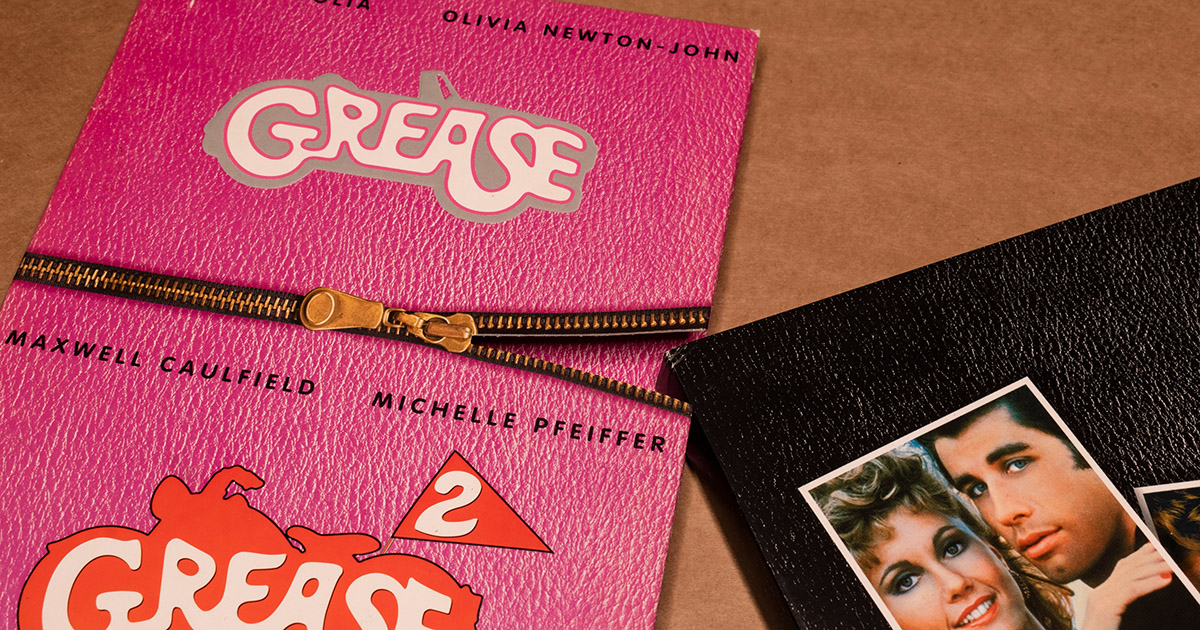
Grease is practically a liturgy for Gen-Xers who caught it on cable in the early ’80s and watched it approximately 40 times. The songs are undeniably good. The problem is the story they’re telling.
Sandy’s entire arc ends with her changing her personality, her clothing, and her sense of self to win Danny’s approval. Meanwhile Danny’s attempt to join her world lasts about forty seconds before the film abandons the premise entirely. The ending, played as triumphant, has Sandy arriving in skin-tight leather, having transformed herself wholesale to be desirable to a man who made minimal effort in return. A 2026 studio notes session would have a lot of thoughts about that character journey.
Then there’s “Summer Nights,” the opening duet, in which Danny describes his summer romance to his friends in terms that, depending on interpretation, describe pressuring Sandy into physical contact. His friends cheer. The song is catchy enough that generations of viewers sang along without necessarily processing the words. What once seemed breezy romance comes across, on rewatch, as something considerably darker.
Grease isn’t alone in treating female transformation as a romantic resolution. Read more about how nostalgia shapes our relationship to pop culture at The Amazing Times.
6. The Breakfast Club (1985)
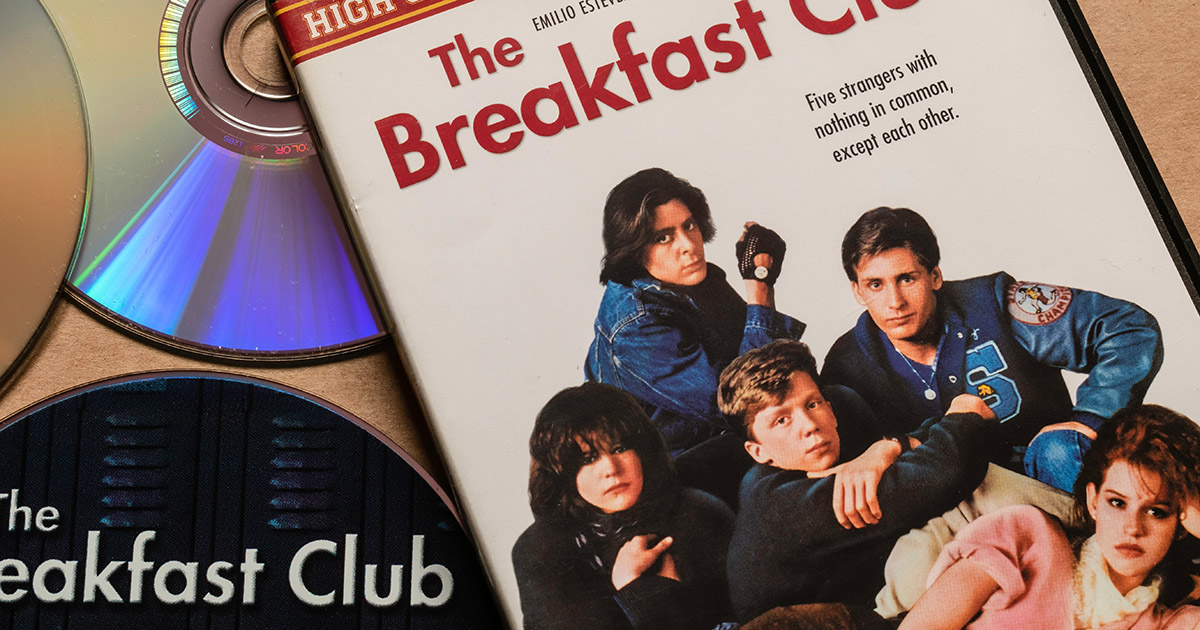
The film that defined the idea of teenagers as full human beings with inner lives is also, upon rewatch, a film in which a boy spends much of his screen time harassing a girl until she finds it endearing. John Bender, played by Judd Nelson, doesn’t just talk back to authority. He crawls under the library table where Claire is sitting and puts his face in her crotch. He threatens her. He mocks her relentlessly.
Ringwald, reflecting on Hughes’ catalog, acknowledged that his work “could also be considered racist, misogynistic, and, at times, homophobic,” with slurs tossed around with abandon throughout the films. In The Breakfast Club specifically, what Bender does to Claire across the course of the film would today be recognized straightforwardly as harassment and intimidation. The film resolves this by having her kiss him and give him her earring. The harassment is framed as passion.
Hughes was, in many ways, a genuine champion of teen interiority at a time when Hollywood treated adolescence as either pure comedy fodder or horror movie territory. The empathy he extended to his characters didn’t fully reach the female ones, who are often the target of behavior the films want you to find romantic.
7. Dazed and Confused (1993)
Richard Linklater’s 1993 film is widely and correctly regarded as a masterpiece of atmosphere. Even though it’s set in 1976, Dazed and Confused became an instant Gen X experience because it perfectly captured a timeless feeling, including that intoxicating mix of boredom, freedom, and possibility that defines being a teenager. The movie doesn’t really have a central plot. It wanders, much like its characters. That’s the point. It’s a tribute to rebellion in its most relatable forms.
It also features sustained, ritualized hazing of incoming freshmen as something that is basically fine. The older boys chase 14-year-olds around with wooden paddles and beat them. The older girls pour condiments on the freshmen girls’ heads and force them into humiliating poses for photographs. The film doesn’t condemn any of this. It doesn’t particularly endorse it either. It just presents it as the way things were, which is true, and lets the audience do what they will.
A film distributed today that spent significant screen time depicting teenagers physically beating younger teenagers while the soundtrack plays and everyone moves on with their evening would face a much harder path to distribution. It’s not framed as dark or disturbing. It’s framed as nostalgia.
8. Top Gun (1986)

The original Top Gun is the rare film that got a sequel nearly four decades later and had the sequel perform just as well, which says something about the enduring pull of the original. What the original actually contains, stripped of its F-14s and its Kenny Loggins soundtrack, includes a meet-cute that doubles as stalking.
While the dogfights and sunsets were undeniably fun to watch, Tom Cruise’s Maverick throws off more than a few red flags with his flirting style. After serenading Charlie in a packed bar, Maverick follows the woman he’s just met into the ladies’ restroom. This is framed as charming. He’s persistent. He doesn’t take no for an answer. The film presents that as what romantic pursuit looks like.
The military worship embedded in the film would also face more scrutiny today. Top Gun was famously co-produced with the cooperation of the U.S. Navy, which had significant input into how military life was depicted. Naval recruitment spiked after the film’s release. A 2026 production that gave the Department of Defense that level of creative control over a major studio release would generate considerably more discussion than it did in 1986.
9. Fast Times at Ridgemont High (1982)
Fast Times is, in some ways, the most complicated film on this list, because it’s also genuinely progressive in ways that other ’80s teen films aren’t. Directed by Amy Heckerling, the female perspective was key. Generally, women in these ’80s comedies were portrayed as little more than physical objects, yet in Fast Times, they are not only fully formed characters but active participants in the film’s storylines.
Perhaps the most revolutionary moment in Fast Times is its straightforward depiction of abortion. After a disappointing encounter with classmate Mike Damone, Stacy finds out she is pregnant. Being young and unprepared, she decides to terminate the unwanted pregnancy. The sequence is directed with a complete lack of sensationalism, done without any sort of after-school special melodrama, because that’s how life is.
That abortion storyline, honest and non-judgmental, would face an entirely different set of obstacles today, and not because of taste. Following Dobbs v. Jackson Women’s Health Organization in 2022 and the resulting state-level restrictions across the US, a major studio would be navigating legal and political pressures around how to handle that plotline that simply didn’t exist in 1982. The film that was progressive enough to get it right in 1982 would find the ground under that scene dramatically shifted in 2026.
10. Heathers (1988)
Heathers is the film on this list that’s least likely to be mistaken for something innocent. It knows exactly what it is. Winona Ryder and Christian Slater play high school students who murder the popular kids and stage the deaths as suicides, while the school community interprets each death as a tragic expression of teen anguish.
The film is a perfect satire of “yuppie” culture, with Ryder and Slater playing a Gen X dream team: rebellious, cynical, and extremely attractive. Heathers is a classic for the ages. But it’s a classic that exists in a world before Columbine, before Sandy Hook, before school shootings became a defining American experience. The film’s central premise, that a charismatic outsider boy talks a girl into murdering her classmates with him and that this can be treated as dark comedy, was radical in 1988. In 2026, a studio presenting that pitch would face immediate questions about tone, responsibility, and who the film is ultimately for.
Comedies that addressed genuinely dark subjects, like Fast Times at Ridgemont High and Heathers, are the ones that managed to survive relatively unscathed in terms of critical reputation. Surviving with a reputation intact and surviving the modern studio development process are two different things, though. Heathers gets cited regularly in film schools and published criticism as sharp, ahead of its time, genuinely subversive. A 2026 version of the pitch, in a media climate that handles school violence very carefully, would have a much harder conversation ahead of it than the original did.
Read More: 20 Nostalgic Meals Every Middle-Class Mom Made in the ’90s
What We Actually Lose When We Notice This

None of this is an argument that these films should be erased, or that the people who love them are wrong to love them. Gen-X nostalgic movies like these exist in an era when mainstream cinema had a particular set of assumptions baked in, and the films both reflected and reinforced those assumptions. That’s what films do. They’re time capsules as much as they’re stories.
Holding two things at once is the uncomfortable part: these were genuinely formative films that shaped how a generation understood humor, romance, gender, and identity, and some of them also normalized things that caused real harm to real people who saw themselves reflected in the characters being mocked, assaulted, or used as props for someone else’s comedy arc. Seemingly innocuous movies can distort ethics and condone destructive behavior. Watching them with your eyes open doesn’t require you to stop watching them.
The 1980s and early 1990s produced some of cinema’s most alive, specific, and genuinely funny films. They also produced a lot of content that treated women’s bodies, people of color, and LGBTQ+ characters as existing primarily for someone else’s benefit. Both of those things are true. The generation that grew up on these films is now old enough to hold that complexity without needing to resolve it in either direction. Naming what’s actually in them is where that conversation starts.
AI Disclaimer: This article was created with the assistance of AI tools and reviewed by a human editor.