
The argument over what’s for dinner has existed for as long as families have shared a kitchen, but in the 1990s, that argument almost always ended the same way. Someone reached for a box. Or cracked open a can. Or defrosted something that had been sitting in the freezer since Tuesday. The ’90s were the peak era of convenience cooking – not fast food exactly, but something in between: home-cooked meals that leaned hard on processed shortcuts and boxed kits and still somehow felt like real dinner.
For the middle-class American household of that decade, feeding a family of four on a weeknight budget meant knowing your roster. There were maybe a dozen meals in rotation, and everyone in the house knew them by heart. Taco night meant crunchy Old El Paso shells. Friday meant fish sticks. And if someone was running late and there was nothing planned, there was always a box of Hamburger Helper in the cabinet behind the cereal. These were the meals that defined a generation’s idea of home cooking – not fancy, not Instagram-worthy, but deeply, stubbornly comforting.
Call them 1990s nostalgic meals if you want. The people who actually ate them just called them dinner. Here are 20 that showed up on middle-class tables across America, week after week, throughout that decade.
1. Hamburger Helper
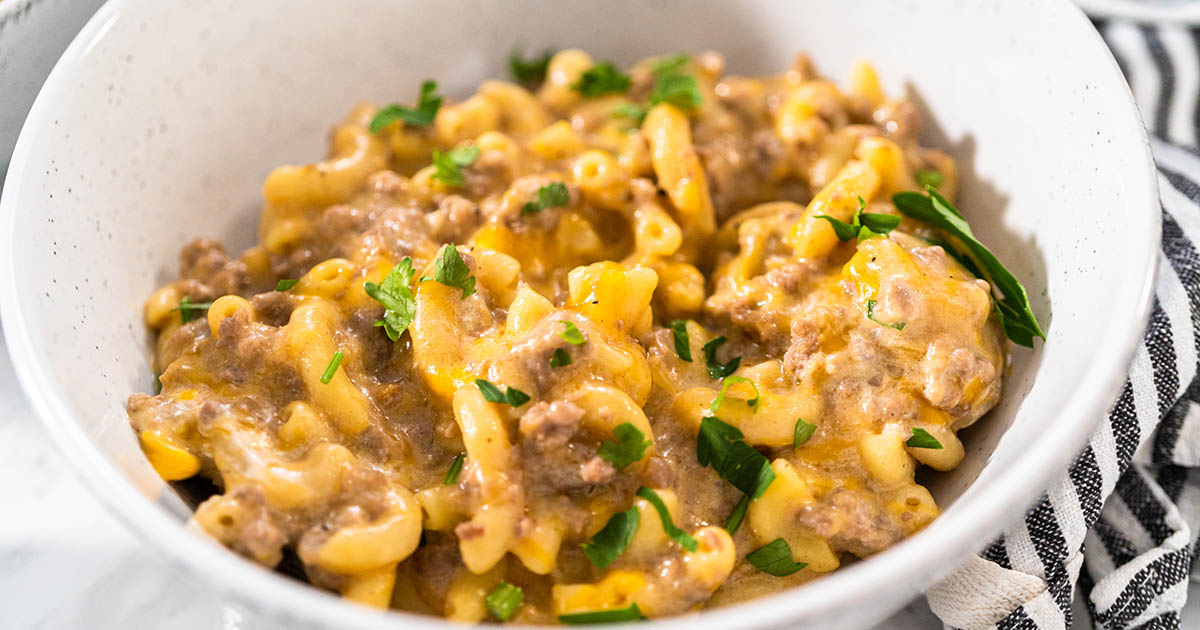
The boxed pasta-and-sauce kit became a household name in the 1970s and has managed to stand the test of time, despite its kitschy, old-fashioned reputation. The premise was elegantly simple: one pound of ground beef, one box of pasta and powdered seasoning, one pan, twenty minutes. The genius of Hamburger Helper was that it let families stretch a single pound of beef into a whole meal. That math mattered enormously in an era when dual-income households were increasingly the norm and the clock was always running.
By the 1990s, the brand had achieved significant market penetration. Hamburger Helper accounted for 70 percent of dry dinner mix sales in 1996. Cheeseburger Macaroni was the undisputed crowd favorite, but Stroganoff had its loyalists, and the occasional household that tried the pizza flavor felt briefly exotic. From a cultural standpoint, it was a symbol of “semi-homemade” cooking before that phrase was trendy. Families felt like they were cooking, not just heating something up, which carried a genuine sense of pride.
Today, sales of Hamburger Helper have been on the rise, with analysts noting an uptick among groups like young adults and aging retirees. The nostalgia economy is real, and apparently, it tastes like Cheeseburger Macaroni.
2. Tuna Noodle Casserole
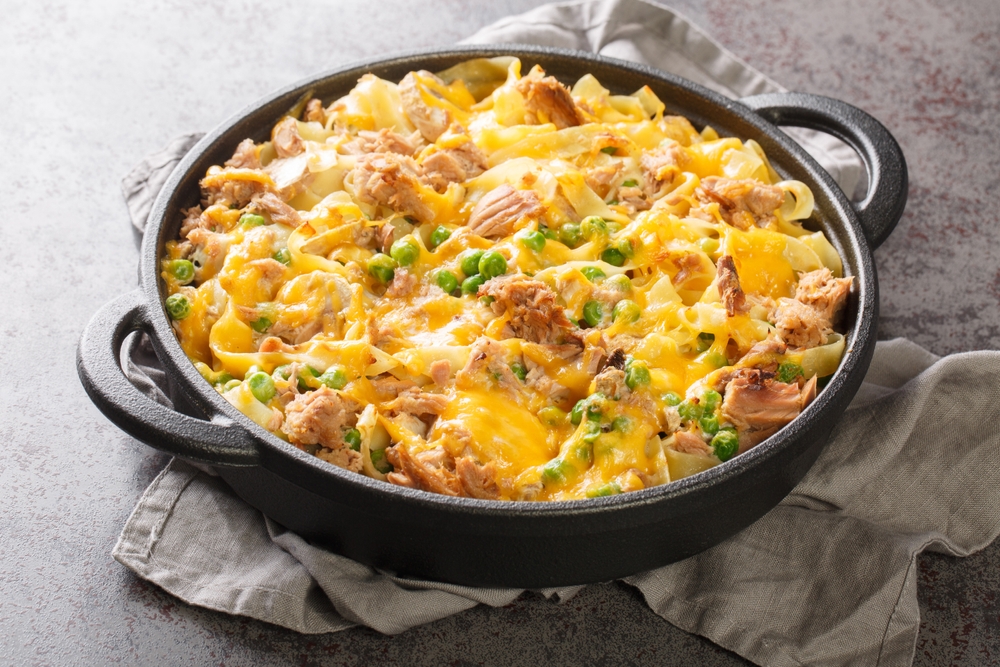
Few dishes in the American home-cooking canon are as aggressively unloved and as persistently made as tuna noodle casserole. The ’80s and ’90s were the era of the casserole. Middle-class families with lots of mouths to feed figured out you could take plain noodles and bulk them up with a creamy soup sauce and simple protein, then add whatever vegetables were on hand.
The formula was reliable: egg noodles, a can of condensed cream of mushroom soup, canned tuna, frozen peas, and a topping of breadcrumbs or crushed Ritz crackers to signal that someone had made an effort. Tuna noodle casserole was, in the words of one person who grew up eating it, “a total abomination” they were “thrilled to never again have plonked down” in front of them – and yet it showed up every week, because tuna was cheap, shelf-stable, and high in protein. The whole dish cost maybe three dollars. For a family balancing a mortgage and two car payments, that math was irresistible even if the dinner table reaction was not.
3. Taco Night
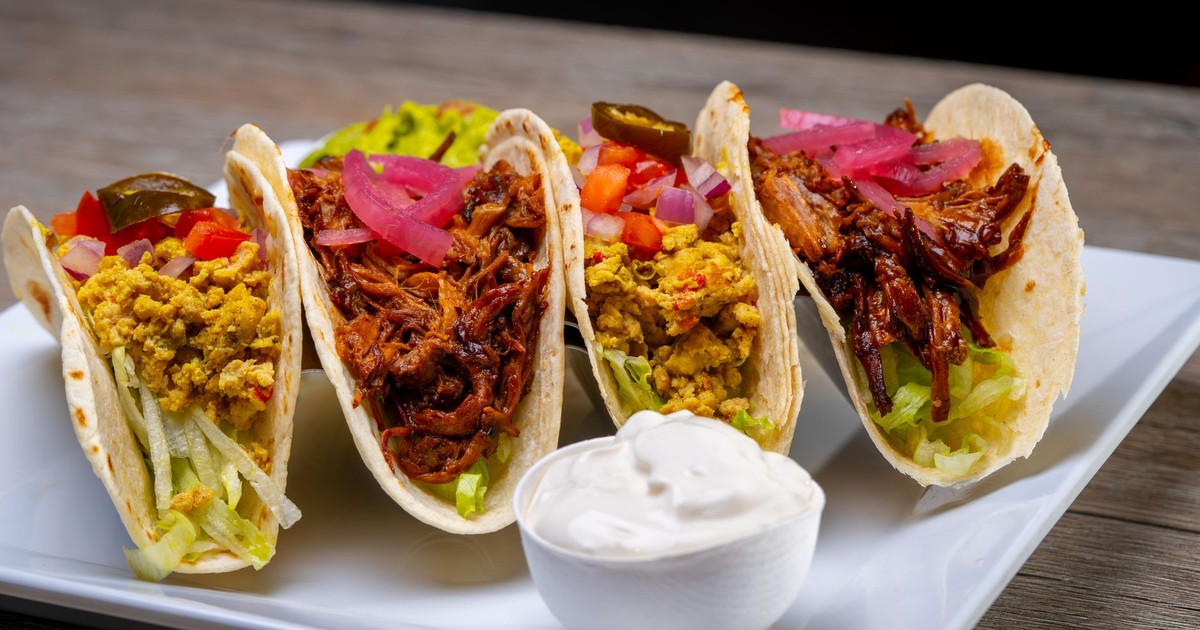
Taco night in the 1990s was not a culinary event. It was a kit. Old El Paso or Ortega, a box of crunchy yellow shells, a seasoning packet with enough sodium to preserve a small mammal, and a pound of browned ground beef. Shredded iceberg lettuce, pre-grated cheddar, jarred salsa. The whole production took twenty minutes and left the kitchen smelling like cumin for two days.
The quintessential American-style taco was at its peak in the 1990s. Families loved that it was interactive, so everyone assembled their own with whatever they wanted inside. That customization aspect was real. Taco night was one of the few dinners where a picky eight-year-old could quietly eat a shell with only cheese and still feel like a full participant in the meal.
The Tex-Mex revolution of the 1980s had made salsa America’s favorite condiment by the early ’90s, surpassing ketchup in grocery sales. That shift in national taste filtered directly into home kitchens, and the weekly taco kit was its most democratic expression.
4. Shake ‘n Bake Chicken or Pork Chops
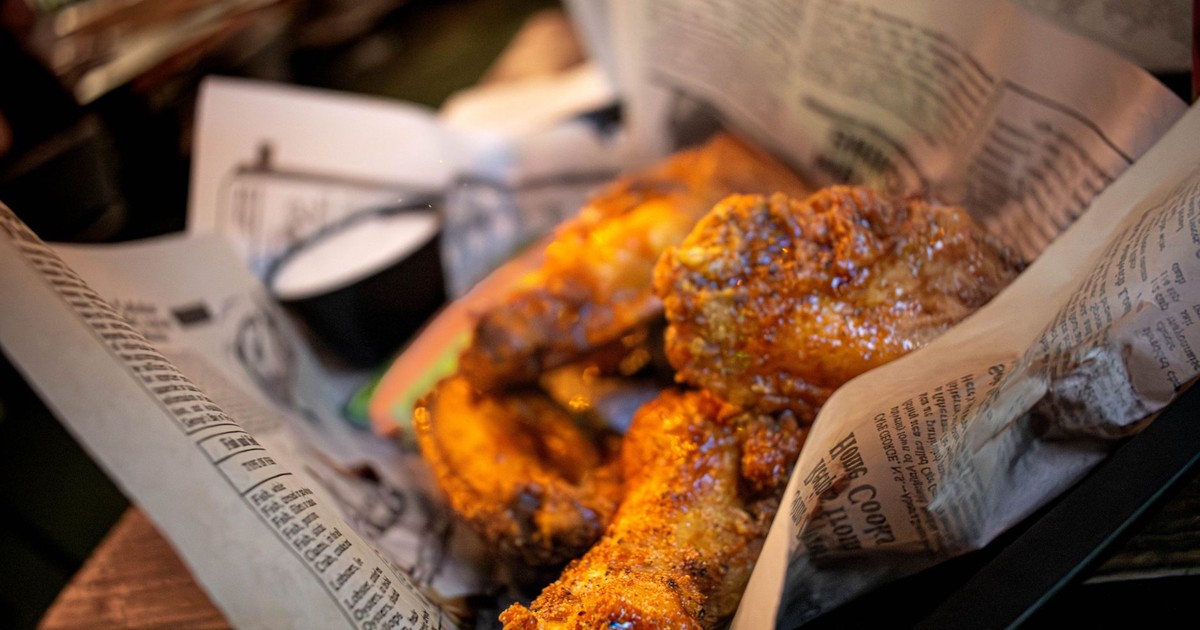
Before air fryers and the endless quest for “crispy without frying,” there was Shake ‘n Bake. A bag of seasoned breadcrumbs, a piece of chicken, a vigorous shake, and into the oven it went. Long before the days of flashy food trends on TikTok, families were feasting on Shake ‘n Bake pork chops and calling it a win. The name was not being poetic.
In the ’90s, parents figured out that complicated marinades were a waste of time when a dusting of Shake ‘n Bake produced an instant main course with no mess. The original barbecue flavor and the Italian herb variety were the two main pillars of most households’ rotations, and you could alternate them across the week without anyone complaining.
Shake ‘n Bake gave families a result that was easier to make, less messy, and lighter than frying. Applied to pork chops especially, it delivered something that sat halfway between comfort food and actual cooking, which was exactly what the decade wanted.
5. Stouffer’s Frozen Lasagna
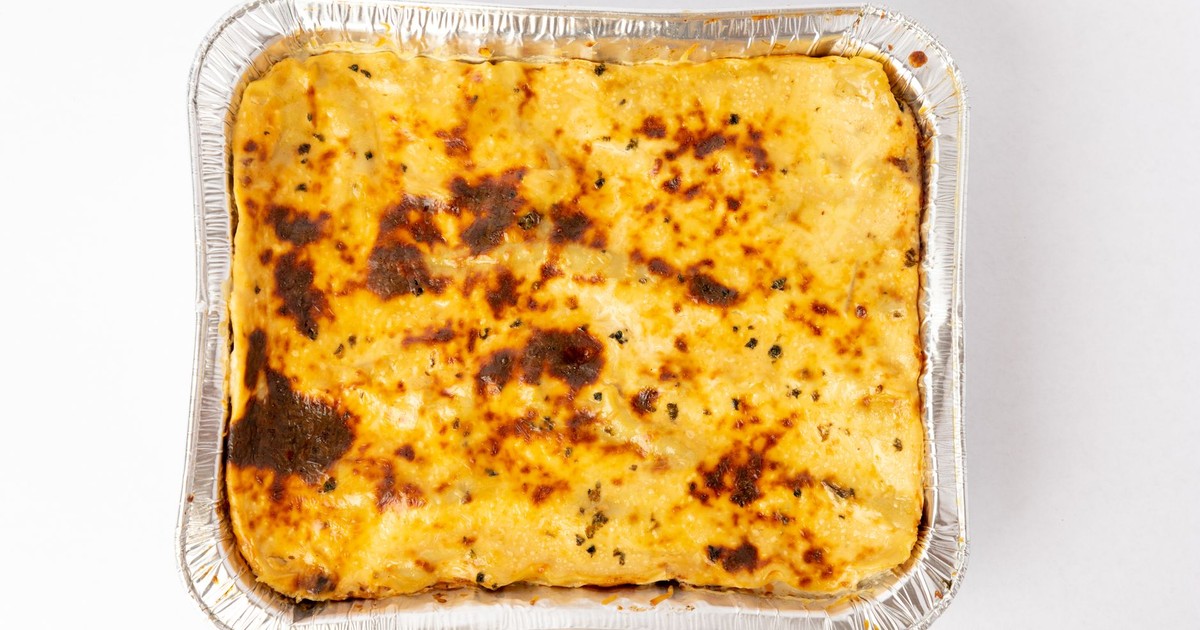
Stouffer’s lasagna occupied a specific cultural position in the 1990s: it was the frozen meal that families served when they wanted to feel like they were having a proper Italian dinner but had no intention of actually making one. The large rectangular tray, the bubbling cheese top, the 75-minute bake time – it felt almost ceremonial.
When people discovered Stouffer’s frozen lasagna, some of them never went back to homemade. Whether that was good or bad depended entirely on the skills of the cook being replaced. But it did mean that lots of families were eating lasagna far more often than they used to.
The accompaniment was almost always the same: a bag of pre-shredded iceberg salad with bottled Italian dressing and a loaf of Texas Toast. Nothing about this meal was homemade, but it landed on the table in a baking dish, so it counted. The ease of it was significant enough that Stouffer’s became a fixture in middle-class freezers across the country throughout the decade.
6. Sloppy Joes
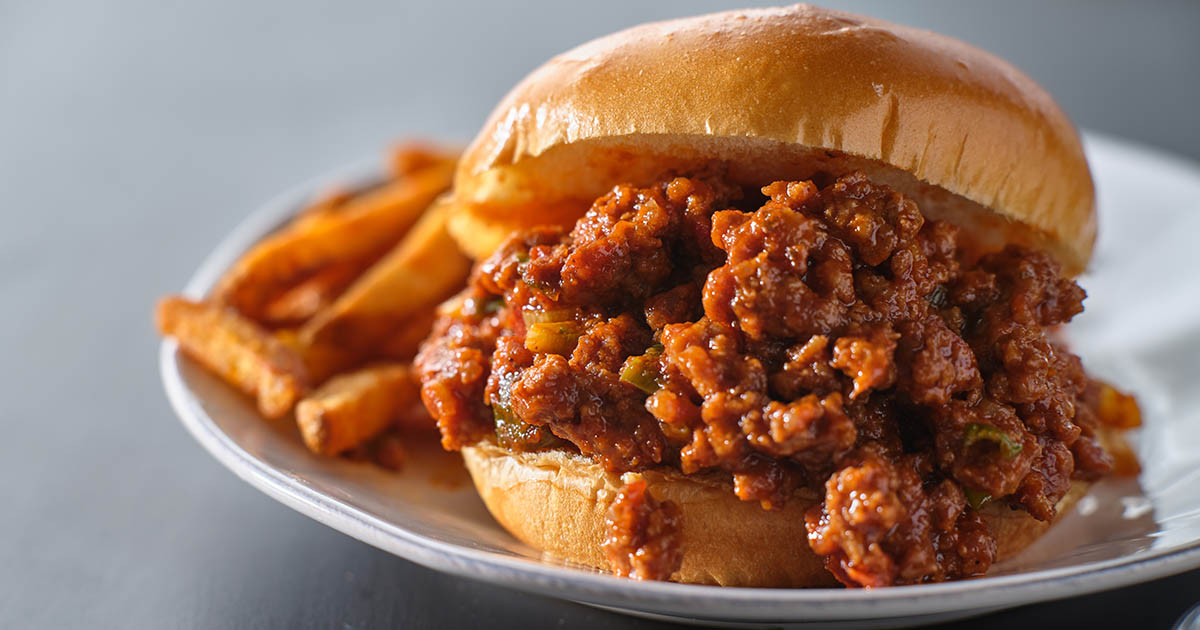
Sloppy Joes were the ’90s answer to the question nobody was asking: what if a burger were more chaotic? Ground beef, a can of Manwich sauce (or ketchup, Worcestershire, and brown sugar if you were going homemade), and a soft white hamburger bun that immediately began disintegrating under the weight of the filling. Kids loved them. The soft bun, the sweet-savory sauce, the permission to eat something that looked like a mess – it was practically designed for a ten-year-old.
Sloppy Joes ruled dinner tables across America during the ’80s and into the ’90s, thanks mainly to convenience sauces like Manwich that turned ground beef into a family feast in minutes. The appeal for parents was even simpler: the whole thing cost under five dollars and could be on the table in fifteen minutes flat.
The pairing of choice was tater tots. Not fries – tots. Something about the combination of a sloppy, sweet ground beef sandwich and a pile of crispy, salty potato cylinders felt perfectly calibrated for that era’s idea of a satisfying weeknight dinner.
7. Chicken Pot Pie (Individual Frozen)
The chicken pot pie had existed in American cooking for generations, but the 1990s miniaturized it. Individual pot pies shrank down to single-serving size and showed up in every grocery store freezer section. Brands like Swanson and Marie Callender’s put them there, and they became the default “there’s nothing for dinner” solution for a certain kind of Tuesday night.
The individual frozen pot pie occupied a peculiar emotional space. It was your own personal meal in a little foil tin, which felt both lonely and luxurious depending on your mood. They were best baked properly, of course, but no one wanted to wait the full time, so the microwave version – slightly soggy, catastrophically hot in the center – was the more common result.
Still, the filling of cubed chicken, carrots, peas, and cream sauce underneath a buttery crust delivered something genuinely satisfying. For kids eating alone on a school night while a parent worked late, a pot pie in its little tin was, improbably, comfort food at its most sincere.
8. Pesto Pasta
The ’90s Italian food obsession hit middle-class home kitchens with particular force, and pesto was one of its most visible arrivals. Pesto Genovese shot to the forefront of American home cooking in the 1980s and 1990s as Italian cuisine became all the rage. It arrived first in specialty stores, then Whole Foods (which opened its first stores in the late ’80s), and eventually in the regular refrigerated section of every supermarket.
In the ’90s, pesto was a specialty food, considered an import from the old country. The vibrant green sauce is a relatively simple combination of Parmesan cheese, basil, pine nuts, garlic, and olive oil – and its simplicity was what gave it mass appeal and seemingly endless uses. First popping up in specialty markets, it was a spoonful of authenticity that soon spread everywhere: paninis, pastas, chicken dishes, dressings.
For the middle-class household making a step up from Hamburger Helper on a special weeknight, pesto pasta with grilled chicken felt almost restaurant-level. It was one of the first meals that decade where home cooks could look at the plate and feel genuinely sophisticated. Sundried tomatoes were almost always involved, too – often stirred right into the same bowl.
9. Baked Ziti
Baked ziti was the potluck dish and the casual family dinner that powered the ’90s Italian food wave from the inside. You cooked the pasta, mixed it with jarred marinara, layered in ricotta and mozzarella, topped it with more cheese, and baked it until it bubbled and browned. Italian food had been popular in America since Italians began immigrating in the 19th century, but the 1990s ushered in a surge of Italian products that found their way onto nearly every menu. The rise of Olive Garden at the time was no fluke – Italian cooking, at least a particular interpretation of it, was a massive food trend.
Baked ziti was that trend’s home-kitchen equivalent. It fed a crowd, it reheated well, and it required almost no skill to execute. A jar of Ragu, a container of ricotta from the dairy case, a bag of shredded mozzarella – total cost about eight dollars, total servings about six. For a generation of parents who didn’t have time to learn real Italian cooking but wanted to deliver something that felt festive, it was perfect.
10. Meatloaf
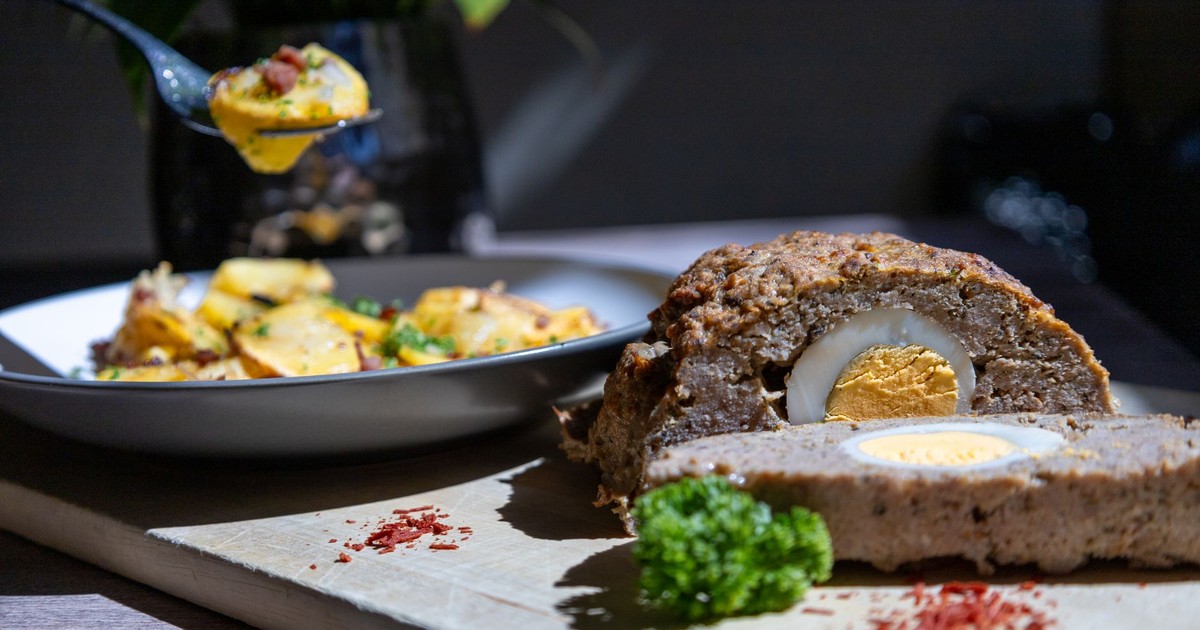
Meatloaf is technically a Depression-era recipe that found a permanent home in postwar American cooking and simply never left. By the 1990s it had been on dinner tables for fifty years and showed no signs of going anywhere. Ground beef, an egg, some breadcrumbs, a chopped onion, Worcestershire sauce, and a ketchup glaze on top. Baked for an hour. Sliced at the table.
The texture and flavor were recognizable to anyone who grew up in a middle-class home in any decade between 1940 and 2000. What made the ’90s version slightly different was the Lipton Onion Soup Mix packet. Mixed directly into the meat before baking, it added salt and savory depth and meant you didn’t have to dice anything. The soup packet shortcut became so standard that many families forgot there had ever been a version without it.
Leftover meatloaf in a sandwich the next day – cold, on white bread with yellow mustard – was a secondary tradition that many people who grew up with it will tell you they preferred to the original dinner.
11. Macaroni and Cheese (Boxed Kraft)
Few weeknights felt as reliable as the ones saved by boxed macaroni and cheese. It needed just milk, butter, and about 15 minutes on the stovetop to transform elbow noodles into a creamy, cheesy bowl that kids devoured. The product surged in popularity in the late ’80s and early ’90s as families sought fast, affordable dinners.
Kraft Macaroni and Cheese was technically a pantry staple, not a meal – but that distinction evaporated quickly once children had any influence over dinner. In the 1990s, many households used it as a main course and considered the addition of cut-up hot dogs a reasonable and even generous upgrade. Nothing beat the two-ingredient mac and cheese with hot dogs comfort meal for the era.
The orange powdered cheese sauce had absolutely nothing in common with actual cheese, and nobody cared. It was a flavor unto itself – specific, nostalgic, unreproducible – and it defined Tuesday nights for an entire generation of children whose parents needed dinner done fast.
12. Fish Sticks
Fish sticks were the weeknight protein that divided households entirely by age. Parents served them because they were cheap, easy, and required no more effort than a preheated oven and 18 minutes. Kids either loved them with a pool of ketchup or refused them with theatrical disgust. There was rarely a middle position.
Mrs. Paul’s and Gorton’s were the dominant brands, and the grocery store freezer section of any 1990s supermarket gave them prominent, eye-level placement. The fish inside was usually pollock or cod, breaded in a pale coating that turned golden in the oven. Served alongside Rice-A-Roni or a pile of frozen corn, they appeared on the table with the resigned frequency of a habit nobody could quite break.
The fact that the same child who refused fish sticks one Thursday would eat them happily the following week – provided ketchup was available – was a minor mystery that parents stopped trying to solve.
13. Chicken Fajitas
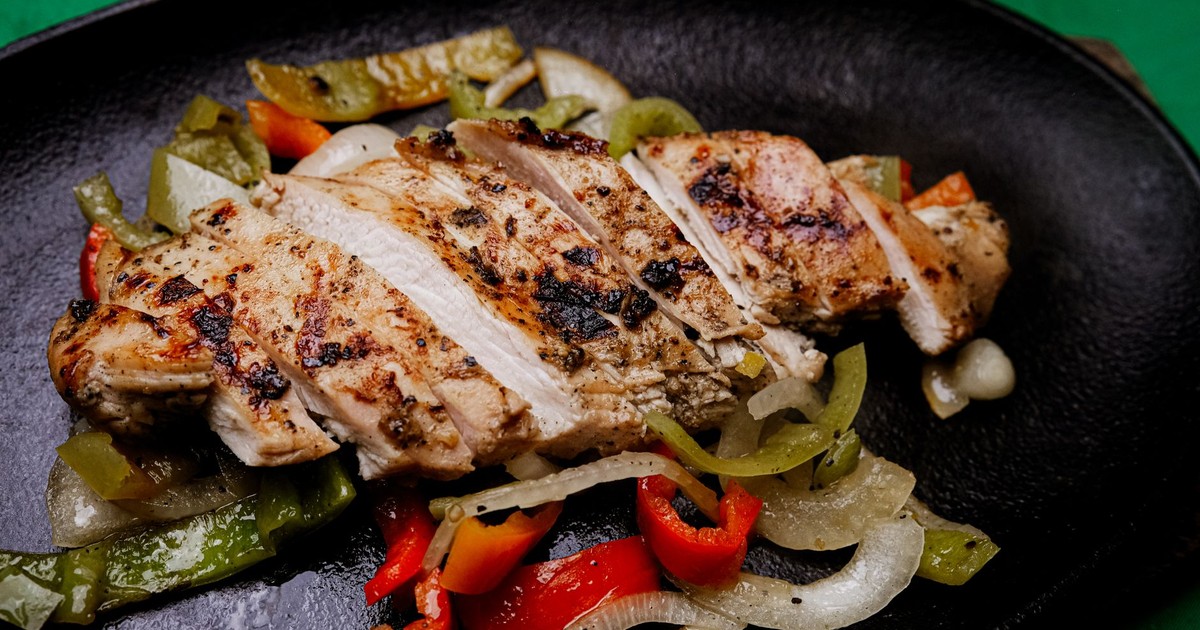
The fajita arrived in American home kitchens in the late 1980s riding the broader Tex-Mex wave, and by the early ’90s it had become one of the decade’s signature home dinners. The sizzle from the cast-iron skillet, the smell of cumin and peppers and onions filling the house – it was one of the few weeknight dinners that actually smelled like an occasion.
The standard kit involved chicken strips marinated in a store-bought fajita seasoning mix, green and red bell peppers, sliced onion, flour tortillas, sour cream, shredded cheese, and salsa. A jar of Old El Paso fajita seasoning was the most common approach for families who didn’t want to measure anything. The whole dinner came together in under 30 minutes on a hot skillet, and the table presentation – everyone assembling their own – gave it the same interactive quality that made taco night so popular.
Fajitas also benefited from feeling slightly more adventurous than the rest of the rotation, the kind of dinner that made kids say “this is restaurant food” while still costing six dollars to feed the family.
14. Chicken Cordon Bleu (Frozen)
Frozen chicken cordon bleu was the aspirational meal of the 1990s middle-class freezer. It arrived pre-assembled: a breaded chicken breast wrapped around a filling of ham and Swiss cheese, oven-ready in its individual packaging. Frozen, processed chicken entrées were a big hit in the ’90s, and the cordon bleu variety in particular delivered a dramatic moment – cutting into one and watching the ham and cheese spill out – that gave the meal a genuine restaurant-dinner quality.
That payoff justified the slightly higher price tag compared to fish sticks or a bag of frozen nuggets. Brands like Barber Foods and Tyson sold them by the box, and they appeared on middle-class tables specifically on nights when someone wanted to feel like dinner was special without any actual cooking involved.
They were served with instant mashed potatoes and a side vegetable that was almost always frozen broccoli, and the whole plate looked, at a certain distance, like something you might get at a mid-range steakhouse.
15. Pot Roast with Onion Soup Mix
The Sunday pot roast was a tradition that stretched back through American home cooking for generations, but the 1990s middle-class version had a specific, non-negotiable ingredient: a packet of Lipton Onion Soup Mix. As one person who grew up eating it recalled: “Pot roast made with chuck roast covered in a packet of onion soup mix. Of course, it was always accompanied by cut carrots, halved potatoes, and mushrooms on the side.”
You put the chuck roast in a Dutch oven or slow cooker, scattered the chopped vegetables around it, tore open the soup packet and dusted the whole thing with the brown powder, added some water or beef broth, and left it alone for four to six hours. What came out was falling-apart tender beef surrounded by soft vegetables sitting in a rich, sodium-heavy broth that tasted like something a grandmother who took shortcuts would make.
The slow cooker – still called a Crock-Pot by nearly everyone in that era, regardless of brand – made this meal possible for working parents. You assembled it in the morning, left for work, and came home to a house that smelled like Sunday dinner. That particular combination of convenience and apparent effort was the high-water mark of 1990s home cooking.
16. Boiled Hot Dogs
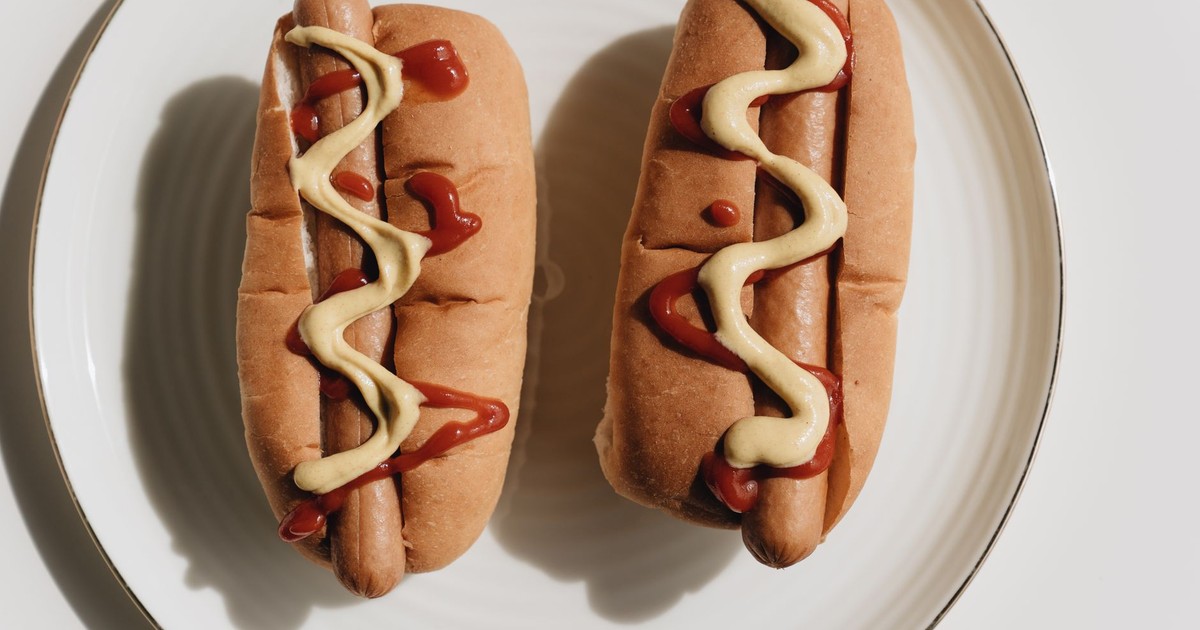
Boiled hot dogs were not pretending to be anything other than what they were: a five-minute solution to the question of what’s for dinner when nobody had planned ahead. A pot of water, a pack of Ball Park or Hebrew National franks, and about four minutes of boiling. Served in soft white buns with yellow mustard and a bag of chips on the side.
Nobody was fooled into thinking this was a proper meal, but it satisfied the basic brief: warm, filling, cheap, fast, and universally acceptable to children who would refuse anything else. One person who grew up eating it put it plainly: “A bowl of baked beans with sliced hot dogs. I always looked forward to this meal as a kid, but my mom recently admitted that she only made it when she barely had any money for dinner.”
The beans-and-franks version – canned baked beans heated alongside the hot dogs – elevated this slightly, turning it from a panic dinner into something that could be called a meal without irony.
17. Cream of Mushroom Soup Casseroles
Campbell’s Cream of Mushroom soup was not just a soup in the 1990s. It was an ingredient, a sauce, a casserole base, and a cultural institution. The can appeared in almost every casserole recipe circulating among middle-class home cooks of that era, from green bean casserole to chicken and rice bake to the classic tuna noodle.
The basic chicken and rice casserole – Campbell’s Cream of Mushroom, rice, chicken pieces, mixed vegetables, and maybe some crushed crackers on top – was the Swiss Army knife of 1990s weeknight dinners. It took about ten minutes to assemble, baked unattended for 45 minutes, and produced a dish that tasted distinctly of processed mushroom and salt. Kids were divided on it. Parents made it anyway.
What those soups represented was a particular era in American cooking when the middle class had fully embraced the idea that convenience and home-cooked were not opposites. You opened a can, but you still assembled a dish and put it in the oven. That felt like cooking. It counted.
18. Pizza Bagels and Bagel Bites
In the ’90s, everything became pizza. Pizza bagels were probably the best of the at-home versions, whether homemade with a spoon of marinara and some pre-shredded cheese, or frozen Bagel Bites. The latter came with the tagline “When pizza’s on a bagel, you can eat pizza anytime!” – and a generation of children took this as a personal philosophy.
Homemade pizza bagels were a weeknight staple in the 1990s household: a bag of plain bagels from the bread aisle, a jar of Ragú pizza sauce, and a package of shredded mozzarella. Halved bagels, spread with sauce, topped with cheese and whatever else was in the refrigerator, fifteen minutes in the oven at 375. It was the dinner that parents used to buy themselves a night off from actual cooking.
The frozen Bagel Bites version was aimed squarely at kids as an after-school snack, but plenty of middle-class families served them as dinner on busy weeknights with zero guilt. Totino’s Pizza Rolls, served alongside or as an alternative, occupied the same space: pizza-flavored, bite-sized, endlessly devoured.
19. Breakfast for Dinner
Pancakes, scrambled eggs, and bacon on a weeknight table was called “breakfast for dinner” or, in some households, “brinner.” The ingredients were cheap, the cooking was fast, and kids loved the novelty of eating the wrong meal at the wrong time of day. Pancakes, scrambled eggs, bacon, and toast on a dinner plate transformed an ordinary weeknight into something that felt like a small occasion.
The cultural logic of breakfast for dinner was entirely sound. Eggs were inexpensive. Pancake batter from a box (Bisquick, always Bisquick) took five minutes to mix. Bacon cooked in twelve. The whole dinner cost less than four dollars and produced the specific happiness that comes from eating something sweet and salty at 6pm. Children universally celebrated it. Parents deployed it strategically.
Read More: Bring Back the Flavor: 15 Vintage Recipes Worth Reviving
It was also one of the most equalizing dinners in the ’90s rotation: it didn’t require culinary skill, it didn’t require a trip to the store if you had eggs and flour, and it worked whether the family was flush or stretched thin. Some of the warmest kitchen memories of that decade involve a Sunday-night stack of pancakes eaten in front of a movie on VHS.
20. Chicken and Rice Bake
The chicken and rice bake was the workhorse of the 1990s oven. Chicken pieces – thighs or drumsticks, usually, because they were cheap and forgiving – laid on top of uncooked rice in a baking dish, covered with a mixture of chicken broth, cream of mushroom soup, and seasoning, then sealed with foil and baked low and slow until the rice had absorbed everything and the chicken was falling off the bone.
The 1990s saw a wave of interest in lighter and more health-conscious eating, with the Food Guide Pyramid and the emerging Mediterranean diet both influencing how families thought about dinner. The chicken and rice bake fit neatly into that aspiration: it was real food, relatively balanced, and it looked like the kind of dinner you’d find in a magazine recipe. The fact that it required one dish and minimal active cooking time was the actual reason people made it.
It was also one of the most forgiving recipes in the rotation. You could add frozen peas at the halfway point, substitute garlic powder for fresh garlic, use whatever condensed soup was on sale, and the result was almost always the same: a comforting, savory bake that smelled like Sunday even on a Wednesday.
The Meals That Meant Something
Nostalgia has a way of softening the edges of things, and 1990s home cooking is a good example. In the cold light of 2026, a lot of these meals read as heavily processed, sodium-loaded, and nutritionally approximate. Which is fair. But that’s not quite all they were.
What these 1990s nostalgic meals actually represented was a specific moment in American domestic life: dual-income households navigating the gap between the aspiration to cook real food and the reality of a packed schedule, a modest budget, and children who would eat approximately four things. The box of Hamburger Helper and the Shake ‘n Bake chicken and the frozen pot pie were not failures of ambition. They were pragmatic solutions from a generation of parents who were doing a lot and still tried to put dinner on the table every night.
The smell of any of these dishes, more than thirty years later, still lands somewhere behind the sternum. That’s not nothing. The reason those meals stick isn’t really the food itself – it’s the fact that someone made them. Every single weeknight, someone stood at a stove and figured it out. The box of Cheeseburger Macaroni and the pot of boiled hot dogs and the frozen lasagna in its foil tray were all just different versions of the same answer: we’re here, we’re fed, and tomorrow we’ll do it again.
AI Disclaimer: This article was created with the assistance of AI tools and reviewed by a human editor.