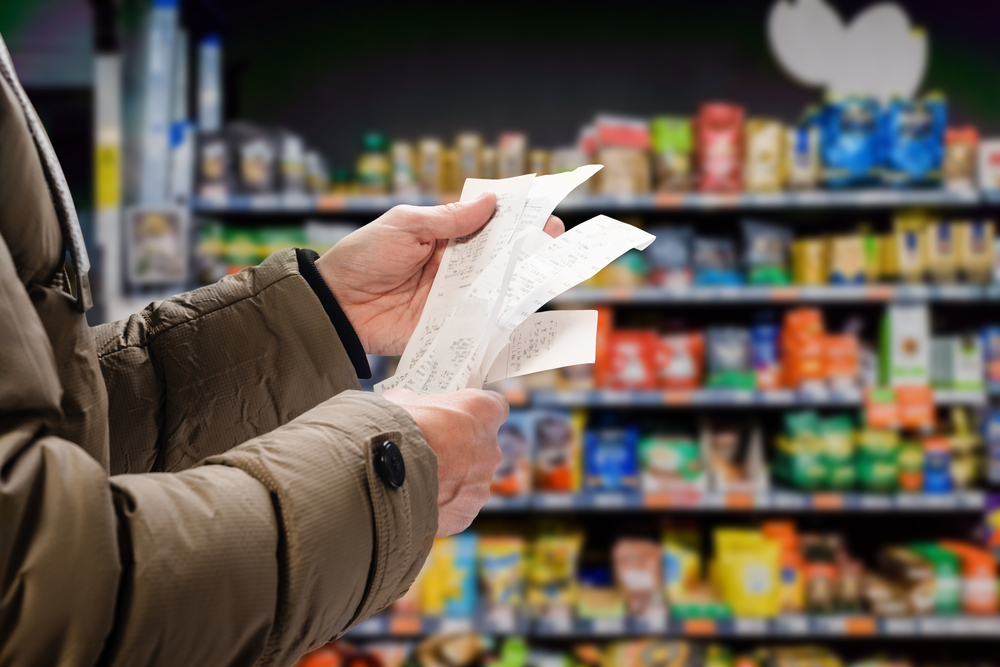

If you’ve been quietly adjusting your grocery habits over the past couple of years, buying the store-brand pasta instead of the one you used to reach for, skipping a few things you used to consider basics, you’re not imagining things and you’re not alone. Food prices rising have been the top financial concern for American households for some time now. What’s coming next is unlikely to make that feeling go away.
A collision of drought, unusually warm winters, elevated input costs, and geopolitical pressure on supply chains is pushing the grocery bill higher again in 2026. The causes stretch from farm fields across the Southern Plains all the way to the fertilizer trade routes running through the Middle East. None of it is simple, and none of it is resolved. But the pieces fit together in a way that’s worth understanding, because the effects will be visible on your receipt before most economic reports have a chance to flag them.
The story starts with wheat, which is one of the most foundational grains in the American food supply. And the wheat harvest this year has turned into one of the worst in living memory.
What Happened to the Wheat
Few people outside of farming communities saw how bad this growing season had gotten until the numbers landed. According to the USDA’s wheat market outlook, the National Agricultural Statistics Service has forecast winter wheat production to be the smallest since 1965-66. When all wheat types are counted together, total U.S. all-wheat production is forecast at its lowest level since 1972-73. For context: there are Americans alive today who have never seen a wheat harvest this bad.
The overall winter wheat harvest came in at 1.048 billion bushels, down 25% from the previous year’s crop and the smallest since 1965. The biggest hit came to Hard Red Winter wheat, the class grown predominantly across the Southern Plains states of Kansas, Oklahoma, and Texas, and the variety most commonly milled into the flour used in everyday bread.
Farm Progress reports that Hard Red Winter wheat was pegged at about 515 million bushels, down 36% from last year, with USDA’s May Crop Production report coming in roughly 160 million bushels below the average analyst forecast. July Hard Red Winter futures reached $7.50 per bushel in mid-May, the highest intraday price for the most active contract since September 2023. Wheat acres planted across the U.S. are at their smallest since 1919. Between September and last April, temperatures across the Plains were the warmest in more than 130 years, and wheat that breaks dormancy too early is exposed to freeze risk before it’s ready to handle it.
Persistent drought was the biggest factor shaping this year’s crop. One OSU extension specialist described a season that “started with a little bit of moisture” but for the most part was “very dry winter, and then coming into early spring, hot, dry and windy.” Oklahoma’s crop is estimated at roughly half the size of the previous two years, with production projected at 48.9 million bushels compared to 101.1 million in 2025.
It’s not just Hard Red Winter. Soft Red Winter came in at 301 million bushels, down 15% from the previous year, while White Winter dropped 5% from last year as well.
From the Field to the Shelf
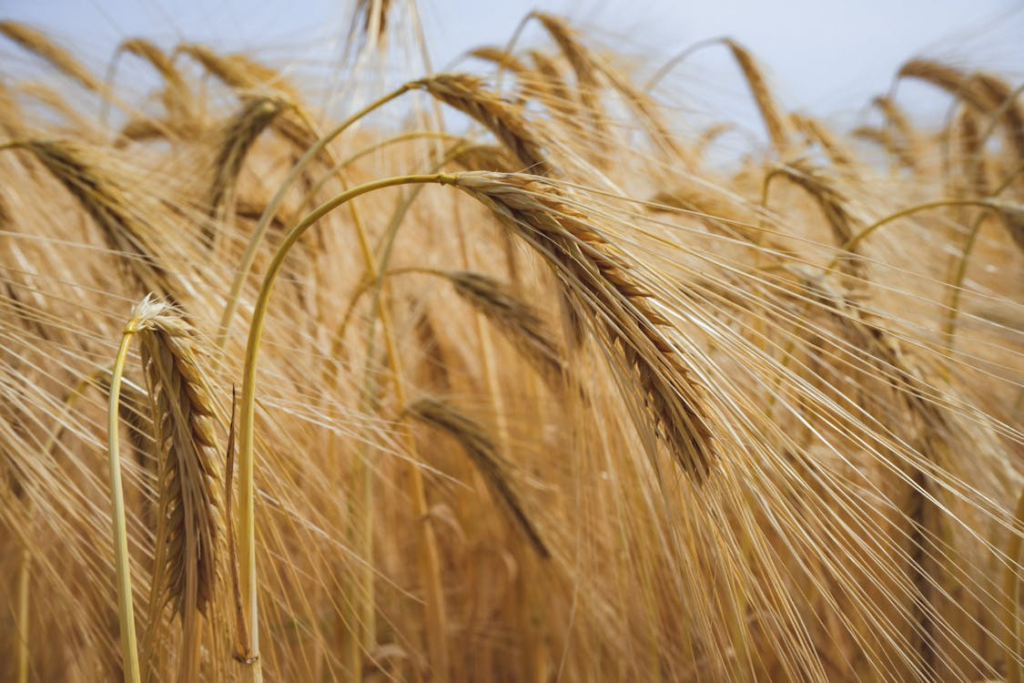
Wheat is not priced like gasoline. A drought doesn’t cause the price of a loaf of sourdough to spike overnight. The supply chain between a Kansas wheat field and a grocery store shelf is long and layered with other costs, which means price changes arrive slowly and in increments. Flour milling, packaging, trucking, retail margin: each adds a buffer.
Farm-level wheat prices have already started to respond, rising significantly year on year. By current forecasts, farm-level wheat prices are predicted to increase more than 10% for the full year, with a wide range of possible outcomes depending on how the rest of the growing season goes.
Those futures prices will, eventually, filter through to consumers. The direct hits are straightforward enough: flour, bread, pasta, cereals, and baked goods all rely on wheat. But wheat also turns up in animal feed, which is where the story fans out across more of the grocery store. Higher grain costs make it more expensive to raise beef, pork, poultry, and dairy animals. A failed wheat harvest doesn’t just raise the price of your sandwich bread; it creates upward pressure across the entire protein aisle too.
The reassuring part is that no single ingredient drives grocery prices alone. Wheat is one input among many that go into the final cost of food. A 10% rise in wheat prices does not translate to a 10% rise in bread prices. The connection is real but it’s diluted by the time it hits your receipt.
The Costs Already Piling Up
The wheat crisis would be easier to absorb if everything else in the food supply chain were holding steady. It isn’t.
Rising costs for fertilizer, fuel, packaging, and transportation are already rippling through the food supply chain, and April’s rise in grocery prices may be only the beginning of a longer, steeper stretch of food inflation. According to Food Navigator’s reporting on Richard Volpe, a former USDA economist now at California Polytechnic State University, grocery prices could increase closer to 4% to 4.5% by year’s end, well above the long-run historical average of around 2.6%. Even if current geopolitical conflicts were resolved immediately, the impacts on the food system are likely to filter through well into late summer and fall, or even into 2027.
It’s worth pausing on what that “4% to 4.5%” figure means in practice. On a monthly grocery bill of $1,000 for a family of four, that’s an extra $40 to $45 every single month on top of prices that are already well above where they were three years ago. Not catastrophic on its own, but these increases don’t arrive in isolation. They stack on top of each other, year after year.
The Bigger Picture at the Grocery Store
The grocery staples that have already gotten more expensive over the past few years make the wheat news harder to take. Food prices weren’t exactly comfortable before this harvest season.
The USDA ERS Food Price Outlook is now forecasting that overall food prices will rise 3.4% in 2026, with grocery prices specifically expected to climb 3.2%, faster than their long-run average. Grocery prices were already 2.9% higher in April 2026 than a year earlier, with a 0.7% jump from March alone, one of the steepest single-month increases since 2022.
Beef and veal prices are expected to rise 12.1% this year, one of the largest increases among major food categories. Fresh tomatoes were 39.7% higher year over year in April 2026. Eggs have bounced around. Ground beef has climbed steadily.
In a recent poll, more than half of Americans said everyday life had become less affordable. Three-quarters of them pointed to rising grocery prices as a leading cause, more so than gasoline, healthcare, housing, or any other category.
That poll captures something important: people feel this in their kitchens before they see it in any economic report. The cumulative weight of years of grocery inflation, even at moderate rates, adds up to a fundamentally different experience at the checkout counter.
Food prices are particularly sensitive to energy costs because energy plays a role at every step of the supply chain. Diesel powers the tractors that plant crops. Nitrogen fertilizer and crop-drying heat typically come from natural gas. Then there’s shipping, processing, and packaging; each stage adds costs, all of them energy-dependent.
What to Make of All This
None of this means you should expect a moment of crisis where bread suddenly costs twice as much. That’s not how this works. What the wheat harvest tells us is that food prices rising in 2026 won’t ease up the way some earlier forecasts suggested they might. The wheat picture is a new pressure point arriving at exactly the moment when every other pressure on the supply chain, energy, fertilizer, transportation, geopolitics, is already elevated.
The honest read is that grocery bills are going up, and the pace is probably accelerating rather than cooling. The increases won’t arrive as a single shock. They’ll come as a few cents more for a bag of pasta, a slightly higher price for a box of cereal, a loaf of bread that was $4.29 and is now $4.69 before you notice it happened. Individually, none of it feels like a news story. Together, it adds up to real money leaving your household every month.
What you can control is how you shop. Buying pantry staples in bulk before prices climb further is not panic buying; it’s sensible. Store-brand equivalents of wheat-heavy products like pasta and flour have historically absorbed price increases more slowly than name brands. And cooking more from scratch, specifically with whole grains and pulses, puts some distance between you and the categories most exposed to this year’s harvest.
The wheat harvest is a signal, not a sentence. Prices are going to be higher. The question is whether that’s a steady, manageable rise or something steeper, and that depends on how the rest of the growing season goes, how energy costs move, and whether supply chains face any more surprises before the year is out. There’s no clean answer to that. What’s clear is that the grocery bill you have today is probably not the grocery bill you’ll have by the end of the year.
AI Disclaimer: This article was created with the assistance of AI tools and reviewed by a human editor.