

Family gatherings reveal who people really are in small, unguarded moments: the way someone serves themselves before the host sits down, holds court for twenty minutes on a topic nobody asked about, or reaches across four people for the bread basket without a word. Nobody says anything. Family dinner etiquette mistakes almost never get called out. They just get remembered.
Family-style dining, where dishes are passed and shared rather than individually plated, is built for connection. But it has more moving parts than a plated meal, more moments where the social contract can slip. When it does, the person who caused the discomfort usually has no idea.
This list covers subtler habits that fall into a gray zone where nobody’s quite sure if they’re bothered or overreacting. The ones that can make someone feel invisible, rushed, or less welcome at a table they were happy to be at.
1. Starting to Eat Before Everyone Is Served

Basic dining etiquette holds that you wait until everyone is seated and served before eating, or until the host signals that it’s fine to start. When someone digs in the moment their plate lands, it creates pressure on everyone else, especially on the host, who may still be juggling dishes in the kitchen and suddenly feels the window closing on the meal feeling like a shared event.
In family-style settings, this matters more. Dishes come out in waves, and someone is almost always still waiting on a particular bowl or platter. The person who starts eating the moment one dish arrives may not realize that the person across from them is still waiting on the one thing they were actually looking forward to. It reads as impatience.
Wait for the host to sit, or at least for a clear signal that everyone has what they need. When dining with close family and friends, eat once everyone has received a small portion of the first dish. In more formal settings, wait for the host to begin eating. If the host encourages you to start so food doesn’t go cold, then do. But defaulting to “I’ll just start” without that cue flattens the beginning of a meal that took hours to prepare.
2. Taking Too Much on the First Pass
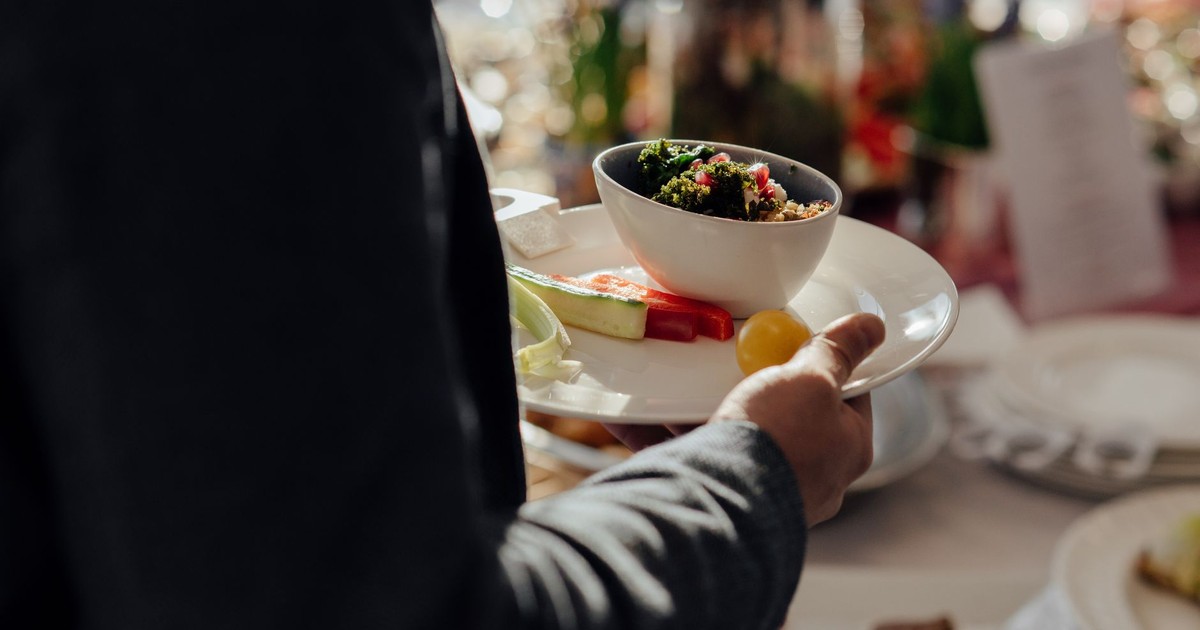
The etiquette guidance on self-serving is consistent: take a modest portion, because you can always go back for more. At a family-style table, this isn’t just courtesy. It’s arithmetic. If six people are sharing a dish and two of them serve themselves generous portions before it reaches the other four, someone at the end of the pass is getting the scraps of something they were looking forward to.
The person who loads up their plate on the first round communicates, even unconsciously, a kind of scarcity thinking, a need to claim more than one’s share before it disappears. People notice this even if they don’t articulate it. The guest who takes a modest amount and lets the dish travel first tends to be remembered as considerate. The one who clears half the platter does not.
Wait for the host to encourage seconds before requesting more food. If food is visible, ask for a specific item to be passed for seconds, and offer some to the dining companions on either side of you before serving yourself. That single adjustment changes how you come across more than almost anything else at a communal table.
3. Reaching Across the Table Instead of Asking

Reaching across the table for anything is a breach of basic etiquette. The correct move is to ask for it to be passed. In practice, this one gets bent constantly, especially in families where the table is casual and close. But the reach-across creates problems: it puts someone’s arm in another person’s personal space, risks knocking over drinks or candles, and can be genuinely awkward for everyone watching.
Asking for a dish to be passed is an act of inclusion: it brings other people into the moment, creates a small exchange, and acknowledges that other people exist between you and what you want. Reaching across skips all of that. It’s the table equivalent of cutting in line.
When passing dishes family-style, always pass to the right so that dishes are going in the same direction. After serving yourself, pass it to the person on your right and offer to hold the dish, especially if it’s heavy, so they can serve themselves. Following that convention means the table operates as a system rather than a free-for-all, which makes the whole meal smoother for everyone involved.
4. Using Your Personal Utensils to Serve From Shared Dishes
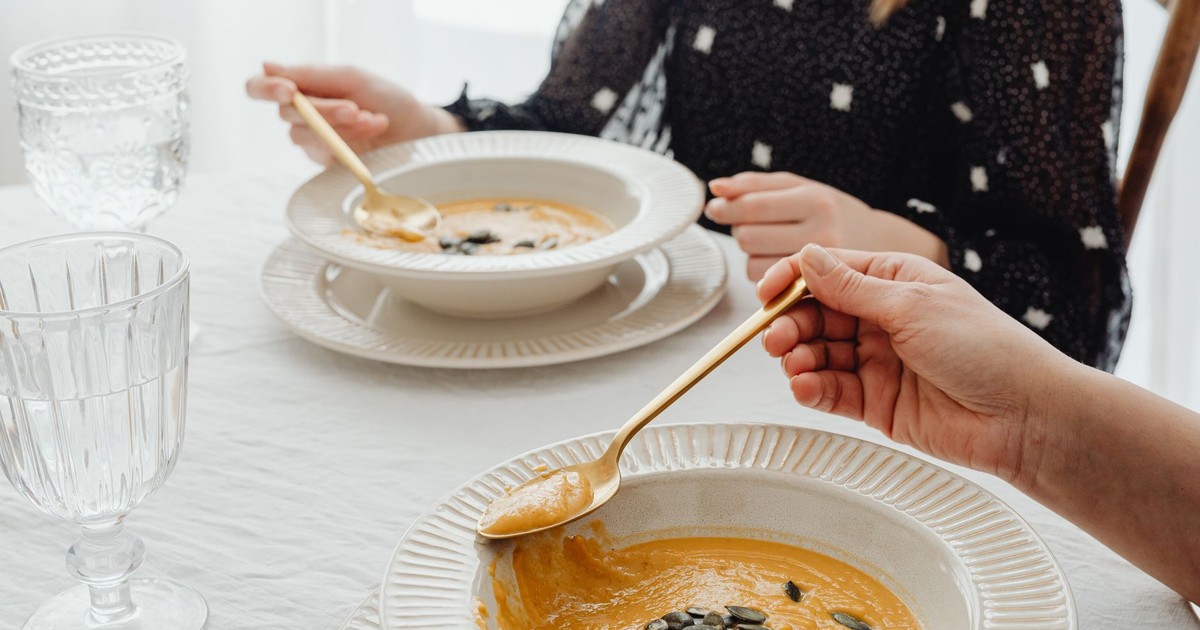
The rule is clear: always use the serving utensils provided, not your personal silverware, when taking food from a shared dish. This one makes people genuinely uncomfortable, even if they feel awkward saying so. Watching someone spear a roasted potato from the communal bowl with the fork they’ve already been eating with is a hygiene issue as much as it is an etiquette one.
Serving utensils exist precisely because the whole point of family-style dining is that everyone at the table is sharing from the same bowls. The moment a personal fork goes into a shared dish, the communal nature of the meal shifts for a lot of people, particularly those who are more mindful about germs or simply weren’t raised that way. It creates discomfort without the perpetrator ever noticing.
If the host hasn’t included a serving spoon or tongs with a particular dish, it’s entirely appropriate to ask for one. Most hosts would rather provide one than watch a guest hesitate in silence.
5. Monopolizing the Conversation

Shared meals are, by design, communal experiences. The food is shared, and so is the conversation. The guest who holds the floor for long stretches, who steers every topic back to their own work or opinions or the thing that happened to them last month, makes other people feel like audience members at a dinner they were supposed to be part of.
A lot of table monopolizing isn’t malicious. It’s nerves, or genuine enthusiasm, or the habit of someone who doesn’t get enough space to talk in their everyday life. But the effect on others is real regardless of the cause. The person who hasn’t said a word in forty minutes tends to leave the table feeling smaller than when they arrived.
The simplest correction is also the most effective: ask people questions and wait for the full answer. Not as a technique, but as actual interest. The conversation will balance itself naturally when people at the table feel genuinely invited into it.
6. Putting Your Phone on the Table
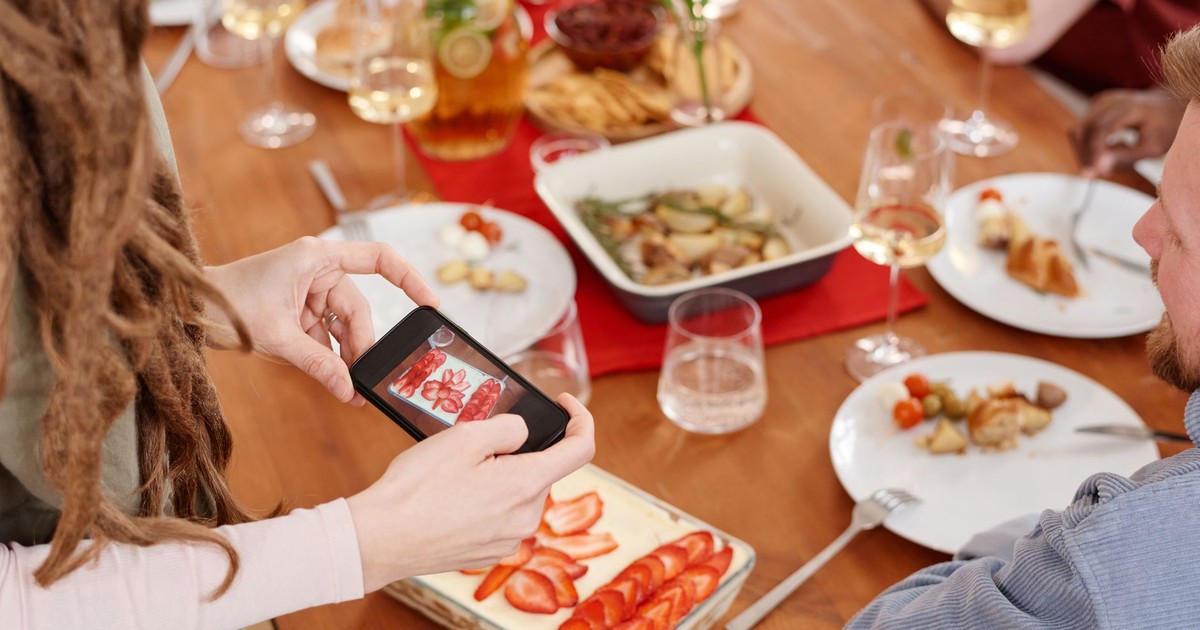
A phone sitting face-up on the table during a meal is considered a breach of basic etiquette, especially in shared dining settings. Your phone belongs in your bag or pocket, on vibrate. If you leave your phone out in plain sight for everyone to see, you’re sending the message that more interesting things are on the screen than are in front of you.
When family members are on their phones at dinner, it chips away at the idea that this time together is significant, that the people present matter, at least for the next thirty minutes. When it becomes a pattern, people stop trying. Conversations shrink and the connection dulls.
The phone-on-the-table habit has become so normalized that people often don’t register they’re doing it. You sat down to eat with people. The phone can wait twenty minutes. If it genuinely cannot, that’s worth naming out loud rather than just leaving it face-up as a silent hedge.
7. Commenting Negatively on What Others Are Eating
Every table has at least one: the person who can’t let a dietary choice go without commentary. The unsolicited remark about someone’s portion size, the eyebrow raise when a guest declines the meat, the cheerful observation that so-and-so is eating the same thing again. It’s rarely intended to wound. It still lands.
A core principle of shared dining is this: a family-style meal should focus on the overall enjoyment of the celebration and spending time in good company. Neither the host nor the guest should place undue pressure on the food served. Commenting on another person’s plate, even positively, like noting they’re eating “so healthily,” draws attention to their choices in a way most people find intrusive. The dinner table is not the moment to audit what other people have put on their plate.
This applies equally to food the host has prepared. If something isn’t to your taste, eating around it without comment is always preferable to announcing your objection to the room. The host has spent time and effort on this meal. A single dismissive comment about a dish tends to stay with them long after the dishes are cleared.
8. Salting Your Food Before Tasting It

Reaching for the salt shaker the moment a dish lands, before a single bite, is a signal, however unintentional, that you’ve already decided the food needs fixing. For the person who spent two hours on that dish, it registers.
The etiquette guidance is consistent: never season food before tasting it first. Professional chefs and home cooks alike have been observed wincing at the automatic reach for salt before the fork has even been lifted. At a family dinner where someone put genuine care into the food, it signals indifference more clearly than almost any other gesture.
Taste it. If it genuinely needs salt after that, add some. Nobody is policing the shaker, just the timing.
9. Forgetting to Pass Dishes That Haven’t Reached Everyone
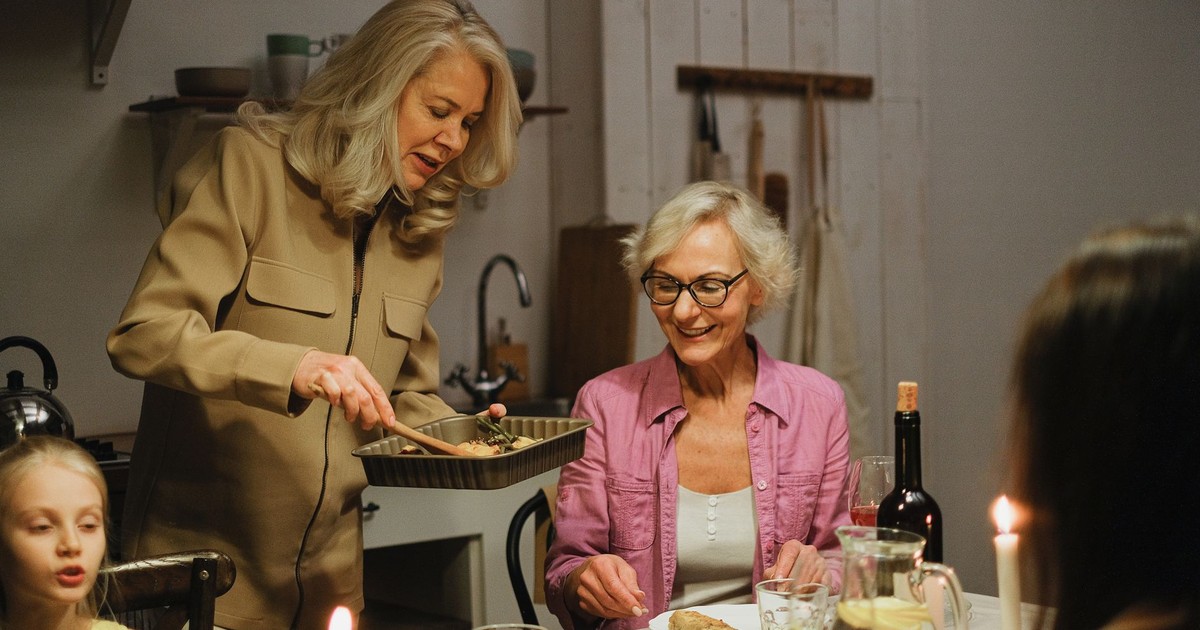
Family-style dining works because it’s a system. Dishes travel around the table so everyone gets a chance at everything. That system breaks when someone takes what they want and then sets the dish down in front of them without passing it on, or gets absorbed in a conversation and forgets there are four people still waiting on the pasta.
Family-style platters and shared dishes are designed for multiple people. When someone pulls a dish from the circuit, it creates a disruption that ripples down to the other end of the table, where people are waiting, trying to work out if they should ask, not wanting to interrupt the conversation, silently calculating whether the dish will eventually make its way back around.
Pass the dish before it gets to you if someone further along the table is still waiting. And if you’ve served yourself and realize you set a dish down without continuing the pass, just pick it up and send it on. Nobody will notice. They’ll just appreciate the food arriving.
10. Leaving the Table Repeatedly During the Meal
Standard dining etiquette holds that you should avoid leaving the table until everyone has finished eating, unless excused for an important reason. At a family-style dinner, where the whole point is communal presence, someone who pops up every ten minutes, to check their phone in another room, to look something up, to step outside, fragments the table’s energy. Even one or two departures can make the host feel like the meal isn’t worth staying for.
This is distinct from practical necessity. Stepping away briefly for a genuine reason, and doing so with a word to the host, is understood by everyone. The discomfort comes from the repeated departure that treats the table as a waiting room between errands. It signals that the meal itself, and the people at it, are optional.
If you know ahead of time you might need to step away for something, mention it to the host before dinner starts. That way it doesn’t read as restlessness when the moment comes.
11. Bringing Up Divisive Topics at the Table
The general guidance on dinner conversation is to keep it pleasant and steer away from topics that might make anyone feel uncomfortable. Political debates, long-running family grievances, pointed comparisons between siblings, and any subject that reliably produces tension should stay off the table. Family dinners are not the venue for relitigating old arguments or airing opinions guaranteed to divide the room.
The problem with contentious topics at the dinner table isn’t that important things shouldn’t be discussed. It’s that the dinner table is a shared space where not everyone has agreed to enter that particular conversation. Raising a charged topic mid-meal puts everyone in an awkward position: engage and risk escalation, or disengage and sit through an uncomfortable silence. Neither option improves the meal.
People come to the table with different rules and dinner rituals, often arriving with different expectations. Working out common ground in advance, even informally, makes a real difference in avoiding moments where one strong opinion shuts the whole table down.
You can read more about the etiquette traps that trip people up even in casual settings in this look at common Italian dining mistakes, some of them translate directly to any shared table.
12. Not Acknowledging the Host’s Effort

Expressing genuine gratitude to the host and the cook for the meal and the time spent together is a basic, often neglected, courtesy. And yet it’s the one most people handle the least thoughtfully. A perfunctory “thanks, it was great” delivered while already reaching for a coat is a very different thing from a moment of actual acknowledgment.
Hosting a family-style dinner involves hours of planning, shopping, cooking, and setup. Complimenting the cook and acknowledging the effort of the person who prepared the meal matters more than most guests realize. Hosts who put genuine effort into a meal notice when it’s recognized, and they notice when it isn’t.
The specific gesture matters less than its sincerity. A brief, specific remark about something the host did particularly well, “that sauce was exceptional” or “I loved how you set the table,” lands far more meaningfully than a general compliment on the way out. It tells the host that someone was actually paying attention. At a dinner where the whole point was for people to be present together, that’s probably the most generous thing a guest can offer.
What the Discomfort Is Actually About
None of the twelve behaviors on this list require bad intentions to do real damage to the atmosphere at a table. Most of them happen on autopilot, or out of habits formed long before anyone sat down to think about them. Family dinner etiquette mistakes don’t feel like mistakes from the inside. They feel like Tuesday.
Etiquette expert Valerie Sokolosky describes good manners as “a list of agreed-upon social rules that let everyone know what to expect when interacting with others.” At a family-style dinner, where the format is specifically designed to create closeness and generosity, those agreed-upon rules are more visible than almost anywhere else. Every pass of a dish is a small act of consideration. Every choice about when to speak, when to put the phone down, when to wait for the last person to be served before picking up a fork, these are the choices that determine whether the people at the table feel seen or overlooked.
The uncomfortable truth about most of these habits is that they tend to cluster. The person who reaches across the table is often also the one who salts their food without tasting it and monopolizes the first twenty minutes of conversation. It’s not malice. It’s a kind of tunnel vision, an absorption in one’s own experience so complete that the other people at the table become backdrop. The antidote isn’t a checklist. It’s the older and simpler habit of looking up and noticing who else is there.
Disclaimer: This information is not intended to be a substitute for professional medical advice, diagnosis, or treatment and is for information only. Always seek the advice of your physician or another qualified health provider with any questions about your medical condition and/or current medication. Do not disregard professional medical advice or delay seeking advice or treatment because of something you have read here.
AI Disclaimer: This article was created with the assistance of AI tools and reviewed by a human editor.