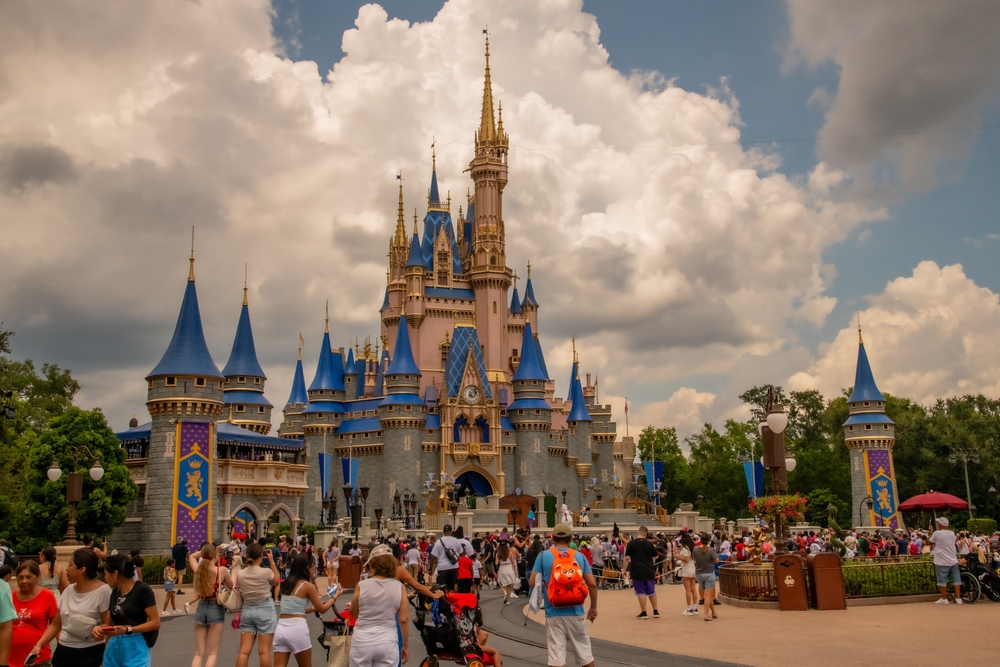

The post was so unhinged it almost seemed fake. A mother, furious after a Disney World trip, took to Facebook to declare that childless adults needed to be banned from the parks. Her three-year-old had seen a young woman eating a Mickey Mouse-shaped pretzel. He wanted one. The line was too long. He cried. And in her mind, the person holding that pretzel was directly responsible. The disney childless adults ban debate had begun.
None of that logic holds together, obviously. But it went viral anyway, and it kept resurfacing. The post touched something that had been sitting just below the surface for a while: a simmering tension between parents who feel theme parks belong to them, and the very large number of adults who apparently disagree.
What’s worth understanding is not the post itself, which was extreme by any measure, but what it reveals about who actually goes to Disney, what the company thinks about that, and why this argument keeps coming back.
The Post That Started Everything
In a now-deleted 2019 Facebook post, one angry mother took to Facebook to vent her frustration with childless millennials after a trip to Disney World, detailing an incident where she had to deny her 3-year-old son a Mickey-shaped pretzel he had seen another adult purchase.
She told her son the line was “very long” and assured him they could get the treat “later,” but her boy burst into tears, sparking her diatribe: “DW is for CHILDREN!!!! People without CHILDREN need to be BANNED!!!!! Mothers with children should be allowed to skip ALL THE LINE!!!”
According to CBS News, the Twitter post, a screenshot of her Facebook musings, went viral and garnered nearly 63,000 “likes.” The original poster’s name had been blacked out by the Twitter user @JenKatWrites, who shared it. Bemused readers commented that they, too, enjoy the resort as childless adults.
Why the Internet Exploded

The reaction was swift and largely incredulous. Thousands of people replied to say they love visiting the parks without kids. Some noted they have children but actually enjoy Disney more when the kids aren’t there. Others pointed out, with some amusement, that Mickey and Minnie Mouse don’t have children either.
Critics called out what they saw as entitled parenting. One commenter noted that Disney gets a significant portion of its income from childfree adults and “knows better.” Others went further, arguing that Disney would be more enjoyable if it banned children instead. That counterpoint was obviously not serious, but it captures how the argument landed on most people who read it.
A few days after the tweet went viral, the New York Post published an op-ed in response, in which the author accused millennials of having “an unhealthy relationship with Disney,” claiming that adults enjoying Disney theme parks leads to “stupidity and culture ignorance.” That piece didn’t land well either. Many people pushed back, with one commenter noting: “WALT’S WHOLE GOAL WAS TO MAKE THINGS THAT EVERYONE COULD ENJOY… maybe stop shaming people for enjoying a freaking theme park.”
The whole episode is a neat little time capsule of debates that have been simmering in comment sections for years: parents versus the childfree, nostalgia versus gatekeeping, and the eternal question of who public spaces are actually for.
What Disney Actually Thinks

Here’s where the mother’s proposal runs into something more stubborn than public opinion: it directly contradicts what Disney as a company has been doing for decades.
Disney has never issued a formal response to calls for a childless ban. In fact, Disney World has an adult guide to the parks for visitors without children, which promises “Enchantment for All Ages… Especially Adults!” That’s not an accident. Chasing millennial dollars, Disney offers adults-only cruises. Even in its mixed family cruise lines, the company offers separate areas for adults-only pools, lounges, and nightclubs. Disney also loosened its long-standing alcohol-free policy by announcing it would serve cocktails in all its restaurants.
A promotional booklet from 1979 told the story even more bluntly. According to WTSP.com, the Disney booklet from 1979 advertised the perks of the parks for adults directly, claiming “70% of our kids are adults.” The company has not changed its mind since.
Walt Disney himself was clear on the subject. The opening dedication for Disneyland reads: “Here age relives fond memories of the past – and here youth may savor the challenge and promise of the future.” Walt Disney also said, “You’re dead if you aim only for kids. Adults are only kids grown up, anyway.” A ban on childless visitors would not just be commercially ruinous. It would be historically illiterate.
The Demographics Tell the Real Story
The mother’s frustration about crowded lines is real, even if her proposed solution is not. But the crowds are not caused by some millennial invasion. They’re caused by the sheer scale of Disney’s popularity across every demographic imaginable.
In 2024, Walt Disney World drew approximately 49.1 million visitors across its four main parks, with Magic Kingdom attracting 17.84 million, Hollywood Studios drawing 10.33 million, EPCOT seeing 12.13 million, and Animal Kingdom pulling in 8.8 million. Lines at the pretzel stand are not going to be short regardless of who’s in them.
What has genuinely shifted, though, is who makes up those crowds. Data from MapZot.AI’s 2025 Walt Disney World travel behavior report shows that only about 36.7% of visitors come from households with children under 18, highlighting that adults and young adults without kids are a significant share of the park’s guest demographic.
Third-party studies and travel behavior reports from 2025 to 2026 indicate that households with children under 18 now represent a minority of visitors at Walt Disney World, a major shift from pre-pandemic norms, when families with children were the dominant demographic. Adults, couples, solo travelers, empty-nesters, and friend groups are more likely to book premium experiences, stay at deluxe resorts, and spend on dining and merchandise.
Banning them wouldn’t just change who’s queuing for Mickey pretzels. It would collapse a substantial portion of Disney’s revenue model. Disney’s Q1 2026 earnings highlighted the Experiences segment as the company’s strongest performer, with domestic parks seeing per capita spending up 4% and resort occupancy at Walt Disney World rising to 87%, with growth coming from higher guest spending rather than massive attendance spikes. The adults spending freely on table-service dinners and themed hotel rooms are a core reason that math works.
The “Disney Adult” Phenomenon

The term “Disney Adult” has taken on a life of its own, and it’s worth separating what’s actually happening from how it gets caricatured online. The label started as a lighthearted description of grown-ups who love Disney without kids in tow, but it evolved into a meme, used affectionately by some, mockingly by others. On TikTok, X, and Reddit, “Disney Adults” are frequently portrayed as people in Disneybounding costumes, collecting merchandise, throwing elaborate events, or treating the parks like an adult playground.
The psychology behind it isn’t hard to understand. Millennials who grew up with fond memories of Disney parks have been returning in large numbers, driven by nostalgia for their childhoods. If you went to Disney at seven and it was the best week of your life, you don’t necessarily stop wanting to feel that way just because you’re now thirty-four with a mortgage. That’s not immaturity. That’s just how memory works.
What often gets lost is how deeply this generation’s relationship with Disney was shaped during childhood. Millennials grew up alongside Disney’s most commercially aggressive era: The Lion King, Beauty and the Beast, Aladdin, the parks expanding rapidly. The brand is genuinely woven into their formative years in a way that has no easy equivalent for older generations. Telling them to stop going back is a little like telling someone to stop listening to the music they loved at sixteen.
The pandemic changed everything. During lockdowns, adult Disney fans turned to vlogs, Disney+ content, and nostalgia for escapism. When parks reopened, childless adults returned first and spent more freely.
So Who Does Disney Actually Belong To?

Parents who travel with young children do face a genuinely harder version of the park experience. Managing a toddler’s expectations at a theme park, in the heat, with the sensory overload and the cost of everything, is not easy. The frustration is understandable even when the solution proposed, banning an entire category of visitor, is not.
The debate isn’t new. A Thrillist blogger in 2016 questioned adult couples vacationing at Disney, asking readers to help explain “your peculiar choice of destination for an amorous getaway.” Mom bloggers wrote open letters to childfree millennials around the same time. The viral post just keeps getting rediscovered.
The New York Post op-ed that piled onto the original rant was met with widespread pushback from childless millennials, parents, and people who had been visiting Disney since the 1970s. Some questioned whether the genuinely “weird” visitors are actually parents who bring children too young to form lasting memories of the trip. A three-year-old who cries over a pretzel and can’t ride half the rides is arguably not the park’s ideal visitor either, at least not as a practical matter.
Read More: 18 Things Millennials Had That Today’s Kids Are Clueless About
The Quiet Truth Underneath All of This

The pretzel incident says less about childless adults than it does about how deeply parenting can narrow a person’s sense of what’s fair. When you’re exhausted, when you’ve spent thousands of dollars on a trip to make your kid happy, and the kid is still crying, the frustration has to go somewhere. Childless adults are a convenient target because they seem, from the outside, to have it easy. No whining child in tow. No one to disappoint. Just a pretzel and a sunburn and no one to answer to.
It’s a reading that skips over the obvious: the person buying the pretzel doesn’t know your child exists. The line is long because tens of millions of people a year want to be there, not because childless visitors are conspiring against parents. And the parks have never been exclusively for families with children, not in 1979, not when Disneyland opened in 1955, and not now, when the majority of park visitors don’t have children under 18 in their group at all.
Who Gets to Decide
The deeper argument underneath the pretzel rant, that some spaces should be reserved for people with children, that the childfree are somehow trespassing on family territory, shows up in various forms all over culture. Restaurant high chair debates. Airplane tantrums. Noise complaints in neighborhoods with lots of kids. These arguments rarely resolve neatly because they’re not really about pretzels or airplane seats. They’re about whose needs count, whose comfort gets to win, and who gets to decide.
Disney is not going to ban childless adults. It would be commercially catastrophic, legally dubious, and contrary to everything the company has stood for since the 1950s. The company is currently expanding adult-friendly offerings, increasing premium experiences, and watching its revenue climb on the back of people who show up without kids and spend freely. The idea of banning them isn’t just unlikely. From Disney’s perspective, it’s almost funny.
But the fact that the post resonated with some parents, that it went viral rather than just disappearing, tells you something real. The exhaustion behind it is genuine. A theme park trip with a toddler is expensive, logistically brutal, and emotionally intense. When it doesn’t go the way you imagined, the mind looks for someone to blame. The person calmly eating a pretzel without a care in the world makes an easy target.
The harder truth is that nobody gets an uncrowded Disney. Not the parents, not the childless millennials in matching ears, not the couples celebrating anniversaries at EPCOT. The park was built for all of them, and all of them showed up. That was always the plan.
AI Disclaimer: This article was created with the assistance of AI tools and reviewed by a human editor.