

The death certificate might say cardiac arrest, or respiratory failure, or complications from diabetes, but the people who loved these figures always knew something deeper had broken first.
Takotsubo cardiomyopathy, also known as broken heart syndrome, is a transient, reversible left ventricular dysfunction triggered by intense emotional or physical stress, and it can, in the most severe cases, be fatal. Common triggers include the death of a loved one, a severe accident, a heated argument, an unexpected loss, or a sudden illness. The stress hormone surge that follows grief can stun the heart muscle, spike blood pressure, and strip away the will to recover from whatever other illness was already waiting in the wings.
The ten people below lived in different centuries and different worlds. Sometimes the gap between loss and death was years. Sometimes it was eleven days.
1. Queen Victoria (1819 – 1901)
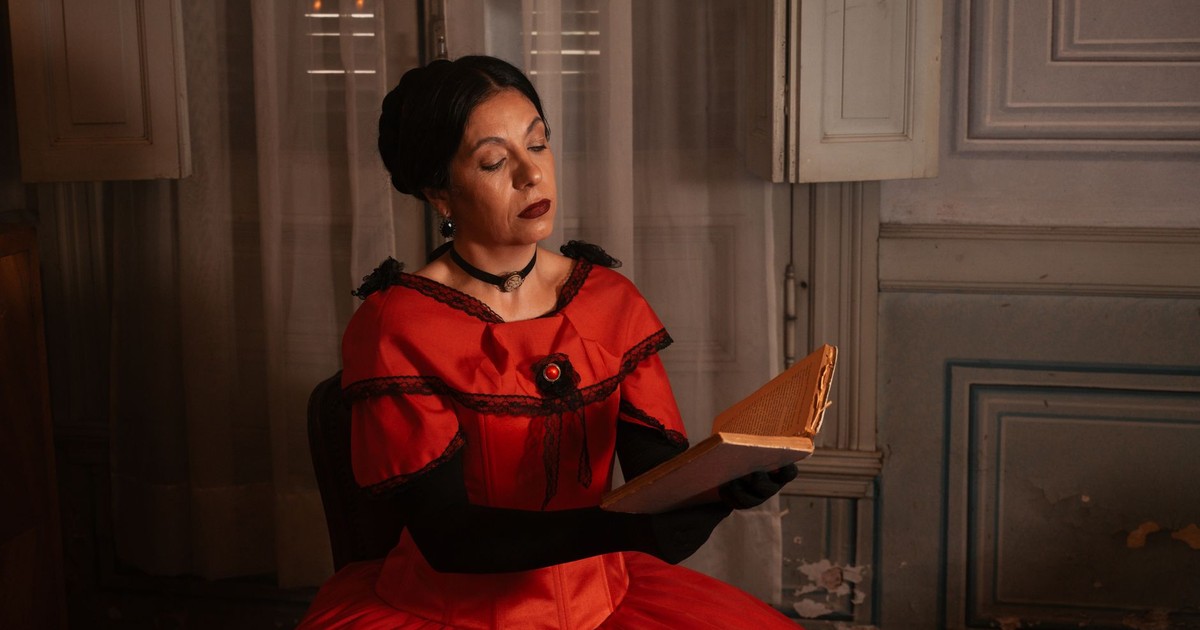
In 1861, Prince Albert died, and Victoria’s grief was such that she did not appear in public for three years. She never entirely got over the loss, and until the end of her life she had her maids nightly lay out Albert’s clothes for the next day and in the morning replace the water in the basin in his room.
That ritual, repeated every single day for forty years, tells you more than any biography would. Victoria wore black for the rest of her life. Her sharp withdrawal from public life lasted for over ten years.
By the time she died in January 1901, Victoria had grown very frail and had to use a wheelchair. She was losing weight, described as having shrunk so as to appear about one half the person she had been. She had outlived Albert by four decades.
2. Johnny Cash (1932 – 2003)

Cash, country music’s “Man in Black,” died September 12, 2003, of complications from diabetes, four months after the death of his wife, June Carter Cash. The medical explanation is accurate as far as it goes. It doesn’t capture how fast he fell apart once June was gone.
June Carter Cash died on May 15, 2003, at the age of 73 following heart surgery. The couple had been inseparable, both personally and professionally, and June’s passing left her husband heartbroken. His health quickly began to decline.
His final public performance took place on July 5, 2003, in June’s hometown of Maces Spring, Virginia, where he told the crowd: “The spirit of June Carter overshadows me tonight… We connect somewhere between here and Heaven.” Those who were in the room said he looked like a man who had already decided he wasn’t going to be around much longer. Cash’s close friend and fellow musician Kris Kristofferson spoke publicly after Cash’s death about how deeply June’s loss had gutted him, describing a man who cried every night and found life a daily struggle without her.
3. George H.W. Bush (1924 – 2018)
Barbara Bush died on April 17, 2018, ending 73 years of marriage to George, the second longest-married presidential couple in US history. By that point, the couple had been together since 1943. George Bush was 93 years old and had already been in declining health, but those closest to him noticed that after Barbara’s death, something more fundamental gave way.
The former president survived his wife by around seven months, passing away on November 30, 2018. Those who knew him described a man diminished by her absence in his final months. Research from Harvard School of Public Health found that the widowhood effect is greatest in the first three months after a spouse dies, when surviving partners have a 66% increased chance of dying. Seven months is exactly within that window.
4. Debbie Reynolds (1932 – 2016)

Debbie Reynolds died on December 28, 2016. Her daughter, Carrie Fisher, had died the day before, on December 27. Reynolds collapsed at her son Todd Fisher’s home while they were making funeral arrangements for Carrie. Todd Fisher later told CBS News: “This morning she was just deep, deep in grief and the stress, you know, from that likely triggered a stroke that was debilitating.”
According to CNN, Reynolds’ death certificate listed the cause of death as intracerebral hemorrhage, a type of stroke in which a blood vessel ruptures and bleeds into the brain. Reynolds had already suffered two strokes in 2015 and recovered from both. The speed of it, less than 24 hours, was what stopped people cold.
5. Edgar Allan Poe (1809 – 1849)
Poe’s death has been debated for over 170 years. The official cause was never definitively established and the theories range from rabies to cooping (being forced to vote repeatedly under duress) to heavy drinking. His wife Virginia died of tuberculosis after years of illness, a slow, devastating loss that Poe watched from beside her sickbed, often unable to afford food or sufficient heating for the house.
Virginia Clemm was Poe’s first cousin and had married him when she was 13. She died in January 1847, when Poe was 38. Poe himself died in 1849 under mysterious circumstances, leaving behind a body of work that often reflected the grief and fear he knew so well. The two years between Virginia’s death and his own were marked by erratic behavior, heavy drinking, and repeated collapses. He was found delirious on the streets of Baltimore in early October 1849, and died four days later. He was 40 years old.
6. James Callaghan (1912 – 2005)

James Callaghan served as Prime Minister of the United Kingdom from 1976 to 1979. He had been married to his wife Audrey for nearly 67 years. On March 15, 2005, after nearly 66 years of marriage, Audrey Callaghan passed away, aged 89.
James Callaghan died just 11 days after Audrey’s death, and the day before his 93rd birthday. He had been in reasonably stable health for a man of his age, and there was no dramatic acute illness in the weeks beforehand. His family and colleagues described a man who had been devoted to Audrey for his entire adult life, and who simply had no template for existing without her.
7. Empress Elisabeth of Austria (1837 – 1898)

Empress Elisabeth of Austria, known widely as Sisi, was assassinated in Geneva in September 1898 by an Italian anarchist named Luigi Lucheni, who stabbed her with a sharpened file. Her death was sudden and violent, not a slow wasting from grief. But the grief that preceded her death is the part worth examining.
Her only son, Crown Prince Rudolf, died in January 1889 at Mayerling in what was officially declared a suicide, though the circumstances remain disputed. Rudolf was 30 years old. Elisabeth never recovered. She spent the remaining nine years of her life in near-constant motion, traveling restlessly across Europe as if trying to outrun her sorrow. Contemporaries described a woman who had become indifferent to her own survival, who refused security details and exposed herself repeatedly to risk. The wound from the file was so narrow that Elisabeth initially didn’t realize she had been stabbed. She died within the hour. She was 60.
8. Mark Twain (1835 – 1910)

Samuel Clemens, the man behind the pen name Mark Twain, lived long enough to bury almost everyone he loved. His son Langdon died in infancy. His daughter Susy died of meningitis in 1896 at the age of 24, while Twain was abroad. His beloved wife Olivia, whom he called Livy, died in 1904 after years of illness that Twain had spent largely at her bedside or barred from her room by doctors who believed his presence was too stimulating for her fragile health.
His daughter Jean died of an epileptic seizure on December 24, 1909, the day before Christmas. Twain wrote about her death in an essay called “The Death of Jean,” in which he described holding her body and realizing he was glad she didn’t have to outlive him. He died four months later, in April 1910, of a heart attack. He had predicted his own death repeatedly in the years after Livy died, telling friends he was simply waiting for it. He had also famously noted that he had come in with Halley’s Comet in 1835 and expected to go out with it, which he did.
9. Eleanor Roosevelt (1884 – 1962)
Eleanor Roosevelt’s grief was not for a romantic partner in the conventional sense. Her marriage to Franklin was complicated, long-strained by distance and by Franklin’s affair with Lucy Mercer, which Eleanor discovered in 1918 and never fully forgave. Franklin died in April 1945, suddenly, in Warm Springs, Georgia. He was with Lucy Mercer when he died.
Her father, Elliott Roosevelt, died when she was just nine years old, a loss she said defined her emotional life entirely. She threw herself into human rights work with ferocious energy for the rest of her life, becoming a driving force behind the Universal Declaration of Human Rights at the United Nations. But those who worked alongside her in her final years described a woman who had grown progressively more withdrawn and physically fragile. She died in November 1962, at 78, of a rare form of tuberculosis combined with aplastic anemia. Her doctor said she seemed to have lost the will to fight the illness.
10. Cleopatra VII (69 – 30 BCE)

Cleopatra’s death is among the most documented and most debated in ancient history. The most widely accepted account holds that she died by suicide, almost certainly by poison, after learning that she was to be transported to Rome and displayed in Octavian’s triumph. Cleopatra ruled Egypt during one of the most dangerous political periods in the ancient Mediterranean. Her alliances with Julius Caesar and Mark Antony made her a major figure in Roman power struggles, and after Antony’s defeat and death, Cleopatra took her own life in 30 BCE as Egypt fell under Roman control.
Mark Antony died first, based on a false report that Cleopatra herself was already dead. When she learned what had happened, she refused to eat, refused treatment for a wound she had inflicted on herself, and declared she had no intention of living without him or without her kingdom. Her death by asp, or by some other poison secreted into her chambers, was a deliberate choice made in the immediate aftermath of losing Antony.
What the Death Certificates Miss
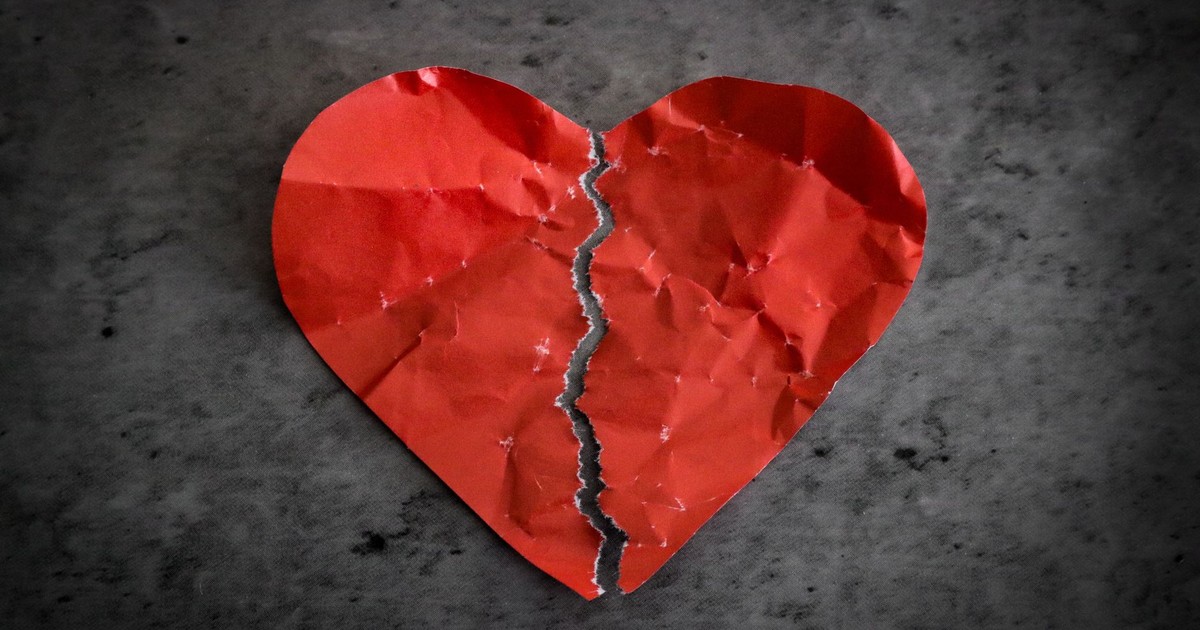
The official cause of death is rarely the whole story. Diabetes, stroke, heart attack, cardiac arrest: these are the words that go on the form. They cannot capture the timeline of a person whose decline began the day someone central to their life was gone.
Research on the physiological effects of grief shows that stress hormones released following bereavement, particularly catecholamines like adrenaline, can cause the heart muscle to weaken and blood pressure to spike. When someone loses a person central to their existence, the neurological and cardiovascular response isn’t metaphorical. It’s physiological. The heart actually changes how it functions. In the elderly, or those with pre-existing conditions, that change can be enough.
The ten people above share this: the loss preceded the decline, and in most cases, those closest to them understood what was actually happening long before the end. The death certificates caught the final event. The people who loved them had already been watching someone die of a broken heart for months, sometimes years, before it was finished.
Some of these patterns go back to the earliest relationships a person forms. A father who disappears when you’re nine. A husband who dies in another woman’s arms. A child who doesn’t survive you. The certificate records the last moment. It has no column for everything that came before it.
Disclaimer: This information is not intended to be a substitute for professional medical advice, diagnosis, or treatment and is for information only. Always seek the advice of your physician or another qualified health provider with any questions about your medical condition and/or current medication. Do not disregard professional medical advice or delay seeking advice or treatment because of something you have read here.
AI Disclaimer: This article was created with the assistance of AI tools and reviewed by a human editor.