

Most people picture history as a parade of wars and treaties, coronations and elections. The version you memorize for exams. But underneath that tidy official record runs a stranger current, full of events that don’t fit any pattern and don’t have satisfying explanations. A town full of people who couldn’t stop dancing. A manuscript no one has ever decoded. A forest the size of a small country flattened in seconds, and no one quite knows why.
These are not folklore or campfire legends. They are documented, verified, and in many cases still unsolved. The creepiest stories from history aren’t the ones dressed up as ghost stories. They’re the ones backed by physician notes and city council records and government logs, where the facts themselves are the unsettling part.
Some of the 28 events below come from ancient civilizations, some from the 20th century. A few are eerie because they happened at all. Others are eerie because they stopped, just as suddenly as they began, and nobody ever figured out why.
1. The Dancing Plague of 1518
In July 1518, hundreds of citizens of Strasbourg danced uncontrollably and apparently unwillingly for days on end. The mania lasted for about two months before ending as mysteriously as it began. It started with a single woman, known as Frau Troffea, who stepped into the street and began dancing. She didn’t stop. Within days, dozens joined her. Within weeks, the number had grown into the hundreds.
Historical documents, including physician notes, cathedral sermons, local and regional chronicles, and notes issued by the Strasbourg city council, are clear that the victims danced. It is not known why. Contemporary explanations included demonic possession and overheated blood. Investigators in the 20th century suggested that the afflicted might have consumed bread made from rye flour contaminated with the fungal disease ergot, which is known to produce convulsions. The most widely accepted theory, put forward by medical historian John Waller, was that the dancing plague was a form of mass psychogenic disorder, meaning the body producing real, involuntary symptoms in response to extreme stress.
The dancing plague was one of a series of calamitous events to befall Strasbourg’s residents in the early 16th century. Floods, unusually extreme temperatures, bubonic plague, and strange celestial events had led to apocalyptic expectations and civil unrest. Three years of famine in the years leading up to 1518 had prompted peasant uprisings amid many deaths from malnutrition. The dancing, in that light, looks less like madness and more like a collective body in crisis, doing the only thing it could think of.
2. The Voynich Manuscript
In 1912, rare book dealer Wilfrid Voynich acquired a medieval manuscript from a Jesuit college near Rome. Written in an extinct language, or code, that no one could recognize and filled with strange illustrations of fictitious plants and naked women, it has befuddled scholars ever since, including some of the 20th century’s most accomplished cryptographers, none of whom could crack it.
The text is accompanied by astrological charts, illustrations of strange plants, and bizarre images, and is composed in a writing system that doesn’t appear on any other document or object ever discovered. Every letter, every symbol, every page of it is unique to itself. No known alphabet. No known language. No confirmed date of origin. Yale’s Beinecke Library, which has housed the manuscript since 1969, describes it simply as having “no clearer purpose now than when it was rediscovered.”
Some, including the late U.S. Army cryptographer William Friedman, who led the team that broke Japan’s PURPLE cipher during World War II, believe it was written in a synthetic language. Others think it uses a dead language such as proto-Romance, a precursor of vulgar Latin, though that claim has been highly controversial. A small group of scholars still argues the whole thing is an elaborate hoax. The problem with that theory is that nobody has ever proven it, either.
3. The Tunguska Event
On the morning of June 30, 1908, 830 square miles of forest and an estimated 80 million trees in Siberia, Russia, were flattened by what appeared to be a mysterious explosion. The blast was so powerful it registered on seismographs across Europe. People as far as 40 miles away were knocked off their feet.
The phenomenon, known as the Tunguska event, has been classified by scientists as the largest “impact event” in recorded history, meaning a recordable impact between two astronomical objects, such as an asteroid and the Earth. What makes it genuinely strange is the absence of a crater. Whatever hit didn’t leave one. The leading theory is that a space rock or comet entered the atmosphere and exploded mid-air before reaching the ground, the force of the explosion radiating downward like a pressure wave. But since no fragment has ever been definitively recovered, it remains technically unconfirmed.
The region was so remote that the first scientific expedition didn’t reach the site until 1927, nearly two decades later. The trees at the epicenter were stripped of their bark and still standing, upright but bare, like burned matchsticks. For miles in every direction, fallen trunks pointed outward from the center, a perfect starburst visible even from the air.
4. The Dyatlov Pass Incident

On February 1, 1959, nine ski hikers died mysteriously in the mountains of what is now Russia. The night of the incident, the group set up camp on a slope, enjoyed dinner, and prepared for sleep, but something went catastrophically wrong. They were experienced hikers. The weather was cold but not extreme. No other parties were nearby.
What investigators found at the scene was bewildering. The tent had been cut open from the inside. The group had left it in the middle of the night, barefoot in the snow, in temperatures well below freezing. Some were found at a significant distance from the camp. Their belongings, including boots and warm clothing, were left behind. None of them made it back.
Russian authorities closed the case in 1959 with the explanation “unknown compelling force.” It was reopened in 2019 after decades of speculation. The current official assessment suggests an avalanche, though the unusual details, including the cut tent fabric, the positions of the bodies, and the state of the scene, have continued to fuel other theories for over 60 years.
5. The Cadaver Synod
In the year 897, Pope Stephen VI decided his predecessor, Pope Formosus, had been a heretic and traitor. The problem was that Formosus had been dead for about eight months. Stephen’s solution was to put the corpse on trial anyway.
The Cadaver Synod, as it became known, saw Pope Stephen physically put a dead pope on trial. He had the body disinterred, propped the rotting corpse up in a chair in the courtroom, and denounced it for heresy. A deacon was appointed to speak on the dead man’s behalf. The corpse was found guilty. The body was later thrown into the Tiber river, after which people reportedly began attributing miracles to it. Stephen was quickly deposed and later died in prison.
The Catholic Church essentially erased the Cadaver Synod from its official narrative, but it remains one of the most thoroughly documented events of medieval papal history. It says something unsettling about institutional power: that it can be so absolute, and so unhinged, that even the dead aren’t exempt.
6. The Great Molasses Flood of 1919
On January 15, 1919, a 50-foot-tall steel storage tank holding over two million gallons of molasses burst in Boston’s North End neighborhood. The resulting wave of thick liquid moved through the streets at approximately 35 miles per hour, destroying buildings, crushing structures, and leaving the neighborhood coated in a heavy brown layer that took weeks to clean up.
Twenty-one people lost their lives and over 150 were injured. The smell of molasses in the North End reportedly lingered for years. Residents at the time described hearing a low rumble before the tank let go, followed by a sound like cannon fire as the rivets failed in rapid sequence. The molasses, warmed by an unexpectedly mild January day, had been fermenting and building internal pressure inside a tank that investigators later found had been structurally inadequate from the start.
The legal case that followed was one of the first major industrial disaster lawsuits in American history. The company responsible was found liable after a lengthy investigation. What lingers about this event is the sheer improbability of it: a wave of molasses, in January, in a city street. Stranger than fiction, and all of it on the public record.
7. New England’s Dark Day
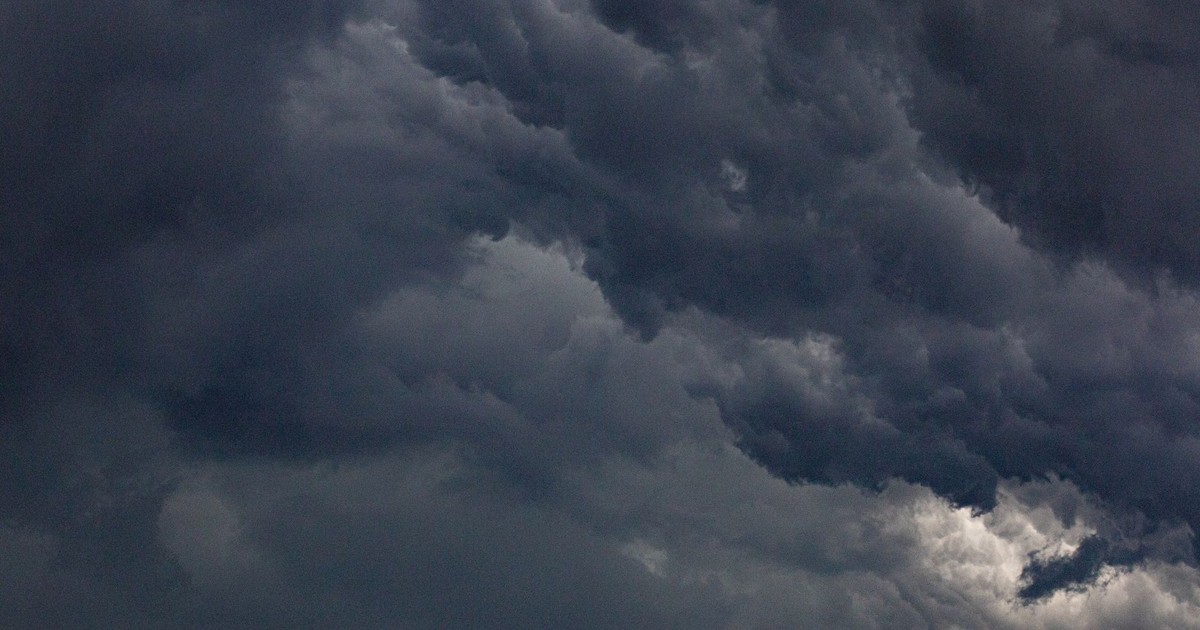
On May 19, 1780, New England experienced what became known as the Dark Day. The morning started normally, then the sky turned a strange yellow that grew progressively darker. By midday, daylight had nearly disappeared, forcing people to light candles just to move around. Panic spread fast, with many convinced the end had arrived. Lawmakers debated stopping work, but some pushed on calmly while the world outside looked completely wrong.
The cause, determined much later, was a combination of wildfire smoke from fires burning in Canada and an unusual weather pattern that trapped the smoke close to the ground across a wide area of New England. At the time, nobody knew that. People prayed in churches. Some gave away their possessions. Animals roosted as if for night. The darkness lasted for hours.
What’s documented is that members of the Connecticut legislature, faced with what many believed to be the last day of existence, voted to continue their session rather than adjourn. One of them reportedly said that if it was indeed the end of the world, he would prefer to be found doing his duty.
8. The Mary Celeste
In December 1872, the brigantine Mary Celeste was found sailing in the Atlantic Ocean between Portugal and the Azores. There was no one on board. The ship was in perfectly good sailing condition. The cargo was intact. Food was prepared. The crew’s personal belongings were still in their cabins. There was no sign of struggle.
The captain, his wife, their two-year-old daughter, and seven crew members had simply vanished. The last entry in the ship’s log was made ten days before the Mary Celeste was found, noting nothing unusual. No bodies were ever recovered. No definitive explanation has ever been established.
Theories over the years have ranged from the practical, such as a waterspout, a seaquake, or fear of a cargo explosion, to the fanciful. What keeps this story in the creepiest stories from history is the detail: a half-eaten meal on the table, a child’s toys in the cabin, a ship sailing itself through the ocean with nobody left to steer it.
9. The Disappearance of the Roanoke Colony
In 1587, English governor John White led a group of over 100 colonists to establish a settlement on Roanoke Island, in what is now North Carolina. He returned to England for supplies shortly after. When he came back three years later, the entire colony had vanished.
The only clue left was a single word carved into a fence post: CROATOAN. No bodies. No signs of conflict. No explanation. White believed it might be a message indicating the colonists had moved to Croatoan Island nearby, but a storm prevented him from investigating at the time, and he never returned.
Subsequent searches found nothing. Archaeological work in the area continues to this day, and various theories involve assimilation into local Native American communities, dispersal, or worse. The word CROATOAN remains one of the most sobering inscriptions in American history.
10. The Princes in the Tower
In 1483, twelve-year-old Edward V and his ten-year-old brother Richard, Duke of York, were placed in the Tower of London for their supposed protection while preparations for Edward’s coronation were made. Their uncle, Richard, Duke of Gloucester, was appointed their protector. The boys were seen less and less frequently through the summer of 1483. Then they weren’t seen at all.
No remains were definitively identified at the time. Richard of Gloucester became King Richard III shortly afterward. The boys were never seen in public again. In 1674, workmen at the Tower of London discovered the bones of two children buried beneath a staircase. They were reinterred at Westminster Abbey, where they remain, never formally tested with modern methods.
The question of what happened to the Princes in the Tower has been debated by historians for over 500 years, and no firm answer has ever been established.
11. The Bog Bodies of Northern Europe
Across Ireland, the United Kingdom, Denmark, and the Netherlands, peat bogs have preserved human remains for thousands of years with extraordinary detail. The cold, acidic, oxygen-free conditions of the bogs essentially halt decomposition, meaning that some bodies recovered are so well-preserved that facial expressions, hair color, stomach contents, and even fingerprints survive intact.
Tollund Man, found in Denmark in 1950, still had the rope around his neck and an expression so peaceful that the farmers who found him initially thought they had discovered a recent death. He had been placed deliberately in the bog around 400 BCE. Lindow Man, found in England in 1984, had been in the bog for roughly 2,000 years before he surfaced. His last meal was identified from stomach contents.
What makes the bog bodies genuinely eerie is the intimacy of the detail after so much time. These are real people, with specific faces and specific histories, whose identities are almost entirely unknown. They are believed in many cases to have been ritual offerings, but certainty is out of reach. They turn up in fields and construction sites, surfacing every few years from the dark water, looking for all the world like someone who only just went in.
12. The Overtoun Bridge Dog Mystery
In West Dunbartonshire, Scotland, there is a stone bridge built in 1895, and since the 1950s, an unusual number of dogs have reportedly leaped from the same spot on that bridge into the gorge below. Local accounts and news coverage have documented dozens of incidents over the decades, with most occurring on the same side of the bridge, near the same section of parapet, in similar weather conditions.
Multiple theories have been proposed. The leading explanation among animal behaviorists is that the dogs are detecting the scent of small animals like mink or otters from the riverbed below, and the bridge’s high walls prevent them from gauging the drop. The smell overrides their caution.
The rational explanation exists. But the fact that it keeps happening, in the same spot, generation after generation of different dogs, something about that stubbornly refuses to feel entirely explained.
13. The Winchester Mystery House

Sarah Winchester, heir to the Winchester rifle fortune, began building an addition to her San Jose farmhouse in 1884 and didn’t stop until her death in 1922. Over 38 years, the house grew to 160 rooms, with staircases that lead into ceilings, doors that open onto blank walls, windows set into interior floors, and a staircase with steps only two inches tall.
Winchester reportedly believed she was being haunted by those who had fallen to Winchester rifles, and that constant construction would confuse the spirits. Whether she truly believed this or had other motivations for the endless building project, the physical result is a genuine architectural oddity. Rooms were added seemingly at random, creating a structure that is both enormous and deliberately disorienting.
The house still stands and is open to visitors today. Architects have noted that despite the chaotic construction, much of the building is structurally sound. Winchester supervised everything personally and had the project maintained to a high standard. That might be the strangest detail of all.
14. The Black Dahlia
In January 1947, the body of 22-year-old Elizabeth Short was found in a Los Angeles vacant lot. The case received enormous press attention, and the nickname “Black Dahlia” was coined by newspapers of the era. Investigators received hundreds of tips and confessions in the months that followed, none of which led to a confirmed arrest.
The Los Angeles Police Department’s file on the case has never officially been closed. Detectives and researchers have proposed dozens of suspects over the decades. Books, documentaries, and films have revisited the case repeatedly. No one has ever been charged.
What keeps this among the creepiest stories from history is partly the era and partly the scale of the investigation. Over 150 people confessed to the crime. The gap between the volume of information and the complete absence of resolution remains one of American law enforcement’s longest-running open questions.
15. The Screaming Mummies
Among the mummies unearthed from ancient Egyptian tombs and burial sites, a small number have been found with their mouths open in what appears to be a frozen scream. The “Unknown Man E,” found in the Royal Cache at Deir el-Bahri in 1881, is among the most striking: wrapped in sheepskin, face contorted, hands bound.
Modern forensic analysis has suggested the expression likely results from the relaxation of jaw muscles after burial, rather than any emotional state at the time of death. The wrapping in sheepskin was itself unusual and has been interpreted as a mark of disgrace, potentially indicating a non-standard burial for someone who had done something wrong.
The explanation is convincing. The face is still arresting. Some things you can know the answer to and still find unsettling.
16. The Sailing Stones of Death Valley
In Racetrack Playa, a remote dry lakebed in Death Valley, large rocks leave long tracks across the ground, as if they’ve been moving on their own. Some of the trails stretch hundreds of feet. The rocks themselves can weigh several hundred pounds. No one witnessed the movement for decades, and no animal or human tracks accompanied the rock trails.
In 2014, a research team finally caught the process on camera. Thin sheets of ice form overnight on the playa’s surface, and when the morning sun begins to melt the ice, the floating panels push the rocks slowly across the mud beneath them, driven by the lightest wind. The rocks glide at speeds of only a few inches per minute, too slowly to see in real time.
It’s a satisfying explanation. And yet people walked past those trails for a hundred years and couldn’t figure it out. The desert kept its secret until someone thought to set up a time-lapse camera and wait.
17. The Green Children of Woolpit
In the 12th century, in the village of Woolpit in Suffolk, England, two children were reportedly found in a pit used to trap wolves. They were described as having green-tinged skin, speaking a language no one could understand, and refusing to eat anything but raw beans. Over time, their skin color faded and they learned to speak English.
The girl, who survived, later said they had come from a place called “St. Martin’s Land,” where it was always twilight and everything was green. She described a broad river of light that separated their world from the one they found themselves in.
The most grounded explanations suggest the children may have been Flemish immigrants who had become lost, malnourished, and severely ill; anemia caused by poor diet can produce a greenish pallor. The account, recorded by two independent chroniclers of the time, is well-documented for a medieval story. What they were actually doing in that pit, and where they had come from, remains unanswered.
18. The Antikythera Mechanism
In 1901, divers exploring a Roman-era shipwreck off the Greek island of Antikythera recovered a heavily corroded lump of bronze. It sat in a museum storage room for years before researchers realized what it was: a computing device made sometime around 100 BCE, capable of predicting astronomical positions, solar and lunar eclipses, and the dates of athletic competitions including the Olympic Games.
Nothing else like it has ever been found from that era. The device contains at least 30 interlocking bronze gears, some with teeth smaller than a millimeter. The level of precision engineering it required wouldn’t appear again in recorded history for roughly 1,400 years, when comparable gear complexity began appearing in European clock movements.
Where this knowledge came from, who made it, and why nothing similar survived is unknown. The Antikythera mechanism sits in the National Archaeological Museum in Athens, a piece of technology that seems to have arrived a millennium ahead of schedule.
19. The Taos Hum
Since the early 1990s, some residents of Taos, New Mexico, have reported hearing a persistent low-frequency hum. They describe it as resembling the idling of a distant diesel engine, audible indoors but not outdoors, and most noticeable at night. Only a small percentage of Taos residents can hear it. Microphones cannot detect it.
A 1997 study commissioned by Congress found no confirmed source for the sound. Theories have ranged from industrial equipment, to natural geological processes, to mass psychogenic phenomenon. A similar hum has been reported in locations as far apart as Bristol in England and Largs in Scotland.
The people who hear the Taos Hum consistently describe the experience as deeply distressing. Some have reported disrupted sleep for years. The absence of any confirmed source, combined with the fact that it appears to affect only some people, places it in a genuinely puzzling category: an experience that is real to those who have it, and functionally undetectable to everyone else.
20. The Rat Kings
Across Europe, from the Middle Ages into the 20th century, collections of rats were occasionally found with their tails knotted together in a tangle at the center, the rats themselves still alive and moving as a single writhing mass. These were called “Rat Kings” and were considered profoundly bad omens.
Real, preserved specimens exist. The Museum Mauritianum in Altenburg, Germany, holds a Rat King of 32 rats, found in 1828. Scientific examination confirmed the knotting was not faked. The leading explanation is that the tails became entangled during cold weather when huddled rats were frozen together and subsequently grew into place, the rats being unable to separate themselves.
The Rat Kings are documented, physical, and real. They are also exactly the kind of thing you hope not to find under a floorboard.
21. The Devil’s Footprints
On the night of February 8 to 9, 1855, after a heavy snowfall, residents of Devon in England woke to find a trail of hoof-like prints running continuously for over 100 miles across fields, through walled gardens, over rooftops, across the Exe estuary, and through the walls of haystacks. The trail was single-file, as if made by a biped. Each print measured approximately four inches by three inches.
Contemporary newspaper accounts, including in the Illustrated London News, documented the event in detail. The prints were seen by hundreds of people across dozens of communities. Multiple explanations have been proposed: a weather balloon, a large animal like a badger or kangaroo, a hoax, or even a series of different unrelated animal tracks that were stitched together after the fact by people sharing the story.
No definitive explanation has ever been accepted. The event was widely reported at the time and has remained a subject of genuine historical inquiry ever since.
22. The Max Headroom Broadcast Intrusion
On November 22, 1987, during a WGN-TV sports broadcast in Chicago, the signal was briefly hijacked by an unidentified person wearing a Max Headroom mask and making an incoherent speech. Later the same evening, the signal for a Chicago PBS station was hijacked again in the same manner, this time for a longer segment.
The Federal Communications Commission launched an investigation. Nobody was ever identified or charged. Three and a half decades later, the perpetrator or perpetrators have never been found. The footage remains, but the source never surfaced.
The incident is notable not for any harm caused but for how completely it went unsolved. A live television broadcast, watched by tens of thousands of people, hijacked twice in one night by someone who apparently walked away and was never seen again.
23. The Wow! Signal
On August 15, 1977, astronomer Jerry Ehman was reviewing data from Ohio State University’s Big Ear radio telescope when he noticed a 72-second signal unlike anything in the surrounding data. It matched the expected profile of a potential transmission from interstellar space almost exactly. He circled it on the printout and wrote “Wow!” in the margin, which became the signal’s name.
The signal has never been received again, despite repeated attempts to relocate it. In 2016, a team of researchers proposed that it might have been caused by a hydrogen cloud surrounding a pair of comets. Other researchers have disputed that explanation. The original signal remains unexplained and, so far, unrepeated.
24. The Baigong Pipes
In the Qinghai province of China, near Mount Baigong, a series of iron pipe-like structures protrude from the walls of a cave and from the shores of a nearby saltwater lake. They appear to follow a consistent direction, some leading toward the lake and some into the cave interior. Samples analyzed by Chinese state media in the early 2000s reportedly found the pipes to be largely iron oxide.
The area is extremely remote, and there is no known human settlement from any historical period that could account for the structures. The pipes have been cited, with enthusiasm, as evidence of ancient advanced technology or extraterrestrial construction. A more conventional explanation is that they are formed by fossilized tree roots or natural mineralization processes that can produce tubular structures in certain geological conditions.
Even with the natural explanation on the table, they photograph in a way that is difficult to look at without a slight sense of wrongness.
25. The Marfa Lights
Loch Ness has its monster. But scattered across remote parts of the world are stranger documented oddities, including persistent reports of unexplained light phenomena witnessed by independent observers over generations. These aren’t modern smartphone videos. The earliest accounts predate photography.
The village of Marfa, Texas has one of the best-documented cases. The Marfa Lights have been observed and documented since 1883, and a permanent viewing area now exists on US Route 67 for visitors. Multiple investigations have been conducted, and while some sightings are explained by car headlights reflecting off atmospheric inversions, others recorded under controlled conditions haven’t been accounted for by that explanation.
The persistence across time, the consistency of the descriptions, and the failure of investigation to produce a complete account put the Marfa Lights in the same company as several other phenomena where the rational framework comes close but doesn’t quite close the gap.
26. The Sodder Children Disappearance
On Christmas Eve, 1945, a fire broke out in the Sodder family home in Fayetteville, West Virginia. George Sodder, his wife, and four of their ten children escaped. Five of the children, ranging in age from five to fourteen, did not. No remains were found in the ruins.
The Sodder family refused to accept that the children had died in the fire and spent the rest of their lives searching for them. The reasons are specific: a telephone operator reported the local lines had been disconnected before the fire was called in, a neighbor found a strange device near the house after the fire, and witnesses reported seeing children’s faces in a car driving away from the scene that night.
In 1968, the family received a photograph in the mail. It showed a young man who bore a strong resemblance to what their son Louis might have looked like at age 29. There was no return address. The case was never resolved.
27. The Vanishing of Flight MH370
On March 8, 2014, Malaysia Airlines Flight MH370 departed Kuala Lumpur for Beijing carrying 239 passengers and crew. About 40 minutes into the flight, the aircraft’s transponder was turned off. The plane then flew for approximately seven more hours in the wrong direction before the signal was lost over the southern Indian Ocean.
A search covering one of the largest areas in aviation history recovered small pieces of debris confirmed to be from the aircraft, washed ashore on Indian Ocean islands. The main wreckage, the black box, and 239 people have never been found.
What makes this case belong in any list of the creepiest stories from history is the inexplicability of it. A modern commercial aircraft, with all its tracking technology, turned off its transponder and flew for hours. Someone on that plane made decisions. And whatever those decisions were, and whatever happened in those final hours, has remained entirely unknown for over a decade.
28. The Antechamber of Tutankhamun’s Tomb
On November 26, 1922, archaeologist Howard Carter made a small breach in the sealed doorway of Tutankhamun’s tomb in Egypt’s Valley of the Kings and held a candle through the gap. When asked if he could see anything, Carter reportedly replied: “Yes, wonderful things.”
What he found inside was a burial chamber sealed for over 3,000 years, containing over 5,000 artifacts arranged precisely as they had been placed at the time of interment. Golden furniture. Chariots. A golden throne. Linen-wrapped ceremonial objects. A perfectly intact royal burial, undisturbed since approximately 1323 BCE.
What followed in the press was a wave of stories about a “Pharaoh’s Curse,” triggered by the deaths of several people connected to the excavation in the months and years that followed. The scientific consensus is that the deaths were coincidental. But the tomb itself, the extraordinary preservation, the completeness of the scene, the sense of a door opening onto something that had been sealed for 32 centuries, has never quite lost its power to stop people in their tracks.
Read More: Jesus Returned from the Dead, But So Did They
History Doesn’t Always Explain Itself
What runs through all 28 of these entries is a refusal to behave the way things are supposed to. Ships sail themselves. Signals arrive from deep space and don’t come back. Children dance until they collapse. Manuscripts defeat every cryptographer who attempts them. The past is supposed to be fixed, settled, knowable, and yet it keeps producing moments that resist every category we try to sort them into.
Some of these events have reasonable explanations that most experts accept. Others have reasonable explanations that most experts dispute. A handful have no credible explanation at all. What they share is a quality that separates them from ordinary history: the facts themselves are the strange part. These are not stories that were embellished over time. They are stories that were documented carefully at the time and are still strange now, with all the documentation intact.
That stubbornness is its own kind of unsettling. The universe, it turns out, doesn’t always offer a resolution. Some of these chapters simply close without one.
AI Disclaimer: This article was created with the assistance of AI tools and reviewed by a human editor.