

The argument that gets made about resurrection – that it’s a uniquely Christian idea, born in the tomb outside Jerusalem sometime around 30 CE – has never quite survived contact with the historical record. The story of someone dying and returning to life is far older than Christianity, older than the Hebrew Bible, older than almost any written text we have. Which raises a question worth sitting with: what does it mean that cultures separated by thousands of miles and thousands of years kept telling the same story?
The answer probably isn’t coincidence. Death is the one thing every human civilization has had to explain. Resurrection – the defiant reversal of it – is the fantasy that sits on the other side of that explanation, the one that refuses to let the story end with a body. Whether it happens through divine intervention, a wife’s grief-fueled magic, or a prophet’s outstretched body, the basic shape of the story stays the same. Someone dies. Someone brings them back. The world, briefly, bends.
What follows is a look at eight resurrection biblical figures across history and scripture who returned from the dead – some of them well-known, some almost entirely overlooked even by people who have read the texts they come from.
1. Osiris – The God Who Had to Be Reassembled
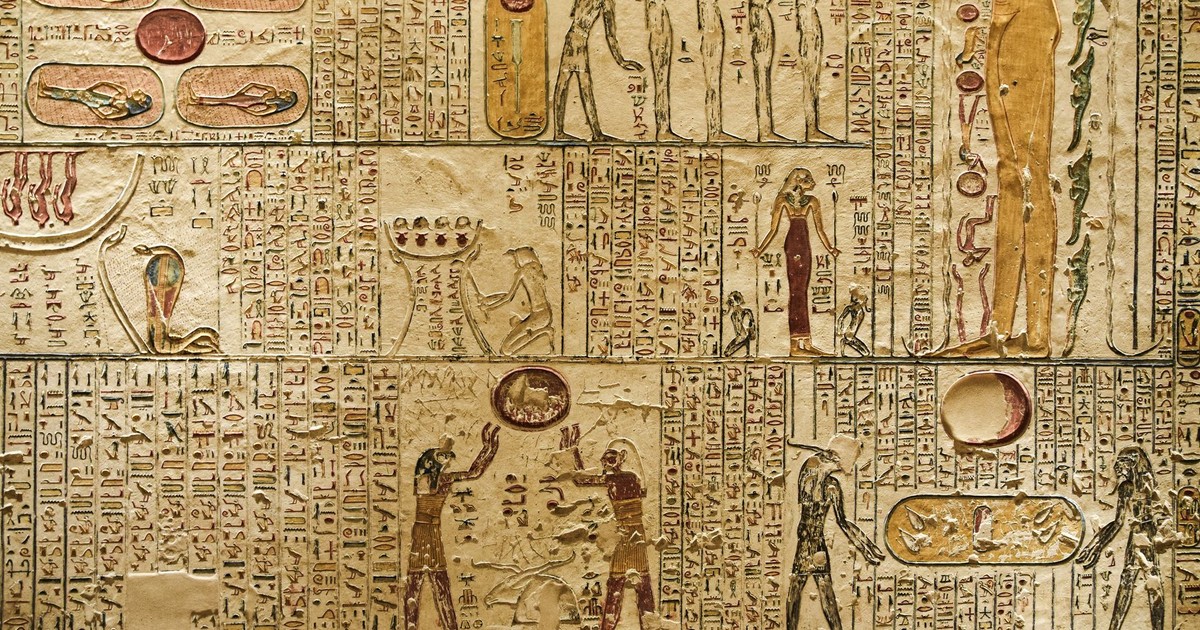
The Wikipedia entry on the Osiris myth describes it as “the most elaborate and influential story in ancient Egyptian mythology,” and at its center is a murder: Osiris, a primeval king of Egypt, is killed by his own brother Set. Set doesn’t just kill Osiris. He finds the coffin, recognizes the body inside, and cuts it into fourteen pieces, scattering them across Egypt. It’s a death designed to be permanent – you can’t bring someone back if there’s nothing to bring back.
Osiris’s wife Isis restores her husband’s body, allowing him to posthumously conceive their son, Horus. What Britannica describes as Osiris’s double role – both a god of fertility and the embodiment of the dead and resurrected king, a role established by around 2400 BCE – tells you how ancient this resurrection story actually is. This wasn’t a late addition to Egyptian religion. It was baked in from near the beginning.
The myth also did something practical. From the earliest funerary texts in the Old Kingdom to the dramatic temple rituals at Abydos during the New Kingdom, Egyptians described Osiris as both a slain ruler and a resurrected god who governed the afterlife. His story combined betrayal, violent dismemberment, and ending in restoration, becoming the foundation for how Egyptians explained death, judged morality, and prepared for what came after. Every Egyptian who was ever mummified was, in a sense, being aligned with Osiris. The resurrection wasn’t just mythology. It was the operating manual for the entire civilization’s relationship with death.
2. Baldr – The God Whose Death Broke Everything

Norse mythology’s most beloved deity dies from a dart made of mistletoe, and the story of how it happens is almost unbearably cruel. After Baldr has foreboding dreams, his mother Frigg gets everything in the worlds to swear an oath to do no harm to him – except for the mistletoe, which she thinks is too small and weak to matter. According to Norse Mythology for Smart People, when Baldur began to have dreams of his death, Frigg went around to everything in the world and secured from each of them an oath not to harm her son. Loki, in the shape of an old woman, gets Frigg to reveal that she did not demand an oath from the mistletoe, promptly cuts a mistletoe wand, and puts it in the hand of the blind god Hodr, guiding his throw. Hodr flings the dart at Baldr, and he falls dead.
This event is pivotal in Norse mythology: Baldr’s death signals the beginning of the end for the gods and the onset of the universe-shattering Ragnarok. The gods attempt to retrieve him. Frigg sends Hermod to ride to Hel and beg for Baldr’s return. Hel agrees to return him if everything in all the worlds weeps for him. And everything does weep for Baldr – except for one giantess named Thokk, who is Loki in disguise.
So Baldr stays dead – until after Ragnarok. After the apocalypse, Baldr returns as one of the new gods in the reborn world, representing the resurrection of light and wisdom. His death doesn’t just precede his resurrection; it makes it necessary. The world has to end and begin again for Baldr to return. The resurrection and the rebirth of the cosmos are the same event.
3. The Widow of Zarephath’s Son – The First Biblical Resurrection
The first recorded resurrection in the Bible takes place during the ministry of the prophet Elijah. A widow in Zarephath had shown kindness to Elijah during a severe famine. Later, tragedy struck when her son became sick and died. In her grief, she turned to Elijah, who carried the child to his room and cried out to God.
What happens next in 1 Kings 17 is the template for nearly every biblical resurrection that follows. The boy gets sick, his illness worsens, and he dies. The woman lashes out at Elijah, blaming him and God. Elijah takes her grief without deflecting. He goes to where the boy’s body lies and cries out to God. Three times he stretches himself over the dead body and asks God to return the child’s life. God does, and the boy’s mother is restored.
That detail about stretching over the body three times recurs in Elisha’s story – a physical intimacy with the dead that most people find uncomfortable to picture but that the biblical writers seem to have considered entirely appropriate for a resurrection. The miracle was never presented as effortless. It required closeness.
4. The Shunammite’s Son – Elisha’s Turn
Elijah’s successor, Elisha, performs a nearly identical miracle a generation later, and the extra detail in this version makes the whole thing feel stranger and more specific. A Shunammite woman had shown hospitality to Elisha. In time, God blessed her with a son. But one day the child suddenly became ill and died. Instead of surrendering to despair, the woman went quickly to find the prophet. Elisha returned with her, went into the room where the child lay, and prayed. Then he stretched himself over the child’s body. The child’s body became warm, and then the boy sneezed seven times and opened his eyes.
Seven sneezes. That specificity – almost comical if you’re reading it cold – is the kind of detail that doesn’t get invented. Nobody making up a miracle story thinks to include the sneezing. It reads like someone who was there, or was told by someone who was, and couldn’t quite leave out the odd part.
The story in 2 Kings 4 also has an interesting structural feature: Elisha first sends his servant Gehazi ahead with a staff, instructing him to lay it on the child’s face. It doesn’t work. Only when Elisha himself arrives and lies over the body does the child revive. Even within a text that treats resurrection as possible, it’s treated as difficult. The first attempt fails. The prophet has to come himself.
5. The Man in Elisha’s Tomb – Resurrection by Accident
This one is genuinely strange, and easy to see why it gets left out of most discussions. In 2 Kings 13, a dead man is raised when his body accidentally comes into contact with Elisha’s bones. People were burying a man when they spotted a band of raiders approaching, so they hastily dropped the body into the nearest tomb – which happened to be Elisha’s. The dead man touched the prophet’s bones, revived, and stood on his feet.
No prayer here. No prophet invoking God’s name. The body makes contact with Elisha’s remains and the man comes back to life. The rabbi who first puzzled over this passage and the theologian who puzzled over it centuries later were grappling with the same question: what exactly is happening? Is it residual holiness? Is it the bones themselves? The text offers no explanation and seems entirely comfortable with that.
It’s the most matter-of-fact resurrection in the entire Bible. Raiders approach, someone panics, a body lands in the wrong tomb, and a dead man stands up. Whatever theology you bring to it, the storytelling is almost darkly comic.
6. Lazarus – Four Days in the Tomb

The raising of Lazarus, found only in the Gospel of John (John 11:1 – 44), is a miracle of Jesus in which he brings Lazarus of Bethany back to life four days after his burial. The four-day detail is deliberate. By the time Jesus arrives, his sister Martha tells him the body already smells. There is no ambiguity about whether Lazarus is actually dead – the text makes sure of it.
The Israel Institute of Biblical Studies notes that Jews of the first century in the Land of Israel buried people twice: the body was first wrapped in cloth and placed in a cave, and after the body decayed and only bones remained, they were collected into a special box called an ossuary, placed with other family ossuaries in a family tomb. Jesus asking for the stone to be removed, then, wasn’t a small ask. It was a request to open something meant to stay closed.
In the Roman catacombs alone there are over 55 paintings of Lazarus’s resurrection. Roughly an equal number exist on Roman sarcophagi depicting this story told only in John’s Gospel, alongside dozens more depictions on ivory, glass, and metal objects that had nothing to do with funerals. Early Christians returned to this story obsessively, and it’s not hard to see why. The resurrection of Lazarus was a preview – an argument Jesus made with a living body rather than with words.
7. The Widow of Nain’s Son – The Funeral That Stopped
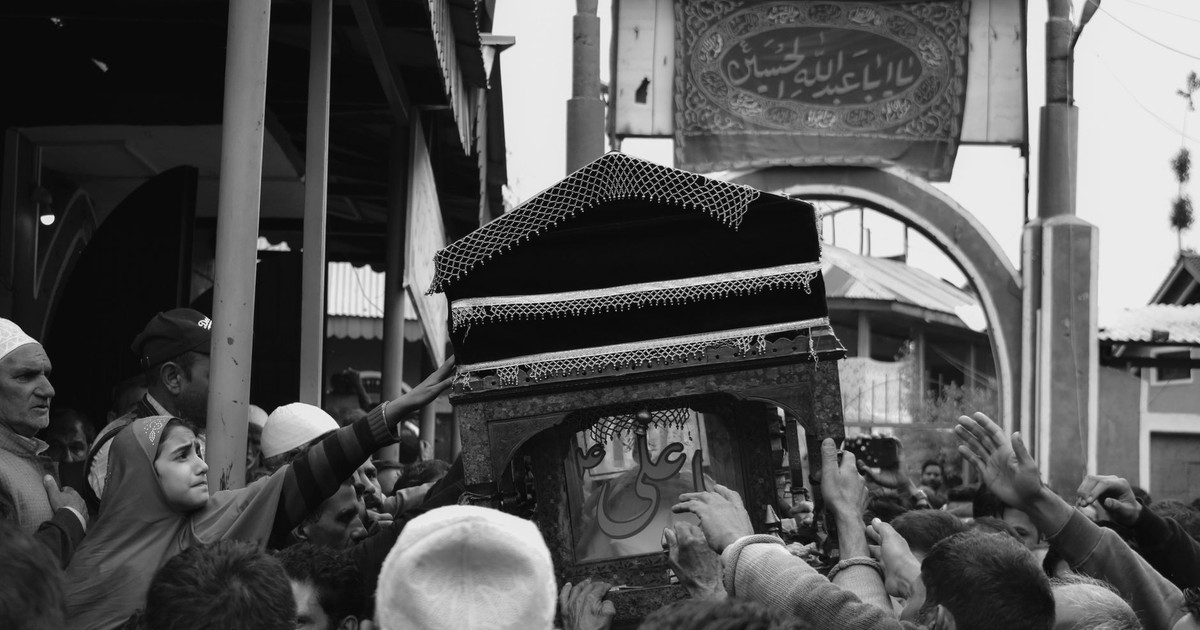
Jesus raises three specific people from the dead in the Gospels, and each one reads slightly differently. The son of the widow of Nain, in Luke 7, is the most understated. There’s no request. No one asks Jesus to do anything. Jesus goes to the town of Nain, sees a funeral procession, and stops it. He tells the grieving mother – who is also a widow – not to cry. He commands the dead boy’s body to get up. The corpse sits up and talks.
The social context matters here. A widow in first-century Judea who loses her only son doesn’t just lose a child. She loses her primary means of financial support, her place in the household structure, her future. Jesus restoring the boy to his mother is framed explicitly in Luke as an act of social restoration as much as a miracle. “He gave him back to his mother” is how the verse ends, and the language is pointed.
The crowd’s reaction in Luke 7 is also worth noting. They don’t see the miracle and immediately celebrate. First they’re terrified. Then, after the fear passes, they start saying that a great prophet has appeared among them. The sequence – terror, then recognition – recurs in nearly every resurrection narrative in the Bible, as if the texts are telling you something about what it actually feels like to watch someone come back.
8. Tabitha – The Woman Peter Raised from the Dead
The apostle Peter raised a certain disciple, Dorcas (also known as Tabitha), from the dead (Acts 9:36 – 41). She died of sickness and was washed and laid in an upper room while people went to fetch Peter from nearby Lydda. The detail about washing her body is a burial preparation custom – there is no expectation, when Peter is summoned, that he will reverse what has happened. They’re grieving. They want the apostle to come and pray over the body.
What Peter does when he arrives closely echoes what Elijah and Elisha did centuries earlier. He puts everyone out of the room, kneels down, prays, and then turns to the body and says “Tabitha, get up.” She opened her eyes, saw Peter, and sat up, fully restored.
Tabitha is the only woman in the New Testament explicitly called a “disciple” – the Greek word used is the feminine form, mathētria, which appears nowhere else in the New Testament. Her resurrection isn’t just a miracle story; it’s the resurrection of the only person in the entire text given that specific designation. Whether that’s intentional framing by Luke, who wrote Acts, is something scholars have debated for a long time. It’s hard to read it as accidental.
Read More: Why Is Jesus Depicted As White?
What These Stories Have in Common
The resurrection stories above span roughly 3,500 years and at least three separate religious traditions, and they’re not really about the same thing. Osiris is restored so that the Nile keeps flooding and the crops keep growing. Baldr returns so the cosmos can begin again. Lazarus comes back as evidence of who Jesus is. The widow’s son in Zarephath comes back because a prophet prayed hard enough. These are different claims about why death gets reversed, and they shouldn’t be collapsed into one another.
But the persistence of the story is worth something. Every culture that has ever tried to make sense of death has eventually produced a narrative where someone gets to come back – not as a ghost, not as a memory, but bodily, recognizably, in a way that people around them can see and touch and be stunned by. The resurrection biblical figures from Elijah to Peter, and the mythological ones from Osiris to Baldr, all share that insistence on the physical. It’s never enough for the soul to survive. The body has to return. Whatever these stories are doing theologically, anthropologically they’re doing something simpler: refusing to accept that the person is simply gone.
That refusal is as old as human beings who could articulate what they’d lost. The story keeps getting told because the loss keeps being real, and a story where it can be undone is one that no tradition, in any era, has been able to stop telling.
AI Disclaimer: This article was created with the assistance of AI tools and reviewed by a human editor.